In This Article
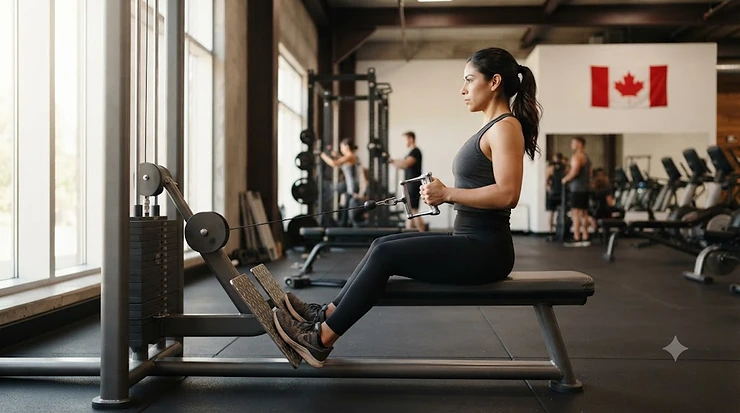
A seated cable row machine is a strength-training station that lets you pull a horizontal handle toward your torso against resistance while braced in a fixed seat, targeting the muscles across your mid and upper back. That’s the textbook definition, anyway — what it actually does for you is a little more interesting. You sit down, plant your feet, grab a handle, and pull. Simple movement, huge payoff. Somewhere between your shoulder blades, muscles that never get much love from bench presses and bicep curls finally wake up and start working.
Here’s the thing nobody tells beginners: a strong back isn’t just about looking good from behind (although, sure, that happens too). It’s what keeps your shoulders from rolling forward after eight hours hunched over a keyboard. The latissimus dorsi — the broad, flat muscle spanning your back that connects to the arm — is one of the primary muscles pulling exercises like seated rows train directly, alongside the rhomboids and mid-traps that pin your shoulder blades in place. If you’ve spent any time browsing a seated row machine review Amazon.ca listing has attached to it, you already know the category is crowded — everything from C$300 plate-loaded units to C$3,000 commercial-grade towers claims to be “the one.”
This guide cuts through that noise. We researched seven real products, dug into genuine review sentiment, and built an honest comparison so you can pick a cable seated row machine for home gym use without guessing. We’ll cover foot plate adjustment quirks, rowing handle attachment options, and how to actually train back thickness — not just what the spec sheet says.
Quick Comparison Table
Before we go deep on each machine, here’s the 30-second version. Prices are shown as ranges in CAD because exact Amazon.ca pricing shifts constantly — always check the current price at the time of research.
| Product | Type | Price Range (CAD) | Weight Capacity | Best For |
|---|---|---|---|---|
| Mikolo Plate Loaded Seated Row Machine | Dedicated seated row | C$350-450 | 400 lb | Budget back specialists |
| Yes4All LAT Pull Down Machine and Cable Row Tower | Combo tower | C$300-400 | 500 lb | Tightest budget |
| Valor Fitness BD-62 | Wall-mount cable station | C$400-500 | 250 lb | Small spaces |
| Titan Fitness Plate-Loaded LAT Tower | Combo tower | C$550-700 | 400 lb | Mid-range durability |
| Body-Solid GLM83 | Combo tower | C$750-900 | 210-310 lb stack option | Trusted warranty |
| XMark XM-7618 | Combo tower | C$1,050-1,300 | 400 lb | Serious lifters |
| Mikolo Falcon Functional Trainer | 1:1 functional trainer | C$2,600-3,100 | Dual stack | Premium all-rounder |
Looking at the spread, there’s a clear pattern: the cheaper machines sacrifice frame mass and pulley smoothness, while the premium options buy you a true 1:1 pulley ratio and dual-user capability. The Mikolo Plate Loaded Seated Row Machine and Yes4All LAT Pull Down Machine and Cable Row Tower sit closest together in price, but they solve different problems — one is purpose-built for rowing, the other stretches your dollar across more exercise variety. Budget shoppers should also note that plate-loaded machines (five of the seven here) require you to already own weight plates, which is an extra cost the sticker price doesn’t show.
💬 Just one click — help others make better buying decisions too!😊
Top 7 Seated Cable Row Machines: Expert Analysis
We picked these seven specifically to span budget, mid-range, and premium tiers, plus a mix of dedicated row machines, combo lat-pulldown towers, and a true functional trainer — so there’s a realistic option no matter your space or budget.
1. Mikolo Plate Loaded Seated Row Machine — best dedicated back specialist under C$450
Most home-gym cable stations treat the seated row as an afterthought bolted onto a lat pulldown. This one flips that script — it’s built specifically around the horizontal pulling motion, and that focus shows.
The frame handles up to 400 lb of plate-loaded resistance, and the inclined seat position is engineered for a deeper stretch at the start of each rep than a flat bench allows. Based on the spec comparison against similar-priced towers, that incline matters more than it sounds: it lets you achieve a fuller range of motion without needing extra floor clearance in front of the machine, which is a real constraint in a lot of Canadian basements and condo gyms. The independent-arm handle system also means your left and right side can’t cheat off each other, something a fixed-bar row can’t offer.
Reviewers who’ve put this machine through real seated-row sessions report the dual guide rods keep the weight trolley tracking smoothly even under heavier loads, though a recurring theme is that the stock plastic pulleys feel noticeably better after swapping in aftermarket bushings. That’s a known trade-off at this price point — reviewers consistently note the frame and welds outperform the entry-level hardware Mikolo ships with.
Who’s this for? Someone who already has a squat rack or bench for pressing movements and specifically wants a row-focused accessory station rather than a do-everything tower. Beginners will appreciate the guided, fixed-path motion for learning proper scapular retraction before graduating to freer cable movements.
Pros:
- ✅ Purpose-built inclined seat deepens the stretch on every rep
- ✅ Independent arms prevent one side from compensating
- ✅ Compact 63.7-inch footprint fits small home gyms
Cons:
- ❌ Stock pulleys are plastic and benefit from an upgrade
- ❌ Requires your own weight plates, adding to total cost
At around C$350-450 (check current price for exact figures), the Mikolo Plate Loaded Seated Row Machine delivers solid value if back training is your priority and you’re willing to tolerate a hardware upgrade down the line.

2. Yes4All LAT Pull Down Machine and Cable Row Tower — best value for stretching a tight budget
If your home gym budget is genuinely tight, this is where most people land, and for good reason. The tower supports up to 500 lb of plate-loaded resistance — a surprisingly high number for the price bracket — and the high/low pulley combination means you’re not just getting a row machine, you’re getting a lat pulldown station too.
What most buyers overlook about this model is the seat and knee support adjustability: both move across four positions, which matters more than it sounds because a mismatched seat height is the number-one reason people report shoulder strain on cable rows. The anti-slip foot board is a small but genuinely useful touch for seated rowing — bracing your feet properly is half the battle in maintaining a stable pulling position.
Aggregated review sentiment here is mixed but leans positive: buyers frequently mention the machine “rounds out” a home gym nicely and that assembly, while occasionally frustrating with underwhelming included tools, is manageable with a basic socket set. A recurring complaint is the lack of a built-in floor or wall anchor — several reviewers note the base wants to shift under heavy low-pulley loads unless you add your own anchoring hardware.
Pros:
- ✅ 500 lb capacity is high for this price tier
- ✅ Four-position seat and knee support adjustment
- ✅ Dual high/low pulley adds lat pulldown versatility
Cons:
- ❌ No included floor or wall anchoring hardware
- ❌ Included tools and instructions are rougher than premium brands
Priced in the C$300-400 range, the Yes4All LAT Pull Down Machine and Cable Row Tower is the pick if you want maximum exercise variety per dollar spent.
3. Valor Fitness BD-62 — best for tight apartment and condo spaces
Space is the real enemy in most Canadian home gyms, especially in condos where every square foot counts. The Valor Fitness BD-62 solves that with a wall-mounted dual-pulley design that occupies roughly 25 by 26 inches of footprint — smaller than a lot of exercise bikes.
The 1:1 weight ratio is the standout spec here: load 90 lb onto the carriage and you’re moving the full 90 lb, unlike cable systems that use pulley ratios to reduce the felt resistance. Sixteen adjustable pulley positions on each side mean you can dial in the exact height for a seated row versus a standing face pull without repositioning the entire unit. On paper this means genuine training flexibility from a machine roughly the size of a bookshelf.
Reviewers consistently note the cable action feels smoother than the price would suggest, with several describing it as “90% as good” as a full-size cable crossover at a fraction of the cost. The most common complaint isn’t about the machine itself but about stability during heavy low-pulley work — several users report needing to bolt the base to the floor in addition to the required wall mount, since the horizontal pulling force from a seated row can cause the unit to shift if it’s wall-anchored alone.
Pros:
- ✅ True 1:1 weight ratio, unlike many budget cable units
- ✅ Tiny footprint ideal for condos and apartments
- ✅ 16 adjustable pulley positions per side
Cons:
- ❌ Requires both wall and floor anchoring for heavy rows
- ❌ Plates and most attachments sold separately
At roughly C$400-500, the Valor Fitness BD-62 earns its spot for anyone whose home gym doubles as a spare bedroom.
4. Titan Fitness Plate-Loaded LAT Tower — best mid-range durability play
This is the machine that shows up again and again in comparison roundups as the “heavy-duty choice,” and the spec sheet backs that reputation. It’s rated to 400 lb, built from powder-coated steel, and includes four adjustable thigh pads so lifters from 5’2″ to 6’4″ can find a locked-in position.
Here’s what the spec sheet won’t tell you, but reviewer feedback suggests: the diamond-textured, flip-up footplate genuinely changes how stable a seated row feels compared to towers with a flat or fixed plate. Bracing your feet against a textured surface rather than a smooth one reduces the tendency to slide forward mid-set, which becomes a bigger issue as the weight climbs. Independent reviews recommend bolting the tower to the floor specifically when performing upright cable rows, since the leverage from that angle can rock a freestanding unit.
The trade-off for that mid-range durability is size — this is a genuine floor-standing tower, not a compact wall unit, so you’ll want a dedicated corner rather than a shared multipurpose space. Buyers moving up from an entry-level machine consistently describe the pulley action as noticeably smoother.
Pros:
- ✅ Diamond-plate footplate improves rowing stability
- ✅ Four adjustable thigh pads fit a wide height range
- ✅ 400 lb capacity with Olympic plate compatibility
Cons:
- ❌ Larger footprint than wall-mount alternatives
- ❌ Floor-bolting recommended for upright row safety
Expect to pay around C$550-700, which puts the Titan Fitness Plate-Loaded LAT Tower squarely in the “buy once” mid-range category.
5. Body-Solid GLM83 — best warranty and long-term peace of mind
Body-Solid has been a fixture in the home-gym space for decades, and the Body-Solid GLM83 is the machine most likely to still be running in your garage a decade from now. The headline feature is “no-cable-change technology” — switching between the 48-inch lat bar on the high pulley and the 20-inch seated row bar on the low pulley requires no manual cable rerouting, just letting go of one handle and grabbing the other.
What most buyers overlook about this model is the warranty structure: a lifetime guarantee on frame, welds, pulleys, and bushings for in-home use is genuinely rare in this category, where most competitors only cover the frame. Based on the spec comparison, the patented nylon bushings and thick DuraFirm seat pad are engineered specifically to minimize the noisy, gritty feel that plagues cheaper pulley systems after a few months of use.
Reviewers frequently cite the seated row foot brace and diamond plate stabilizers as standout comfort features, and the adjustable leg hold-down accommodates most users up to roughly 6’1″ comfortably — a detail worth noting if you’re on the taller side, since a handful of reviewers over 6’4″ report needing to adapt their form slightly for full range of motion.
Pros:
- ✅ Industry-leading lifetime warranty on frame and pulleys
- ✅ No-cable-change design speeds up supersets
- ✅ Thick DuraFirm seat pad for long training sessions
Cons:
- ❌ Height ceiling around 6’1″ for full range of motion
- ❌ Higher price than comparable plate-loaded towers
At C$750-900, the Body-Solid GLM83 is the machine for buyers who value long-term reliability over rock-bottom price.
6. XMark XM-7618 — best for lifters who are already pulling heavy
Once you’re consistently loading 150 lb or more on seated rows, budget towers start to show their limits — flex in the frame, drag in the cable path, seats that shift under load. The XMark XM-7618 is built for exactly that stage of training.
Its 400 lb capacity comes wrapped in 11-gauge, 2-by-3-inch steel tubing, noticeably heavier-duty than the towers in the budget and mid-range tiers. The thigh stopper is height-adjustable with 4.3-inch thick foam padding, and the seat features a 3-inch cushion designed for high-volume sessions. Reviewers consistently note the aircraft-quality, 2,200 lb test cables feel meaningfully more substantial under load than what ships with sub-C$500 machines.
Here’s what the spec sheet won’t tell you: the flip-up, diamond-pattern footplate is a small design choice that makes a real difference for low-pulley exercises, giving you a stable, textured brace point instead of forcing your feet against bare frame tubing. The main drawback flagged by taller reviewers — over roughly 6’4″ — is limited range of motion on the high pulley station, a common ceiling across this whole product category rather than an XMark-specific flaw.
Pros:
- ✅ Heavy-duty 11-gauge steel frame resists flex under load
- ✅ Diamond-pattern flip-up footplate for stable rows
- ✅ Aircraft-quality 2,200 lb test cables
Cons:
- ❌ Limited range of motion for users over roughly 6’4″
- ❌ Ankle strap not included in the base package
Priced around C$1,050-1,300, the XMark XM-7618 is the machine for lifters who’ve outgrown entry-level towers but aren’t ready for a full commercial functional trainer.
7. Mikolo Falcon Functional Trainer — best premium all-rounder with a true 1:1 pulley
At the top of this lineup sits a genuinely different category of machine. The Mikolo Falcon Functional Trainer isn’t just a lat tower with a row attachment — it’s a full dual-cable functional trainer with a 1:1 pulley ratio, which means the weight you select is the weight you actually move, unlike the mechanical-advantage systems used on cheaper single-stack machines.
Standing roughly 89 inches tall, the Falcon gives you enough vertical cable travel for pull-ups, high lat pulldowns, and deep seated rows without compromise. Reviewers who’ve compared it directly against pricier functional trainers describe the overall smoothness as “completely normal” for a selectorized system — high praise in a category where budget cable machines often feel noticeably grittier by comparison. The knurling on the included attachments is aggressive enough for a secure grip without being abrasive.
The honest downside, flagged consistently in independent reviews, is that Mikolo doesn’t offer an OEM seated-row footplate or dedicated lat pulldown seat for this specific unit — you’ll either improvise foot placement or budget for a compatible third-party attachment. For a machine at this price point, that’s a genuine gap, though the overall footprint and pulley quality still make it a standout value against commercial-grade competitors costing considerably more.
Pros:
- ✅ True 1:1 pulley ratio for accurate resistance
- ✅ 89-inch height supports pull-ups and full-range pulldowns
- ✅ Dual weight stack allows two people to train independently
Cons:
- ❌ No dedicated seated-row footplate included
- ❌ Significant investment compared to plate-loaded towers
At C$2,600-3,100, the Mikolo Falcon Functional Trainer is the machine for buyers who want a near-commercial experience without the near-commercial price tag.
✨ Don’t Miss These Exclusive Deals!
🔍 Take your home gym setup to the next level with these carefully selected machines. Click on any highlighted product to check current pricing and availability on Amazon.ca. These picks will help you build the stronger, more capable back you’re working toward!
Practical Usage Guide: Setting Up and Maintaining Your Machine
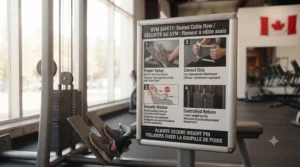
Getting a cable seated row machine for home gym use isn’t the finish line — the first 30 days determine whether it becomes a training staple or an expensive coat rack. Start with seat and foot-plate positioning before you touch a plate: sit down, grab the handle at full extension, and confirm your knees have a slight bend rather than being locked straight or overly compressed. Most machines in this guide offer at least a few adjustment positions, and dialing this in on day one prevents weeks of subtly wrong form.
For the first two weeks, resist the urge to load up. Cables need a short break-in period, and reviewers across nearly every product in this guide mention that stiffness in new cables softens noticeably after a handful of sessions. Use that window to groove the movement pattern: pull with your elbows, not your hands, and think about driving your shoulder blades together at the top of each rep rather than just pulling the handle to your torso.
Maintenance after that is refreshingly low-effort. Wipe down the guide rods monthly, apply a light silicone-based lubricant to visibly dry pulleys, and periodically check that anchor bolts on wall-mounted units like the Valor Fitness BD-62 haven’t loosened. The single most common first-30-days mistake, based on aggregated review sentiment across these products, is skipping the recommended floor or wall anchoring — a step several buyers admit they regretted after their machine shifted mid-set. It’s the same lesson longtime Canadian fitness columnists give when walking through how to build a home gym: plan for stability and clearance before you plan for variety.
Real-World Scenarios: Who Should Buy Which Machine
Picture a university student in a shared apartment near Waterloo, working with maybe six feet of unused wall space and a strict no-drilling clause in the lease. The Valor Fitness BD-62 fits that constraint almost perfectly, though the floor-anchoring recommendation means renters should have an honest conversation with their landlord first, or look for a version of the mount that doesn’t require permanent drilling.
Now picture a home gym owner in a Calgary garage who’s been training for three years and recently hit a plateau on seated rows using resistance bands. That’s the exact profile the XMark XM-7618 or Body-Solid GLM83 were built for — someone who needs real mechanical resistance, a stable frame under heavy load, and attachments that won’t feel flimsy after a year of consistent use.
Finally, consider a family in the Ottawa suburbs converting a basement into a shared training space for two adults with different strength levels. The Mikolo Falcon Functional Trainer‘s dual weight stack directly addresses that use case, letting one person load 40 lb while the other loads 90 lb on the opposite side, with zero setup time lost between users.
Problem → Solution: Common Seated Row Machine Issues
Problem: Shoulder shrugging instead of scapular retraction. This is the most common form breakdown on any seated row machine, and it usually traces back to seat height. Solution: adjust the seat so the handle sits roughly at chest height when your arms are fully extended, and consciously pull with your back before your arms engage.
Problem: The machine shifts or rocks during heavy pulls. Nearly every plate-loaded tower in this guide gets flagged for this at high loads. Solution: use the included floor-anchor holes if present, or add rubber anti-slip matting underneath as a low-cost interim fix.
Problem: Cables feel stiff or grabby when new. Solution: this typically resolves within the first two weeks of regular use; applying a light silicone lubricant to the pulley wheels can speed up the break-in.
Problem: Squeaking or grinding pulleys after a few months. Solution: this is almost always dry bushings. A drop of lubricant at each pulley pivot point, applied monthly, prevents most of this before it starts.
Problem: Limited range of motion for taller users. Solution: this is a structural limitation on several machines in this guide, not a defect — taller lifters (above roughly 6’4″) should prioritize the Mikolo Falcon Functional Trainer or another full-height functional trainer over a compact tower.
How to Choose a Seated Cable Row Machine
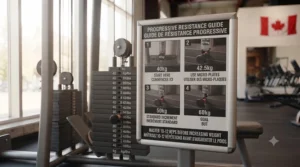
- Confirm your available footprint first. Measure both the machine’s footprint and the clearance needed in front of it for full leg extension — this single step eliminates more bad purchases than any spec comparison.
- Decide between plate-loaded and selectorized resistance. Plate-loaded machines like most in this guide are cheaper upfront but require you to own plates; selectorized stacks cost more but load instantly with a pin.
- Check the weight capacity against your realistic ceiling. A 400 lb-rated machine sounds like plenty, but remember pulley ratios can effectively double or halve the resistance you feel versus the plates loaded.
- Prioritize seat and foot plate adjustability. A machine with only one seat position will eventually stop fitting your body as your flexibility and strength change.
- Look for genuine anchoring hardware. Machines without floor or wall anchor points tend to shift under heavy horizontal pulling loads — a detail worth checking before you buy, not after.
- Read the warranty terms closely. Lifetime frame warranties are common; lifetime coverage on pulleys and bushings, like the Body-Solid GLM83 offers, is not, and it signals real manufacturer confidence.
- Weigh total cost of ownership, not sticker price. Factor in plates, attachments, and any anchoring hardware you’ll need to buy separately before comparing final numbers.
Rowing Handle Attachment: Which Grip Should You Use?
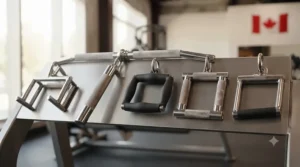
The rowing handle attachment that ships with your machine matters more than most buyers assume. A straight bar forces a fixed, pronated or neutral grip depending on orientation, which is great for consistency but limits variation. A V-handle or close-grip attachment, included with several machines in this guide, angles your wrists into a more natural position and tends to bias slightly more toward the lower lats and mid-back. Independent arm handles — a feature on the Mikolo Plate Loaded Seated Row Machine — let each side move through its own path, which is useful for correcting side-to-side strength imbalances but requires more core stability to control.
If your machine only ships with one bar, a rope attachment is usually the cheapest add-on and opens up face-pull variations that hit the rear deltoids and upper traps — muscles a straight-bar row alone won’t fully develop. Reviewers consistently note that swapping attachments periodically, rather than sticking with one grip indefinitely, helps prevent the plateau that comes from training the exact same movement pattern week after week.
Foot Plate Adjustment: Why It Matters More Than You Think
Foot plate adjustment gets treated as an afterthought in most buying guides, but it’s arguably as important as seat height. A foot plate positioned too close forces excessive knee bend and shortens your effective range of motion; positioned too far, it puts your lower back at a mechanical disadvantage during the pull. Machines with a diamond-textured, flip-up footplate — the Titan Fitness Plate-Loaded LAT Tower and XMark XM-7618 both feature this — give you a stable, non-slip brace point that stays fixed even as the resistance climbs.
What most buyers overlook about foot plate design specifically is the flip-up function itself: a plate that folds out of the way when not in use isn’t just a storage convenience, it also lets you use the low pulley station for standing exercises like upright rows without your feet catching on hardware. If your machine’s foot plate is fixed and non-adjustable, a cheap interim fix is a portable, non-slip anti-fatigue mat positioned at your natural foot spacing.
Back Thickness Training: Programming for Real Growth
Back thickness training — building the dense, three-dimensional mass across your mid-back rather than just width — is where a seated cable row machine genuinely earns its keep over free weights. Because the resistance stays constant through the entire range of motion, unlike a barbell row where gravity’s pull varies with bar position, cable rows keep tension on the target muscles from the initial stretch through the final squeeze.
A sensible programming approach for back thickness is 3-4 sets of 8-12 reps at a controlled tempo, prioritizing a full stretch at the bottom and a deliberate 1-2 second squeeze at the top rather than rushing through reps. Varying your rowing handle attachment across sessions — wide grip one day, close neutral grip the next — recruits slightly different fibers within the lats, rhomboids, and mid-traps. According to the Canadian Society for Exercise Physiology’s 24-Hour Movement Guidelines for adults, muscle-strengthening activities targeting major muscle groups should happen at least twice a week for meaningful health benefits, which lines up well with a two-session-per-week back-focused routine built around seated rows.
Seated Cable Row Machine vs Free-Weight Rows
The debate between cable rows and free-weight rows (barbell or dumbbell) isn’t about one being universally better — it’s about what each does well. A seated cable row machine locks your torso in a fixed position, removing lower-back stabilization demands and letting you isolate the pulling muscles more directly. That’s a real advantage for beginners learning proper scapular mechanics, or for anyone training around a lower-back issue.
Free-weight rows, by contrast, demand more total-body stabilization and arguably build more functional strength that transfers to real-world pulling and lifting tasks. The trade-off is technique risk — a barbell row done with poor form under heavy load is a common source of lower-back strain, something a fixed-seat cable machine largely eliminates. In practice, most well-rounded programs use both: cable rows for controlled hypertrophy work and free-weight rows for total-body strength development. If you’re choosing just one to start, a seated cable row machine’s built-in safety margin makes it the more forgiving entry point for home-gym beginners.
Common Mistakes When Buying a Seated Cable Row Machine
The single biggest mistake is buying based on price alone without checking weight capacity against realistic long-term goals — several reviewers across this guide mention “outgrowing” a budget machine within their first year of consistent training. A close second is skipping the measurement step: a machine that fits in a showroom photo can easily be too long for the actual clearance in a basement or garage once you account for full leg extension during rows.
Buyers also frequently underestimate the hidden cost of plate-loaded systems — the machine price rarely includes the weight plates themselves, which can add C$100-300 depending on how much resistance you eventually want. Finally, ignoring anchoring requirements is a recurring theme in negative reviews; a machine that “wobbles” or “shifts” almost always turns out to be one that wasn’t bolted down as the manufacturer recommended.
Long-Term Cost & Maintenance
Thinking in terms of cost-per-use changes the calculus considerably. A C$400 machine used three times a week for five years works out to well under C$2 per session — cheaper than a single drop-in gym class in most Canadian cities. Maintenance costs are minimal across every product in this guide: replacement cables, when eventually needed, typically run C$20-40, and pulley lubricant is a negligible ongoing expense.
Where total cost of ownership diverges most is warranty coverage. The Body-Solid GLM83‘s lifetime warranty on pulleys and bushings effectively insures you against the most common wear-and-tear repair, while budget towers with shorter warranty windows may require an out-of-pocket pulley replacement within a few years of heavy use. Factor this into your comparison — a C$300 price difference upfront can be offset entirely by five years of warranty-covered parts.
Safety and Setup Compliance for Canadian Home Gyms
Before loading any of these machines, confirm the floor underneath can handle both the equipment weight and the dynamic load of a heavy pull — concrete garage floors are ideal, while upper-floor condo installations may warrant a chat with a structural professional for genuinely heavy setups. If a machine requires wall anchoring, like the Valor Fitness BD-62, always anchor into a stud or use rated concrete anchors rather than drywall alone.
Health Canada doesn’t regulate home strength-training equipment the way it does consumer products with electrical or chemical risk, but general household safety principles still apply: keep the machine’s pull path clear of foot traffic, store loose plates securely rather than leaning them against walls, and involve a second person for initial heavy-plate loading if you’re working alone. According to Canada’s public health guidance on physical activity for adults, building a consistent, sustainable strength routine matters more than any single session’s intensity — a reminder worth keeping in mind as you set your loading progression on a new machine.
Frequently Asked Questions
❓ What muscles does a seated cable row machine work?
❓ Is a seated cable row machine better than a rowing machine (cardio rower)?
❓ How much weight should a beginner use on a seated cable row?
❓ Do I need to bolt a seated cable row machine to the floor?
❓ What's the difference between plate-loaded and selectorized seated row machines?
Conclusion
There’s no single “best” seated cable row machine — there’s only the best one for your space, budget, and training goals. If you’re working with a tight footprint and an even tighter budget, the Yes4All LAT Pull Down Machine and Cable Row Tower or Valor Fitness BD-62 get you training without a major investment. If you’ve outgrown entry-level equipment and want something that’ll still feel solid five years from now, the Body-Solid GLM83 or XMark XM-7618 justify their higher price with real durability and warranty backing. And if you want the closest thing to a commercial gym experience in your own basement, the Mikolo Falcon Functional Trainer delivers that, dual weight stack and all.
Whichever you choose, remember that the machine is only half the equation — consistent, well-programmed pulling volume twice a week is what actually builds the thicker, stronger back you’re after. Measure your space, be honest about your budget, check current pricing on Amazon.ca before you commit, and get pulling.
✨ Ready to build a stronger back? Check current prices on today’s top seated cable row machines and start your next home gym upgrade! 🚴♂️💪
Recommended for You
- Stack Loaded vs Plate Loaded Lat Pulldown: 7 Best Picks 2026
- Stack Loaded Lat Pulldown Machine: 7 Best Picks for Canada (2026)
- 7 Best Plate Loaded Lat Pulldown Machines in Canada (2026 Guide)
Disclaimer: This article contains affiliate links. As an Amazon Associate, I earn from qualifying purchases. If you purchase products through these links, we may earn a small commission at no additional cost to you.
✨ Found this helpful? Share it with your friends! 💬
