
In This Article
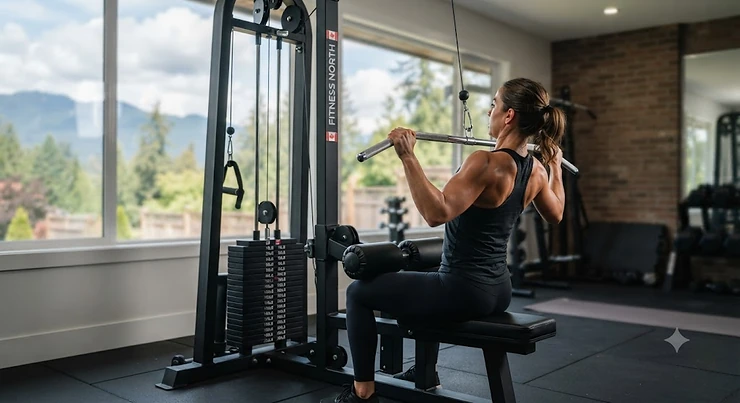
A stack loaded lat pulldown machine is a cable pulldown station that uses a pre-loaded, pin-selectable weight stack instead of loose plates, letting you change resistance in seconds by moving a single pin. If you’ve ever stood at a commercial gym’s pulldown station and thought, “why can’t my garage do this,” you’re not alone — it’s one of the most requested upgrades I hear about from home gym owners who are tired of loading and unloading Olympic plates between sets.
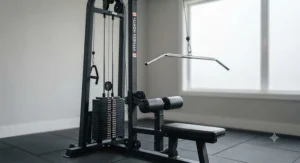
Here’s the thing nobody tells you up front: not every “lat machine” on Amazon.ca is actually stack loaded. A lot of them are plate-loaded towers wearing selectorized marketing language, and the difference matters a lot once you’re mid-workout and just want to drop from 120 lb to 90 lb without breaking your rhythm. This guide sticks strictly to genuine stack loaded lat pulldown machine options — the kind where a magnetic or spring pin slides into a pre-stacked column of plates — and walks through seven real products currently sold on Amazon.ca, spanning entry-level home gyms under C$700 to commercial-grade towers north of C$2,500.
We’ll cover how selectorized weight stack systems actually work, what separates smooth cable movement from the jerky, cable-fraying kind, and where a stack loaded lat pulldown machine wins — and loses — against a plate-loaded equivalent. According to Canada.ca’s physical activity guidance, Canadian adults are advised to include muscle-strengthening activity at least twice weekly, and a pulldown station is one of the more accessible ways to hit back, biceps, and shoulders in that recommendation without needing a spotter.
Quick Comparison Table
Before diving into the full write-ups, here’s how the seven machines stack up (pun intended) at a glance.
| Machine | Stack Weight | Cable Ratio | Best For | Price Range (CAD) |
|---|---|---|---|---|
| Marcy 150 lb. Stack Home Gym (MWM-988) | 150 lb | ~1:1 | Tightest budgets | C$550–C$700 |
| BalanceFrom Multi-Station Home Gym | 160 lb | ~1:1 | All-in-one beginners | Under C$600 |
| Body-Solid G3S Selectorized Multi-Station | 210 lb | 1:1 | Long-term durability | C$950–C$1,150 |
| Mikolo Multi-Function Stack Machine | 150 lb | ~1:1 | Circuit-style training | C$450–C$600 |
| Body-Solid GLM85B (stack-upgraded) | 210–310 lb | 1:1 | Commercial-grade feel | C$1,800–C$2,400 |
| Bells of Steel Lat Pulldown Low Row | 310 lb (upgrade) | 1:1 | Smoothest pulley feel | C$2,600–C$3,000 |
| REP Fitness Selectorized Lat Pulldown | 200–300 lb | 1:1 | Rack owners wanting modularity | C$900–C$1,100 |
Looking at the spread, the pattern is pretty clear: stack capacity and pulley refinement climb together with price, but not in a straight line. The BalanceFrom Multi-Station Home Gym and Mikolo Multi-Function Stack Machine deliver genuine selectorized convenience for less than a pair of decent dumbbells, while the Bells of Steel Lat Pulldown Low Row justifies its premium through aluminum pulleys and a 310 lb ceiling that only advanced lifters will ever approach. The REP Fitness Selectorized Lat Pulldown sits in an interesting middle spot — it’s not cheap, but it assumes you already own a compatible power rack, so the “price” only tells part of the story.
💬 Just one click — help others make better buying decisions too!😊
Top 7 Stack Loaded Lat Pulldown Machines: Expert Analysis
1. Marcy 150 lb. Stack Home Gym (MWM-988) — most affordable true weight-stack pick
The Marcy 150 lb. Stack Home Gym (MWM-988) earns its spot as the entry point into genuine selectorized training, and it does it without cutting the one corner that matters — the stack itself is real, vinyl-coated, and pin-locked, not a marketing label slapped on a cable machine. The frame is 14-gauge steel with a powder coat finish, and the 150 lb stack feeds a lat bar, dual-function press arms, a preacher curl pad, and a leg developer off one pulley system.
Practically speaking, a 150 lb ceiling with a roughly 1:1 pull ratio means most beginner and intermediate lifters will get real training value for a year or two before they outgrow it — that’s the honest trade-off with any budget stack. Based on the spec comparison against pricier options, what most buyers overlook here is the versatility angle: you’re not just buying a lat pulldown, you’re buying a compact circuit trainer that happens to include one.
Aggregated owner feedback across major retailers consistently flags two things: assembly instructions are picture-only and can be confusing in spots, and the machine feels noticeably sturdier once fully built than the box weight suggests. Reviewers also note the selectorized pin lock is a genuine safety feature, preventing kids or guests from yanking a stack they shouldn’t be loading.
Pros:
- ✅ Genuine 150 lb selectorized stack, not plate-loaded in disguise
- ✅ Five workout stations off one pulley system
- ✅ Compact footprint fits smaller basements and garages
Cons:
- ❌ Picture-only assembly instructions frustrate some owners
- ❌ 150 lb ceiling limits long-term progression for stronger lifters
At around C$550–C$700, the Marcy 150 lb. Stack Home Gym (MWM-988) is one of the strongest value plays in this whole roundup for anyone starting from zero equipment.
2. BalanceFrom Multi-Station Home Gym (160 lb Stack) — best all-in-one for tight budgets
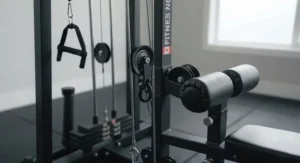
The BalanceFrom Multi-Station Home Gym pairs a 160 lb selectorized stack with a lat pull/low row bar setup and a four-roll leg developer, and it consistently shows up as one of the highest-rated budget stack machines on Amazon.ca. Its steel frame construction keeps the whole unit under 300 lb, which — combined with a floor mat included in the box — makes it one of the easier units to relocate if you’re renting or working with a shared basement space.
What most buyers overlook about a machine at this price is how much the pulley geometry, not just the stack size, determines whether it feels smooth or gritty under load. On paper this means a 160 lb cap sounds modest, but reviewers report the low row and lat pull bars deliver a pull that feels closer to 1:1 than some competitors in the same price bracket, which matters more for strength gains than raw stack size alone.
A common theme in aggregated review sentiment is praise for the floor mat and included hardware, paired with mixed feedback on the assembly manual’s clarity — a pattern that shows up across almost every budget stack machine, Marcy included.
Pros:
- ✅ 160 lb stack undercuts most competitors on capacity per dollar
- ✅ Included floor mat protects flooring during setup
- ✅ Low row and lat pull bars both included standard
Cons:
- ❌ Assembly manual clarity is inconsistent per owner reports
- ❌ Leg developer padding wears faster than the stack hardware
Priced under C$600, the BalanceFrom Multi-Station Home Gym is arguably the best stack lat pulldown under $800 for anyone who wants an all-in-one unit rather than a dedicated tower.
3. Body-Solid G3S Selectorized Multi-Station (210 lb Stack) — best build quality under mid-range
Body-Solid has been manufacturing commercial gym equipment for over three decades, and the Body-Solid G3S Selectorized Multi-Station is where that heritage starts to show. Its 210 lb selectorized stack is a meaningful step up from the sub-160 lb budget tier, and the brand’s reputation for precision-machined pulleys means the cable path stays consistent even after months of daily use.
Here’s what the spec sheet won’t tell you outright: a 210 lb stack on a 1:1 ratio machine gives most intermediate lifters two to three years of headroom before they max it out, which is a genuinely different proposition than the 150–160 lb budget units. Based on the spec comparison, the G3S also uses a heavier-gauge steel frame than entry-level competitors, which translates into less wobble during aggressive low-row pulls — something lighter frames struggle with once you’re pulling near stack capacity.
Reviewers consistently note the welds and powder coat finish hold up noticeably better than budget alternatives after a year of regular use, echoing the brand’s broader reputation among home gym buyers who’ve upgraded from cheaper units.
Pros:
- ✅ 210 lb stack gives real long-term progression room
- ✅ Commercial-grade frame construction and welds
- ✅ Multi-station design covers back, chest, arms, and legs
Cons:
- ❌ Meaningfully pricier than the sub-C$600 budget tier
- ❌ Larger footprint than compact single-purpose towers
Expect a Body-Solid G3S Selectorized Multi-Station to land in the C$950–C$1,150 range — a fair ask given the durability upgrade over entry-level stacks.
4. Mikolo Multi-Function Stack Machine — best value for circuit-style training
The Mikolo Multi-Function Stack Machine occupies a similar niche to the Marcy and BalanceFrom units but distinguishes itself with a slightly more refined pin-select resistance mechanism that owners describe as snapping in cleanly rather than requiring a wiggle to seat properly. It runs a comparable 150 lb stack across a lat pulldown, chest press, and leg extension station.
What stands out on the spec comparison is how Mikolo positions this specifically for circuit training rather than heavy progressive overload — the convenience of instant pin changes matters more when you’re moving between exercises every 30–45 seconds than when you’re grinding a single heavy set. Reviewers consistently frame this as the appeal: no plates to fumble mid-circuit, just pull the pin and go.
Aggregated feedback flags the trade-off plainly — buyers focused specifically on maximal strength find the 150 lb ceiling limiting fairly quickly, while buyers doing higher-rep, shorter-rest circuit work report the machine holds up well without complaint.
Pros:
- ✅ Smooth cable movement reported across pulley stations
- ✅ Fast pin changes suit circuit and superset training
- ✅ Compact enough for apartment-adjacent garages
Cons:
- ❌ 150 lb stack caps out quickly for serious strength training
- ❌ Fewer accessory attachments than Body-Solid competitors
At C$450–C$600, the Mikolo Multi-Function Stack Machine is a genuinely solid pick for anyone whose training style leans toward volume over max loads.
5. Body-Solid GLM85B with 210/310 lb Selectorized Stack Upgrade — best commercial-grade lat tower
The Body-Solid GLM85B with 210/310 lb Selectorized Stack Upgrade ships as a plate-loaded base unit but can be upgraded to a genuine 210 lb or 310 lb selectorized weight stack, which is exactly the modular approach that lets budget-conscious buyers spread the investment over time rather than paying everything upfront. Standing 82 inches tall, it clears standard residential ceilings while still giving taller lifters a full overhead stretch — a detail shorter towers often botch.
Based on the spec comparison against the rest of this list, the GLM85B’s dedicated pulldown/low-row geometry (rather than a multi-station hybrid) means the cable path is purpose-built for this one movement pattern, and it shows in how the pulleys track. Reviewers consistently describe the construction quality as immediately apparent — clean welds, even powder coat, and pulleys that operate with a precision you don’t usually find below the C$2,000 mark.
What most buyers overlook is that the adjustable leg hold-down and included lat/low-row bars are genuinely commercial-spec parts, not afterthought accessories — a common shortfall on cheaper towers.
Pros:
- ✅ Modular stack upgrade path (210 lb or 310 lb)
- ✅ 82-inch height fits residential ceilings comfortably
- ✅ Adjustable leg hold-down suits a wide range of body sizes
Cons:
- ❌ Selectorized stack upgrade is a separate purchase, not included
- ❌ Meaningfully more expensive than multi-station alternatives
Fully outfitted with the stack upgrade, expect the Body-Solid GLM85B with 210/310 lb Selectorized Stack Upgrade to run C$1,800–C$2,400 — a serious investment that reads as commercial-gym quality at home.
6. Bells of Steel Lat Pulldown Low Row (310 lb Stack Upgrade) — smoothest pulley feel on the list
If cable feel is the deciding factor for you, the Bells of Steel Lat Pulldown Low Row (310 lb Stack Upgrade) is the machine to beat in this roundup. Its aluminum pulley system — rather than the nylon pulleys common on budget and mid-range units — produces a cable path that reviewers consistently compare to genuine commercial cable stations: smooth, quiet, and free of the jerky start-stop feel nylon pulleys develop over time.
Here’s what the spec sheet doesn’t fully convey: aluminum pulleys resist grooving and wear far better than nylon under repeated cable friction, so the smooth cable movement you feel on day one is far more likely to still be there in year three. Based on the spec comparison, the frame also accepts Bells of Steel’s own rack attachment ecosystem — Y-Dip, Seal Row pad, landmine — which effectively turns a single-purpose lat tower into a multi-movement station without eating more floor space.
The trade-off is unavoidable and worth stating honestly: the base plate-loaded unit already sits at a premium price point, and the 310 lb selectorized stack upgrade pushes total cost well past most competitors on this list.
Pros:
- ✅ Aluminum pulleys deliver noticeably smoother cable movement
- ✅ Modular attachment ecosystem expands functionality over time
- ✅ 310 lb stack ceiling suits advanced lifters long-term
Cons:
- ❌ Highest total price on this list once stack-upgraded
- ❌ Large footprint requires dedicated floor space
With the stack upgrade included, budget C$2,600–C$3,000 for the Bells of Steel Lat Pulldown Low Row (310 lb Stack Upgrade) — a premium price for what reviewers agree is a premium pulley experience.
7. REP Fitness Selectorized Lat Pulldown & Low Row (200–300 lb Stack) — best rack-mounted stack system
The REP Fitness Selectorized Lat Pulldown & Low Row (200–300 lb Stack) takes a different approach entirely: instead of a standalone tower, it’s an attachment that bolts onto a compatible REP 4000 or 5000 series power rack, arriving with a 200 lb selectorized stack that can be upgraded to 300 lb with an add-on kit of hot-rolled steel plates. The pulley system runs a true 1:1 ratio, and the magnetic pin lets you move between 10 lb increments quickly.
What most buyers overlook here is the space math: if you already own a compatible rack, this attachment gives you a genuine selectorized weight stack lat pulldown review-worthy setup without adding a single extra square foot of dedicated floor space, which is a meaningfully different value proposition than a standalone tower. Based on the spec comparison, the 1:1 ratio and durable steel plates put it on par with far pricier standalone units in terms of raw pulling feel.
The obvious limitation, and one reviewers flag consistently, is that this isn’t a starting point — it’s an upgrade path that only makes sense if the rack compatibility box is already checked.
Pros:
- ✅ True 1:1 pull ratio with magnetic 10 lb pin increments
- ✅ Zero additional footprint if you already own a compatible rack
- ✅ Upgrade path from 200 lb to 300 lb stack available
Cons:
- ❌ Requires a compatible REP 4000/5000 series rack, sold separately
- ❌ Not a standalone solution for rack-less home gyms
Expect the attachment alone to run C$900–C$1,100, making the REP Fitness Selectorized Lat Pulldown & Low Row (200–300 lb Stack) a smart mid-life upgrade rather than a first purchase.
How Selectorized Weight Stack Systems Work
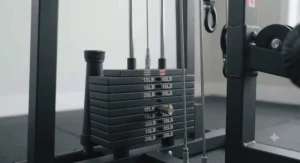
A selectorized weight stack is a column of individually cut steel or iron plates, each drilled with a hole, stacked on two vertical guide rods so every plate can slide independently. This is the mechanism behind nearly every pulldown movement targeting the latissimus dorsi, the broad back muscle these machines are built around. A cable runs from the pulldown handle, over one or more pulleys, and connects to the top plate. Pin-select resistance works exactly the way it sounds: a metal pin — often spring-loaded or magnetic — slides horizontally through the guide rods and into the stack at whatever weight you want, physically locking every plate above and including that point to the top plate.
What most buyers overlook is that the pull ratio, not just the stack number, determines what you actually feel. On a 1:1 machine, selecting 100 lb means you’re moving 100 lb of resistance through the cable. On a 2:1 system, the same 100 lb selection only feels like 50 lb, because the moving pulley splits the load across two cable runs — useful for lighter trainees, less useful if you’re trying to progressively overload toward heavier numbers. Nearly every machine in this guide runs 1:1, which is generally the better choice for genuine strength training rather than high-rep endurance work.
Pros:
- ✅ Instant resistance changes with no plate handling
- ✅ Consistent, repeatable loading for progressive overload tracking
- ✅ Pin lock adds a real safety barrier against unauthorized use
Cons:
- ❌ Capped at the stack’s maximum — no adding extra plates easily on most units
- ❌ Heavier, harder to relocate than a comparable plate-loaded tower
Features That Actually Matter (And Those That Don’t)
Marketing copy on lat pulldown listings loves to bury the two or three specs that actually predict how a machine performs three years in. Smooth cable movement is the single biggest one — it comes down to pulley material (aluminum outlasts nylon), pulley diameter (bigger pulleys mean less cable stress per rotation), and cable core quality (aircraft-grade steel cores resist fraying far longer than budget alternatives).
Weight capacity headline numbers matter less than most buyers assume, because very few home users ever approach a 300+ lb pulldown. What actually predicts long-term satisfaction is frame gauge (thicker steel resists flex under load), seat and thigh-pad adjustability (a poor fit ruins form regardless of stack size), and — for anyone taller than average — overall tower height, since a short tower cuts off the top of your range of motion.
Features that get marketed hard but rarely matter in practice: exercise-count claims (“40+ exercises!”) that mostly recycle the same three cable angles, and cosmetic upholstery colours. Reviewers consistently note that fit and pulley smoothness predict satisfaction far better than any spec sheet bullet point.
✨ Ready to compare specs side-by-side on your own shortlist? Check current pricing and availability on any machine above before you commit.
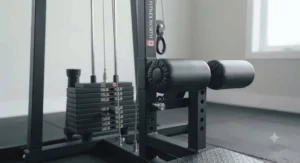
Stack Loaded vs Plate-Loaded Lat Pulldown Machines
The core trade-off is convenience versus cost and ceiling. A stack loaded lat pulldown machine changes resistance in under two seconds via a pin, which matters enormously for drop sets, circuit training, or households where multiple people share the same machine at different strength levels. A plate-loaded lat tower, by contrast, uses standard Olympic plates you likely already own from a barbell setup, meaning your effective resistance ceiling is limited only by how many plates you’re willing to buy — often 400 lb or more on sturdier frames.
On paper this means plate-loaded machines win on raw upper-end capacity and often cost less upfront, since you’re not paying for pre-cut, precision-drilled stack plates and the guide-rod hardware that holds them. What the spec sheet won’t tell you is that changing plates between sets takes real time and effort — reviewers who’ve owned both consistently describe the stack’s speed advantage as the deciding factor once the novelty of a new home gym wears off.
The honest verdict: if you’re building a home gym from scratch and already own barbell plates, a plate-loaded tower is the cheaper starting point. If convenience and fast transitions matter more than squeezing out maximum resistance, a stack loaded lat pulldown machine is worth the premium.
How to Choose a Stack Loaded Lat Pulldown Machine
- Match stack capacity to your two-year strength trajectory, not just where you are today — a 150 lb stack that feels generous now may cap your progress by next winter.
- Confirm the pull ratio is 1:1 unless you specifically want a lighter-feeling 2:1 system for rehab or high-rep work.
- Check pulley material — aluminum resists wear and delivers smoother cable movement than nylon over years of use.
- Measure your ceiling height before buying a tall standalone tower; most units need 7.5–8 feet of clearance.
- Decide between standalone and rack-mounted based on whether you already own a compatible power rack.
- Read the fine print on frame gauge and warranty length, since these two numbers correlate strongly with long-term durability.
- Budget for assembly time — most stack machines take one to three hours and ship in multiple boxes.
Best Stack Lat Pulldown Under $800: Budget Breakdown
If your ceiling is a firm C$800, three machines in this guide realistically qualify: the Marcy 150 lb. Stack Home Gym (MWM-988), the BalanceFrom Multi-Station Home Gym, and the Mikolo Multi-Function Stack Machine. All three deliver a genuine selectorized weight stack rather than a plate-loaded machine dressed up in selectorized marketing language, which is the trap to watch for at this price tier.
Among the three, the trade-offs come down to stack size versus refinement. The BalanceFrom Multi-Station Home Gym edges out on raw capacity at 160 lb, the Marcy 150 lb. Stack Home Gym (MWM-988) offers the broadest station variety for circuit-style full-body work, and the Mikolo Multi-Function Stack Machine reportedly delivers the smoothest pin-select resistance feel of the three despite a comparable price point. None of these will satisfy an advanced lifter chasing heavy back volume, but for anyone starting a home back-training routine, they represent genuine value rather than a compromise.
Practical Usage Guide: Setup, First 30 Days & Maintenance
Most stack machines ship in two to three separate boxes and take one to three hours to assemble solo — budget extra time if the manual is picture-only, which is common across this category. Once built, torque-check every bolt after your first three or four sessions; vibration during early use tends to loosen hardware that felt tight on assembly day.
In your first 30 days, resist the urge to max out the stack pin immediately. A common mistake is loading close to the stack ceiling before the cable and pulleys have “broken in,” which can accelerate wear on nylon pulleys specifically. Wipe down guide rods monthly with a light machine oil to keep pin insertion smooth, and inspect the cable for fraying every few weeks — catching a fraying cable early is far cheaper than a snapped cable mid-set.
Optimization tricks the listing won’t mention: adjusting the seat height so your arms reach full extension at the top of the pull prevents shoulder strain, and setting the thigh pad snug (not loose) keeps you anchored during heavier pulls without restricting circulation.
Real-World Scenarios: Who Should Buy Which Machine
The apartment-dwelling beginner with a spare bedroom corner and a C$600 ceiling is best served by the Mikolo Multi-Function Stack Machine or BalanceFrom Multi-Station Home Gym — compact, genuinely selectorized, and forgiving of infrequent, lighter-volume training.
The intermediate lifter converting a garage bay with 8-foot ceilings and a two-year strength horizon fits the Body-Solid G3S Selectorized Multi-Station well — its 210 lb stack and commercial-grade frame give real progression room without the premium-tower price tag.
The advanced lifter who already owns a power rack and wants zero additional floor space should look hard at the REP Fitness Selectorized Lat Pulldown & Low Row (200–300 lb Stack) — it slots directly onto existing rack real estate rather than demanding a new footprint.
The serious home gym builder with a dedicated space and a bigger budget — someone training four or five days a week long-term — is the target buyer for the Bells of Steel Lat Pulldown Low Row (310 lb Stack Upgrade) or Body-Solid GLM85B with 210/310 lb Selectorized Stack Upgrade, where the extra cost buys years of headroom and noticeably smoother pulleys.
Problem → Solution: Common Stack Lat Pulldown Issues
Problem: The pin won’t seat smoothly into the stack. This is usually dried-out guide rods — a light machine oil applied monthly, as covered in the usage guide above, typically resolves it within a few sessions.
Problem: The cable feels jerky or catches mid-pull. Nylon pulleys develop grooves over time from repeated friction; if you’re shopping fresh, prioritizing aluminum-pulley machines like the Bells of Steel Lat Pulldown Low Row (310 lb Stack Upgrade) avoids this entirely.
Problem: You’ve maxed out the stack and progress has stalled. This is the single biggest long-term limitation of any stack loaded lat pulldown machine — at that point, either add resistance bands looped through the cable attachment as a stopgap, or plan an upgrade to a higher-capacity unit like the Body-Solid GLM85B with 210/310 lb Selectorized Stack Upgrade.
Problem: The seat or thigh pad doesn’t fit taller or shorter users comfortably. Confirm adjustability range before buying — the Body-Solid GLM85B with 210/310 lb Selectorized Stack Upgrade in particular is noted for accommodating a wide range of body sizes.
Problem: Assembly instructions are confusing. Search the model number plus “assembly video” before starting — most manufacturers, Marcy included, have unofficial owner walkthroughs online that fill gaps the printed manual leaves out.
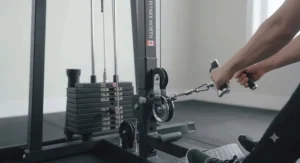
Long-Term Cost & Maintenance
Total cost of ownership on a stack loaded lat pulldown machine extends beyond the sticker price. Budget machines under C$700 typically need pulley or cable replacement parts within three to five years of regular use, running roughly C$40–C$80 per part depending on the manufacturer. Premium aluminum-pulley machines like the Bells of Steel Lat Pulldown Low Row (310 lb Stack Upgrade) trade a higher upfront cost for meaningfully longer intervals between part replacements — often the deciding factor for buyers training five-plus years on the same unit.
Consistent use is what makes the math work at all — Canadian muscle-strengthening guidelines recommend at least two sessions weekly, and a machine sitting three feet from your couch removes the biggest excuse for skipping them. Cost-per-use math favours stack machines over gym memberships surprisingly quickly. At a typical Canadian gym membership cost, a C$700 home stack machine used three times weekly pays for itself within roughly five to six months, with the machine itself retaining meaningful resale value afterward — unlike sunk membership fees. Factor in a light annual maintenance budget of C$20–C$50 for oil, replacement pins, or minor hardware, and the long-run economics clearly favour ownership for anyone training consistently for more than a year.
Safety, Certification & Regulations for Canadian Buyers
Home gym equipment sold in Canada isn’t subject to the same mandatory third-party certification regime as, say, electrical appliances, but reputable manufacturers still test frame welds and weight-bearing components against recognized engineering standards before listing on Amazon.ca. Look for stated maximum user weight ratings — and note whether that figure is user weight alone or combined user-plus-load, since some listings blend the two in a way that can overstate real capacity.
Beyond the equipment itself, positioning your stack loaded lat pulldown machine matters for household safety: keep the stack’s rear clearance path free of foot traffic, since a released pin allows plates to drop suddenly. According to Statistics Canada’s Canadian Health Measures Survey, roughly half of Canadian adults were meeting national physical activity targets as of the most recent measurement period — a reminder that consistent, safely-set-up equipment tends to get used far more than gear that’s crammed into an awkward, hazard-prone corner.
If you’re training with any pre-existing joint or cardiovascular condition, it’s worth consulting a health professional before starting a new resistance program, regardless of which machine you choose.

FAQ
❓ Is a stack loaded lat pulldown machine better than a plate-loaded one?
❓ What's a good weight stack size for a home gym lat pulldown?
❓ How much ceiling height does a stack lat pulldown machine need?
❓ Can a selectorized weight stack lat pulldown machine be used for other exercises?
❓ Are rack-mounted stack lat pulldown attachments worth it over a standalone tower?
Conclusion
A genuine stack loaded lat pulldown machine earns its place in a home gym by removing the single biggest friction point in cable training — swapping plates mid-session. Across the seven machines in this guide, the honest takeaway is that budget and mid-range stack machines like the Marcy 150 lb. Stack Home Gym (MWM-988), BalanceFrom Multi-Station Home Gym, and Mikolo Multi-Function Stack Machine deliver real selectorized convenience for under C$700, while the Body-Solid G3S Selectorized Multi-Station bridges into commercial-grade durability without commercial-grade pricing.
At the premium end, the Body-Solid GLM85B with 210/310 lb Selectorized Stack Upgrade and Bells of Steel Lat Pulldown Low Row (310 lb Stack Upgrade) justify their cost through pulley refinement and long-term stack headroom, while the REP Fitness Selectorized Lat Pulldown & Low Row (200–300 lb Stack) rewards anyone who already owns a compatible rack with a space-efficient upgrade path. Whichever tier fits your budget, prioritize pull ratio, pulley material, and stack capacity relative to your actual two-year training trajectory over flashy exercise-count marketing claims — those three specs predict satisfaction far better than anything else on the listing page.
✨ Don’t Miss These Exclusive Deals!
🔍 Take your back training to the next level with the machines above. Click on any highlighted product to check current pricing and availability on Amazon.ca before stock or pricing changes.
Recommended for You
- 7 Best Plate Loaded Lat Pulldown Machines in Canada (2026 Guide)
- Seated Lat Pulldown Machine: 7 Best Picks for Canada (2026)
- Compact Cable Crossover vs Full Size Cable Crossover: 7 Picks (2026)
Disclaimer: This article contains affiliate links. As an Amazon Associate, I earn from qualifying purchases. If you purchase products through these links, we may earn a small commission at no additional cost to you.
✨ Found this helpful? Share it with your friends! 💬🤗
