
In This Article
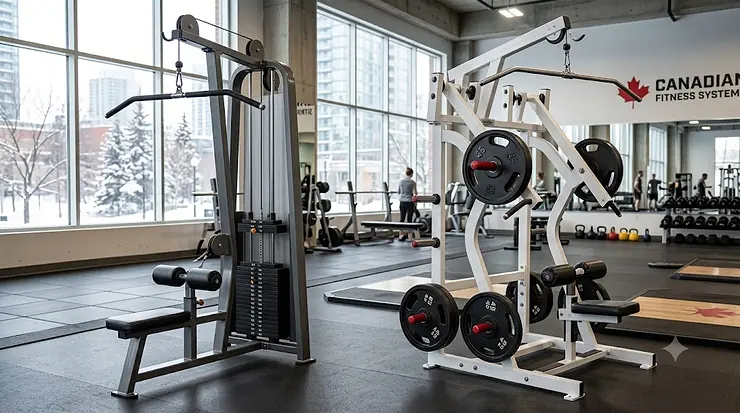
Walk into any commercial gym and you’ll find a lat pulldown tower parked in the same spot it’s occupied for thirty years, usually with a line of people waiting their turn. Building your own version at home means answering one question before you spend a single dollar: stack loaded vs plate loaded lat pulldown — which one actually earns its floor space? A stack loaded lat pulldown uses a selectorized weight stack you adjust with a pin, while a plate loaded lat pulldown relies on the Olympic or standard plates you already own (or don’t). Neither is objectively “better” — they’re built for different budgets, different training styles, and different patience levels for changing weight mid-set. This guide breaks down seven real machines sold in Canada, compares how they actually behave under load, and walks through the specific scenarios — beginner, budget hunter, small apartment, serious lifter — where one loading style clearly beats the other. Canada’s own physical activity guidelines recommend muscle-strengthening activities using major muscle groups at least twice a week, and a lat pulldown machine happens to be one of the more joint-friendly ways to hit that target consistently, so getting the hardware decision right matters more than most buyers assume.
Quick Comparison Table
| Machine | Loading Style | Capacity | Best For | Price Range (CAD) |
|---|---|---|---|---|
| Titan Fitness Plate-Loaded LAT Tower | Plate | 181 kg (400 lb) | Best value pick | C$400–C$480 |
| Valor Fitness CB-12 | Plate | 113–136 kg (250–300 lb) | Budget with adjustable seat | C$380–C$450 |
| XMark XM-7618 | Plate | 181 kg (400 lb) | Heavy-duty durability | C$650–C$800 |
| Mikolo Lat Pulldown Machine | Plate | 204 kg (450 lb) | Small spaces | C$280–C$350 |
| XMark Single Stack Functional Trainer | Stack | 100 kg (220 lb) | Beginners wanting a stack | C$1,600–C$2,000 |
| Bells of Steel Lat Pulldown / Low Row Machine | Stack (or plate) | 141 kg (310 lb) | Selectorized all-rounder | C$1,350–C$1,650 |
| REP Fitness Ares | Dual stack | 118–141 kg per stack (260–310 lb) | Premium versatility | C$1,900–C$2,400 |
Looking at the spread above, the gap between the cheapest plate loaded option and the priciest stack loaded one is roughly four to five times the cost, and that gap is really a tax on convenience rather than on performance. Budget-focused lifters cluster around the plate loaded machines because those dollars stretch further per pound of resistance, while anyone who trains with a partner, does drop sets, or simply hates fumbling with plates tends to gravitate toward a stack, capacity for capacity, regardless of the premium. Notice, too, that the Bells of Steel Lat Pulldown / Low Row Machine is the rare case where you can start plate loaded and upgrade to a stack later without replacing the whole frame — a detail that changes the calculus for anyone unsure which camp they belong to.
💬 Just one click — help others make better buying decisions too!😊
Top 7 Stack Loaded and Plate Loaded Lat Pulldown Machines: Expert Analysis
1. Titan Fitness Plate-Loaded LAT Tower — best value plate loaded pick
The Titan Fitness Plate-Loaded LAT Tower earns its “best value” label by refusing to cut corners where it counts, even at a genuinely low entry price. It offers a 400-pound weight capacity and a 13-inch loadable sleeve that accommodates Olympic plates, which in practice means most intermediate lifters won’t outgrow it for years. The four adjustable thigh pad positions matter more than they sound — a loose thigh pad is the number one reason people float off the seat mid-rep on cheap towers, and Titan avoided that trap. Based on the spec sheet, this is the machine for someone who already owns plates, wants both lat pulldown and low row in one footprint, and isn’t ready to spend stack-machine money. Reviewers consistently note the powder-coated steel construction holds up well once bolted down, though a few mention the base can feel less planted on carpet without anchoring. What most buyers overlook here is that bolting it to the floor isn’t optional cosmetic advice — it’s the difference between a stable pulling station and one that walks across the garage during a heavy set.
Pros:
- ✅ 181 kg (400 lb) capacity outlasts most home-gym progression curves
- ✅ Four thigh pad positions fit a wide range of body heights
- ✅ Genuinely low entry price for a dual lat/row station
Cons:
- ❌ Requires bolting down for full stability under heavy load
- ❌ No weight stack means you supply your own plates
Priced around C$400–C$480 at the time of research, the Titan Fitness Plate-Loaded LAT Tower delivers the best cost-per-pound of any machine on this list, and it’s the value benchmark every other plate loaded option gets measured against.
2. Valor Fitness CB-12 — best budget pick with an adjustable seat
The Valor Fitness CB-12 stands out in the sub-C$500 bracket for one reason most competitors skip: a seat that actually adjusts. It runs on 2-inch by 12-gauge steel construction with a 60-inch cable pulley rated for up to 200 lbs at max weight, though later spec sheets bump that to 250–300 lbs depending on the production run, so double-check the current listing. Here’s what to weigh: the seat post moves through four positions across a 5-inch range, which sounds minor until you’re 6’0″ and stuck with a fixed leg roller on a competitor’s machine that only fits 5’8″ lifters comfortably. Reviewers consistently report smooth assembly and solid build quality for the price, with a few noting the plate storage pegs at the rear double as extra ballast, adding stability without costing you a cent. On paper this means the CB-12 rewards anyone who already has a home plate collection sitting idle.
Pros:
- ✅ Adjustable seat fits users up to roughly 6’2″
- ✅ Rear storage pegs double as stability weight
- ✅ Includes ab harness and low-row T-bar out of the box
Cons:
- ❌ Lower weight ceiling than the XMark XM-7618
- ❌ Backrest itself is non-adjustable
Expect the Valor Fitness CB-12 to land in the C$380–C$450 range, making it a strong beginner’s plate loaded option when paired with a modest set of plates you likely already own.
3. XMark XM-7618 — best heavy-duty plate loaded machine
If durability under repeated abuse is the priority, the XMark XM-7618 is built from noticeably thicker material than most of its plate loaded rivals. Its frame uses 11-gauge, 2-inch by 3-inch steel tubing, and it’s rated for loads up to 400 lbs with a 14-inch weight carriage arm — a heavier gauge than the Titan tower and a wider carriage than the CB-12. What that means in practice is less frame flex when you’re grinding out a heavy set, which matters if you’re the kind of lifter who occasionally loads more plates than good judgment recommends. The nylon-coated aircraft-quality cables and flip-up footplate for the low row bar round out a package that feels closer to commercial equipment than most home units in this price bracket. Reviewers consistently describe the assembly as straightforward and the pulley action as smooth from day one, and more than one buyer specifically flagged the flip-up footplate as an underrated feature competitors leave out.
Pros:
- ✅ 11-gauge steel frame resists flex under heavy loads
- ✅ Flip-up footplate improves bracing for low rows
- ✅ Includes Olympic sleeve adapters at no extra cost
Cons:
- ❌ No weight plates included — budget separately
- ❌ Fixed, non-adjustable seat height
At roughly C$650–C$800, the XMark XM-7618 costs more than the Titan or Valor options, but the added steel gauge is a legitimate reason to pay the premium if you’re training heavy and often.
4. Mikolo Lat Pulldown Machine — best for small spaces and apartments
Space is the real currency in most Canadian condos and townhouses, and the Mikolo Lat Pulldown Machine was clearly designed around that constraint. It weighs just 71 lbs and occupies only about 10 square feet, yet still manages a 2mm steel tubing frame supporting up to 450 lbs — a surprisingly high capacity-to-footprint ratio. The padded seat offers three height adjustments, which is fewer than the Valor’s four but still enough to fit most adult heights reasonably well. Based on the spec comparison, this is the machine for someone prioritizing floor space above all else — a spare bedroom gym, a basement corner, or a garage shared with a car. The lighter frame is a trade-off worth naming honestly: less mass generally means the unit benefits more from anchoring than heavier competitors like the XMark, especially once you’re loading anywhere near its rated ceiling.
Pros:
- ✅ Compact ~10 sq ft footprint fits tight spaces
- ✅ High 204 kg (450 lb) capacity relative to its size
- ✅ Lightweight at 32 kg (71 lb) for easy repositioning
Cons:
- ❌ Lighter frame benefits more from floor anchoring
- ❌ Fewer seat height positions than rivals like the Valor CB-12
Around C$280–C$350 in most listings, the Mikolo Lat Pulldown Machine is the pick for anyone whose square footage, not their budget, is the real limiting factor.
5. XMark Single Stack Functional Trainer — best stack loaded pick for beginners
Selectorized machines usually skew expensive, but the XMark Single Stack Functional Trainer is one of the more approachable stack options for someone new to cable training. It uses a 220-pound weight stack in 10-pound increments, paired with aluminum pulleys operating at a 1:1 ratio for the lat pulldown and a 2:1 ratio for the low row. That 1:1 ratio on the lat pull matters for beginners specifically: what you select on the pin is what you feel, with no mental math required to figure out your actual working load — a genuinely simpler learning curve than plate math or ratio guessing on some functional trainers. The 3-inch by 3-inch, 11-gauge steel frame assembled with 1-inch bolts gives it commercial-grade rigidity, and the pin-select system means a total beginner can go from warm-up weight to working weight in about two seconds, no wrenches involved. Verified customer review data specific to this configuration is limited at the time of research, so treat the spec sheet — not invented testimonials — as your primary source here; the build quality claims are well documented by the manufacturer’s construction specs even where third-party review volume is thin.
Pros:
- ✅ True 1:1 ratio removes guesswork for new lifters
- ✅ Pin-select changes take seconds, ideal for supersets
- ✅ Commercial-grade 11-gauge steel frame
Cons:
- ❌ Requires roughly a 9-foot ceiling for full clearance
- ❌ Limited independent review volume at time of research
Budget C$1,600–C$2,000 for the XMark Single Stack Functional Trainer — a real jump from the plate loaded options, but one that buys a genuinely beginner-friendly stack experience.
6. Bells of Steel Lat Pulldown / Low Row Machine — best selectorized all-rounder
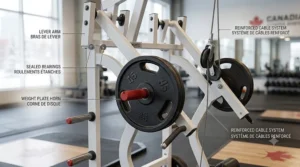
Among selectorized machines built specifically for home use, the Bells of Steel Lat Pulldown / Low Row Machine consistently comes up as a top pick in independent buying guides, and the spec sheet explains why. It ships with a 310 lb pin-loaded weight stack, aluminum pulleys, aircraft cable, and sealed bearings, and unusually, Bells of Steel sells both a stack version and a plate-loaded-to-stack upgrade kit, meaning you can start cheaper and convert later instead of replacing the whole unit. One independent review noted this model has the best blend of performance and value among the machines tested, highlighting the larger stack, fast adjustments, and smooth aluminum pulleys. Aggregated customer sentiment on the brand’s own site consistently praises assembly ease and weld quality, with at least one buyer specifically noting they appreciated being able to upgrade from plates to a stack down the line rather than being locked into their initial choice. What reviewers don’t always mention up front: Bells of Steel explicitly recommends bolting the unit down, which is a stability admission worth taking seriously rather than skipping.
Pros:
- ✅ 141 kg (310 lb) stack in smooth 10 lb increments
- ✅ Upgrade path from plate loaded to stack without a new frame
- ✅ Lifetime warranty and free shipping included
Cons:
- ❌ Premium price relative to plate loaded alternatives
- ❌ Manufacturer recommends floor-bolting for full stability
Expect to pay roughly C$1,350–C$1,650 for the Bells of Steel Lat Pulldown / Low Row Machine, which puts it squarely in premium territory but with a flexibility no other stack machine on this list matches.
7. REP Fitness Ares — best premium rack-attached option
The REP Fitness Ares takes a different approach entirely: instead of a standalone tower, it’s a rack-attached system that turns your existing power rack into a full lat pulldown, low row, and functional trainer. It offers a choice of dual 260 lb or 310 lb weight stacks in 10 lb increments, with a 2:1 pulley ratio, which sounds like less resistance per pin setting than a 1:1 machine until you realize both stacks engage simultaneously during pulldowns and rows, delivering an equivalent working load to single-stack 1:1 competitors. What most buyers overlook about this model is the versatility beyond pure lat work — the same hardware handles pec flies, Pallof presses, and a long list of cable accessory movements, effectively replacing several single-purpose machines. The catch, and it’s a real one: it requires owning a compatible REP power rack, so this isn’t a fit if you’re starting from zero or already committed to a different rack brand. One long-term owner’s account describes owning the unit since its 2022 release and calling it one of the most versatile pieces available for a home gym, which lines up with the spec sheet’s emphasis on multi-exercise capability over single-purpose simplicity.
Pros:
- ✅ Functions as lat pulldown, low row, and functional trainer in one
- ✅ Dual stacks deliver true heavy-load capacity
- ✅ Over 30 aluminum pulleys with 180-degree swivel fronts
Cons:
- ❌ Only compatible with specific REP power racks
- ❌ Highest total investment on this list once rack cost is included
At around C$1,900–C$2,400 before rack costs, the REP Fitness Ares is the premium choice for lifters who already own the matching rack and want maximum versatility per square foot.
How to Choose Between Stack Loaded and Plate Loaded Lat Pulldown Machines
Deciding between loading styles gets much easier once you run through the same checklist a knowledgeable buyer would use in a showroom. Here’s the short version, worked through step by step:
- Count your existing plates. If you already own 45–90 kg (100–200 lb) of Olympic plates, a plate loaded machine like the XMark XM-7618 effectively costs less than its sticker price, since you’re not buying resistance twice.
- Estimate your rest-period patience. Supersets and drop sets punish plate loaded machines badly; a stack like the Bells of Steel Lat Pulldown / Low Row Machine changes load in under two seconds.
- Check your ceiling height. Stack machines like the XMark Single Stack Functional Trainer often need 2.7 metres (9 feet) of clearance; plate towers are typically shorter.
- Weigh household sharing. Multiple users at different strength levels favour a stack — pin changes are faster and less error-prone than re-loading plates every set.
- Set a real ceiling budget. Plate loaded options top out around C$800; stack machines routinely start near C$1,300 and climb from there.
- Confirm floor anchoring is possible. Nearly every machine on this list performs best bolted down; renters should check lease terms before committing to a premium stack unit.
Working through these six criteria in order — rather than starting with price alone — tends to produce a more honest answer than shopping by budget first and rationalizing the loading style afterward.
Weight Stack Increment Size: Why 10-Pound Jumps Matter
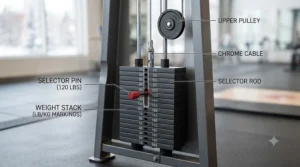
Every selectorized machine on this list — the XMark Single Stack Functional Trainer, the Bells of Steel Lat Pulldown / Low Row Machine, and the REP Fitness Ares — uses 10-pound (roughly 4.5 kg) increments, and that number isn’t arbitrary. For most intermediate lifters, a 10-pound jump on a lat pulldown represents somewhere between a 5 and 10 percent increase depending on your current working weight, which lines up reasonably well with the kind of gradual progressive overload most training programs recommend. The spec sheet won’t tell you this, but reviewers across multiple machines note that finer 5-pound increments — sometimes achieved with add-on magnetic plates — matter most for smaller or newer lifters whose next “clean” jump might otherwise feel too large to complete for a full set. Plate loaded machines sidestep this entirely, since standard plates come in 1.25, 2.5, 5, and 10 kg increments (or 2.5–45 lb in imperial sets), giving finer control at the cost of speed. If you’re someone who stalls easily on 10-pound jumps, budgeting for a small set of fractional plates to supplement a stack machine is a cheap fix reviewers rarely mention but frequently wish they’d bought sooner.
Quick Weight Change: Pin-Loading vs Plate-Loading Speed
The practical difference between pin-loading and plate-loading shows up most clearly mid-workout, not on a spec sheet. On a stack machine, dropping from a heavy working set to a lighter burnout set is a one-second pin move — no bending, no plate math, no risk of dropping a 20 kg plate on your foot between sets. On a plate loaded tower like the Titan Fitness Plate-Loaded LAT Tower or Valor Fitness CB-12, the same transition means physically removing and re-racking plates, which realistically adds anywhere from 20 to 45 seconds depending on how much weight you’re shedding. That gap compounds fast across a superset-heavy session: five exercises with three weight changes each is roughly 10–15 extra minutes of pure downtime on a plate loaded machine compared to a stack. Here’s what to weigh: if your programming leans heavily on drop sets or rest-pause training, that lost time is a legitimate performance cost, not just an inconvenience — and it’s often the single biggest reason serious lifters eventually upgrade from a plate tower to a selectorized unit even when the plate machine still functions perfectly well.
Lat Machine Stability: What Keeps a Pulldown Tower Planted
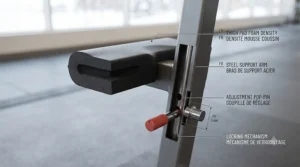
Stability is where loading style genuinely changes the physics of the machine, and it’s worth understanding why. On a plate loaded tower, the weight carriage sits high on the frame near the top pulley, which shifts the centre of mass upward and backward — fine for lat pulls, but it can make low-row stations feel less planted under heavy load, since the load isn’t centred over the base. Stack machines flip this: the weight stack usually sits low and close to the middle of the frame, which keeps the centre of gravity closer to the floor regardless of which exercise station you’re using. That’s part of why models with centrally mounted stacks tend to feel steadier during heavy low rows, even at similar total weight capacities to plate towers. None of this means plate loaded machines are unsafe — the XMark XM-7618‘s 11-gauge frame and the Titan Fitness Plate-Loaded LAT Tower‘s powder-coated steel are both solid — but it does explain why nearly every manufacturer on this list, stack or plate, explicitly recommends bolting their unit to the floor rather than treating that step as optional. Skipping the anchor bolts is the single most common corner buyers cut, and it’s the one most likely to matter during a genuinely heavy set.
Selectorized Lat Pulldown Machines: What the Reviews Actually Show
Selectorized — meaning pin-and-stack — lat pulldown machines get consistently strong marks in independent buying guides for one recurring reason: predictability. Reviewers repeatedly single out smooth pulley action, precise 10-pound increments, and minimal maintenance as the recurring strengths across brands, and the Bells of Steel Lat Pulldown / Low Row Machine in particular was flagged in one guide as having the best blend of performance, weight capacity, and value among the models tested. The recurring criticism across selectorized units isn’t build quality — it’s price and ceiling clearance, since most stacks need close to 2.4–2.7 metres (8–9 feet) of vertical space to function properly. Aggregated sentiment also flags one legitimate durability concern worth knowing before you buy: stack cables see more total cycles over their lifespan than plate loaded cables, simply because pin changes happen so much more often, so budgeting for an eventual cable replacement — typically a low-cost part — is realistic long-term maintenance planning rather than a sign of poor engineering.
Stack Lat Pulldown for Beginners: Is Selectorized the Easier Start?
For someone brand new to structured back training, a stack lat pulldown genuinely lowers the learning curve compared to a plate loaded machine, and it’s not just marketing talk. There’s no plate math to calculate, no risk of unevenly loading one side of the carriage, and the pin system makes it physically obvious how much weight you’re about to pull — reducing the odds of a beginner grabbing an ambitious first set and getting stuck at the bottom of the movement. The XMark Single Stack Functional Trainer‘s true 1:1 ratio reinforces this further, since what’s selected on the pin is exactly what the beginner feels, with no ratio conversion required to estimate actual resistance. That said, beginners on a tighter budget shouldn’t feel pressured into overspending on a stack purely for ease of use — a well-built plate loaded option like the Valor Fitness CB-12, used with a modest, evenly loaded set of plates and a bit of patience learning proper loading habits, teaches good form just as effectively over the first few months of training. The honest takeaway: a stack removes friction, but it doesn’t teach technique any faster than a properly coached plate loaded session would.
Best Value Lat Pulldown Machine: Where Your Money Goes Furthest
“Best value” isn’t the same question as “cheapest,” and it’s worth separating the two before you shop. On pure cost-per-pound of capacity, the Titan Fitness Plate-Loaded LAT Tower wins outright — a 181 kg (400 lb) rated frame for around C$400–C$480 is difficult to beat, and it’s the machine most likely to satisfy a budget-focused buyer’s first two years of training without needing an upgrade. But value calculations change once you factor in convenience and longevity: the Bells of Steel Lat Pulldown / Low Row Machine‘s upgrade path — start plate loaded, convert to a stack later without replacing the frame — arguably delivers better long-run value for someone who expects their training habits or household needs to evolve over several years, even though the sticker price sits far higher upfront. Reviewers consistently frame the Bells of Steel machine as the standout on a pure performance-per-dollar basis among selectorized options specifically, which is a narrower — but still legitimate — value claim than “cheapest overall.” The honest answer to “what’s the best value lat pulldown machine” depends entirely on whether you’re optimizing for lowest total cost today or lowest cost over a five-year ownership window.
Setup, Maintenance and the First 30 Days
Getting a lat pulldown machine from delivery box to reliable daily use involves a few steps that manufacturer manuals tend to gloss over. Most units, plate or stack, ship semi-disassembled and take 60–90 minutes to build with two people; budget closer to two hours solo, and use the assembly video most brands provide rather than relying solely on the printed instructions, since photographed steps catch orientation mistakes text can’t. Once assembled, the single most important first-week task is bolting the base to the floor if your flooring allows it — rubber gym tiles over concrete are ideal for anchoring, while carpet over subfloor usually needs a plywood base plate first. During the first 30 days, expect the cables on a new plate loaded machine to stretch slightly; recheck cable tension after the first two weeks of use, since a cable that felt snug on day one can develop a bit of slack once it’s fully broken in. For stack machines specifically, apply a light silicone-based lubricant to the guide rods every one to two months — WD-40 Silicone is the brand most manufacturers explicitly recommend, and it won’t attract dust the way petroleum-based lubricants do. Common first-month mistakes include skipping the anchor step entirely, over-tightening the thigh pad hardware until it cracks the plastic housing, and loading plates unevenly on a plate loaded carriage, which stresses the guide rods asymmetrically over time.
Real-World Scenarios: Matching the Machine to Your Training Life
Picture three fairly typical Canadian buyers and how the loading-style decision plays out differently for each. First, a university student training in a shared basement apartment with a strict C$400 ceiling and zero existing plates — the Mikolo Lat Pulldown Machine fits both the budget and the footprint constraint, though they’ll need to buy a modest plate set separately, which should factor into the real total cost. Second, a parent of two in a suburban garage gym who already owns 90 kg (200 lb) of plates from an old power rack and trains three days a week with supersets between lat pulls and rows — the XMark XM-7618‘s heavier frame and existing plate compatibility make it the more sensible pick over buying a stack machine and letting perfectly good plates sit unused. Third, a household of three adults at different strength levels sharing one home gym, where fast, error-free weight changes between users matter more than upfront cost — here the Bells of Steel Lat Pulldown / Low Row Machine‘s 10-pound pin increments remove the friction of relearning someone else’s plate configuration every session. None of these three profiles is more “correct” than another; the right machine simply follows from an honest read of your space, existing equipment, and how many people are actually using it.
Common Lat Pulldown Problems and How to Fix Them
A handful of issues show up repeatedly across both loading styles, and most have straightforward fixes once you know what to look for. Cable fraying near the pulley is usually caused by a misaligned pulley wheel rather than a defective cable — check that the pulley spins freely and sits centred before assuming you need a replacement cable. A carriage or seat that feels wobbly under load almost always traces back to a base that isn’t bolted down; before troubleshooting anything mechanical, confirm the anchor bolts are actually torqued to spec, since a loose base can masquerade as a dozen other problems. Squeaking pulleys respond well to the same silicone spray mentioned earlier, applied sparingly — over-lubricating tends to attract dust that makes the noise worse within a few weeks. On plate loaded machines specifically, uneven plate loading — more weight on one side of the carriage than the other — causes the whole unit to rock side to side during the pull; always load plates symmetrically, even if it means using slightly odd combinations to balance both sides. Finally, if a stack machine’s pin won’t seat fully into the selected plate, check for a bent guide rod before forcing it, since forcing a misaligned pin is the most common cause of a stripped or permanently damaged selector pin.
Long-Term Cost and Maintenance: Total Cost of Ownership
Sticker price only tells part of the story once you factor in what each machine actually costs to own over five years. Plate loaded machines like the Titan Fitness Plate-Loaded LAT Tower have a hidden cost most buyers underestimate at checkout: plates. A modest 90 kg (200 lb) set of Olympic plates typically runs C$250–C$400 in Canada, which closes a meaningful chunk of the price gap between plate loaded and stack machines once you account for it honestly. On the maintenance side, stack machines generally need less attention over time — sealed bearings and enclosed cable runs on units like the Bells of Steel Lat Pulldown / Low Row Machine hold up well with occasional lubrication, while exposed plate-loaded guide rods on cheaper towers benefit from more frequent wipe-downs to prevent rust, especially in humid basement gyms common across much of Canada. Replacement cables, when eventually needed, typically cost C$30–C$80 regardless of loading style and are a normal five-to-seven-year wear item rather than a sign of poor build quality. Run the full math — machine price, plates if needed, occasional replacement parts — and the total cost gap between a budget plate loaded setup and a premium stack often narrows from “several times more expensive” to a more modest 40–60 percent premium, which reframes the buying decision considerably for anyone weighing convenience against long-term spend.
Safety, Canadian Standards and Home Gym Considerations
Home gym equipment sold in Canada isn’t subject to a single unified safety certification the way, say, electrical appliances are under CSA standards, so due diligence falls more heavily on the buyer than it might for other purchases. That said, a few practical safety habits apply regardless of which machine you choose: bolt the base to the floor or a weighted mounting plate wherever your flooring allows it, inspect cables and pulleys monthly for fraying or wear, and never exceed the manufacturer’s rated capacity even briefly, since most listed limits already build in a safety margin rather than representing a hard engineering ceiling. Consistent, moderate resistance training is well supported by the evidence base behind Canada’s movement guidelines — as researchers at McMaster University explain in newly updated resistance-training guidance, any amount of resistance training improves strength, muscle size, power, and physical function, which is a useful reminder that a modest, well-maintained plate loaded machine used consistently will outperform an expensive stack gathering dust in the corner. If you’re recovering from a shoulder or back injury, or you’re new to structured resistance training entirely, a brief consultation with a physiotherapist or certified trainer before loading a lat pulldown heavily is worth the modest cost, particularly given how much grip and shoulder positioning influences which muscles actually do the work during the pull.
What to Expect: Real-World Performance Beyond the Spec Sheet
Spec sheets describe capacity and materials, but they rarely describe how a machine actually feels mid-set, and that gap matters. On a well-built plate loaded machine like the XMark XM-7618, expect a slightly heavier, more deliberate pull compared to a stack — the extra cable length routed through more pulleys on some plate towers introduces marginally more friction, which some lifters actually prefer because it smooths out the bottom of the rep. On a true 1:1 stack machine like the XMark Single Stack Functional Trainer, expect the pull to feel closer to free-weight resistance, with less mechanical “give” at the top and bottom of the range of motion. Research comparing muscle activation across front and back pulldown variations has found that grip and pull-path variations meaningfully change which back muscles do the most work, which is a useful reminder that the loading style you choose matters less for muscle development than grip width, bar selection, and consistent form — factors every machine on this list, plate or stack, lets you control equally well.
FAQ
❓ Is a stack loaded or plate loaded lat pulldown better for beginners?
❓ What's the standard weight stack increment size on a lat pulldown machine?
❓ Can I convert a plate loaded lat pulldown to a stack loaded one later?
❓ How much does a stack loaded lat pulldown machine cost in Canada?
❓ Do plate loaded lat pulldown machines need to be bolted to the floor?
Conclusion
Choosing between a stack loaded vs plate loaded lat pulldown really comes down to three honest questions: what you already own, how much your rest periods matter, and how many people will actually be using the machine. Budget-conscious buyers with existing plates and patience for manual weight changes get excellent value from options like the Titan Fitness Plate-Loaded LAT Tower or XMark XM-7618. Anyone prioritizing speed, shared use, or a genuinely beginner-friendly pin system should lean toward a selectorized pick like the XMark Single Stack Functional Trainer or the flexible, upgradeable Bells of Steel Lat Pulldown / Low Row Machine. And for lifters who already own a compatible rack and want maximum exercise variety in one footprint, the REP Fitness Ares remains the standout premium option. Whichever direction you go, the research is clear that consistency matters more than equipment prestige — a modest machine used three times a week will always outperform a premium one used once a month, a point ParticipACTION’s breakdown of the Canadian 24-Hour Movement Guidelines makes clear when it notes that only about a third of Canadian adults currently meet the muscle-strengthening recommendation at all.
✨ Don’t Miss These Exclusive Deals!
🔍 Take your back training to the next level with these carefully selected machines. Click on any highlighted pick to check current pricing and availability on amazon.ca. The right lat pulldown machine will help you build the stronger, wider back you’ve been working toward. 💪
Recommended for You
- Stack Loaded Lat Pulldown Machine: 7 Best Picks for Canada (2026)
- 7 Best Plate Loaded Lat Pulldown Machines in Canada (2026 Guide)
- Seated Lat Pulldown Machine: 7 Best Picks for Canada (2026)
Disclaimer: This article contains affiliate links. As an Amazon Associate, I earn from qualifying purchases. If you purchase products through these links, we may earn a small commission at no additional cost to you.
✨ Found this helpful? Share it with your friends! 💬🤗
