In This Article
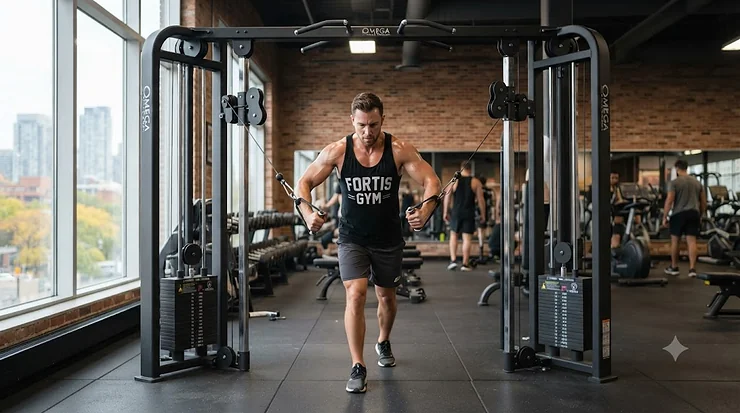
Somewhere between “I’ll just do push-ups forever” and “I’m renting a warehouse,” there’s a much saner option: a commercial cable crossover machine bolted into a corner of your garage. A commercial cable crossover machine is a dual-pulley strength system, usually built around one or two weight stacks or plate-loaded carriages, that lets you perform chest flies, rows, pulldowns, and dozens of other movements along adjustable cable paths instead of a fixed barbell path. It’s the piece of equipment that turns “home gym” into “actual gym,” and it’s why so many Canadians who got hooked on cable work at a commercial facility eventually go looking for one of their own.
The tricky part is that “commercial cable crossover machine” gets slapped onto everything from a C$300 wall-mounted pulley system to a C$6,000 dual-stack behemoth with a built-in Smith bar. Both might be labelled “commercial,” and both are lying at least a little — commercial usually just means the manufacturer rates it for light supervised gym use, not that it’s the same unit sitting on the floor at your local GoodLife. Knowing the difference between marketing language and genuine build quality is the whole game here.
It’s also a legitimate way to meet Canada’s national physical activity guidelines, which call for muscle-strengthening activity as a core part of a healthy weekly routine, not just an optional add-on to cardio.
This guide breaks down seven real, currently available machines across budget, mid-range, and premium tiers, with honest analysis of who each one actually suits — not just a features list copied off a product page. We’ll walk through comparison tables, real-world performance, setup logistics for Canadian basements and garages, and the mistakes that trip up first-time buyers. By the end, you’ll know exactly which category of machine fits your space, your budget, and your training goals, whether that’s a compact wall unit or a full dual-stack functional trainer.
Quick Comparison Table
| Machine | Resistance Type | Stack/Capacity | Best For | Price Range (CAD) |
|---|---|---|---|---|
| Titan Fitness Functional Trainer | Dual selectorized stack | 200 lb per side (400 lb total) | Best all-rounder for serious home lifters | C$1,800–C$2,200 |
| Body-Solid GDCC250B | Dual selectorized stack | 160 lb per side | Best commercial-rated build quality | C$3,800–C$4,500 |
| Force USA G3 V2 | Plate-loaded, integrated rack | 992 lb frame rating | Best for lifters who also want a rack + Smith | C$3,200–C$3,800 |
| Inspire FT2 Pro | Dual stack + Smith bar | 165 lb per side | Best premium all-in-one for small spaces | C$5,500–C$6,500 |
| Titan Plate-Loaded Cable Crossover | Plate-loaded | 220 lb per side | Best budget pick for existing plate owners | C$700–C$900 |
| Goimu WM1 Wall Mount | Plate-loaded, wall unit | 280+ lb rated | Best for tiny apartments and condos | C$300–C$450 |
| Valor Fitness BD-61 | Plate-loaded | 400 lb max load | Best value crossover for two-person households | C$600–C$800 |
Looking at the spread above, the split isn’t really budget versus premium — it’s selectorized versus plate-loaded. Selectorized stacks like the Titan Fitness and Body-Solid units cost more up front because the weight is built in, while plate-loaded machines like the Valor BD-61 or Titan crossover ask you to already own (or separately buy) Olympic plates, which quietly shifts hundreds of dollars of cost outside the sticker price. If you’re weighing a plate-loaded machine against a selectorized one, run the plate math first: that “cheaper” machine might not stay cheaper once you’ve filled four weight pegs.
💬 Just one click — help others make better buying decisions too!😊
Top 7 Commercial Cable Crossover Machines: Expert Analysis
1. Titan Fitness Functional Trainer — 200 LB dual stack in a compact frame
The Titan Fitness Functional Trainer earns its spot at the top of this list for one simple reason: it’s the rare machine that gives you genuine dual 200 lb selectorized stacks without asking you to also budget for plates or a small moving crew. Each stack adjusts in 10 lb increments, running through a 2:1 cable ratio, which means when you pin the stack at 100 lb you’re actually pulling roughly 50 lb of resistance at the handle — smoother and more joint-friendly than it sounds on paper. The 20 vertical pulley positions and numbered settings mean you’re not eyeballing height guesses mid-set, which matters more than it sounds like it should once you’re four exercises deep into a superset.
Based on the spec comparison against similarly priced functional trainers, this is one of the few sub-C$2,500 selectorized units with a full 400 lb combined stack capacity — most competitors top out closer to 300 lb combined before you start adding weight plates to the carriage. That makes it a legitimate long-term option for lifters who are still adding strength, not just someone doing light accessory work. Reviewers consistently note that assembly takes a solid afternoon with two people and that the pulleys run smooth out of the box, though a few mention the included cable attachments feel like an afterthought compared to the frame itself.
Pros:
✅ Dual 200 lb stacks with 10 lb increments for real progression
✅ 20 numbered pulley positions speed up exercise transitions
✅ Compact footprint compared to plate-loaded alternatives
Cons:
❌ Included attachment handles are basic compared to the frame quality
❌ At 672 lb assembled, relocating it later is a two-person job
The Titan Fitness Functional Trainer sits in the C$1,800–C$2,200 range at the time of research, and for that price, it’s tough to beat if you want a real 200lb+ weight stack setup without financing a small vehicle.
2. Body-Solid GDCC250B — commercial-rated frame with a lifetime warranty
Body-Solid built its reputation on equipment that shows up in actual commercial facilities, and the GDCC250B is a direct descendant of that lineage rather than a home-gym knockoff wearing a commercial label. The frame uses 11-gauge, 2-inch by 4-inch oval tubing — noticeably thicker steel than most home-market cable crossovers — and the company backs it with a lifetime warranty on the frame, welds, and guide rods, plus three years on pulleys and bearings. That’s not marketing fluff; it’s the kind of warranty structure a manufacturer only offers when they’re confident the welds won’t crack under years of heavy low-row pulls.
What most buyers overlook about this model is the dual independent carriage system, which offers roughly twice the height adjustment range of Body-Solid’s earlier crossover stations, plus 180-degree cable positioning that keeps the pull frictionless whether you’re doing a standing chest fly or a floor-level cable crunch. The two 160 lb stacks run at a 1:2 resistance ratio, and reviewers consistently describe the pulley action as noticeably quieter and smoother than lower-priced competitors — a difference you’ll feel most on high-rep isolation work like tricep pressdowns, where a jerky cable ruins the tension.
Pros:
✅ Commercial-rated frame with an industry-leading lifetime warranty
✅ 20 independent height adjustments for precise angle control
✅ Extra-wide mainframe gives real cable-crossover range of motion
Cons:
❌ At 514 lb, it needs a dedicated, fairly permanent spot
❌ Heavier investment than most home-market functional trainers
At around C$3,800–C$4,500, the GDCC250B sits solidly in premium territory, but the warranty and steel gauge are doing real work to justify that number rather than just padding a price tag.
3. Force USA G3 V2 All-In-One Trainer — power rack, Smith machine, and functional trainer in one footprint
If your garage has room for exactly one large piece of equipment and you don’t want to choose between a rack, a Smith machine, and a cable station, the Force USA G3 V2 solves that problem by refusing to make you choose. It’s built around a 2-inch by 2-inch, 11-gauge steel power rack rated to 992 lb, with a functional trainer running dual adjustable pulleys on a 2:1 ratio and 21 height positions along roughly 8.2 feet of cable travel. Because it’s plate-loaded rather than selectorized, your ceiling on resistance is really your ceiling on how many Olympic plates you own — a meaningful advantage for stronger lifters who’ll eventually outgrow a fixed 200 lb stack.
Here’s what the spec sheet won’t tell you, but reviewers note repeatedly: loading both cable pulleys evenly for a movement like a cable crossover requires matched pairs of plates on four separate pegs, which can get fiddly if your plate collection is mismatched. On paper, the 6.2mm mil-spec aircraft-grade cables tested to 2,000 lb sound like overkill for home use, and honestly, they basically are — but that’s the kind of overbuilt spec that means you won’t be thinking about cable fatigue five years from now. The counterbalanced-free Smith bar starts at roughly 45 lb before you add plates, which beginners should factor into their working weight.
Pros:
✅ Combines power rack, Smith machine, and cable trainer in one frame
✅ Plate-loaded design scales resistance beyond fixed stack limits
✅ 2,000 lb-rated cables built for genuine long-term durability
Cons:
❌ Even-loading both pulleys demands duplicate plate sets
❌ Smith bar has no counterbalance, adding real starting weight
Priced around C$3,200–C$3,800 at the time of research, the G3 V2 delivers strong value if you’re replacing three separate machines rather than shopping for a cable station alone.
4. Inspire FT2 Pro Smith Functional Trainer — dual stacks plus a built-in Smith bar
The Inspire FT2 Pro is the machine you buy when “good enough” isn’t the goal and floor space is limited. It pairs two 165 lb selectorized weight stacks with a counter-balanced Smith bar that’s mechanically linked to those same stacks through a weight-multiplier system, so heavy lifters can push the Smith bar’s effective resistance well past what either stack manages alone. Eight total pull points — two wide, two narrow-high, four narrow-low — give it more functional-training variety than most competitors in this price bracket, and the pull-up bar’s adjustable height helps in rooms with less-than-ideal ceiling clearance.
Based on the spec comparison, this is genuinely one of the only machines on the market that eliminates Olympic plates entirely while still offering true barbell-style pressing through the Smith mechanism — a clever bit of engineering for anyone in a condo who can’t have loose plates rolling around. Reviewers consistently praise the build quality and versatility, though the same reviewers, and Inspire’s own long-term owner community, flag that the printed exercise manual undersells what the machine can actually do, and that first-time assembly commonly runs six to ten hours for a single person working alone.
Pros:
✅ Fully plate-free design with dual 165 lb stacks and Smith bar
✅ Weight multiplier lets heavy lifters exceed base stack resistance
✅ Eight pull points cover more angles than typical functional trainers
Cons:
❌ Premium price puts it out of reach for casual home users
❌ Assembly documentation lags behind the machine’s actual capability
Expect to pay in the C$5,500–C$6,500 range for the FT2 Pro package, which puts it firmly at the top of this list — a reasonable ask only if you genuinely want a Smith machine and a cable trainer combined into one commercial grade cable machine home gym setup.
5. Titan Fitness Plate-Loaded Cable Crossover Machine — wide working space at a fraction of stack-machine pricing
Not every household needs dual weight stacks, and the Titan Fitness Plate-Loaded Cable Crossover exists for exactly that reality. It skips the selectorized mechanism entirely in favour of four 9.75-inch Olympic plate sleeves per side, holding up to 220 lb of resistance per side once loaded, running on a 2:1 cable ratio through reinforced fiberglass pulleys. With three feet of working space on each side, it gives you real cable-crossover range of motion — the wide stance that lets you actually stretch through a chest fly instead of feeling boxed in by narrow uprights.
The spec sheet won’t tell you this, but user reports suggest the compact 110 lb unit weight and under-8-foot ceiling clearance make it one of the easier machines on this list to tuck against a wall for storage between sessions, which is a genuinely underrated feature for anyone sharing garage space with a car. What most buyers overlook is that because there’s no stack, there’s also no waiting on backordered weight-stack parts if something needs replacing — you’re working with generic Olympic plates the whole way through, which simplifies both loading and long-term maintenance.
Pros:
✅ 220 lb per-side capacity using plates you likely already own
✅ Slides against the wall for space-saving storage
✅ Fits under 8-foot ceilings, ideal for basements and garages
Cons:
❌ No weight stack means uneven loading is a real risk without matched plates
❌ Requires a separate plate purchase if you’re starting from zero
At roughly C$700–C$900, this is one of the more affordable entries here, and it’s a strong pick if you already own a plate collection from a rack or bench setup.
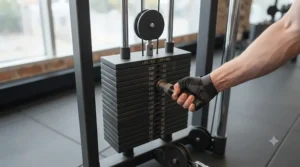
6. Goimu WM1 Wall Mount Cable Station — a full cable gym that mounts flat to a wall
For apartment and condo dwellers, floor space is the enemy, and the Goimu WM1 is built specifically around that constraint. It’s a tool-free, wall-mounted design with a 6.5-foot vertical rail offering 17 quick-pin positions, a removable footplate for 360-degree stability, and dual-bearing pulleys rated to handle 280-plus lb of load without wobble. Because it mounts flush to the wall, it occupies roughly three square feet of usable floor space — a fraction of what any freestanding functional trainer needs — while still covering lat pulldowns, seated rows, chest flies, and bicep curls through its SmartT dual-pulley system that switches between 1:1 and 2:1 cable ratios.
Here’s the honest trade-off: this is a plate-loaded, wall-anchored unit, not a selectorized stack machine, so your total resistance depends on your own plate collection and the compatible sleeve adapters included in the box. Reviewers report that most users complete installation in under 45 minutes using the included heavy-duty anchors, but the catch is that installation quality depends entirely on hitting solid wall studs — this is not a machine you can safely anchor to drywall alone, regardless of what the hardware kit implies. If your walls cooperate, though, it’s a genuinely clever way to get commercial grade cable machine home gym functionality into a room that has no business hosting a full functional trainer.
Pros:
✅ Mounts flat to the wall, using minimal floor space
✅ 17 height positions accommodate users from 5’0″ to 6’7″
✅ Switchable 1:1/2:1 pulley ratio for heavy or high-rep training
Cons:
❌ Requires anchoring into wall studs for safe operation
❌ Resistance depends entirely on your own plate collection
Priced around C$300–C$450, the WM1 is the most affordable machine on this list and arguably the best fit for anyone renting or working with a genuinely small footprint.
7. Valor Fitness BD-61 Cable Crossover Station — a two-user setup built for shared households
Rounding out the list is the Valor Fitness BD-61, a plate-loaded cable crossover with a max load rating of 400 lb and room for two people to train at the same time — a small but genuinely useful feature for couples or roommates who both lift. It ships with a lat pulldown bar, curl/row bar, two single strap handles, and a pull-up station built into the frame, plus the option to bolt the unit to the floor with included hardware for extra stability during heavy pulls. The double bar track design keeps motion smooth whether you’re loading standard 1-inch plates or 2-inch Olympic bumpers.
Based on the spec comparison, the BD-61’s 17 adjustable pulley positions land in the middle of the pack for this category — fewer than the Titan Fitness Functional Trainer’s 20, but more than enough range for most chest, back, and arm movements. What most buyers overlook here is the floor-anchoring option: a cable machine that isn’t bolted down can develop a subtle forward lean over years of heavy low-row pulling, and Valor’s decision to include the hardware standard, rather than as a paid add-on, is a small but telling sign of thoughtful engineering. One owner review, cited by the manufacturer, describes running the same unit almost daily since 2018 without structural issues, which — while a single account — lines up with the machine’s 3-year frame warranty.
Pros:
✅ Dual-user design with a built-in pull-up station
✅ Floor-anchoring hardware included standard, not sold separately
✅ 3-year frame warranty backs long-term durability claims
Cons:
❌ Fewer pulley height positions than the Titan Fitness Functional Trainer
❌ Weights not included, adding to your real total cost
The BD-61 runs roughly C$600–C$800 at the time of research, making it a strong mid-budget pick for households where more than one person will be using the machine regularly.
Practical Usage Guide: Setup, First 30 Days & Maintenance Rhythm
Getting a commercial cable crossover machine into your home is only half the job — the other half is not wrecking it (or your back) in the first month. Start with the floor: even a compact wall-mounted unit like the Goimu WM1 needs to anchor into studs, and freestanding machines in the 500-plus lb range benefit from a plywood-and-rubber flooring layer that spreads the load and protects your subfloor from dents. Before your first workout, run every pulley through its full range of motion empty, without weight, to check for snags or uneven cable tension — a five-minute step that catches assembly errors before they become a mid-set surprise.
For the first 30 days, resist the urge to max out both pulleys immediately. Cables and pulley bushings need a modest break-in period, and starting at 60–70% of what you think you can handle lets you dial in seat height, pulley position numbers, and handle attachments without fighting the machine while you’re still learning it. A common rookie mistake is skipping the numbered position log — jot down your preferred pulley heights for your top three exercises on masking tape or a notes app, because “somewhere around here” is a terrible way to start a chest day. On the maintenance side, wipe down cables monthly with a dry cloth (never oil-based lubricant near where hands grip), re-torque visible bolts every few months as the frame settles, and inspect stitching on any strap attachments before they fray past the point of safe use.
Real-World Scenarios: Who Should Buy Which Machine
The condo-bound beginner. Picture someone in a 650-square-foot Toronto apartment who wants consistent strength training without a commute. Floor space is nonexistent, and a landlord probably isn’t thrilled about a 670 lb functional trainer. The Goimu WM1 wall mount or a compact plate-loaded option makes far more sense here than anything selectorized — minimal footprint, no stack to relocate if they move, and a price point that doesn’t sting if the lease changes in a year. This kind of buyer isn’t rare, either — CBC News reported a sharp jump in Canadian home gym demand once commercial facilities became less appealing, and a lot of that demand landed squarely on compact, space-conscious equipment rather than full commercial rigs.
The intermediate lifter with a garage. This is someone who’s outgrown resistance bands and dumbbells, has a two-car garage with one bay converted, and wants real progressive overload without joining a gym in a Calgary winter. The Titan Fitness Functional Trainer hits the sweet spot: genuine 200lb+ weight stack progression, a reasonably compact footprint, and a price that doesn’t require a second mortgage.
The serious home-gym builder. Someone who already owns a barbell, plates, and a rack, and wants to add cable work without duplicating equipment they’ve already invested in. The Force USA G3 V2 or the Titan Plate-Loaded Cable Crossover both make sense here, since they lean on an existing plate collection rather than asking for a second, separate weight-stack investment.
How to Choose a Commercial Cable Crossover Machine
- Match resistance type to your existing equipment. If you already own Olympic plates from a rack or bench, a plate-loaded machine like the Valor BD-61 saves real money. If you’re starting from zero, a selectorized stack removes the extra plate-buying step entirely.
- Measure your ceiling before your floor. Most functional trainers need at least 8 feet of clearance for pull-up bars and overhead cable paths — a detail that trips up more Canadian basement buyers than any other spec.
- Prioritize pulley height positions over total weight capacity. A machine with 20 numbered positions and a modest stack will usually deliver a better day-to-day training experience than one with a huge stack and only six clunky height settings.
- Check the warranty structure, not just the number of years. A lifetime frame warranty paired with a short parts warranty tells you the manufacturer trusts the steel but not the moving parts — worth knowing before you buy.
- Decide if you need a dual-user setup. Households where two people train seriously benefit from wider frames and dual pull-up stations, like the Valor BD-61, rather than fighting over one narrow unit.
- Factor in relocation likelihood. Renters and anyone who might move within a few years should lean toward lighter, wall-mountable, or plate-loaded units that don’t require a moving crew.
- Budget for accessories separately. Ankle straps, extra handles, and floor anchoring hardware are sometimes included and sometimes not — read the included-accessories list closely before comparing prices.
As a baseline for point one, Canada’s 24-Hour Movement Guidelines recommend muscle-strengthening activity using the major muscle groups at least twice a week for adults, which is a useful minimum to plan your weekly cable routine around before you even start comparing machines.
Commercial Cable Crossover Machine vs Traditional Home Gym Equipment
A traditional home gym setup — barbell, plates, a bench, maybe a squat rack — is unmatched for raw strength development in big compound lifts like the bench press and squat. What it doesn’t do well is constant-tension isolation work: a dumbbell fly loses tension at the top of the movement, but a cable crossover keeps the muscle under load through the entire range of motion, which is a meaningfully different training stimulus, not just a convenience upgrade. This matters most for anyone chasing hypertrophy or working around a joint issue, since constant cable tension tends to be gentler on shoulders and elbows than heavy free-weight pressing at end ranges.
Where cable machines lose ground is raw loading capacity and simplicity — a barbell and a pair of plates will always be cheaper, more portable, and arguably more effective for building a big deadlift or squat than any cable system. The honest answer for most Canadian home gym owners is that these aren’t competing purchases; a cable crossover machine complements a barbell setup rather than replacing it, filling in the isolation and rehab-friendly work that free weights handle poorly. Buyers trying to choose just one should weigh their actual training history: people who already have a strength base from barbell work often get more day-to-day mileage out of adding a cable station than they would from a second barbell-focused piece of equipment.
What to Expect: Real-World Performance
Specs on a page don’t tell you what a workout actually feels like, so here’s the translation. A 200 lb dual stack running a 2:1 ratio, like the Titan Fitness Functional Trainer, means your heaviest realistic single-arm cable row tops out around 100 lb of felt resistance per side — plenty for the vast majority of home lifters, and noticeably smoother than free weights through the full pulling motion. Plate-loaded machines feel heavier and slightly more “raw” at the same nominal number, since there’s no ratio softening the load, which some lifters prefer for pressing movements and others find harsher on cold joints during a Canadian winter warm-up.
Reviewers consistently note that pulley smoothness matters more day-to-day than almost any other spec. A machine with sealed bearing pulleys glides through a chest fly without the jerky start-stop feel that cheaper bushings produce, and that difference compounds over hundreds of reps — it’s the kind of detail that’s invisible on a spec sheet but obvious the moment you’re mid-set. Expect a genuine break-in period of a few weeks on any new cable machine, during which cables settle slightly and pulley action smooths out; a brand-new unit rarely feels as good on day one as it will by week three.
Heavy Duty Cable Crossover Construction: What “Commercial Grade” Really Means
The phrase “heavy duty cable crossover” gets stamped on packaging regardless of whether the frame can actually survive years of supervised gym use, so it pays to know what separates a genuinely commercial-rated build from a home-market machine wearing the label loosely. Steel gauge is the first tell: Body-Solid’s 11-gauge, 2-by-4-inch oval tubing on the GDCC250B is meaningfully thicker than the lighter tubing common on budget units, and thicker steel resists the twisting stress that repeated heavy low-rows put on a frame over years, not months. Cable rating is the second tell — Force USA’s 6.2mm cables tested to 2,000 lb are wildly overbuilt for a single home user, but that headroom is exactly what “commercial grade” is supposed to mean: a safety margin that assumes multiple users and years of daily use, not gentle occasional workouts.
Warranty length is the most honest signal a manufacturer gives you, because it’s the one claim backed by actual financial liability. A lifetime frame warranty paired with a shorter parts warranty, which several machines on this list offer, tells you the company is confident about the welds but realistic about wear items like pulleys and cables needing eventual replacement. What most buyers overlook is that “commercial” doesn’t automatically mean better for a single-household home gym — a genuinely heavy duty cable crossover built for a staffed facility can be overkill in weight and footprint for someone who just wants solid, dependable cable work in a garage.
Professional Cable Crossover Station for Different Training Styles
A professional cable crossover station means something different depending on who’s standing in front of it. For a bodybuilding-focused lifter chasing hypertrophy, the priority is pulley height range and smooth constant tension — the Body-Solid GDCC250B’s 20 independent height adjustments and 180-degree cable positioning let you hit a chest fly from a dozen subtly different angles, which matters far more for muscle-building isolation work than raw weight capacity does. For a functional or athletic-performance lifter, the priority shifts toward multi-plane movement and standing stability, which is where a wider-stance unit with freely rotating pulleys — the kind found on the Force USA G3 V2 — earns its keep, letting you start a cable chop or rotational press from genuinely varied angles rather than a fixed narrow path.
For rehab and lower-impact training, the deciding factor is cable ratio and smoothness rather than max weight. A 2:1 ratio machine lets you dial in genuinely light resistance for shoulder or knee rehab work without the awkward minimum-weight jumps that plate-loaded systems sometimes force on you — reviewers consistently note this as a strength of stack-based machines for anyone easing back into training after an injury. Whichever category fits, the honest advice here from a training-style standpoint is to match the machine’s strengths to your actual weekly routine rather than buying the model with the most-impressive-sounding spec sheet.
Commercial Grade Cable Machine for the Home Gym: Getting Gym-Quality Equipment at Home
Finding a genuinely commercial grade cable machine for a home gym setup comes down to separating real engineering upgrades from surface-level marketing. Gym-quality equipment for home use generally shows up in three concrete places: bearing quality in the pulleys (sealed versus open bushings), the gauge of steel used in the uprights, and whether the cable system uses aircraft-rated or generic-rated cable. None of these show up in a glossy product photo, which is exactly why so many budget machines lean on the word “commercial” without the underlying build to back it up.
The other half of getting gym-quality equipment at home is honest about limitations most listings won’t mention: even a genuinely commercial-rated frame will wear differently in a Canadian garage that swings from -20°C in January to 30°C in July than it would in a climate-controlled commercial facility. Temperature swings affect cable flexibility and lubricant viscosity, so owners in unheated garages should budget for slightly more frequent cable inspection than the manufacturer’s baseline maintenance schedule assumes. Reviewers who’ve run machines like the Titan Fitness Functional Trainer or Valor BD-61 through multiple Canadian winters in unheated spaces consistently mention this as the one maintenance item that surprised them most.
Understanding 200lb+ Weight Stacks and Cable Ratios
A 200lb+ weight stack sounds like a straightforward spec until you factor in cable ratio, which quietly changes what that number actually means at the handle. On a 2:1 ratio machine, like the Titan Fitness Functional Trainer, a 200 lb stack pin setting delivers roughly 100 lb of felt resistance — the ratio doubles the distance the cable travels relative to the stack, which smooths the pull but also means the printed stack number overstates your working weight by half. On a 1:1 ratio machine, that same 200 lb pin setting delivers a much closer-to-literal 200 lb of resistance, which matters enormously if you’re comparing two machines by stack size alone without checking the ratio.
For most home lifters, a genuine 200lb+ weight stack on a 2:1 ratio machine covers the vast majority of isolation and accessory work — few people are cable-flying with more than 100 lb of true resistance per side. Where the extra headroom matters is compound cable movements like a standing cable row or a heavy tricep pressdown, where stronger lifters can genuinely max out a smaller stack within a year or two of consistent training. Based on the spec comparison across this list, buyers who are already intermediate-to-advanced in strength should lean toward either a true 200lb+ dual stack or a plate-loaded system with room to keep adding weight well past that mark.
Chrome Cable Pulleys and Cable Systems: What Actually Matters
Chrome cable pulleys show up in a lot of product photography because they look sleek, but the finish itself isn’t really the spec that matters — what’s underneath it is. A chrome-plated pulley wheel with a cheap plastic or unsealed bushing will still develop play and noise within a year of regular use, while a matte-finished pulley with a genuinely sealed bearing system will outlast it by years. The visual appeal of chrome cable pulley hardware is real and does help a machine look and feel premium in a home gym setting, but reviewers consistently note that bearing quality, not surface finish, is what determines whether a pulley system stays smooth after 18 months of use.
Cable coating matters just as much as the pulley hardware itself. Nylon-coated cables, like those used across several machines on this list, resist fraying and reduce the metallic screech that bare steel cables can develop over time, particularly in humid basement environments common across Atlantic Canada and coastal British Columbia. What the spec sheet won’t tell you is that cable replacement, when it’s eventually needed, is a genuinely manageable DIY task on most selectorized machines — a detail worth confirming before purchase if you want to avoid a service call five years down the line for what’s ultimately a C$30–C$50 part.
Long-Term Cost & Maintenance
The sticker price is only the opening bid on total cost of ownership. Plate-loaded machines like the Valor BD-61 or Titan crossover look cheaper on paper, but factor in Olympic plates — a reasonable starter set runs another C$300–C$600 in Canada depending on current steel and shipping costs — and the gap to a selectorized stack machine narrows considerably. Selectorized units carry their weight cost up front, which for buyers who value simplicity and predictable pricing is often worth the higher initial number.
Ongoing maintenance costs are modest across every machine on this list but not zero. Budget roughly C$50–C$100 annually for replacement handles, straps, and the occasional cable, more if the unit lives in an unheated garage exposed to temperature swings and humidity. Warranty coverage genuinely offsets this: a machine backed by a lifetime frame warranty and multi-year parts coverage, like the Body-Solid GDCC250B, effectively caps your worst-case repair costs for the structural components that would otherwise be the most expensive to replace. Looking at value per dollar over a five-year horizon rather than just the checkout price gives a much more honest picture of which machine actually costs less.
Safety, Regulations & Compliance Guide
Canada doesn’t have a dedicated consumer regulation specifically governing home cable crossover machines the way it does for, say, car seats, but general product safety still applies through the Canada Consumer Product Safety Act, and manufacturers selling into Canada are expected to meet reasonable structural and material safety standards. On the health side, this kind of equipment is a legitimate way to meet the twice-weekly muscle-strengthening recommendation covered earlier, rather than a niche fitness gadget.
On the practical safety side, floor anchoring is worth taking seriously: any freestanding machine over roughly 400 lb benefits from the floor-bolting hardware that some manufacturers, like Valor Fitness, include standard, since a machine that shifts even slightly during a heavy low row creates real fall and pinch-point risk. If you’re building your gym on a second floor or over a finished basement ceiling, a quick structural check — or at minimum, spreading the load with plywood and rubber flooring — is genuinely worth the modest cost given how much these machines weigh fully assembled.
Common Mistakes When Buying a Commercial Cable Crossover Machine
Buyers most often go wrong in five predictable ways. First, ignoring ceiling height — a machine with a pull-up bar or high pulley position needs a genuine 8 feet of clearance, and measuring the room instead of the machine’s stated dimensions is a mistake that only shows up after delivery. Second, comparing stack weight without checking cable ratio, which leads to buying a “bigger” stack that actually delivers less felt resistance than a smaller stack on a 1:1 system. Third, underestimating plate costs on plate-loaded machines, turning a “budget” purchase into a mid-range one once four weight pegs are properly loaded.
Fourth, skipping the floor-anchoring step because it feels optional, which it isn’t for anything approaching a 400 lb load rating — an unanchored machine develops a forward lean over years of heavy pulling that’s both a performance issue and a safety one. Fifth, and perhaps most common, buying based on the word “commercial” alone without checking steel gauge, cable rating, or warranty length, all of which tell you far more about actual build quality than a single marketing word ever will. Avoiding these five mistakes alone puts a buyer ahead of a large share of first-time cable machine shoppers.
Frequently Asked Questions
❓ What's the difference between a functional trainer and a cable crossover machine?
❓ Can I put a commercial cable crossover machine on a second-floor room in Canada?
❓ Is a plate-loaded or selectorized cable machine better for beginners?
❓ How much does a decent commercial cable crossover machine cost in Canada?
❓ Do I need to bolt a cable crossover machine to the floor?
Conclusion
There’s no single “best” commercial cable crossover machine, only the best one for your specific room, budget, and training history. If you’re working with genuinely tight square footage, the Goimu WM1 wall mount solves the space problem better than anything freestanding ever could. If you want real 200lb+ progression without financing furniture for a year, the Titan Fitness Functional Trainer hits that mid-range sweet spot better than almost anything else on the Canadian market right now. And if budget genuinely isn’t the constraint, the Inspire FT2 Pro or Body-Solid GDCC250B deliver the kind of commercial-grade build quality that will still be running smoothly a decade from now.
What matters more than any single spec is being honest with yourself about how you’ll actually train. A machine that perfectly matches your current strength level but has no room to grow will frustrate you within a year; one that’s wildly oversized for a casual three-sessions-a-month routine just becomes an expensive coat rack. Match the machine to the lifter you actually are, budget honestly for plates or accessories if you’re going the plate-loaded route, and take floor anchoring and ceiling clearance seriously before delivery day rather than after.
✨ Don’t Miss These Exclusive Deals!
🔍 Take your home gym to the next level with these carefully selected cable crossover machines. Click on any highlighted item to check current pricing and availability on amazon.ca. These machines will help you build the strength training routine your future self will thank you for!
Recommended for You
- Dual Stack Functional Trainer: Worth It? 7 Real Picks (2026)
- Best Dual Stack Functional Trainer in Canada 2026: Top 7 Expert Picks
- Single Stack vs Dual Stack Functional Trainer: 7 Best in Canada
Disclaimer: This article contains affiliate links. As an Amazon Associate, I earn from qualifying purchases. If you purchase products through these links, we may earn a small commission at no additional cost to you.
✨ Found this helpful? Share it with your friends! 💬🤗
