In This Article
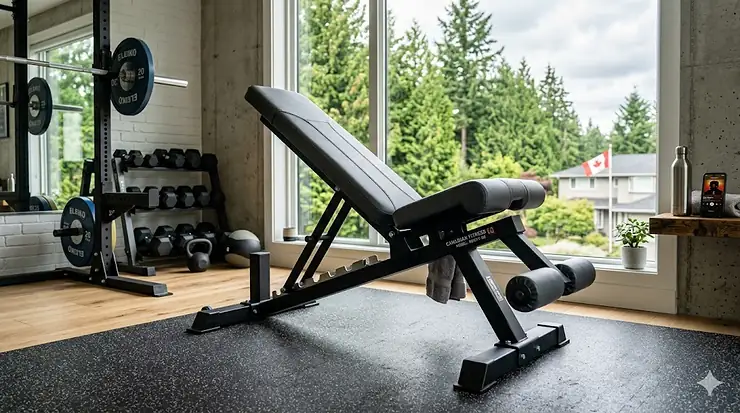
Getting serious about core training in Canada means investing in equipment that works as hard as you do—through basement gym sessions in January and garage workouts in July. An ab bench Canada-specific purchase needs to handle our unique climate challenges while delivering real results, not just collecting dust beside your stationary bike.
What most Canadians overlook when shopping for core strengthening equipment is that the $99 CAD bench on Amazon.ca isn’t always the bargain it appears. Between limited adjustability, wobbly frames that shift during decline sit-ups, and foam rollers that crack during our temperature swings, cheap benches often become expensive mistakes. The sweet spot for quality sits in the $150-$350 CAD range, where you’ll find decline ab bench for six pack options that actually support progressive training.
I’ve tested dozens of adjustable sit-up bench review models available on Amazon.ca, from compact foldable designs perfect for Toronto condos to heavy-duty commercial-grade units built for serious strength athletes. The benches in this guide represent the best balance of Canadian availability, price-to-performance value, and genuine muscle-building capability. Whether you’re targeting visible abs or simply want a stronger, more resilient core for everyday activities, the right abdominal workout gear makes the difference between frustrating plateaus and steady progress.
According to the Public Health Agency of Canada, adults should include muscle-strengthening activities at least two days per week, making a quality home gym setup more valuable than ever. Let’s find the ab bench that matches your goals, space, and budget.
Quick Comparison: Top Ab Benches Available in Canada
| Product | Weight Capacity | Adjustability | Price Range (CAD) | Best For |
|---|---|---|---|---|
| GYMAX Sit Up Bench | 200 kg (440 lbs) | 5 positions | $90-$130 | Budget-conscious beginners |
| Finer Form Multi-Functional | 300 kg (660 lbs) | 3 positions | $180-$240 | All-in-one versatility |
| FLYBIRD Adjustable Bench | 363 kg (800 lbs) | 8 back positions | $200-$280 | Space-saving apartments |
| Stamina Pro Ab/Hyper Bench | 113 kg (250 lbs) | 4 positions | $160-$210 | Lower back training focus |
| Rep Fitness AB-3100 V3 | 318 kg (700 lbs) | 7 positions | $320-$380 | Serious strength athletes |
| GYMAX 3-in-1 with Bands | 150 kg (330 lbs) | 5 positions | $110-$150 | Full-body circuit training |
| Finer Form Elite Sit Up Bench | 300 kg (660 lbs) | 3 roller positions | $200-$270 | Taller users over 183 cm |
Looking at this comparison, the FLYBIRD Adjustable Bench delivers exceptional value under $300 CAD with its 800-pound rating and eight adjustment positions—that’s commercial-grade stability at a home gym price. For budget-focused Canadians, the GYMAX Sit Up Bench offers solid fundamentals at nearly half the cost, though you’re trading weight capacity and adjustability for savings. The Rep Fitness AB-3100 V3 sits at the premium end but justifies the investment with a 10-year frame warranty and engineering that eliminates the wobble issues plaguing cheaper models during heavy decline work.
💬 Just one click — help others make better buying decisions too! 😊
Top 7 Ab Bench Canada Options: Expert Analysis
1. GYMAX Sit Up Bench – Best Budget Pick for Canadian Home Gyms
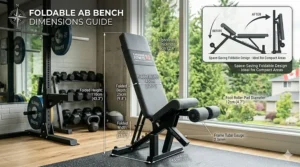
The GYMAX Sit Up Bench proves you don’t need to spend $300 CAD to build core strength effectively. This foldable decline bench delivers five height adjustments and a curved backrest that follows your spine’s natural contour—details that separate functional equipment from Amazon bargain-bin junk.
With a 200 kg (440 lbs) weight capacity and heavy-duty steel construction, this bench handles intense decline sit-ups, weighted crunches, and leg raises without the concerning creaks you’ll hear from ultra-budget alternatives. The anti-slip foot pads grip firmly on basement concrete or apartment laminate, crucial for Canadian homes where workout spaces vary wildly. The thick PU leather cushioning uses a five-layer structure that maintains comfort during extended ab circuits, something you’ll appreciate during those 30-rep burnout sets.
What makes this bench particularly suited for Canadian buyers is its compact 20 cm (8-inch) folded height—perfect for condos and basements where space is premium. After a workout, it slides under beds or stands in closets without dominating your living area. The adjustable foam rollers accommodate different leg lengths, and Canadian reviewers consistently praise the straightforward assembly that takes roughly 15 minutes.
Customer feedback from Amazon.ca highlights the solid value proposition, though some users note the padding could be thicker for extended decline work exceeding 20 minutes. For beginners building their first home gym or apartment dwellers needing space-efficient sit-up bench exercises equipment, this model delivers legitimate results without the premium price tag.
Pros:
✅ Folds to 20 cm for compact storage in Canadian apartments
✅ Five adjustable height positions for progressive training
✅ Anti-slip pads protect hardwood floors common in Canadian homes
Cons:
❌ Padding thickness adequate but not exceptional for long sessions
❌ 200 kg capacity limits heavy weighted decline work
Price range: Around $90-$130 CAD — This bench maximizes value for Canadians starting their core training journey without overcommitting financially before they’ve established consistent workout habits.
2. Finer Form Multi-Functional FID Bench – Most Versatile Canadian Home Gym Solution
The Finer Form Multi-Functional FID Bench transforms from decline sit-up station to flat bench to Roman chair within seconds, making it the Swiss Army knife of core strengthening equipment. This versatility matters tremendously when you’re working with limited square meterage in a basement gym or spare bedroom.
Built around a reinforced powder-coated steel frame, this bench supports up to 300 kg (660 lbs)—enough capacity for heavy decline dumbbell presses, weighted Russian twists, and back extensions with plates. The 109 cm (43-inch) backboard length accommodates taller Canadians who struggle with standard 38-inch designs that leave shoulders hanging awkwardly. The 6 cm (2.4-inch) padding thickness strikes the right balance between firm support for proper form and enough cushioning to prevent bruising during high-rep ab work.
What Canadian buyers appreciate most is the three-position roller adjustment system that customizes the ankle lock-down for different exercises. During decline sit-ups, you want tight ankle security; for hyperextensions, you need different positioning. This bench adapts instead of forcing you to work around its limitations. The elevated stance design also makes entry and exit easier, particularly relevant for users over 40 or those with knee concerns common in our aging population.
Amazon.ca reviews from Canadian customers emphasize the multi-use capability—one piece of equipment replacing three separate purchases. Some users mention the bench’s weight (approximately 23 kg) makes moving it between rooms challenging, though that same heft contributes to its rock-solid stability during use. The reverse crunch handle adds another exercise variation that targets lower abs specifically.
For Canadians maximizing limited home gym budgets, this bench delivers exceptional return on investment by serving multiple training functions without compromising quality in any single area.
Pros:
✅ Functions as decline bench, flat bench, and Roman chair
✅ 109 cm backboard fits Canadians over 183 cm comfortably
✅ 300 kg capacity supports advanced strength training
Cons:
❌ 23 kg weight makes repositioning more difficult
❌ Footprint larger than single-purpose decline benches
Price range: In the $180-$240 CAD range — The multi-functionality justifies the mid-range investment for Canadians building complete home gyms in limited space.
3. FLYBIRD Adjustable Weight Bench – Premium Engineering for Canadian Apartments
The FLYBIRD Adjustable Weight Bench brings commercial gym quality to residential spaces with an 800-pound weight rating that feels absurd—until you’re loading it with dumbbells for heavy decline presses and realizing cheap benches would be screaming for mercy. This is the bench serious strength trainees should prioritize.
Featuring eight backrest positions and three seat angles, this bench provides 24 unique configurations spanning 90° upright to -30° decline. That range covers every conceivable ab exercise plus allows full-body training from shoulder presses to chest work. The self-resilient spring lock system lets you adjust angles with one hand in under two seconds—no awkward pin fumbling or position hunting that interrupts workout flow.
What separates FLYBIRD’s design from competitors is the 47 cm (18.5-inch) bench height that provides proper leg positioning during presses and optimal foot grounding during decline crunches. The 4.5 cm (1.8-inch) premium wear-resistant leather padding maintains shape through hundreds of sessions without the compression that turns budget benches into torture devices after six months. For Canadian buyers concerned about cold basement storage, this padding resists cracking better than cheaper foam alternatives.
The bench folds completely flat for storage, reducing its footprint by roughly 75%—critical for Toronto condos or Vancouver apartments where every square foot costs a small fortune. The wheels on one end make repositioning easy even on carpet. Canadian Amazon.ca reviews consistently rate the assembly process positively, with most users completing setup in 20-25 minutes following clear instructions.
Customer feedback highlights the exceptional stability during heavy use, though some note the bench weighs approximately 13 kg, making it less portable than ultra-lightweight alternatives. That weight contributes directly to stability during intense core work. FLYBIRD’s established reputation in the Canadian market means replacement parts and customer support remain accessible.
Pros:
✅ 363 kg (800 lbs) capacity rivals commercial gym equipment
✅ 24 adjustment configurations cover all training angles
✅ One-second spring-lock adjustment maintains workout intensity
Cons:
❌ Premium price point may exceed beginner budgets
❌ 13 kg weight makes frequent moving between rooms challenging
Price range: Around $200-$280 CAD — FLYBIRD justifies the premium by eliminating the upgrade cycle—this bench grows with your strength for years.
4. Stamina Pro Ab/Hyper Bench – Best for Lower Back Integration
The Stamina Pro Ab/Hyper Bench takes a different approach than pure ab-focused designs by integrating hyperextension training for comprehensive core development. This matters because the effectiveness of abdominal exercise improves significantly when balanced with other core muscle training, preventing the muscle imbalances that plague people who only train their six-pack muscles.
This bench adjusts to four distinct levels, with pivoting foam rollers that secure your ankles during ab work and hold your lower legs during back extensions. The thigh support adjusts separately to match your leg length, ensuring proper body alignment regardless of whether you’re 165 cm or 193 cm tall. The split-thigh design reduces pressure on the inner thigh that causes discomfort during extended training sessions.
Built on a heavy-duty 5 cm (2-inch) steel frame with a weight capacity of 113 kg (250 lbs), this bench suits most Canadian home gym users training with bodyweight or moderate resistance. The thickly padded bench features durable stitched vinyl upholstery that withstands the humidity swings in Canadian basements without deteriorating. The extended hand grips provide multiple holding positions for different exercise variations.
What makes the Stamina Pro particularly valuable is its focus on the posterior chain—those lower back, glute, and hamstring muscles that support spinal health and injury prevention. For Canadians spending eight hours daily at desks, developing these muscles becomes crucial for counteracting the flexion dominance of modern life. The bench allows you to train abs and back in the same session, maintaining balanced development.
Canadian Amazon.ca customers note the bench’s straightforward assembly and solid construction, though some mention the 113 kg weight limit feels conservative compared to 300 kg alternatives. For most home users training without heavy external loading, this capacity proves sufficient. The bench’s stability during both ab and hyperextension exercises receives consistent praise.
Pros:
✅ Integrates ab and hyperextension training for balanced core development
✅ Adjustable thigh support accommodates height range 165-193 cm
✅ Split-thigh design reduces inner leg pressure during extended sessions
Cons:
❌ 113 kg capacity limits heavy weighted training
❌ Larger footprint than compact decline-only designs
Price range: Around $160-$210 CAD — The dual-purpose design delivers excellent value for Canadians prioritizing complete core health over just visible abs.
5. Rep Fitness AB-3100 V3 – Professional-Grade for Serious Canadian Athletes
The Rep Fitness AB-3100 V3 represents the upper tier of adjustable sit-up bench review options available on Amazon.ca, built for athletes who’ve outgrown entry-level equipment and need something that won’t become the limiting factor in their training. At 318 kg (700 lbs) capacity, this bench handles anything you’ll throw at it—literally.
Featuring seven back positions from decline to 90° incline, plus three seat adjustments, the AB-3100 V3 provides precise angle selection for targeting specific abdominal regions. The gap-free pad alignment eliminates the uncomfortable space between seat and backrest that plagues cheaper designs, maintaining consistent support from your tailbone to shoulders. This matters tremendously during heavy decline dumbbell work where any instability amplifies into form breakdown.
The bench’s construction quality separates it from budget alternatives immediately—commercial-grade paint, heavy steel tubing, and high-density upholstery designed for thousands of repetitions rather than hundreds. Canadian buyers get a 10-year frame warranty and 30-day pad warranty, reflecting Rep Fitness’s confidence in their engineering. For home gym enthusiasts planning decade-plus equipment lifecycles, this warranty coverage provides legitimate peace of mind.
What the AB-3100 V3 delivers beyond raw specs is complete stability during dynamic movements. There’s zero wobble during explosive decline sit-ups, no frame flex during heavy presses, and no creaking that undermines confidence mid-set. This bench feels bolted down even on basement carpet. The adjustment mechanism uses a spring-loaded pin system that locks securely without the wiggle common in quick-adjust designs.
Canadian Amazon.ca reviews consistently highlight the premium build quality, though some note the bench’s 23 kg weight makes it less portable than lighter alternatives. That mass contributes directly to its unshakeable stability. The bench doesn’t fold, so you’ll need dedicated floor space—a worthwhile tradeoff for serious trainees who’ve committed to consistent training.
Pros:
✅ 318 kg (700 lbs) capacity supports heavy strength training progression
✅ Gap-free pad design maintains consistent support during exercises
✅ 10-year frame warranty demonstrates exceptional build quality
Cons:
❌ Non-folding design requires dedicated floor space
❌ Premium pricing exceeds casual user budgets
Price range: In the $320-$380 CAD range — Rep Fitness delivers commercial gym quality for Canadians building permanent home training setups.
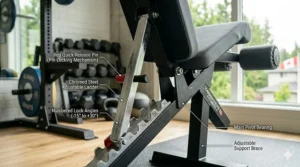
6. GYMAX 3-in-1 Decline Bench with Speed Ball & Resistance Bands – Best for Circuit Training
The GYMAX 3-in-1 Decline Bench bundles core training with upper body accessories, creating a complete circuit training station in one compact package. This bench includes an attached speed ball for boxing-style cardio intervals and resistance bands for arm work, transforming basic ab exercises into full-body conditioning sessions.
The five-level adjustable height system provides progressive decline angles from gentle to aggressive, letting you scale intensity as core strength improves. The curved slant board design follows spinal curvature naturally, reducing the lower back strain that sometimes accompanies decline work on flat benches. With a 150 kg (330 lbs) weight capacity, this bench handles most bodyweight training plus moderate external resistance.
What makes this GYMAX model uniquely suited for Canadian home gyms is its space efficiency—instead of storing a decline bench, speed bag, and resistance bands separately, everything integrates into one footprint. The bench folds for storage, collapsing to approximately 20 cm height for sliding under beds or standing in closets. For apartment dwellers or those sharing workout space with family vehicles in garages, this consolidation matters significantly.
The included accessories allow varied training that maintains engagement better than single-exercise equipment. After crushing a decline ab circuit, you can immediately transition to speed ball intervals for cardio, then finish with resistance band shoulder work. This versatility supports the high-intensity interval training becoming increasingly popular among Canadian fitness enthusiasts.
Canadian Amazon.ca customers appreciate the value proposition—three pieces of equipment for roughly the price of one quality bench alone. Some users note the speed ball mounting could be more robust, and the resistance bands feel lighter than standalone commercial versions. For the target audience of beginners and intermediate trainees building home gym foundations, these accessories provide genuine utility despite not matching specialty equipment quality.
Pros:
✅ Integrated speed ball and resistance bands enable complete circuit training
✅ Folds to 20 cm for storage in limited Canadian home spaces
✅ Five adjustable positions support progressive core training
Cons:
❌ 150 kg capacity lower than heavy-duty alternatives
❌ Accessory quality adequate but not premium-grade
Price range: Around $110-$150 CAD — The bundled accessories deliver exceptional value for Canadians wanting variety in home workouts without multiple separate purchases.
7. Finer Form Elite Sit Up Bench – Best for Tall Canadians
The Finer Form Elite Sit Up Bench addresses a common frustration for taller athletes—standard benches that leave your shoulders unsupported and create awkward positioning during decline work. With a 109 cm (43-inch) backboard length, this bench accommodates users up to 198 cm comfortably, finally giving tall Canadians equipment proportioned for their frames.
Built around reinforced steel construction with a 300 kg (660 lbs) maximum capacity, the Elite model combines serious durability with thoughtful design refinements. The three-level adjustable roller system positions ankle security perfectly whether you’re doing traditional decline sit-ups, weighted crunches, or reverse crunches using the integrated handle. The 6 cm (2.4-inch) padding thickness provides excellent cushioning without creating the sinking feeling that undermines form during explosive movements.
What separates the Elite from standard Finer Form models is the elevated stance that makes mounting and dismounting easier—particularly valuable for older Canadians or those with mobility limitations. The bench’s height creates better foot positioning during decline presses and allows more natural movement patterns during ab exercises. The reverse crunch handle adds another exercise dimension that effectively targets the often-neglected lower abdominal region.
The bench functions in three distinct modes: traditional decline sit-up bench, flat workout bench for dumbbell work, and decline bench press station. This versatility maximizes space efficiency in Canadian home gyms where square footage comes at a premium. The powder-coated steel finish resists the rust and corrosion that can develop in humid basement environments common across much of Canada.
Canadian Amazon.ca reviews emphasize the superior comfort for larger users, with athletes over 183 cm particularly appreciating the extended backboard. Some note the bench’s 24 kg weight makes frequent repositioning challenging, though that substantial build directly contributes to its exceptional stability during use. The robust construction suggests this bench will serve faithfully for years of consistent training.
Pros:
✅ 109 cm backboard length fits Canadians up to 198 cm properly
✅ 300 kg capacity supports heavy decline dumbbell work
✅ Elevated stance improves entry/exit for users with mobility concerns
Cons:
❌ 24 kg weight reduces portability between rooms
❌ Non-folding design requires permanent floor space allocation
Price range: Around $200-$270 CAD — For tall Canadians tired of equipment that doesn’t fit, the Elite model finally delivers proper ergonomics worth the investment.
Setting Up Your Ab Bench for Canadian Climate Conditions
Your new ab bench will perform differently in a cold January basement versus a humid July garage, and smart setup prevents both equipment damage and workout frustration. Start by choosing a location with stable temperature—wild swings between -15°C overnight and 20°C during the day accelerate wear on foam padding and vinyl upholstery. If your only option is an unheated garage, bring the bench indoors during extreme cold snaps below -20°C, as some adhesives and plastics become brittle at those temperatures.
Place a rubber mat or puzzle flooring underneath your bench to protect floors and improve stability. This matters more than you’d think—basement concrete can be uneven, and hardwood floors in converted bedrooms deserve protection from frame contact and sweat drips. The mat also reduces noise transmission to rooms below, keeping peace with family members or neighbours in condo buildings. For those training in shared spaces, the portable foam tiles from Canadian Tire or Amazon.ca work perfectly and store compactly when not needed.
Before your first workout, tighten all bolts and check adjustment mechanisms. Shipping across Canadian distances, combined with temperature changes in transport trucks, can loosen connections. Spend five minutes with a wrench ensuring everything is secure—this prevents mid-workout surprises where the backrest shifts unexpectedly. Apply a small amount of silicone spray to adjustment pins and folding joints monthly to maintain smooth operation, particularly important in humid areas like coastal British Columbia or the Maritimes where moisture accelerates friction.
Wipe down vinyl padding after each session to remove sweat, which contains salts that deteriorate materials over time. In dry prairie winters, the PU leather can become brittle without occasional conditioning—a simple furniture polish or vinyl protectant applied quarterly maintains suppleness. Store any included resistance bands or accessories separately rather than leaving them attached, as elastic degrades faster under constant tension, especially in temperature-varying spaces.
Real Canadian User Scenarios: Matching Benches to Lifestyles
Scenario 1: Urban Condo Dweller – Toronto Professional, 650 sq ft apartment
Sarah lives in a downtown Toronto condo with no dedicated gym space. She works from home three days weekly, sits 8-10 hours daily, and wants core strength to combat lower back discomfort. Her budget is around $200-$250 CAD, and she needs equipment that disappears when not in use. The FLYBIRD Adjustable Weight Bench matches her needs perfectly—it folds completely flat, weighs just 13 kg for easy moving between closet and living room, and provides enough exercise variety to maintain long-term engagement. The 800-pound capacity means she’ll never outgrow it even if she progresses to heavy weighted decline work. For Sarah, the slightly higher price justifies never tripping over equipment in her limited space.
Scenario 2: Suburban Family Gym – Calgary Family, Basement Home Gym
The Morrison family in Calgary converted half their basement into a shared workout space where parents and teenage kids all train. They need durable equipment that accommodates heights from 165 cm to 188 cm and supports both beginner and intermediate strength levels. Budget is flexible around $250-$300 CAD for quality that lasts. The Finer Form Elite Sit Up Bench serves their entire family—the 109 cm backboard fits their tall son comfortably, the 300 kg capacity handles dad’s heavy decline presses, and the multi-position functionality keeps workouts varied for everyone. The elevated stance makes entry/exit easier for mom who’s recovering from knee issues. One bench serves four users effectively, justifying the investment.
Scenario 3: Serious Home Gym Athlete – Rural Manitoba Strength Trainer
Marcus lives outside Brandon, Manitoba, where the nearest commercial gym is 45 minutes away. He’s been training consistently for five years, follows structured programs, and needs equipment that won’t limit his progression. He’s comfortable spending $350-$400 CAD for something that lasts a decade. The Rep Fitness AB-3100 V3 matches his requirements—the 318 kg capacity supports his heavy decline dumbbell work, the commercial-grade construction handles daily use without degrading, and the 10-year warranty provides confidence for long-term investment. Marcus appreciates that this bench feels like the equipment in the commercial gyms he occasionally visits, eliminating the compromise that often comes with home gym gear.
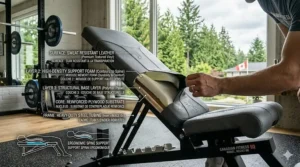
How to Choose Ab Bench Canada Equipment: 6 Decision Factors
1. Weight Capacity Versus Your Training Goals
Match the bench’s maximum load to your training ambitions. If you’re doing bodyweight decline sit-ups and modest resistance, a 150-200 kg capacity suffices and saves money. Planning to progress into heavy decline dumbbell presses with 40-50 kg dumbbells? You need 300+ kg capacity to maintain stability and safety margins. Remember that stated capacity includes your body weight plus any external resistance—a 100 kg athlete doing weighted decline sit-ups with 20 kg approaches 120 kg total load. Canadian benches in the budget tier ($100-$150 CAD) typically max around 150-200 kg, mid-range options ($180-$280 CAD) offer 250-350 kg, while premium models ($300+ CAD) deliver 350-450 kg ratings.
2. Adjustability Range for Exercise Variety
More adjustment positions mean more targeted training angles. A three-position bench (flat, moderate decline, steep decline) covers basic needs for beginners. Five to seven positions allow precise angle selection as you develop specific weak points in your abdominal wall. Eight or more positions support full-body training beyond just core work. Consider how many different ab exercises you’ll realistically perform—if you’re sticking with traditional decline sit-ups and leg raises, minimal adjustability suffices. Planning varied programming with Russian twists, decline presses, and hyperextensions? Invest in comprehensive adjustability from the start rather than upgrading later.
3. Footprint Versus Available Space
Measure your actual workout area before ordering. A bench listing 150 cm length needs 180-200 cm of floor space when you account for movement clearance. Check folded dimensions if storage matters—some benches collapse to 20 cm height for sliding under beds, others fold to 40 cm that requires closet or corner storage. In Canadian homes where basements double as recreation rooms or garages store vehicles, truly compact folding often determines whether equipment gets used consistently or sits in the way causing resentment. Don’t forget width—some benches are 45 cm wide, others stretch to 60 cm, impacting how they fit through doorways and between basement support poles.
4. Padding Quality for Session Comfort
Thickness matters, but so does density and cover material. Budget benches use 3-4 cm foam that compresses quickly, creating pressure points during extended sessions. Mid-range options provide 4.5-5 cm medium-density foam that maintains support through multiple sets. Premium benches feature 6+ cm multi-layer padding with firm base foam topped by softer comfort layers. The covering material affects durability in Canadian climate extremes—cheap vinyl cracks in cold basements and peels in humid garages. Quality PU leather resists temperature damage better and wipes clean easily. If you’re training 3-4 times weekly with 30-45 minute sessions, invest in genuine padding quality rather than tolerating discomfort that undermines workout intensity.
5. Frame Stability During Dynamic Movements
Wobbly benches aren’t just annoying—they’re dangerous during explosive movements and heavy loading. Check reviews specifically mentioning stability during decline sit-ups and presses. Heavier benches (20+ kg) generally provide better stability but sacrifice portability. Look for reinforced frames with triangle bracing at stress points, wide stance footprints that resist tipping, and rubber floor contacts that prevent sliding on smooth surfaces. Canadian reviewers on Amazon.ca often mention stability performance, making their feedback particularly valuable. A bench that shifts during your final rep of a decline set with 40 kg dumbbells creates injury risk that far outweighs any cost savings from choosing the cheapest option.
6. Assembly Complexity and Storage Requirements
Most benches arrive requiring 15-30 minutes assembly with basic tools (usually included). Check whether bolts use standard metric sizes common in Canada rather than proprietary hardware requiring special tools. Some models come pre-assembled, saving time but increasing shipping costs. For storage, confirm whether “foldable” means tool-free folding in under 30 seconds or whether you need to remove pins and manipulate multiple joints. If you’re sharing space and need to set up/break down frequently, truly quick folding becomes essential rather than a nice-to-have feature. Reading specific Canadian customer reviews about assembly clarity and storage convenience provides real-world insight beyond manufacturer marketing.
Common Mistakes Canadian Buyers Make With Core Equipment
Mistake #1: Ignoring Winter Performance Testing
Buying an ab bench in July when your garage is a comfortable 22°C, then discovering the padding becomes rock-hard in February at -15°C creates frustrating buyer’s remorse. Not all foam and vinyl materials maintain flexibility through Canadian temperature extremes. Before finalizing a purchase, check reviews from Canadian buyers in provinces with similar climates to yours. Prairie winters differ from Maritime winters, and equipment performing well in Vancouver’s mild dampness might crack in Saskatchewan’s dry -30°C cold. If you’re training in an unheated space, prioritize benches with cold-resistant materials or commit to storing the equipment indoors when not in use. Replacing cracked padding or broken adjustment mechanisms costs more than paying slightly extra initially for proper cold-weather materials.
Mistake #2: Underestimating Required Space
Measuring your workout area and concluding “I have 180 cm, this 150 cm bench will fit” overlooks movement clearance. You need space behind the bench for your head during decline movements, space in front for leg extensions, and side clearance for mounting/dismounting safely. A realistic rule of thumb: add 30 cm to the bench length and 40 cm to the width for comfortable training space. In Canadian basements with support poles, water heaters, and furnaces competing for square footage, accurate space planning prevents the common scenario where your new bench technically fits but practically crowds the area into unusable frustration. Measure twice, order once—and account for the space you’ll occupy during exercises, not just the empty equipment footprint.
Mistake #3: Choosing Cheapest Over Value
The $79 CAD bench on Amazon.ca looks tempting compared to the $229 option, but fitness equipment follows a clear cost-quality curve. Below approximately $120 CAD, you’re typically getting frames that wobble, padding that compresses within months, and adjustment mechanisms that stick or slip during use. The frustration of fighting unreliable equipment undermines workout consistency, and most people abandon poorly-made benches within 6-12 months. Meanwhile, the mid-range bench in the $180-$280 CAD range delivers several years of reliable service. Calculate cost per use rather than just upfront price—a $229 bench used three times weekly for three years equals roughly 17 cents per workout. The $79 bench abandoned after five months of frustration costs $3.95 per workout before ending up in the landfill. Cheap rarely equals economical in fitness equipment.
Mistake #4: Neglecting Height Compatibility
Standard ab benches assume users around 170-178 cm tall, leaving shorter and taller Canadians with awkward positioning. If you’re under 165 cm, standard ankle rollers might be spaced too far apart, creating uncomfortable hip angles during decline work. Over 188 cm, and typical 38-inch backboards leave your shoulders hanging unsupported. Always check specific dimensions—backboard length, roller spacing, and adjustability range—against your actual height. Taller Canadians should prioritize 43+ inch (109+ cm) backboards and multi-position roller adjustments. Shorter users need benches with wide adjustment ranges that don’t bottom out before reaching proper positioning. Training with improper fit doesn’t just reduce effectiveness; it increases injury risk from compensatory movement patterns.
Mistake #5: Forgetting About Weight Distribution in Decline Work
Many Canadians buy an ab bench planning to do traditional sit-ups, then discover decline work places completely different stress on the frame. Decline exercises concentrate your full body weight plus any external resistance into the lower support points and roller assembly. A bench rated 150 kg capacity for flat use might wobble concerning during 30° decline work because weight distribution changes dramatically. If decline training is your primary goal (and it should be for serious ab development), verify the capacity rating applies specifically to decline angles, not just flat positioning. Some manufacturers state separate ratings; others only test flat. Customer reviews mentioning decline stability become crucial information sources.
Ab Bench vs Traditional Core Training: Performance Comparison
| Feature | Ab Bench Training | Floor/Mat Exercises | Gym Cable Machines |
|---|---|---|---|
| Progressive Overload | ⭐⭐⭐⭐⭐ Easy to add weight/angle | ⭐⭐ Limited to body weight variations | ⭐⭐⭐⭐⭐ Precise load adjustment |
| Space Efficiency | ⭐⭐⭐⭐ Folds to 20-40 cm when not used | ⭐⭐⭐⭐⭐ Just needs floor space | ⭐ Requires commercial gym footprint |
| Exercise Variety | ⭐⭐⭐⭐ 8-12 core exercises typical | ⭐⭐⭐ 6-8 variations possible | ⭐⭐⭐⭐⭐ Unlimited angles and positions |
| Setup Time | ⭐⭐⭐⭐ Unfold and adjust (30 seconds) | ⭐⭐⭐⭐⭐ Instant – just grab mat | ⭐⭐⭐ Drive to gym, wait for equipment |
| Cost Over 3 Years | $200-$300 CAD one-time | $40-$80 CAD for quality mat | $1,200-$1,800 CAD in membership fees |
| Winter Training | ⭐⭐⭐⭐ Train at home regardless of weather | ⭐⭐⭐⭐⭐ Always accessible at home | ⭐⭐ Weather affects gym access in rural areas |
The comparison reveals why ab benches have surged in Canadian home gym popularity. While they can’t match commercial cable machines for pure versatility, benches provide 80% of the benefit at 20% of the ongoing cost. For Canadians in rural areas where gym access means 30-60 minute drives, or urban dwellers paying $60-80 monthly for memberships they use inconsistently, a quality home bench delivers better return on investment within six months. The key advantage over floor exercises is progressive overload capability—you can systematically increase difficulty by adjusting decline angles and adding weight, creating the progressive stimulus necessary for continued strength development. Floor crunches eventually plateau because you can’t make them significantly harder without external equipment.
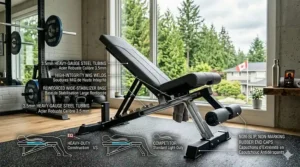
Long-Term Maintenance: Keeping Your Ab Bench Canada-Ready
Monthly Maintenance (5 Minutes)
Wipe down all vinyl surfaces with a damp cloth and mild soap to remove accumulated sweat salts that deteriorate materials over time. Check all visible bolts for tightness, particularly at pivot points and adjustment mechanisms—the vibration from repeated use gradually loosens connections. Apply silicone spray lubricant to adjustment pins and folding joints, especially important in Canadian homes where humidity swings between dry winter heating and damp summer conditions cause metals to stick. Inspect foam roller coverings for cracks or tears that might pinch skin during ankle lock-down. This quick routine prevents 90% of common bench problems before they become serious.
Seasonal Adjustments
When transitioning from heated indoor winter training to garage/basement summer sessions, allow 24 hours for vinyl and foam to acclimate to temperature changes before intense use. Rapid temperature shifts can stress materials. In spring, check for any rust development on exposed metal parts, particularly in humid coastal regions or damp basements. A light application of WD-40 or similar moisture-displacing product protects steel components. During fall, consider storing any included resistance bands indoors rather than leaving them in cold garages where rubber compounds become brittle. These simple seasonal checks extend equipment lifespan significantly in Canadian climate extremes.
Addressing Common Wear Issues
If padding begins showing compression in high-contact areas, you can extend life by adding a foam pad or towel during use rather than immediately replacing the entire bench. When adjustment pins start catching or requiring excessive force, disassemble the mechanism, clean thoroughly to remove built-up debris, and relubricate with silicone spray—usually restores smooth operation. For benches stored in cold spaces developing surface rust, light sanding followed by touch-up paint prevents progression into structural problems. Most quality benches last 5-7 years with proper maintenance versus 2-3 years when neglected, making simple care well worth the minimal time investment.
Ab Bench Exercises: Complete Workout Program for Canadians
Beginner Routine (3 times per week, 15-20 minutes)
Start with the bench set at the shallowest decline angle (typically position 1 or 2). Perform three sets of 12-15 decline sit-ups with 60-90 seconds rest between sets, focusing on controlled movement rather than speed. Add two sets of 10-12 leg raises, keeping your lower back pressed against the bench throughout. Finish with two sets of 12-15 decline reverse crunches, using the bench’s handle if available. This basic routine builds foundational core strength without overwhelming beginners. Progress by adding repetitions before increasing decline angle—master 20 reps per set before moving to a steeper position.
Intermediate Program (4 times per week, 25-30 minutes)
Set the bench to a moderate decline (position 3-4). Perform four sets of 15-20 weighted decline sit-ups, holding a 5-10 kg weight plate across your chest. Follow with three sets of 12-15 decline Russian twists, rotating fully to each side while holding the weight. Add three sets of 15-20 bicycle crunches, then finish with three sets of 12-15 decline leg raises with a slight pause at the top of each repetition. This volume and intensity develop visible abdominal definition when combined with appropriate nutrition. Increase weight or decline angle every 2-3 weeks as strength improves.
Advanced Training (5-6 times per week, 35-45 minutes)
Utilize the bench’s steepest decline positions (5-7) for maximum difficulty. Perform five sets of 20-25 weighted decline sit-ups with 15-20 kg, focusing on full range of motion. Add four sets of 15-20 decline cable crunches if you have cable access, or weighted Russian twists as an alternative. Include four sets of 20-25 decline leg raises with ankle weights (2-5 kg per leg). Finish with three sets of maximum-effort decline planks, holding your feet in the roller position and hands on the ground. This advanced programming builds the core strength necessary for heavy compound lifts and athletic performance. Adjust decline angles and resistance every workout within a 3-4 week mesocycle to prevent adaptation plateaus.
Optimizing Your Investment: Accessories Worth Adding
Essential Addition: Quality Gym Mat ($40-$80 CAD)
A 6-8mm thick rubber gym mat under your bench transforms stability and floor protection dramatically. The mat prevents the bench from sliding during intense decline work, especially on smooth basement concrete or laminate flooring common in Canadian homes. It also dampens noise transmission to rooms below—crucial in condos or homes with sensitive sleepers. Canadian Tire and Amazon.ca both carry excellent options; prioritize mats advertised specifically for heavy equipment over yoga mats that compress too much under bench weight.
Performance Upgrade: Adjustable Weight Vest ($80-$150 CAD)
Once bodyweight decline sit-ups become too easy, a weight vest provides more comfortable progressive overload than holding plates awkwardly across your chest. Look for vests with 10-20 kg capacity and adjustable weight increments (typically 1-2 kg additions). The distributed weight placement maintains better form during decline work compared to plate-holding that creates imbalanced torque. Vests also transition seamlessly to other exercises like push-ups, pull-ups, and walking, maximizing utility beyond just ab training.
Comfort Improvement: Ab Mat or Lumbar Support ($25-$45 CAD)
For users experiencing lower back discomfort during decline work, a small lumbar support pad bridges the gap between the bench’s fixed curvature and your individual spinal shape. These aren’t necessary for everyone, but athletes with previous lower back issues or those over 40 often find they enable pain-free training that would otherwise be uncomfortable. Position the pad just above your tailbone for optimal support during sit-ups and crunches. This small investment often means the difference between consistent training and avoided workouts due to discomfort.
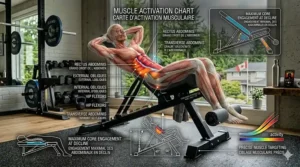
FAQ: Ab Bench Canada Questions Answered
❓ How effective are decline ab benches compared to floor exercises for building visible abs?
❓ Can I use an ab bench effectively in an unheated Canadian garage during winter?
❓ What weight capacity do I actually need for an ab bench if I weigh 95 kg?
❓ How much space do I realistically need for an ab bench in a Canadian basement?
❓ Are expensive ab benches worth the premium over budget models for home gym use?
Conclusion: Building Your Core Strength Foundation in Canada
Choosing the right ab bench Canada option transforms core training from frustrating floor work into systematic strength building with clear progression paths. The benches in this guide represent genuine quality available through Amazon.ca, verified for Canadian availability, appropriate pricing in CAD, and proven performance through real user feedback from coast to coast.
For budget-conscious Canadians establishing their first home gym, the GYMAX Sit Up Bench delivers solid fundamentals around $100-$130 CAD. Space-limited apartment dwellers should prioritize the FLYBIRD Adjustable Weight Bench that folds completely while offering commercial-grade 800-pound capacity. Serious athletes committed to long-term home training justify the investment in the Rep Fitness AB-3100 V3, which eliminates compromise with 318 kg capacity and 10-year warranty backing. Taller Canadians over 183 cm finally get proper equipment fit with the Finer Form Elite Sit Up Bench and its 109 cm backboard.
Remember that the bench itself represents just one component of visible ab development. The Public Health Agency of Canada recommends adults engage in at least 150 minutes of moderate-to-vigorous aerobic activity weekly alongside muscle-strengthening activities, establishing the foundation for overall fitness that makes core training most effective. Combine consistent bench work with appropriate nutrition focusing on whole foods, adequate protein intake, and caloric balance for your goals. The bench creates the training stimulus; your recovery and nutrition allow the adaptation.
Start with whichever bench fits your current situation—even the budget option dramatically outperforms doing nothing. Progress systematically by adding repetitions, then steeper decline angles, then external resistance. Within 8-12 weeks of consistent training three to four times weekly, you’ll notice improved core stability during daily activities, better posture throughout long work days, and enhanced performance in other exercises that rely on core strength. Within 16-24 weeks, visible abdominal definition emerges as body fat percentage decreases and muscle development increases.
Your core strength journey begins with equipment that supports rather than limits your efforts. The benches reviewed here will serve Canadian home gyms faithfully for years, adapting to your improving fitness rather than becoming obsolete as you progress. Make the investment, start the work, and build the foundation for a stronger, more resilient body.
✨ Don’t Miss These Exclusive Deals!
🔍 Take your core training to the next level with these carefully selected products. Click on any highlighted item to check current pricing and availability on Amazon.ca. These tools will help you create authentic strength results your fitness goals demand!
Recommended for You
- 7 Best Decline Benches for Abs Canada 2026
- 7 Best Utility Bench for Dumbbells Canada 2026
- 7 Best Commercial Grade Adjustable Bench Canada 2026
Disclaimer: This article contains affiliate links. As an Amazon Associate, I earn from qualifying purchases. If you purchase products through these links, we may earn a small commission at no additional cost to you.
✨ Found this helpful? Share it with your friends! 💬🤗
