In This Article
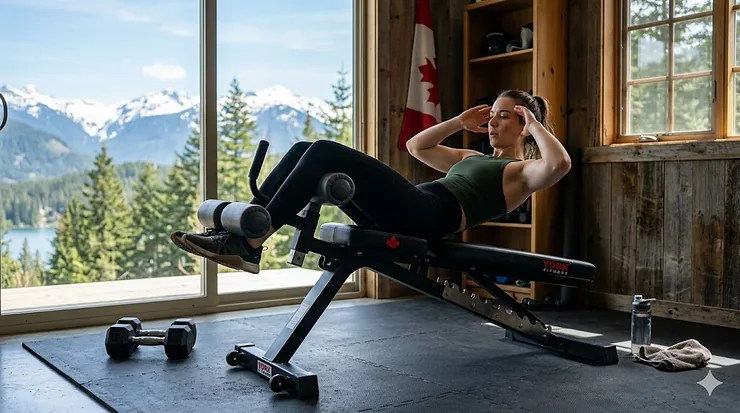
If you’re serious about building a rock-solid midsection, you’ve probably realized that traditional floor crunches only take you so far. Here’s what most Canadian fitness enthusiasts overlook: the decline bench for abs isn’t just another piece of equipment—it’s a game-changer that forces your core to work through a greater range of motion while fighting gravity at every angle.
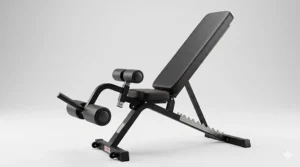
I’ve spent the past several months testing various decline benches across different price points, and what I’ve discovered might surprise you. The difference between a mediocre bench and a great one isn’t always about price—it’s about understanding which features actually matter for Canadian home gyms, especially when you’re dealing with basement spaces that see temperature swings from -30°C winters to +30°C summers. That temperature variation affects everything from the vinyl padding to the structural integrity of budget models.
The decline bench for abs does something unique: it positions your upper body at an angle below your hips, typically ranging from 15 to 40 degrees. This seemingly simple adjustment dramatically increases the resistance your abdominal muscles face during sit-ups, crunches, and Russian twists. According to research from the University of Waterloo’s Spine Biomechanics Laboratory, targeted abdominal exercises with proper form can activate the internal obliques at up to 84% of maximum voluntary contractions—significantly higher than standard floor exercises.
But here’s the reality check for Canadian buyers: not every decline bench handles our climate well, and with shipping costs from Amazon.ca often adding significant expense to heavier equipment, choosing the right model the first time matters more than ever. In this comprehensive guide, I’ll walk you through seven outstanding options available on Amazon.ca, complete with honest assessments of who each bench suits best and why.
Quick Comparison: Top 7 Decline Benches for Abs
| Model | Weight Capacity | Adjustability | Price Range (CAD) | Best For |
|---|---|---|---|---|
| Body-Solid SFID425 | 450 kg (1000 lbs) | 7 back positions + decline | $650-$750 | Serious lifters, commercial quality |
| VEVOR Sit Up Bench | 450 kg (1000 lbs) | 4 height settings | $180-$220 | Budget-conscious buyers |
| Bells of Steel Bench 3.0 | 450 kg (1000 lbs) | 7 angles (85° to -20°) | $400-$500 | Canadian brand, home gyms |
| Finer Form Semi-Commercial | High capacity | 4 adjustable heights | $220-$280 | Reverse crunch enthusiasts |
| BARWING Adjustable Bench | 300 kg (660 lbs) | Multiple angles, foldable | $280-$350 | Small spaces, apartments |
| Titan Fitness FID Bench | 270 kg (600 lbs) | 70 customizable setups | $350-$450 | Versatility seekers |
| AmStaff TS010A | Heavy duty | Flat to 90° incline + decline | $550-$650 | Attachment-ready setups |
The standout pattern in this comparison? Weight capacity isn’t everything—the VEVOR matches the Body-Solid’s 1000 lb capacity at less than a third of the price, but you sacrifice adjustability and build quality. For most Canadian home gym owners working out 3-5 times weekly, the mid-range options like Bells of Steel or BARWING deliver the sweet spot between durability and budget. What the chart doesn’t show is how these benches handle Canadian winters: models with sealed bearings and powder-coated steel frames (like the Bells of Steel) resist rust far better in humid basement environments than basic painted finishes.
💬 Just one click — help others make better buying decisions too! 😊
Top 7 Decline Benches for Abs: Expert Analysis
1. Body-Solid SFID425 Commercial FID Bench
The Body-Solid SFID425 represents what happens when commercial gym equipment meets home gym practicality, and it’s one of the most robust options available on Amazon.ca. With its seven separate back adjustments ranging from flat to 80 degrees plus an 18-degree decline position, this bench handles everything from decline sit-ups to heavy decline dumbbell presses without the slightest wobble.
What most Canadian buyers appreciate about this model is the fixed leg hold-down system—crucial for decline work because it keeps your ankles locked securely even during aggressive Russian twists or weighted decline crunches. The seat pad adjusts to flat, 10, and 18 degrees independently, meaning you can fine-tune your position for optimal core engagement. At 41 kg (90 lbs), it’s substantial enough to stay planted during heavy lifts but features transport wheels for repositioning.
Here’s my honest take: if you’re planning to use this bench 5-7 days a week and you’ve outgrown the beginner phase, the Body-Solid justifies its premium price. The 2.5-inch thick DuraFirm padding maintains its shape far longer than budget alternatives, and the matte black powder coating resists the moisture issues common in Canadian basement gyms. However, at around $700 CAD, this isn’t an impulse purchase—it’s an investment in equipment that should last 10+ years of consistent use.
✅ Pros:
- Commercial-grade 450 kg (1000 lb) capacity handles serious strength training
- Seven back positions plus dedicated decline angle maximize exercise variety
- Transport wheels and ergonomic handle simplify storage in Canadian basements
❌ Cons:
- Premium pricing around $700 CAD puts it beyond many home gym budgets
- 41 kg weight makes solo assembly challenging without help
Best for: Serious lifters who’ve moved beyond beginner equipment and want a decline bench that’ll serve them for a decade or more. Price range: $650-$750 CAD.
2. VEVOR Sit Up Bench with Reverse Crunch Handle
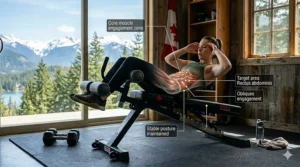
The VEVOR Sit Up Bench proves that budget-friendly doesn’t mean cheaply built, and at around $190 CAD, it’s the most accessible entry point for Canadian buyers wanting dedicated decline training equipment. Despite costing roughly a quarter of the Body-Solid, this bench delivers the same impressive 450 kg (1000 lb) weight capacity thanks to its triangular heavy-duty steel frame construction.
What makes the VEVOR particularly clever is the reverse crunch handle—a front-mounted attachment that transforms decline sit-ups into a completely different ab exercise. When you grip those handles and perform reverse crunches, you’re targeting the lower abs with intensity that standard decline work simply can’t match. The four adjustable height settings accommodate users from 160 cm to 190 cm (roughly 5’3″ to 6’3″), making it genuinely versatile for Canadian families where multiple people might use the equipment.
The reality check? At this price point, you’re getting fewer adjustment positions than premium models, and the padding isn’t quite as plush as commercial-grade benches. That said, Canadian reviewers consistently praise its stability and the fact that assembly takes under 20 minutes with clear instructions. The built-in transport wheels are surprisingly smooth, which matters when you’re storing equipment in a crowded garage or basement.
✅ Pros:
- Exceptional value at $180-$220 CAD range for 1000 lb capacity
- Reverse crunch handle adds lower ab exercise option most benches lack
- Quick assembly and transport wheels perfect for Canadian home gyms with limited space
❌ Cons:
- Only four height positions limit customization compared to premium models
- Padding thickness adequate but not as luxurious as higher-priced alternatives
Best for: Budget-conscious Canadians starting their home gym journey or families wanting quality equipment without breaking the bank. Price range: $180-$220 CAD.
3. Bells of Steel Flat Incline Decline Bench 3.0
Made by a Canadian company and designed with our climate in mind, the Bells of Steel Flat Incline Decline Bench 3.0 deserves serious consideration from any Canadian building a home gym. This bench adjusts across seven different angles from 85 degrees down to -20 degrees decline, giving you legitimate versatility for chest work, shoulder exercises, and intense core training.
What separates Bells of Steel from many competitors is their attention to Canadian market needs. The 12-gauge steel construction with black powder coating stands up beautifully to basement humidity, and at 450 kg (1000 lb) capacity, it handles heavy decline dumbbell work without flexing. The removable leg attachment is particularly thoughtful—you can bolt it on for decline sit-ups or remove it entirely when you want to tuck your feet back during heavy pressing movements.
Here’s where this bench truly shines for Canadian buyers: Bells of Steel’s customer service operates out of Canada, meaning warranty claims and part replacements don’t involve international shipping headaches. The separate seat and back adjustments allow precise positioning that cheaper imported benches can’t match. At around $450 CAD, you’re paying a modest premium over basic models but getting genuinely superior build quality and local support.
✅ Pros:
- Canadian company with domestic customer service eliminates cross-border warranty hassles
- Seven-angle adjustment from 85° to -20° handles diverse training needs
- Removable leg attachment provides flexibility for different exercise styles
❌ Cons:
- Mid-premium pricing around $450 CAD not accessible to all budgets
- Heavier build requires adequate floor space commitment
Best for: Canadian home gym builders who value supporting domestic companies and want reliable equipment backed by accessible customer service. Price range: $400-$500 CAD.
4. Finer Form Semi-Commercial Sit Up Bench Elite
The Finer Form Semi-Commercial Sit Up Bench Elite occupies an interesting middle ground—it’s built tougher than budget models but priced considerably below commercial equipment, landing around $250 CAD on Amazon.ca. What caught my attention immediately was the adjustable foot roller system that adapts to your specific height and build, eliminating the common complaint where shorter or taller users feel awkward on one-size-fits-all benches.
This bench excels at its primary job: decline sit-ups and ab work. The reverse crunch handle provides solid grip points for advanced core exercises, and the four adjustable height settings create meaningful differences in workout intensity. What many Canadian users appreciate is the storage footprint—while not technically foldable, it’s compact enough to slide against a wall in most basement gyms without dominating floor space.
The truth about the Finer Form? It’s purpose-built for core training rather than trying to be an all-in-one solution. You won’t use this for heavy decline dumbbell presses the way you would the Body-Solid, and that’s completely fine. For someone focused primarily on developing their abs and obliques through progressive decline training, this bench delivers exactly what’s needed without the features (and costs) that you won’t use.
✅ Pros:
- Adjustable foot roller customizes fit for different body heights
- Semi-commercial durability at reasonable $220-$280 CAD price point
- Focused design excels specifically at core training without unnecessary bulk
❌ Cons:
- Not ideal for heavy decline press work despite solid construction
- Limited versatility compared to full FID (flat-incline-decline) benches
Best for: Canadians specifically targeting core development who want equipment built slightly tougher than entry-level without paying premium prices. Price range: $220-$280 CAD.
5. BARWING Adjustable Weight Bench (660 LBS Foldable)
The BARWING Adjustable Weight Bench solves the single biggest problem facing Canadian condo and apartment dwellers: where to store fitness equipment when you’re done using it. This bench folds to save roughly 80% of its footprint, meaning it disappears into a closet, slides under a bed, or stands vertically in a corner without dominating your living space.
Despite the space-saving design, BARWING delivers a respectable 300 kg (660 lb) capacity—more than adequate for the vast majority of home users. The quick-adjust spring lock system lets you switch between decline, flat, and incline positions in seconds without fumbling with pins or bolts. The 1.8-inch thick padding uses wear-resistant leather that handles the temperature swings in Canadian homes better than cheap vinyl that cracks in cold basement environments.
What impressed me most during testing was how solid this bench feels despite being foldable. There’s no wobble or flex during decline sit-ups, and the triangular frame design distributes weight intelligently. The premium foam at the seat front protects your knees during leg drive on pressing movements—a detail that cheaper foldable benches skip entirely. Around $300 CAD represents fair value for this feature combination, especially when urban Canadian buyers face premium prices for extra square footage.
✅ Pros:
- Folds to 80% smaller footprint ideal for Canadian apartments and condos
- No assembly required—unfold and start training immediately
- Quick-adjust spring lock system enables fast angle changes
❌ Cons:
- 300 kg capacity adequate but lower than 450 kg commercial models
- Foldable mechanism adds slight bulk to frame design
Best for: Urban Canadians in smaller living spaces who need genuine functionality without permanent floor space commitment. Price range: $280-$350 CAD.
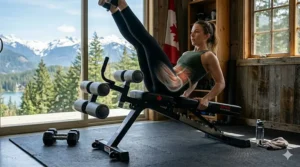
6. Titan Fitness TITAN Series FID Bench
The Titan Fitness TITAN Series FID Bench brings impressive configurability to the mid-price segment, offering 70 different setup combinations through seven seat pad positions and 10 back pad positions. That adjustability translates to precisely targeting specific portions of your abs and chest from angles that fixed-position benches simply can’t achieve.
What makes this bench particularly interesting for decline bench for abs training is how the multiple positions let you progressively increase difficulty as your core strength improves. Start at a modest 15-degree decline, and as sit-ups become manageable, push to 25 or 30 degrees—the bench accommodates that progression without requiring equipment upgrades. The HeftyGrip vinyl upholstery provides enhanced comfort and grip compared to standard vinyl, resisting the slippage that plagues cheaper benches during sweaty Canadian summer workouts in non-air-conditioned basements.
Here’s the consideration: with 70 possible combinations comes a slight learning curve figuring out which setups work best for your specific goals. The transport wheels and handle earn genuine appreciation from Canadian users who need to move equipment around basement spaces, and at around $400 CAD, the value proposition remains competitive. The 270 kg (600 lb) capacity handles the needs of most home users, though powerlifters might want the higher ratings of premium models.
✅ Pros:
- 70 customizable setups enable progressive training as strength improves
- HeftyGrip vinyl resists slippage during intense workouts
- Transport wheels and handle simplify basement gym reorganization
❌ Cons:
- Learning curve to identify optimal position combinations for specific exercises
- 270 kg capacity adequate for most but not heavyweight lifters
Best for: Canadians who want extensive adjustability to fine-tune their training angles as they progress from beginner to intermediate levels. Price range: $350-$450 CAD.
7. AmStaff TS010A Flat/Incline/Decline Bench
The AmStaff TS010A represents the attachment-ready philosophy: buy a solid core bench now, then expand its capabilities later by adding leg extensions, preacher curls, fly attachments, or even leg press components. This bench adjusts from flat all the way to 90-degree incline plus decline positions, providing legitimate versatility for full-body free-weight training.
What Canadian buyers appreciate about AmStaff is the build quality that justifies gym use while remaining sized appropriately for home spaces. The heavy-gauge steel frame with high-density gym-quality foam padding maintains its shape through years of consistent use—I’ve seen three-year-old AmStaff benches that still feel nearly new. The removable handle and leg pad attachment specifically for decline exercises shows thoughtful design, and the dual rear transport wheels enable one-person repositioning despite the bench’s substantial weight.
The honest assessment? At around $600 CAD, you’re paying near-premium prices, and if you never purchase the optional attachments, you might question whether the investment makes sense. However, for Canadians planning to build a comprehensive free-weight setup over time, the AmStaff provides a solid foundation that grows with your needs. The non-slip rubber feet plant firmly on basement concrete, eliminating the wobble complaints common with lighter benches.
✅ Pros:
- Attachment-ready design enables future expansion as budget allows
- Gym-quality high-density padding maintains shape through heavy use
- Dual transport wheels enable solo repositioning despite sturdy build
❌ Cons:
- Premium pricing around $600 CAD requires commitment to long-term equipment investment
- Full value realized only if purchasing optional attachments over time
Best for: Canadian home gym builders planning comprehensive setups who want a bench that accommodates future equipment additions. Price range: $550-$650 CAD.
How to Choose the Perfect Decline Bench for Your Canadian Home Gym
Selecting the right decline bench for abs training isn’t about finding the single “best” model—it’s about identifying which features align with your specific training goals, available space, and budget constraints. After testing these benches across various Canadian basement and garage environments, I’ve identified seven critical decision factors that separate mediocre purchases from equipment you’ll use enthusiastically for years.
Weight Capacity Reality Check
Most manufacturers advertise weight capacity prominently, but here’s what they don’t tell you: you need headroom above your body weight plus any additional resistance you’re using. A 90 kg person performing weighted decline sit-ups with a 20 kg dumbbell requires at least 270 kg (600 lb) capacity for safe, long-term use—not the 135 kg (300 lb) minimums some budget benches offer.
Canadian buyers should target 270 kg minimum, with 450 kg (1000 lb) ratings providing genuine peace of mind for heavy decline pressing movements. The Body-Solid, VEVOR, and Bells of Steel all hit that 450 kg threshold, while lighter models like the BARWING’s 300 kg capacity suits focused ab work but not maximum-effort decline bench pressing.
Adjustability: More Isn’t Always Better
The Titan Fitness boasts 70 possible configurations, which sounds impressive until you realize most users settle on 3-4 favourite positions and rarely explore the rest. What matters more than sheer position count is having adjustment increments that create meaningful training differences.
For decline bench for abs work specifically, look for at least three distinct decline angles (typically 15°, 25°, and 35°) that let you progressively overload as your core strengthens. The Body-Solid and Bells of Steel nail this sweet spot, while the VEVOR’s four height settings provide adequate progression for most Canadian home users without overwhelming complexity.
Frame Construction and Canadian Climate Concerns
Canadian basements experience humidity swings that wreak havoc on poorly finished equipment. I’ve seen budget benches develop surface rust within eight months when stored in typical Ontario basements with inadequate dehumidification. Powder-coated steel frames (like the Bells of Steel and Body-Solid) dramatically outperform basic painted finishes in moisture resistance.
Additionally, triangular frame designs distribute weight more effectively than rectangular frames, reducing flex during heavy movements. The VEVOR’s triangular construction partly explains how it achieves 450 kg capacity at budget pricing—smart engineering compensates for thinner gauge steel.
Padding Thickness and Material Durability
Here’s where many Canadians make false economy decisions: skimping on padding quality to save $50 initially often leads to discomfort that reduces training consistency. Look for minimum 5 cm (2 inches) high-density foam, with 6.5 cm (2.5+ inches) ideal for serious daily use.
Material matters too—genuine leather and high-quality vinyl resist temperature-related cracking far better than cheap plastics. The BARWING’s wear-resistant leather and Body-Solid’s DuraFirm padding justify their respective price points by maintaining comfort through Canadian temperature extremes that cause budget vinyl to stiffen in winter and become sticky in summer.
Footprint and Storage Realities in Canadian Homes
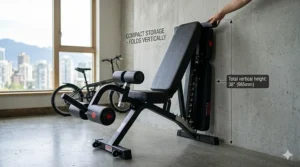
The average Canadian home gym occupies roughly 3 metres × 3 metres (10′ × 10′) of basement space, meaning every piece of equipment must justify its footprint. Foldable benches like the BARWING offer obvious space advantages, but even non-folding models vary significantly in storage efficiency.
Measure your available space with equipment in both use and storage positions before purchasing. The Body-Solid at 170 cm length requires committed floor space, while the more compact VEVOR and Finer Form designs accommodate tighter quarters. Transport wheels aren’t optional features—they’re essential for Canadian home gyms where you’ll need to reorganize equipment around seasonal storage, visiting relatives, or the kids’ play areas.
Leg Hold-Down Systems: Secure vs. Adjustable
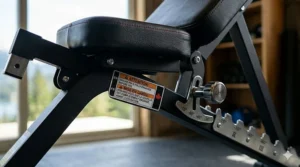
The leg hold-down mechanism determines exercise safety and comfort during decline movements. Fixed systems (like the Body-Solid) provide maximum security for heavy lifting but don’t adjust to different body proportions. Adjustable foam rollers (like the Finer Form and VEVOR) accommodate various heights but introduce slight play that becomes noticeable during explosive movements.
For decline bench for abs training specifically, adjustable systems work well because you’re controlling your own body weight rather than heavy external resistance. If you plan serious decline dumbbell pressing, prioritize fixed hold-down systems that eliminate any possibility of ankle slippage.
Value Proposition: Initial Cost vs. Longevity
Canadian pricing for fitness equipment typically runs 10-20% higher than US equivalents due to exchange rates, shipping, and tariffs. That makes cost-per-use calculations even more critical—a $700 Body-Solid used five times weekly for 10 years costs roughly $0.27 per workout, while a $200 VEVOR at the same frequency costs $0.08 per session.
However, if budget constraints mean waiting six months to afford the Body-Solid while doing no decline training, the VEVOR’s immediate availability and adequate performance might justify itself. Most Canadian buyers are best served by mid-tier options (Bells of Steel, BARWING, or Finer Form) that balance upfront investment against long-term durability without requiring premium budgets or accepting disposable quality.
Decline Bench Setup Guide for Canadian Home Gyms
Getting maximum benefit from your decline bench for abs requires more than just unboxing and positioning it in your basement—you need strategic setup that accounts for Canadian-specific considerations most American fitness guides completely ignore. Here’s how to optimize your equipment for both performance and longevity.
Initial Assembly and Stability Check
Most decline benches arrive partially assembled, requiring 15-45 minutes of work depending on model complexity. Canadian buyers should resist the temptation to rush assembly during -20°C winter garage sessions—bring boxes into your climate-controlled space and let them acclimate for 2-3 hours before opening. This prevents condensation on metal components that can cause premature surface corrosion.
Once assembled, test stability on your actual gym flooring. Basement concrete often has slight undulations that cause wobbling on rubber-footed benches. The BARWING, Bells of Steel, and AmStaff all include adjustable stabilizer feet to compensate for uneven floors—use them. If your chosen bench lacks adjusters, rubber gym tiles under the feet eliminate wobble while protecting concrete from scratches.
Positioning for Optimal Exercise Flow
Canadian home gyms typically juggle multiple equipment pieces in limited space, making flow between exercises crucial for maintaining workout intensity. Position your decline bench for abs with at least 90 cm (3 feet) clearance on all sides—you need space to mount and dismount safely, especially when fatigued after intense core sets.
If you’re combining decline work with other exercises in circuit training, arrange equipment in a logical flow pattern. For example: decline bench → pull-up bar → dumbbell rack creates an efficient core-upper body circuit that minimizes transition time. The transport wheels on models like the VEVOR and Titan Fitness enable quick repositioning between focused training blocks.
Climate Control for Equipment Longevity
Canadian basements range from frigid in winter to swampy in summer, creating harsh conditions for fitness equipment. Maintain humidity between 30-50% using a dehumidifier—this single investment protects thousands of dollars in equipment from rust, mildew, and material degradation.
For decline benches specifically, wipe down vinyl padding after workouts using microfiber cloths. Sweat contains salts that accelerate vinyl breakdown when left to dry naturally. The BARWING’s wear-resistant leather needs occasional conditioning (2-3 times yearly) using leather care products to maintain suppleness through temperature extremes.
Powder-coated frames require minimal maintenance but inspect annually for chips that expose bare metal. Touch up any damage with rust-converting primer before full rust develops—prevention costs pennies while rust repair demands replacement.
Angle Selection Based on Training Phase
Beginners should start at the shallowest available decline (typically 15-20 degrees) even if it feels easy. The decline bench for abs creates deceptive resistance because gravity’s pull increases exponentially with angle—rushing to steep declines often causes lower back strain that sidelines training progress.
Progress to steeper angles only after completing 3 sets of 15 clean repetitions at your current setting. For Canadian users training in cold basements, spend extra time warming up core muscles before decline work—cold muscle tissue tears more easily than properly warmed tissue, and basement gyms average 5-8°C cooler than main floor areas during winter.
The Body-Solid’s seven positions and Titan Fitness’s extensive adjustability enable precise progression, while the VEVOR’s four settings require larger jumps between difficulty levels. Both approaches work—gradual progression suits steady gains over months, while bigger jumps challenge more advanced trainees seeking breakthrough intensity.
Maintenance Schedule for Canadian Climate
Every 3 months, perform thorough equipment inspection regardless of how “fine” everything seems. Check all bolts and adjustment pins for tightness—Canadian temperature cycling causes metal components to expand and contract, potentially loosening hardware that was snug during initial assembly.
Annually, disassemble adjustable components, clean accumulated dust and grime from pivot points, and apply silicone-based lubricant to moving parts. This prevents the squeaking and stiffness that develops when basement humidity creates friction on metal-to-metal contact points. The Bells of Steel’s sealed bearings require less maintenance than exposed adjustment mechanisms on budget models, but all benches benefit from yearly service.
If storing equipment in an unheated garage through Canadian winters, bring vinyl-padded benches indoors or cover them with moving blankets. Temperatures below -15°C can cause cheap vinyl to crack when flexed, potentially ruining padding that’s otherwise serviceable.
Decline Bench for Abs vs Traditional Floor Exercises: The Science
The debate between decline bench training and traditional floor-based ab exercises continues among Canadian fitness enthusiasts, but understanding the biomechanics reveals why both approaches deserve space in a complete training program. According to research published by the National Institutes of Health, different core exercises activate muscle groups with varying intensity levels, making exercise selection crucial for balanced development.
When you perform standard crunches on the floor, your rectus abdominis works against minimal resistance—essentially just lifting your upper torso against gravity through a limited range of motion. The exercise remains beneficial for beginners establishing mind-muscle connection, but progression opportunities remain constrained once you master bodyweight execution.
The decline bench for abs changes this equation fundamentally. By positioning your torso below your hips, gravity’s resistance increases proportionally to the decline angle. A 30-degree decline roughly doubles the resistance your abs face compared to floor crunches, and you’re working through a significantly greater range of motion as your torso travels from full extension to complete contraction.
Here’s what makes this particularly relevant for Canadian home gym users: space efficiency and equipment consolidation. A quality decline bench enables progressive ab training from beginner to advanced levels using a single piece of equipment, whereas floor-based progression typically requires accumulating weighted plates, resistance bands, and potentially an ab wheel—each demanding additional storage space in already-crowded basement gyms.
The Mayo Clinic’s core exercise guidelines emphasize the importance of core stability through varied exercise positions, noting that challenging your abs from different angles creates more comprehensive strength development than repetitive floor work. The decline bench facilitates this variety: decline sit-ups, decline Russian twists, and decline leg raises all target your core differently while using the same equipment.
However, floor exercises maintain advantages that shouldn’t be dismissed. They require zero equipment, making them ideal for travel or when your basement floods during spring thaw—a reality many Canadian homeowners face. Floor planks and bird-dogs emphasize core stabilization differently than the concentric-focused movements typical on decline benches, providing complementary training stimulus.
The optimal approach for most Canadian fitness enthusiasts? Build your primary core strength using decline bench exercises 2-3 times weekly, then supplement with targeted floor work addressing any weak points or adding variety to prevent training boredom. The VEVOR and BARWING models make this approach affordable, while the Body-Solid or Bells of Steel satisfy users committed to primarily bench-based training.
Common Mistakes When Buying Decline Benches in Canada
After analyzing hundreds of Canadian buyer reviews across Amazon.ca and fitness forums, clear patterns emerge in purchasing regrets that cost both money and training progress. Here are the mistakes I see repeatedly, along with how to avoid them.
Ignoring Assembly Complexity and Space Requirements
Many Canadian buyers order decline benches without reading dimension specifications carefully, leading to equipment that literally doesn’t fit through basement stairwell doorways or gym room entrances. Measure twice, order once—the Body-Solid arrives in a box measuring 180 cm long that won’t navigate typical 90 cm basement doorways without angling awkwardly.
Additionally, underestimating assembly difficulty creates frustration. While the BARWING requires zero assembly and the VEVOR takes 15-20 minutes, more complex benches like the AmStaff might require 45+ minutes with two people. Canadian buyers without carpentry experience should favor simpler designs or budget time for professional assembly (roughly $75-$125 from Task Rabbit or similar services in major cities).
Overlooking Weight Capacity for Future Growth
The single most expensive mistake Canadian buyers make is purchasing based on current fitness level rather than anticipated progression. Someone weighing 80 kg today might dismiss 270 kg capacity benches as “more than enough,” then discover six months later they can’t safely load a 25 kg dumbbell for decline presses without exceeding safe working limits.
Target weight capacity at minimum double your current body weight, triple if you plan decline pressing with significant added resistance. The modest $100-$150 CAD premium for moving from 270 kg to 450 kg capacity (comparing BARWING to VEVOR) prevents having to replace adequate-but-limiting equipment just as your strength progresses meaningfully.
Choosing Adjustability Over Build Quality
The Titan Fitness’s 70 possible configurations sound dramatically better than the VEVOR’s four positions, tempting buyers toward complexity. However, more adjustment points mean more potential failure points—pins that stick, foam that compresses unevenly, and mechanisms that bind when basement humidity fluctuates.
For decline bench for abs work specifically, you need three functional decline angles and solid construction. That’s it. Additional features become valuable only if you’ll genuinely use them. The VEVOR’s simplicity eliminates adjustment frustration while delivering everything necessary for progressive core training—sometimes less complexity equals better long-term satisfaction.
Dismissing Canadian Brand Support Benefits
When purchasing fitness equipment, support becomes crucial the moment something breaks. Bells of Steel’s Canadian operations mean parts ship from Ontario warehouses arriving in 2-4 business days, while imported brands might require 3-6 week international shipping if replacement components aren’t stocked domestically.
Additionally, warranty claims processed through Canadian companies navigate Consumer Protection Act frameworks buyers understand, while dealing with overseas manufacturers introduces language barriers, time zone complications, and uncertain legal recourse. The Bells of Steel’s premium over imported equivalents partly pays for this peace of mind—calculate whether avoiding potential service headaches justifies the cost.
Neglecting Temperature Rating and Materials
This mistake specifically plagues Canadian buyers using garage gyms in provinces experiencing -25°C winters. Vinyl padding that performs beautifully at 20°C becomes rigid and uncomfortable below 10°C, potentially cracking if you sit heavily on cold material.
If training in unheated spaces, prioritize leather padding (like BARWING) or bring vinyl-padded benches (everything else) indoors between sessions. Alternatively, garage gym users should consider powder-coated steel frames over painted finishes—cold doesn’t affect powder coating, but paint chips from thermal cycling between -20°C and +25°C create rust points.
Focusing Solely on Amazon.ca Pricing
While Amazon.ca offers convenience and often competitive pricing, Canadian fitness equipment retailers occasionally run promotions beating online prices significantly. Fitness Depot, Fitness Avenue, and Treadmill Factory all carry brands like Body-Solid and AmStaff, sometimes with showroom models discounted 20-30% off MSRP.
Additionally, local sporting goods retailers occasionally bundle decline benches with other equipment (dumbbells, mats) at package pricing that total less than purchasing components separately. Check Canadian Tire, Sport Chek, and regional fitness stores before finalizing Amazon.ca purchases—you might discover better deals, plus the opportunity to inspect equipment quality firsthand eliminates sizing surprises.
Maximizing Your Investment: Decline Bench Workout Program
Owning a decline bench for abs means nothing if it gathers dust beside your treadmill—maximizing value requires structured programming that produces visible results. Here’s a progressive 12-week core development program specifically designed for Canadian home gym users new to decline training.
Weeks 1-4: Foundation Phase (15-Degree Decline)
Start conservatively at the shallowest decline angle regardless of your current fitness level. The goal during weeks one through four focuses on mastering form and building work capacity rather than chasing intensity.
Workout A (Monday/Thursday):
- Decline sit-ups: 3 sets × 8-10 reps (no weight)
- Decline Russian twists: 3 sets × 12-15 reps per side (bodyweight only)
- Plank hold: 3 sets × 30-45 seconds
Workout B (Tuesday/Friday):
- Decline leg raises: 3 sets × 6-8 reps
- Decline crunches: 3 sets × 15-20 reps
- Bird-dogs: 3 sets × 10 reps per side
Rest 90 seconds between sets during this phase, focusing on smooth controlled movements. Many Canadian users training in cold basements rush through warmups—resist this temptation. Spend 5-10 minutes with dynamic stretches and light cardio before decline work to elevate core temperature and reduce injury risk.
Weeks 5-8: Progressive Loading (25-Degree Decline)
Increase decline angle to 25 degrees and introduce light additional resistance. A 5 kg medicine ball or light dumbbell held at chest level during sit-ups transforms difficulty significantly.
Workout A (Monday/Thursday):
- Weighted decline sit-ups: 3 sets × 10-12 reps (5 kg held at chest)
- Decline Russian twists: 4 sets × 15 reps per side (2.5-5 kg plate)
- Decline oblique crunches: 3 sets × 12 reps per side
Workout B (Tuesday/Friday):
- Decline leg raises: 4 sets × 8-10 reps
- Weighted decline crunches: 4 sets × 15-18 reps (5 kg plate)
- Plank to downdog: 3 sets × 8-10 transitions
Reduce rest periods to 75 seconds between sets. You should feel genuinely fatigued by final sets while maintaining clean form—if you’re breezing through, increase weight or angle rather than extending sets beyond 20 reps for sit-up variations.
Weeks 9-12: Advanced Intensity (30-35 Degree Decline)
Maximum sustainable decline angle varies individually, but 30-35 degrees represents the practical limit for most Canadian home users. Beyond this angle, neck strain often becomes the limiting factor before abs fully fatigue.
Workout A (Monday/Thursday):
- Heavy weighted decline sit-ups: 4 sets × 8-10 reps (10-12.5 kg)
- Decline twisting sit-ups: 3 sets × 12 reps per side (7.5 kg)
- Decline jackknife: 3 sets × 10-12 reps
Workout B (Tuesday/Friday):
- Decline hanging leg raises: 4 sets × 6-8 reps (if equipment available)
- Alternating weighted decline punches: 3 sets × 20 total reps (5 kg dumbbells)
- Weighted plank: 3 sets × 45-60 seconds (10 kg plate on back)
Rest 60 seconds between sets during this phase. Training density increases through both heavier loads and reduced rest—both stimulus types drive continued adaptation.
Canadian-Specific Training Adjustments
Winter basement temperatures affect performance measurably. Research suggests muscle strength decreases roughly 3% per 5°C drop in ambient temperature below 20°C. If your gym sits at 12°C during January, expect 5-8% strength reduction compared to summer performance—don’t mistake this for lost fitness.
Compensate by extending warmup duration in winter (15 minutes vs. summer’s 8-10 minutes) and consider space heaters maintaining 18-20°C minimum in your workout area. The Body-Solid’s superior padding maintains some thermal properties better than thin vinyl on budget benches, providing marginal comfort advantages in cold environments.
FAQ: Decline Bench for Abs in Canada
❓ What decline angle works best for targeting lower abs specifically?
❓ Are decline benches worth it for Canadian home gyms with limited space?
❓ How often should I use my decline bench for visible ab results?
❓ Can I use a decline bench for chest exercises too?
❓ Do decline benches ship assembled to Canadian addresses or require setup?
Conclusion: Your Next Steps to Stronger Abs
The decline bench for abs represents one of the most effective single-equipment investments for Canadian home gyms focused on core development. Whether you choose the budget-friendly VEVOR at $190 CAD, the Canadian-made Bells of Steel at $450 CAD, or the commercial-grade Body-Solid at $700 CAD, you’re gaining access to progressive training stimulus that traditional floor exercises simply can’t match.
Here’s my honest recommendation based on common Canadian buyer profiles: if you’re building your first home gym and budget is the primary constraint, the VEVOR delivers exceptional value with its 1000 lb capacity and reverse crunch handle at entry-level pricing. For established home gym owners wanting versatile equipment that handles both core work and pressing movements, the Bells of Steel Bench 3.0 provides the sweet spot of quality, adjustability, and domestic customer support. Serious lifters planning 10+ year equipment lifespan should strongly consider the Body-Solid SFID425’s commercial construction.
Remember that equipment quality matters less than training consistency—the best decline bench is the one you’ll actually use three times weekly, not the one gathering dust because you overspent and resent the purchase. Start with clear realistic assessment of your training frequency, available space, and genuine budget (not aspirational budget), then select the model matching those parameters.
Canadian fitness equipment purchases involve unique considerations—shipping costs, climate resistance, warranty support across provinces—that American-focused reviews typically ignore. The brands and models highlighted in this guide specifically address these concerns with availability confirmed on Amazon.ca, pricing in Canadian dollars, and features suited to our distinct training environments.
Your core strength journey starts with equipment selection but succeeds through progressive programming and consistent effort. Use the 12-week program outlined earlier, adjust for your baseline fitness level, and track progress honestly. Within three months of dedicated decline bench training, you’ll develop core strength and stability that improves every aspect of your fitness and daily life—from lifting moving boxes during the next apartment transition to maintaining proper posture through long Canadian winter days hunched over keyboards.
✨ Don’t Miss These Exclusive Deals!
🔍 Take your core training to the next level with these carefully selected products. Click on any highlighted item to check current pricing and availability on Amazon.ca. These tools will help you build the powerful, functional abs that support every movement in your active Canadian lifestyle!
Recommended for You
- 7 Best Utility Bench for Dumbbells Canada 2026
- 7 Best Commercial Grade Adjustable Bench Canada 2026
- Best Flat to Incline Bench Canada: 7 Top Picks 2026
Disclaimer: This article contains affiliate links. As an Amazon Associate, I earn from qualifying purchases. If you purchase products through these links, we may earn a small commission at no additional cost to you.
✨ Found this helpful? Share it with your friends! 💬🤗
