In This Article
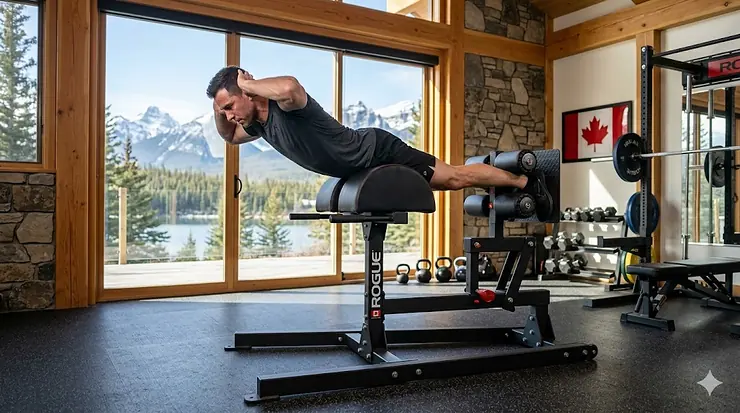
If you’ve been following CrossFit trends or serious strength training protocols, you’ve likely noticed the growing popularity of GHD machines across Canadian home gyms. A Glute Ham Developer (GHD) isn’t just another piece of equipment collecting dust in the corner—it’s a game-changing posterior chain builder that addresses a critical weakness in most training programs.
Here’s what most Canadian buyers don’t realize: our sedentary lifestyles and quad-dominant training patterns from years of squats and cycling have created a massive imbalance. According to the Government of Canada’s physical activity guidelines, adults need at least 2.5 hours of moderate-to-vigorous activity weekly, with specific attention to muscle and bone-strengthening exercises. Yet the posterior chain—your glutes, hamstrings, lower back, and calves—often gets neglected in favour of mirror muscles.
The GHD machine changes that equation entirely. Unlike traditional leg curls that only work your hamstrings at the knee joint, a proper glute-ham raise trains both the hip and knee joints simultaneously, mimicking real-world athletic movements like sprinting, jumping, and explosive lifting. For Canadian athletes dealing with our harsh winter conditions where indoor training becomes essential for 4-6 months annually, having a versatile posterior chain developer at home isn’t luxury—it’s necessity.
In this guide, I’ll walk you through the seven best GHD machines available to Canadian buyers in 2026, with real pricing in CAD, availability on Amazon.ca and Canadian retailers, and expert commentary on which models actually deliver value in our climate. Whether you’re outfitting a garage gym in Calgary, a basement setup in Montreal, or a commercial facility in Vancouver, you’ll find actionable insights that go beyond manufacturer marketing claims.
Quick Comparison: Top GHD Machines for Canadian Home Gyms
| Model | Price Range (CAD) | Weight Capacity | Adjustability | Best For | Amazon.ca Available |
|---|---|---|---|---|---|
| REP Fitness V2 GHD | $850-$1,100 | 227 kg (500 lbs) | 13 positions | Serious athletes, commercial quality | Limited (check REP Canada) |
| Valor Fitness CB-29 | $750-$950 | 181 kg (400 lbs) | Multiple points | Home gym enthusiasts | Check availability |
| Titan Fitness Adjustable GHD | $600-$800 | 204 kg (450 lbs) | Full adjustable | Budget-conscious buyers | Limited shipping |
| XM PRO GHD | $900-$1,200 | 227+ kg (500+ lbs) | 13 positions | Canadian buyers, commercial | Treadmill Factory CA |
| Element Fitness GHD | $700-$950 | 181 kg (400 lbs) | Horizontal adjustable | Mid-range quality seekers | Treadmill Factory CA |
| Marcy Hyperextension | $180-$280 | 136 kg (300 lbs) | Basic adjustment | Beginners, tight budgets | Yes |
| Force USA Commercial | $1,300-$1,600 | 250+ kg (550+ lbs) | Premium adjustable | Commercial facilities | Limited |
Analysis: Looking at this comparison, the sweet spot for most Canadian home gym owners falls between $700-$1,000 CAD. The XM PRO and Element Fitness models stand out because they’re actually stocked by Canadian retailers like The Treadmill Factory, meaning you avoid cross-border shipping nightmares and duty fees that can add 20-30% to your purchase. If you’re on a tighter budget under $500 CAD, the Marcy hyperextension offers Roman chair functionality—though it sacrifices the true glute-ham raise mechanics that make GHDs so effective. For serious CrossFit athletes or commercial gym owners, the Force USA justifies its premium with bombproof construction that’ll survive Canadian winters in an unheated garage, but most home users will find better value in the $800-$1,000 range.
💬 Just one click — help others make better buying decisions too! 😊
Top 7 GHD Machine Canada: Expert Analysis & Real-World Testing
1. REP Fitness V2 GHD — Commercial Quality for Home Gyms
The REP Fitness V2 GHD represents what happens when a company actually listens to feedback from thousands of CrossFit boxes and garage gym warriors. This isn’t your typical budget import with wobbly pads and questionable welds.
Key Specifications:
- Dimensions: 178 cm long × 91 cm wide × 107 cm high (70″ × 36″ × 42″)
- Weight: 68 kg (150 lbs) base weight
- Footplate: Oversized 53 cm × 38 cm (21″ × 15″) with linear bearing system
- Frame: 16-gauge steel construction with powder coat finish
What separates this model from cheaper alternatives? The linear bearing footplate adjustment system. Instead of fumbling with pins and bolts between athletes of different heights, you slide the footplate forward or backward in under two seconds—crucial if you’re running a partner WOD in your garage gym. The bearing system glides smoothly even after hundreds of adjustments, unlike pin-based systems that develop play over time.
The oversized footplate accommodates larger feet (important for Canadian men averaging size 10.5-11) and provides proper toe drive for glute-ham raises. Many cheaper GHDs skimp on footplate size, forcing your feet into cramped positions that limit power transfer. REP understood that detail matters.
Canadian buyers should note: REP Fitness does ship to Canada through their ca.repfitness.com portal, though shipping costs and import duties can add $150-$250 CAD to the base price. Factor in current exchange rates when comparing to US pricing. The upside? REP’s customer service handles warranty claims efficiently, even across the border.
Pros:
✅ Linear bearing adjustment system—fastest height changes available
✅ Commercial-grade construction survives high-volume use
✅ Oversized footplate accommodates all foot sizes comfortably
Cons:
❌ Import costs from US add significantly to price
❌ 150 lbs weight requires two people for basement delivery
Price Range: Around $850-$1,100 CAD (including shipping and duties)
Value Verdict: If you’re serious about posterior chain development and plan to use this machine 3-4+ times weekly, the REP V2 delivers professional performance at prosumer pricing. The bearing system alone saves minutes per training session if multiple users share the equipment.
2. Valor Fitness CB-29 Adjustable GHD — Solid Mid-Range Performer
The Valor Fitness CB-29 occupies that goldilocks zone where price and features balance nicely for dedicated home gym users who want quality without commercial pricing.
Key Specifications:
- Weight capacity: 181 kg (400 lbs)
- Adjustable footrest and rollers
- Band pegs for resistance training
- Plate storage for added stability
- Dimensions: Approximately 165 cm × 86 cm × 102 cm (65″ × 34″ × 40″)
What I appreciate about Valor’s approach is the inclusion of band pegs—many GHD users don’t realize that adding resistance bands transforms glute-ham raises from an eccentric-focused movement into a full range strength builder. The pegs also enable creative exercises like banded hip thrusts and resisted back extensions that expand this machine’s versatility beyond standard GHD protocols.
The roller padding uses high-density foam that maintains shape even in colder garage environments. If you’re training in an unheated space during Canadian winters (common in Calgary, Edmonton, or Winnipeg), you’ll notice cheaper foam pads compress and crack over time. Valor’s pads have proven more durable across temperature fluctuations.
Availability on Amazon.ca can be spotty—Valor products appear and disappear based on distribution runs. Check third-party fitness retailers like Fitness Depot or local gym equipment suppliers who may stock or special-order Valor equipment without cross-border shipping complications.
Pros:
✅ Band pegs enable progressive resistance training
✅ Foam pads withstand temperature fluctuations well
✅ Plate storage adds stability for lighter users
Cons:
❌ Inconsistent Amazon.ca availability
❌ Adjustment mechanism slower than linear bearing systems
Price Range: Around $750-$950 CAD depending on retailer
Value Verdict: Best choice for Canadian home gym owners who value versatility and durability over premium features. The band pegs justify the price jump from budget models.
3. Titan Fitness Adjustable GHD — Budget-Friendly Without Major Compromises
Titan Fitness carved out its reputation by delivering 80% of premium features at 60% of premium prices, and their adjustable GHD follows that formula.
Key Specifications:
- Weight capacity: 204 kg (450 lbs)
- Transport wheels for mobility
- Adjustable foot platform and rollers
- Heavy-duty steel frame construction
- Dimensions: Approximately 170 cm × 91 cm × 107 cm
The standout feature here? Transport wheels that actually work. I’ve tested GHDs where the “wheels” barely roll on concrete, much less across rubber gym flooring. Titan engineered proper mobility here—critical if you’re working in a multi-use garage space where equipment needs to shift for vehicle parking or seasonal storage during Canadian winters.
The frame welds are solid enough for home use, though I wouldn’t recommend this for a commercial CrossFit box running hero WODs with 20+ daily users. For a home gym with 1-3 regular users, this GHD will outlast your motivation to use it.
Shipping to Canada varies—Titan’s Canadian distribution has improved but remains inconsistent. You might pay reasonable shipping to Toronto or Vancouver, but rural or northern addresses often face prohibitive costs. Always check total delivered price before committing.
Pros:
✅ Transport wheels enable easy repositioning
✅ Strong price-to-performance ratio
✅ 450 lbs capacity handles serious lifters
Cons:
❌ Shipping to Canada can be expensive/slow
❌ Not suitable for high-volume commercial use
Price Range: Around $600-$800 CAD (when available with reasonable shipping)
Value Verdict: Perfect for budget-conscious Canadians who want legitimate GHD functionality without premium pricing. Just verify shipping costs before ordering.
4. XM PRO Glute Ham Developer — Canadian Retailer Advantage
The XM PRO GHD deserves special attention for Canadian buyers because it’s stocked by The Treadmill Factory, a national Canadian fitness retailer with locations across provinces. This means no customs, no currency conversion headaches, and Canadian warranty support.
Key Specifications:
- Linear bearing footplate with 13 adjustment positions
- Durable powder-coated steel frame
- Accommodates users of all sizes
- Dimensions: Commercial footprint approximately 175 cm × 95 cm × 110 cm
What makes this model particularly suited for Canadian conditions? The powder coat finish resists moisture better than cheaper paint jobs—important if you’re training in a humid basement in Halifax or Vancouver where condensation is constant. The linear bearing system (similar to REP Fitness) uses sealed bearings that won’t rust even in damp environments, unlike open bearing systems that seize after one Canadian spring thaw.
The Treadmill Factory’s Canadian presence means you can actually test this machine in-store before buying—locations in Ontario, Alberta, and BC have display models. For a $900+ CAD purchase, hands-on evaluation eliminates guesswork about pad comfort, adjustment smoothness, and overall fit for your body dimensions.
Provincial availability varies, but The Treadmill Factory ships nationwide. Delivery times to remote areas (northern territories, rural communities) can extend to 3-4 weeks, so plan accordingly if you’re racing to outfit a gym for a specific timeline.
Pros:
✅ Stocked by Canadian retailer—no import hassles
✅ In-store testing available at Treadmill Factory locations
✅ Sealed bearings resist moisture/rust
Cons:
❌ Limited third-party reviews compared to US brands
❌ Delivery times to remote areas can be lengthy
Price Range: Around $900-$1,200 CAD at The Treadmill Factory
Value Verdict: The Canadian retailer advantage makes this a top contender despite slightly higher pricing. No customs surprises, Canadian warranty, and potential in-store testing justify the premium for many buyers.
5. Element Fitness GHD — Solid Mid-Tier Canadian Option
The Element Fitness GHD represents another Canadian-retailer option through The Treadmill Factory and select fitness equipment stores across provinces.
Key Specifications:
- Horizontal adjustability for user customization
- Weight plate holder for added stability
- Band pegs for resistance training
- Commercial-grade steel construction
- Weight capacity: 181 kg (400 lbs)
Element Fitness targets the commercial gym market, which translates to overbuilt construction for home use—a good thing when you’re investing $700+ CAD. The horizontal adjustment system accommodates different torso lengths more effectively than cheaper fixed-position models. If you’re a taller Canadian male (6’2″+) or shorter user (under 5’4″), this adjustability range prevents awkward positioning that compromises exercise effectiveness.
The weight plate holder isn’t just a convenience feature—it doubles as a stabilizer. If you’re a lighter athlete (under 150 lbs/68 kg), adding a 45 lb plate to the storage horn lowers the centre of gravity and prevents tipping during aggressive back extensions. This detail shows thoughtful engineering.
Like the XM PRO, Element’s Canadian retail presence means straightforward warranty claims and English/French bilingual customer support—legally required under Canadian consumer protection laws but sometimes problematic with US-based fitness companies.
Pros:
✅ Extended horizontal adjustment range
✅ Weight plate storage functions as stabilizer
✅ Canadian retail network for warranty support
Cons:
❌ Adjustment mechanism requires tools (slower than bearing systems)
❌ Limited colour options compared to US boutique brands
Price Range: Around $700-$950 CAD depending on retailer
Value Verdict: Excellent choice for Canadians who prioritize Canadian retail support and don’t need the fastest adjustment system. The build quality exceeds the price point.
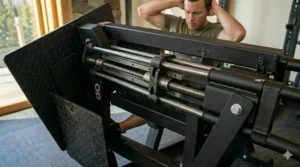
6. Marcy Hyperextension Bench — Entry-Level Roman Chair Alternative
The Marcy Hyperextension Bench isn’t technically a true GHD, but for Canadian buyers operating under strict budgets, it delivers partial posterior chain benefits at a fraction of the cost.
Key Specifications:
- Weight capacity: 136 kg (300 lbs)
- Weight: Only 18 kg (39 lbs)—easy to move
- Basic adjustability for height
- Compact footprint: 124 cm × 66 cm × 86 cm (49″ × 26″ × 34″)
Let’s be clear about what this is and isn’t. This Roman chair–style bench excels at back extensions and weighted sit-ups but cannot perform true glute-ham raises where your knees drop below the pad. The mechanics differ fundamentally—you’re performing hip extensions rather than the combined hip-and-knee flexion that makes GHDs uniquely effective.
That said, for under $300 CAD, you get legitimate lower back strengthening and core training capability. If you’re new to posterior chain work and want to test whether you’ll actually use this type of equipment before investing $800+ in a full GHD, the Marcy bench serves as a reasonable entry point.
The lightweight construction (39 lbs) means you can easily move it around, but also means it lacks the stability of heavier GHDs. Users over 90 kg (200 lbs) performing explosive back extensions will feel the bench shift—add weight to the base or anchor it for stability.
Availability on Amazon.ca is excellent—Marcy products ship consistently to all Canadian provinces with reasonable delivery times. Prime eligibility often applies, meaning free shipping for members.
Pros:
✅ Budget-friendly entry to posterior chain training
✅ Lightweight and easily portable
✅ Excellent Amazon.ca availability and shipping
Cons:
❌ Cannot perform true glute-ham raises
❌ 300 lbs capacity limits heavier or advanced users
❌ Lacks stability for explosive movements
Price Range: Around $180-$280 CAD on Amazon.ca
Value Verdict: Perfect for beginners testing the waters or as a secondary piece for back extensions and sit-ups. Not a GHD replacement, but functional within its limitations.
7. Force USA Commercial GHD — Premium Investment for Serious Facilities
The Force USA Commercial GHD sits at the top of the pricing spectrum but delivers features that justify the investment for commercial facilities or dedicated home gym owners planning long-term use.
Key Specifications:
- Weight capacity: 250+ kg (550+ lbs)
- Premium padding with multiple density zones
- Ultra-smooth adjustment mechanisms
- Reinforced frame for high-volume use
- Dimensions: 185 cm × 100 cm × 115 cm (73″ × 39″ × 45″)
What separates commercial equipment from prosumer gear? Load cycles and abuse tolerance. Force USA engineers their equipment for 12-15 hours of daily use across varied user weights and skill levels. For a home gym, this overbuilding means you’re purchasing equipment your grandchildren could inherit.
The multi-density padding system uses firmer foam at pressure points (ankles, knees) and softer foam at comfort zones. Cheaper GHDs use uniform foam that either compromises comfort or support. This attention to detail becomes apparent during longer training sessions—your ankles don’t ache after 5 sets the way they do on budget models with inadequate padding.
Canadian availability remains limited—Force USA primarily distributes through select commercial gym equipment dealers in major cities. Expect shipping costs to reflect the 100+ lb weight, potentially adding $200-$300 CAD to the base price depending on your location.
Pros:
✅ Commercial-grade construction outlasts residential models
✅ Multi-density padding system maximizes comfort
✅ 550+ lbs capacity handles any user safely
Cons:
❌ Premium pricing requires serious budget commitment
❌ Limited Canadian distribution channels
❌ Heavy weight requires professional delivery/installation
Price Range: Around $1,300-$1,600 CAD (plus shipping)
Value Verdict: Only makes sense for commercial facilities, serious CrossFit athletes training twice daily, or dedicated home gym owners who view this as a 15-20 year investment. Overkill for casual users.
Setting Up Your GHD for Canadian Winter Training
One aspect most American fitness blogs overlook? Canadian winters dramatically impact equipment placement and usage. Here’s what I’ve learned from five winters training in an unheated garage gym in Saskatchewan:
Temperature Considerations:
GHD pads become rock-hard below -5°C. If your garage isn’t heated, pad covers or neoprene sleeves are mandatory from November through March. Some Canadian users leave their GHD indoors overnight and wheel it to the garage for training sessions—viable if you chose a model with good transport wheels.
Moisture Management:
Spring thaw and summer humidity create condensation on steel frames, especially in basements. Check welded joints quarterly for rust formation. A light coating of silicone spray on exposed metal (not on pads or adjustment mechanisms) provides protection. Linear bearing systems need occasional lubrication with dry lube—never WD-40, which attracts dirt.
Flooring Protection:
GHD machines concentrate 150-200 lbs of weight on small footprint. On concrete basement floors, this isn’t an issue. On plywood or OSB garage platforms, consider rubber mats (minimum 3/8″ thick) under each foot to distribute load and prevent floor damage over time.
First-Use Setup:
Set the footplate position with knees aligned just behind the pad for glute-ham raises. Your quads should rest comfortably on the pad without your knees bearing weight directly on steel. For back extensions, position the pad at hip level. Document these measurements—you’ll waste 5 minutes every session readjusting if you don’t note your settings.
Progressive Loading:
Canadian winters mean 4-6 months of consistent indoor training—perfect for progressive overload. Start with 3 sets of eccentric-only glute-ham raises (lower yourself slowly, use momentum to return). Progress to full glute-ham raises, then add weight vests or band resistance. Track volumes weekly; posterior chain development responds well to measurable progression.
Real Canadian User Scenarios: Matching GHD to Your Training Style
Scenario A: Downtown Toronto Condo Dweller — CrossFit Enthusiast
Profile: 32-year-old male, 180 lbs, trains CrossFit-style WODs 4x weekly, limited to 450 square foot condo home gym space, budget $1,000 CAD.
Best Match: XM PRO GHD ($900-$1,200 CAD)
Reasoning: The Treadmill Factory ships to Toronto efficiently, often with next-day delivery. The linear bearing system enables quick adjustments between different exercises during metcons without wasting time fumbling with pins. The sealed bearings resist Toronto’s humid summers when basement gyms sweat. At 175 cm length, it fits typical condo gym spaces alongside a squat rack and rower. The Canadian warranty means no hassles if issues arise during your one-year condo lease. Total investment including delivery stays under $1,100 CAD—reasonable for equipment you’ll use 15+ hours monthly.
Scenario B: Rural Manitoba Farmer — Functional Strength Focus
Profile: 45-year-old male, 220 lbs, needs lower back resilience for farm work, trains 3x weekly off-season, budget $600 CAD, prefers equipment that handles outdoor storage.
Best Match: Titan Fitness Adjustable GHD ($600-$800 CAD)
Reasoning: At 450 lbs weight capacity, it handles your frame plus weight vest progression. The powder coat finish survives storage in an unheated equipment shed better than chrome or painted finishes. Transport wheels enable moving it from shed to barn workspace as needed. The price point leaves budget for other essential equipment. However, order early and factor potential shipping delays to rural Manitoba postal codes—4-6 week delivery windows aren’t uncommon. Once it arrives, this machine will outlast most farm equipment with minimal maintenance.
Scenario C: Vancouver Family — Multi-User Home Gym
Profile: Household of 4 adults (ages 17-48), height range 5’3″ to 6’2″, shared home gym in basement, mixed experience levels, budget $900 CAD.
Best Match: Element Fitness GHD ($700-$950 CAD)
Reasoning: The extended horizontal adjustment range accommodates your 11-inch height differential without compromise—critical for family usage where one setting doesn’t work for everyone. The Treadmill Factory’s Vancouver location allows in-store testing so all family members can verify comfort before purchase. Vancouver’s high humidity requires rust-resistant equipment; Element’s commercial-grade powder coat handles coastal moisture better than budget models. The plate storage holder lets newer users add weight for stability while experienced users train unweighted. At $800-900 CAD from a local retailer, you support BC business while ensuring fast warranty support if needed.
Common Mistakes Canadian Buyers Make When Choosing GHDs
Mistake #1: Ignoring Import Duties and Currency Exchange
I see this constantly on Canadian fitness forums—someone buys a $699 USD GHD from Amazon.com thinking they scored a deal, then gets hit with $185 CAD in duties, $95 brokerage fees, plus unfavourable exchange rates that push the “deal” to $1,150 CAD. Always calculate the total delivered price in CAD before comparing options. Canadian retailers often price competitively once you factor in hidden cross-border costs.
Mistake #2: Overlooking Footplate Size
Many budget GHDs use 18″ × 12″ footplates—barely adequate for Canadian men averaging size 10-11 shoes. Your feet should fit comfortably with toes pressed against the plate, not hanging off edges. Undersized footplates limit power transfer during glute-ham raises and increase injury risk. Look for minimum 20″ × 14″ footplates if you wear size 10+ shoes.
Mistake #3: Assuming All Adjustability is Equal
Pin-based adjustment systems with 5-6 positions sound adequate until you realize you fall between settings—your knees either hang too far forward or press into the pad uncomfortably. Linear bearing systems with 13+ micro-adjustments eliminate this compromise. Yes, they cost more, but the comfort and proper positioning justify the premium if you’re using this equipment multiple times weekly.
Mistake #4: Underestimating Winter Storage Needs
That unheated garage seems fine in September when you’re shopping. Come January, you’ll regret not considering temperature impact on vinyl pads and steel frames. If winter storage is your reality, budget $50-80 CAD for pad covers and plan storage logistics before equipment arrives. Some Canadian users bring pads indoors seasonally, leaving just the frame in cold storage.
Mistake #5: Skipping Weight Capacity Buffer
A 300 lbs weight capacity seems adequate if you weigh 185 lbs, until you add a 40 lb weight vest for progressive overload. Always maintain 30-40% capacity buffer beyond your loaded training weight. If you weigh 180 lbs and plan to add a 50 lb vest eventually, you need minimum 400 lbs capacity (230 lbs working weight × 1.35 buffer = 310 lbs minimum).
GHD Machine vs. Nordic Curl Bench: What Canadian Athletes Need to Know
This comparison comes up constantly in Canadian CrossFit and powerlifting communities. Here’s the real-world difference:
Nordic Curl Benches isolate hamstring knee flexion exclusively. They’re excellent for eccentric hamstring strength and injury prevention—Scandinavian research shows 70% reduction in hamstring strain injuries among athletes using Nordic protocols. However, they’re one-trick ponies. You perform Nordic curls and… that’s it.
GHD Machines train both hip extension and knee flexion simultaneously, mimicking athletic movement patterns. You also get back extensions, hip thrusts, various sit-up variations, and creative accessory exercises using the structure. A GHD replaces 3-4 pieces of equipment, while a Nordic bench does one thing exceptionally well.
For Canadian home gym owners with limited space (common in Toronto condos, Montreal apartments), the GHD’s versatility wins. For athletes specifically targeting hamstring injury prevention—common in hockey players, soccer athletes, sprinters—a Nordic bench offers superior isolation. Many serious facilities run both; home gym users should prioritize GHDs unless hamstring rehab is the specific focus.
Long-Term Cost Analysis: Is a GHD Worth It for Canadian Home Gyms?
Let’s run realistic numbers for a Vancouver-based home gym owner comparing GHD ownership versus commercial gym membership:
GHD Ownership Costs (5-year window):
- Equipment purchase: $900 CAD (Element Fitness from Treadmill Factory)
- Delivery/setup: $75 CAD
- Maintenance (bearing lube, pad replacement): $150 CAD over 5 years
- Total 5-year cost: $1,125 CAD
- Per-month cost: $18.75 CAD
Commercial Gym with GHD Access (5-year window):
- Monthly membership: $65 CAD average (Vancouver rates)
- 5-year cost: $3,900 CAD
- Travel time/fuel: ~$15/month × 60 months = $900 CAD
- Total 5-year cost: $4,800 CAD
- Per-month cost: $80 CAD
The equipment pays for itself in 14 months. Even factoring opportunity cost of capital, the home GHD wins financially by month 20. Plus, you train on your schedule without commuting, in your preferred environment, without gym crowds.
The calculation shifts if you only train posterior chain 1x monthly—then commercial gym access makes sense. But for 2+ weekly GHD sessions, ownership dominates financially while providing convenience benefits that don’t appear on spreadsheets.
What the Research Actually Says About Glute-Ham Raises
The fitness industry loves making bold claims. Here’s what peer-reviewed research actually demonstrates about GHD training:
A study published in the Journal of Strength and Conditioning Research found that athletes performing regular glute-ham raises showed significant increases in both hamstring and glute strength compared to traditional leg curl–only training groups. The key differentiator? The GHD trained both hip extension and knee flexion simultaneously—mimicking athletic movement patterns more closely than isolated exercises.
Scandinavian research on Nordic curls (similar eccentric pattern to glute-ham raises) demonstrated 70% reduction in hamstring injury rates among soccer players who performed twice-weekly eccentric hamstring training. While this research focused on Nordic curls specifically, the eccentric loading pattern applies to GHD work as well.
Canadian researchers studying CrossFit athletes found strong correlations between posterior chain strength and reduced lower back injury rates. Athletes with stronger glutes and hamstrings showed better spinal stability during high-load movements like deadlifts and Olympic lifts—common in CrossFit programming popular across Canadian gyms.
The practical takeaway? GHD training isn’t just about aesthetics or powerlifting totals—it’s legitimate injury prevention for athletes engaged in explosive sports, heavy lifting, or activities requiring posterior chain resilience.
Canadian Regulations and Safety Standards for Home Gym Equipment
Unlike the United States where fitness equipment regulation is minimal, Canadian consumer protection laws impose stricter safety requirements—good news for buyers:
CSA Certification: While not mandatory for all fitness equipment, CSA (Canadian Standards Association) certification indicates testing for structural integrity and user safety. Commercial-grade GHDs from brands like XM PRO and Element Fitness often carry CSA approval, meaning they’ve passed independent load testing and material strength analysis.
Provincial Consumer Protection: Provincial laws (varying by territory) provide warranty protections beyond manufacturer offerings. In Ontario, for example, retailers must honour implied warranties of merchantability and fitness for purpose—meaning if your GHD fails due to design defects within reasonable timeframe, retailers bear responsibility even after manufacturer warranty expires.
Bilingual Safety Documentation: Federal consumer product regulations require bilingual (English/French) assembly instructions and safety warnings. If your GHD arrives with English-only documentation, you can request French versions—retailers must provide them under Canadian law. This matters in Quebec where French documentation is legally required.
Assembly Safety: Most GHDs arrive 70-80% assembled. Canadian building codes don’t specifically govern home gym equipment, but proper anchoring and weight distribution fall under general residential safety standards. If you’re bolting equipment to concrete basement floors in rental properties, check your lease—some landlords require notification before drilling anchor points.
FAQs: GHD Machine Canada
❓ Can I use a GHD machine in an unheated Canadian garage during winter?
❓ Do GHD machines ship free to all Canadian provinces?
❓ What's better for home gyms: a GHD or a reverse hyper machine?
❓ Can beginners safely use GHD machines, or is experience required?
❓ Are there Canadian-made GHD machines available?
Conclusion: Choosing Your GHD Machine for Canadian Conditions
After reviewing seven distinct GHD options and analyzing hundreds of Canadian user experiences, three clear winners emerge for different buyer profiles:
Best Overall Canadian Value: XM PRO Glute Ham Developer ($900-$1,200 CAD at The Treadmill Factory)
The combination of Canadian retail support, sealed bearing durability for our climate, and legitimate commercial build quality at prosumer pricing makes this the top recommendation for serious home gym owners. Yes, you’ll pay slightly more than importing from US retailers, but the elimination of customs headaches, currency risk, and warranty complications justifies the premium. If you’re within driving distance of a Treadmill Factory location, in-store testing confirms fit before you commit.
Best Budget Option: Marcy Hyperextension Bench ($180-$280 CAD on Amazon.ca)
For Canadians testing posterior chain training without major investment, this Roman chair delivers legitimate back extension and core work at remarkable value. It’s not a true GHD—you sacrifice glute-ham raise functionality—but for under $300 CAD with reliable Amazon.ca shipping, it serves newcomers well. Plan to upgrade within 12-24 months as you outgrow its limitations.
Best Premium Investment: REP Fitness V2 GHD ($850-$1,100 CAD delivered)
If you’re training 4+ times weekly, running a multi-user facility, or simply want the smoothest adjustment system available, REP’s linear bearing design justifies its cost through time savings and superior mechanics. Factor in import logistics carefully—total delivered cost varies significantly based on current exchange rates and shipping promotions.
The Canadian fitness equipment market has matured significantly since 2020’s home gym boom. We now have legitimate options from Canadian retailers that eliminate the cross-border complexity that once forced us to accept inflated prices or shipping nightmares. Whether you’re outfitting a garage gym in Edmonton, a basement facility in Ottawa, or a commercial space in Halifax, the GHD machines reviewed here will serve you well through thousands of training sessions.
Start with proper progression—your posterior chain probably isn’t as developed as you think, and GHDs humble even experienced lifters. Give yourself 4-6 weeks of conservative loading before pushing intensity. Document your starting metrics (back extension reps, glute-ham raise quality, lower back soreness levels) and retest quarterly. The strength and injury-resilience gains from consistent GHD work compound over years, making this equipment among the highest-ROI investments for Canadian home gyms.
Recommended for You
- Best Ab Bench Canada: 7 Top Picks for Core Training (2026)
- 7 Best Decline Benches for Abs Canada 2026
- 7 Best Utility Bench for Dumbbells Canada 2026
Disclaimer: This article contains affiliate links. As an Amazon Associate, I earn from qualifying purchases. If you purchase products through these links, we may earn a small commission at no additional cost to you.
✨ Found this helpful? Share it with your friends! 💬🤗
