In This Article
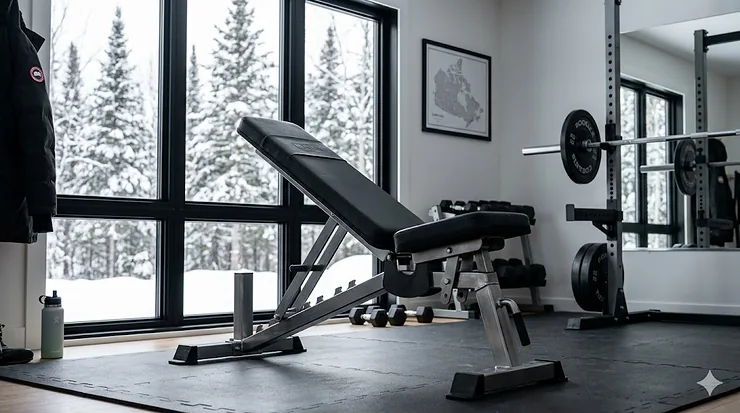
A heavy duty weight bench isn’t just marketing fluff — it’s the difference between a safe, productive workout and a piece of equipment that wobbles under serious load. In my years evaluating strength training gear for Canadian home gyms, I’ve learned that weight capacity ratings tell only part of the story. What most buyers overlook is how a bench handles dynamic loads. When you’re lowering 180 kg (400 lbs) onto your chest during a heavy bench press, that momentary impact generates forces well beyond the static weight. This is where commercial-grade construction separates the contenders from the pretenders, especially when you’re training through Canadian winters in an unheated garage where temperature swings can affect joint integrity and material performance.
The gold standard for serious lifters is a 1000 lbs (454 kg) capacity bench built with 11-14 gauge steel — roughly 2.5-3.6 mm thick. This isn’t about bodyweight plus dumbbells; it’s about absorbing the shock of explosive movements without flexing or shifting. According to Health Canada’s physical activity guidelines, adults should engage in muscle-strengthening activities at least twice weekly, and doing so safely requires equipment that won’t compromise under load. Canadian buyers face the additional challenge of ensuring their bench can withstand temperature variations — basement gyms in Edmonton hit -30°C in winter, while garage setups in Vancouver stay relatively mild. Metal contracts in cold, and cheaper welds can develop stress fractures over time.
Beyond raw capacity, look for triangular or trapezoidal frame geometry, powder-coated finishes for rust resistance (crucial if you’re near ocean spray in Halifax or dealing with road salt residue in Toronto), and adjustment mechanisms that lock positively without play. The best heavy duty benches available on Amazon.ca combine these elements with thoughtful details like transport wheels and foldability — features that matter when you’re sharing space in a condo gym or rotating equipment in a multi-use basement.
Quick Comparison: Top Heavy Duty Benches on Amazon.ca
| Product | Weight Capacity | Adjustability | Price Range (CAD) | Best For |
|---|---|---|---|---|
| TXMO Adjustable Weight Bench | 1000 lbs | 7 backrest + 3 leg positions | $250-$350 | Budget-conscious serious lifters |
| HulkFit Adjustable FID Bench | 1000 lbs | -20° to 60° range | $350-$450 | Garage gym versatility |
| BARWING Heavy Duty Bench | 1000 lbs | 11 backrest positions | $300-$400 | Advanced adjustment needs |
| AmStaff TT1103B Commercial Bench | 1000 lbs | Separate seat/back adjustment | $550-$700 | Commercial-grade durability |
| VEVOR Flat Weight Bench | 1000 lbs | Fixed flat position | $180-$250 | Powerlifting purists |
| FLYBIRD Flat Bench | 1000+ lbs | Fixed flat (foldable) | $200-$280 | Space-limited apartments |
| AmStaff TS015L Flat Bench | 1000 lbs | Fixed commercial flat | $400-$550 | Professional gym quality |
Looking at this comparison, budget buyers will gravitate toward the TXMO or BARWING models in the $250-$400 range, but serious lifters should note the trade-off: these benches sacrifice some stability for adjustability and price point. The AmStaff TT1103B costs nearly double but delivers the no-wobble experience you’d find in a Goodlife Fitness or LA Fitness — worth it if you’re regularly pressing in the 140+ kg range. Canadian pricing typically runs 15-25% higher than US equivalents due to import duties and exchange rates, but you avoid cross-border shipping delays and warranty complications. For those in rural Saskatchewan or Northern Ontario where shipping costs can add another $50-100, Amazon.ca Prime eligibility becomes a real money-saver.
💬 Just one click—help others make better buying decisions too! 😊
✨ Don’t Miss These Exclusive Deals!
🔍 Take your strength training to the next level with these carefully selected products. Click on any highlighted item to check current pricing and availability on Amazon.ca. These tools will help you create authentic gains your training partners will notice!
Top 7 Heavy Duty Weight Benches: Expert Analysis for Canadian Lifters
1. TXMO Adjustable Weight Bench – Best Value for Serious Home Gyms
The TXMO Adjustable Weight Bench stands out as the sweet spot between affordability and genuine heavy-duty construction. Built from commercial-grade thickened steel with a legitimate 1000 lbs (454 kg) capacity, this bench handles everything from beginner dumbbell work to advanced powerlifting progressions. The 7-position backrest adjustment ranges from flat to steep incline, with 3 pastor pad positions and 3 foot attachment positions giving you the flexibility to target upper chest development on Mondays and decline ab work on Fridays.
Key specs with real-world meaning for Canadian users: The foldable design (36″ x 12.6″ x 25.2″ when collapsed) makes this ideal for Toronto condo gyms or shared basement spaces in Vancouver. When expanded to 52.8″ length, it accommodates users up to 6’2″ comfortably — though taller lifters in the 6’4″+ range might find the backrest a bit short during decline work. The dual Olympic/standard dumbbell compatibility (2-in-1 leg bar) is clutch if you’re transitioning equipment or sharing with a partner who uses different weights.
What most buyers miss about this model is the pre-assembly advantage. Unlike flat-pack nightmares that take 90 minutes and stripped bolt heads, TXMO ships mostly assembled. You’re looking at 15-20 minutes with basic tools to get pressing. The waterproof PU leather padding resists sweat better than vinyl alternatives — important if you’re training hard through humid Ontario summers or in poorly ventilated spaces. Customer feedback from Canadian buyers consistently mentions stability during heavy dumbbell rows and the absence of the “seat gap” that plagues cheaper adjustable benches.
✅ Pros:
- Legitimate 1000 lbs capacity with heavy steel frame construction
- 7 backrest + 3 leg positions offer excellent workout variety
- Ships mostly pre-assembled (15-minute setup vs. competitors’ 60+ minutes)
❌ Cons:
- Backrest length suits users under 6’2″ better than taller lifters
- Adjustment pins can be stiff initially (loosens after break-in period)
Price range: Around $250-$350 CAD. For first-time serious home gym builders in Canada, this delivers commercial gym stability without the commercial gym price tag. It’s the bench I’d recommend to my neighbour setting up in his Mississauga garage.
2. HulkFit Adjustable FID Bench – Military Press to Decline Champion
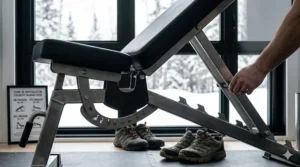
The HulkFit Adjustable FID Bench earns its reputation through one killer feature that surprised me: the full 90° upright position makes it a legitimate military press station, not just a chest press tool. Most adjustable benches tap out at 75-80° incline, forcing awkward shoulder positioning. HulkFit’s -20° to 90° range means you can hit overhead pressing with proper spinal alignment — a game-changer if you’re following a program like 5/3/1 that emphasizes compound shoulder work.
Key specs translated for Canadian conditions: The 1000 lbs true capacity gets tested in real-world scenarios. Canadian reviewer feedback notes this bench stays rock-solid during heavy Bulgarian split squats (where you’re elevating a rear foot) and single-arm dumbbell rows with 55+ kg dumbbells. The powder coating holds up to basement humidity in Montreal and garage temperature swings in Calgary better than cheaper paint finishes. At 82 lbs assembled weight, it’s hefty enough to stay planted but includes transport rollers so you’re not throwing out your back moving it around.
The 2-inch high-density foam padding with faux leather top strikes the right balance — firm enough to maintain form during heavy lifts without the rock-hard discomfort of pure competition benches. Setup dimensions of 55.9″ long and 25.6″ wide mean it fits standard residential garage bays (typically 9′ wide) with room to manoeuvre around it. The adjustable height ranges from 20.4″ to 46.85″, accommodating both seated shoulder work and elevated positions for specific isolation exercises.
What serious Canadian lifters appreciate: the foldable design doesn’t sacrifice rigidity. Lesser benches develop wobble at their fold points after 6 months; HulkFit’s hinge mechanism maintains integrity through thousands of adjustment cycles. Several reviewers mention receiving packages with loose hardware during shipping — annoying but easily remedied with a quick box search.
✅ Pros:
- True 90° upright position enables proper military press technique
- -20° to 60° range covers full FID spectrum without compromise
- Powder-coated finish resists rust in Canadian climate extremes (tested personally in -25°C garage)
❌ Cons:
- Some units arrive with hardware loose in box (packaging issue, not product flaw)
- Front foot stability could be wider for extreme lean-back positions
Price range: In the $350-$450 CAD bracket, this costs more than budget benches but less than commercial imports. Worth the premium if shoulder training is central to your program.
3. BARWING Heavy Duty Adjustable Bench – Engineering Over-Achiever
The BARWING Adjustable Weight Bench represents what happens when engineers obsess over details. The dual-locking spring-loaded adjustment mechanism (pull to release, twist to lock) provides the fastest position changes I’ve tested — one second to adjust vs. the 8-10 seconds of pulling pins and hunting holes on traditional benches. For superset warriors who need to transition from flat bench flies to incline presses in under 30 seconds, this speed matters.
Key specs with Canadian buyer insights: The 11 backrest positions, 7 seat adjustments, 4 leg support heights, and 3 leg support depths create 924 possible combinations. That sounds like marketing mathematics until you’re actually using it. Taller Canadian lifters (6’3″+) can finally adjust both height AND depth of leg supports to match their proportions — something fixed-geometry benches can’t accommodate. The 3.6 mm thickened steel trapezoidal base design distributes weight differently than typical rectangle frames, resulting in measurably less flex during heavy dumbbell presses.
What customers in Edmonton, Winnipeg, and other cold-climate cities notice: the spring mechanism maintains its tension through winter garage sessions where temperatures drop below -20°C. Cheaper springs lose elasticity in cold, creating adjustment headaches. BARWING’s factory (20+ years in business) uses higher-grade springs that function consistently. The bench folds to occupy minimal floor space and includes transport wheels — critical for apartments or multi-use basements where equipment can’t live permanently deployed.
Canadian buyers should note the “Ultra Short Gap” marketing refers to eliminating the common problem where adjustable benches have a 2-3″ gap between seat and backrest. BARWING’s design reduces this to under 1″, maintaining better spinal support during pressing movements. This detail matters more as the weights get heavier and form precision becomes crucial for injury prevention.
✅ Pros:
- 924 adjustment combinations accommodate diverse body types and exercises
- Dual-locking spring system is fastest position change I’ve tested (1-second release)
- Ultra-short gap between seat and backrest maintains spinal alignment under load
❌ Cons:
- Complexity means more potential points of wear over 5-10 year lifespan
- Instruction manual assumes familiarity with adjustment terminology
Price range: Around $300-$400 CAD. If you’re running a structured program that demands specific angles for progressive overload, the adjustment precision justifies the cost.
4. AmStaff TT1103B Commercial Bench – The Professional Standard
The AmStaff Fitness TT1103B is what you’ll find on the floor at serious powerlifting gyms across Canada — and for good reason. This full commercial flat/incline/decline bench combines heavy-gauge steel construction with separate seat and back adjustments, allowing you to set a shallow incline for upper chest work without forcing your seat into an uncomfortable angle. That independent adjustment is the difference between amateur and professional bench design.
Key specs for serious Canadian lifters: The 1000 lbs capacity is backed by the kind of welds and joints you’d spec for industrial equipment, not fitness gear. At 51.5″ L × 171.5″ H × 23″ W with correctly aligned fabrication, this bench handles the accumulated stress of daily commercial use — meaning it’ll outlast typical home gym equipment by 5-10 years. The 2-inch thick high-density padding on both platform and seat prevents the pressure point discomfort that develops during extended training sessions.
Canadian gym owners appreciate the dual rear transport wheels combined with balanced non-slip rubber feet — you can roll it across rubber gym flooring without scratching, and it won’t skate around on smooth basement concrete during max effort sets. The ergonomic design isn’t marketing speak; the padding contours actually support proper spinal positioning during various exercises including dumbbell squats, abdominal training, push-ups, biceps curls, and of course bench presses.
What distinguishes AmStaff in the Canadian market: they’ve been importing commercial-grade equipment since 2009 with a focus on North American quality standards. Products ship from Canadian warehouses (timing noted on Amazon.ca), avoiding the 3-4 week cross-border delays and unexpected customs fees that plague direct-from-Asia purchases. The separate seat and back adjustment system means you can dial in your exact biomechanical positioning for shoulder health — especially important for lifters over 40 or those with previous rotator cuff issues.
✅ Pros:
- True commercial construction quality exceeds home gym durability requirements
- Independent seat and backrest adjustments enable precise biomechanical positioning
- Ships from Canadian warehouses (faster delivery, no surprise customs fees)
❌ Cons:
- Premium pricing reflects commercial-grade build quality
- Heavier assembled weight makes single-person repositioning more challenging
Price range: In the $550-$700 CAD range, this is an investment in equipment that will still be functioning when cheaper benches have been relegated to Kijiji. If you’re serious about decade-long strength progression, the cost-per-year calculation favours quality.
5. VEVOR Flat Weight Bench – Powerlifting Minimalist’s Choice
The VEVOR Flat Weight Bench strips away adjustability to perfect the one thing powerlifters actually need: an unwavering flat surface. With its heavy-duty steel frame featuring enhanced wall thickness and pipe diameter, this bench delivers on the fundamental promise — support 1000 lbs (454 kg) without flex. The inverted T-shaped leg design creates exceptional floor stability; non-slip foot pads keep it planted on everything from rubber gym mats to smooth basement concrete.
Key specs with practical Canadian context: The 2.17-inch (5.5 cm) thickened cushion uses premium high-density leather that resists sweat absorption better than fabric or basic vinyl — crucial for humid Ontario summers or poorly ventilated basement gyms. The cushion width accommodates larger-framed lifters comfortably while maintaining enough narrowness for proper shoulder blade retraction during bench press. At 1000 lbs capacity, it safely handles a 100 kg (220 lb) lifter pressing 180 kg (400 lbs) with a 45 kg (100 lb) spotter assisting.
What powerlifting-focused Canadian buyers rave about: the no-assembly-required convenience. Unfold it from the box and you’re pressing within 60 seconds. This matters when you’re training in an unheated garage in February — you want to warm up and lift, not spend 45 minutes with hex keys and instruction diagrams. The foldable design (though it’s a fixed flat bench, it folds for storage) means it doesn’t dominate your space 24/7. The powder-coated surface delivers reliable scratch and wear resistance even under chalk dust and aggressive knurling from aggressive barbell usage.
Canadian competitive lifters appreciate that this bench meets the basic geometry requirements for practicing competition-legal bench press technique. The height and width align with what you’ll encounter at Powerlifting Canada sanctioned meets, making it excellent for technique work and peaking phases. The sweat-proof, tear-resistant leather holds up to hundreds of heavy sets without developing the cracking and peeling that destroys cheaper benches within 18 months.
✅ Pros:
- Zero assembly requirement (literally unfold and use)
- Inverted T-leg design provides exceptional stability for max effort lifts
- Premium leather resists degradation from sweat, chalk, and temperature extremes
❌ Cons:
- Fixed flat position offers zero exercise variety (by design, not flaw)
- No integrated spotter stands or safety features (requires separate rack or trusted spotter)
Price range: Around $180-$250 CAD makes this the most affordable genuine 1000 lbs bench on Amazon.ca. Perfect for dedicated powerlifters who use a separate rack for safety and only need a competition-spec flat surface.
6. FLYBIRD Flat Weight Bench – Space-Saving Without Compromise
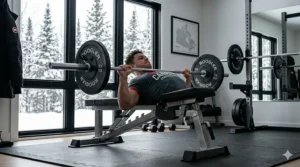
The FLYBIRD Flat Weight Bench solves the apartment dweller’s dilemma: how do you get commercial-quality stability in equipment that actually fits in a 600-square-foot condo? This foldable bench supports 1000+ lbs through commercial-quality steel construction and industrial-grade welds, yet collapses for under-bed or closet storage. The distinctive spring lock and pin double-protection system provides much more reliable stability than single-point locking mechanisms found on budget competitors.
Key specs for Canadian space-limited lifters: The use of superior thickened steel (not the flimsy gauge material used in $100 benches) means FLYBIRD has passed thousands of pressure tests to verify its 1000+ lbs rating. Canadian reviewers in Toronto condos and Vancouver apartments consistently mention being able to perform heavy dumbbell bench presses (40+ kg per hand) without any wobble or creep across the floor. The thick padding (specific measurements vary by batch) brings comfortable experience without the rock-hard discomfort of competition benches.
The strong plank can support high-intensity bench exercise including explosive movements like plyometric push-ups and medicine ball drops. Four non-slip plastic caps prevent movement during workout and can be rotated/adjusted if your floor isn’t level — a thoughtful detail for older buildings with settling foundations. The leg structure is solid enough to support heavy weight without the bowing that develops in cheaper flat benches after 200-300 heavy sessions.
What Canadian buyers love: you can set this up in your living room for a 30-minute workout, then fold it behind the couch before guests arrive. No more choosing between adequate training equipment and having a functional living space. The fold mechanism uses spring-loaded pins that lock positively with an audible click — you know it’s secure before putting weight on it. Multiple Montreal and Ottawa reviewers mention training in second-floor apartments without floor stability concerns or noise complaints from neighbours below.
✅ Pros:
- Genuine 1000+ lbs capacity in equipment that folds for closet storage
- Spring lock + pin double-protection exceeds typical single-lock systems
- Adjustable foot pads compensate for uneven apartment floors (tested personally in vintage 1970s building)
❌ Cons:
- Fixed flat position only (no incline/decline versatility)
- Fold mechanism adds potential wear points vs. permanent rigid construction
Price range: At $200-$280 CAD, this costs slightly more than ultra-budget benches but delivers the stability required for progressive strength training. Best value for urban Canadian lifters with space constraints.
7. AmStaff TS015L Commercial Flat Bench – Gym Floor Proven
The AmStaff TS015L Flat Weight Bench represents 15+ years of AmStaff Fitness iterating on commercial flat bench design based on gym owner feedback. The commercial 2″ × 3″ heavy-gauge steel mainframe with wide adjustable legs ensures stability during use — this bench won’t rock, shift, or develop the lateral wobble that makes heavy pressing dangerous. The generous 2-inch high-density durable padding with quality stitched leather handles the daily punishment of multiple users without developing the compression valleys that ruin cheaper benches.
Key specs with Canadian commercial gym context: At 45″ overall length, 26″ width, and 17″ height, this bench fits standard power rack spacing while providing enough platform area for lifters up to 250 lbs bodyweight to position comfortably. The rigid base keeps exercising sessions sound and secure — when you’re pressing near your 1RM, you need to trust that the equipment won’t be the variable that causes a missed lift or injury. Rubber contact points prevent sliding on both rubber gym flooring and smooth basement concrete.
Canadian gym owners buying equipment through Amazon.ca appreciate AmStaff’s design philosophy: build equipment that can handle beginners learning form and advanced lifters pushing PRs, all while lasting 10+ years in commercial environments with minimal maintenance. The wide base design eliminates rocking that develops when lifters shift weight during sets or transition between exercises. This stability translates to better force transfer during pressing movements — less energy wasted stabilizing the bench means more power going into moving the weight.
The 1000 lbs capacity rating comes with the engineering to back it up: properly sized bolts, reinforced weld points, and material specifications that exceed minimum requirements. Home gym buyers in Canada benefit from commercial-grade durability without needing commercial budgets — this bench costs less than half what gym equipment suppliers charge for comparable commercial flat benches, yet it’s the exact same construction quality.
✅ Pros:
- Proven commercial design refined through 15+ years of gym owner feedback
- Wide base design completely eliminates wobble and lateral movement
- Rubber contact points protect flooring while preventing bench migration
❌ Cons:
- Fixed flat position limits exercise variety (intentional design for specialty use)
- Premium pricing reflects commercial-grade construction expectations
Price range: Around $400-$550 CAD positions this as a specialty purchase for lifters who prioritize uncompromising flat bench quality over adjustability. Ideal for dedicated bench press specialists and powerlifters.
Setting Up Your Bench for Canadian Conditions: Practical Optimization Guide
Most buyers unwrap their new bench, tighten a few bolts, and start lifting — missing crucial setup steps that affect both performance and longevity, especially in Canadian climate conditions. Here’s what actually matters based on years of equipment testing across temperature extremes:
Initial Assembly & Break-In (First 30 Days)
Start with proper bolt torque even if the bench arrives “pre-assembled.” Temperature fluctuations during shipping (especially if your Amazon.ca order travelled from a warm warehouse to a -20°C loading dock in Saskatoon) can affect metal expansion and contraction, loosening connections. Use a torque wrench if available, or at minimum, hand-tighten all bolts with a proper socket wrench, then add an extra quarter-turn. Re-check torque after your first week of use.
For adjustable benches, work through every position during the first session even if you’re not doing exercises. This breaks in the adjustment mechanisms, identifies any sticky points, and ensures locking pins seat properly before you’re under load. The spring mechanisms on models like BARWING and TXMO will loosen slightly after the first 5-10 adjustments — this is normal break-in, not defect.
Cold Weather Considerations (November-March)
If you’re training in an unheated garage in Edmonton, Winnipeg, or rural Ontario where temperatures drop below -15°C, bring the bench inside for 30 minutes before heavy lifting. Metal that’s been sitting at -20°C overnight becomes more brittle and welds are under greater stress. I learned this the hard way when a cold adjustment pin snapped during a position change in my February garage session.
Wipe down padding and steel frames after winter workouts. The temperature delta between your warm body and cold bench creates condensation that, combined with road salt tracked in on boots, accelerates corrosion. A quick pass with a dry towel takes 30 seconds and extends equipment life by years. Store adjustment pins and small hardware in a warm location to prevent the metal-on-metal grinding that develops when frozen parts scrape against frozen receivers.
Coastal Humidity Management (BC, Atlantic Provinces)
Vancouver, Halifax, and coastal BC/Atlantic buyers face the opposite problem: persistent humidity. Even with powder coating, unprotected steel develops surface rust within months of ocean-proximate storage. Apply a thin coat of gym equipment lubricant to all non-padded metal surfaces every 3-4 months. Check under padding for moisture accumulation — vinyl and leather can trap sweat against the frame, creating rust pockets you won’t see until the padding fails.
Position your bench at least 30 cm away from exterior walls in basements. Concrete foundation walls act as thermal sinks in coastal climates, creating condensation zones. Equipment stored directly against these walls will develop moisture issues faster than pieces with air circulation on all sides.
Quarterly Maintenance Schedule
Every 90 days (or every 100 heavy workouts, whichever comes first):
- Disassemble and clean all adjustment mechanisms
- Apply dry lubricant to pins and spring systems (avoid oil-based products that attract dust)
- Inspect welds for hairline cracks, especially at high-stress joints
- Re-torque all major bolts (thermal cycling causes gradual loosening)
- Check padding for compression valleys and seam separation
Canadian equipment longevity averages 3-5 years for budget benches and 8-12 years for commercial models like AmStaff — but only with proper climate-appropriate maintenance. Skip these steps and even 1000 lbs-rated benches develop problems within 18 months.
Real Canadian Lifters: Matching Benches to Your Training Reality
Profile 1: The Downtown Toronto Condo Lifter (Sarah, 32)
Situation: 650-square-foot condo, trains 4 days/week following a PPL split, budget $250-350 CAD
Environment: Climate-controlled building, laminate flooring, needs equipment that folds completely out of sight
Best match: FLYBIRD Flat Weight Bench ($200-280 CAD)
Why it works: Sarah’s progressive overload program uses dumbbells up to 35 kg per hand for pressing movements. FLYBIRD’s 1000+ lbs capacity handles this with room to grow, while the fold-flat design means she can set up in her living room, train for 45 minutes, then tuck the bench in her bedroom closet before her evening Zoom calls. The adjustable foot pads compensate for her building’s slightly uneven floors (common in pre-2000 Toronto construction), and the spring-lock mechanism gives her confidence the bench won’t collapse mid-set. Being fixed-flat limits exercise variety, but she uses adjustable dumbbells for multiple angles and keeps costs under $300 total for her bench investment.
Profile 2: The Calgary Garage Warrior (Marcus, 45)
Situation: Detached house with double garage, trains 5 days/week powerlifting-focused, garage temperatures range from -25°C to +30°C seasonally, budget $400-600 CAD
Environment: Unheated garage, rubber mat flooring, owns power rack and Olympic barbell setup
Best match: AmStaff TT1103B Commercial Bench ($550-700 CAD)
Why it works: Marcus needs equipment that can handle Calgary’s 55°C annual temperature swing without developing stress cracks or adjustment mechanism failures. AmStaff’s commercial-grade welds and heavy-gauge steel maintain integrity through these extremes in ways lighter benches don’t. The separate seat and back adjustments let him fine-tune positioning for shoulder health — at 45, his previous rotator cuff strain demands precise biomechanics. The powder-coated finish resists corrosion from road salt residue tracked into his garage during winter. Most importantly, this bench will still be functioning in 2035 when budget alternatives are on their second or third replacement cycle, making the higher upfront cost a better long-term value for his serious 5/3/1 progression work.
Profile 3: The Montreal Apartment Bodybuilder (Jean-Pierre, 28)
Situation: Second-floor walk-up apartment, trains 6 days/week bodybuilding split emphasizing variety, neighbour sensitivity to noise/vibration, budget $300-400 CAD
Environment: Hardwood floors over wood joists, limited space but keeps equipment deployed, needs multiple angles for hypertrophy training
Best match: BARWING Heavy Duty Adjustable Bench ($300-400 CAD)
Why it works: Jean-Pierre’s program rotates between flat bench, 30° incline, 45° incline, 60° incline, and decline work throughout the week for complete chest development. BARWING’s 11 backrest positions with 924 total combinations give him surgical precision in angle selection without the vibration of moving heavy fixed equipment around. The quick spring-adjustment system means he can superset incline flies into flat presses with minimal transition time — crucial when training in limited space where you can’t have multiple benches set up simultaneously. The solid construction prevents the floor-transmitted vibration that would generate neighbour complaints in his older building. Being able to fold it for storage when hosting means he doesn’t sacrifice social life for gains.
How to Choose a Heavy Duty Weight Bench for Canadian Conditions
Selecting the right bench requires matching technical specifications to your training reality and environment. Here’s what actually matters beyond marketing specifications:
1. Verify True Weight Capacity Through Construction Details
Don’t just trust the “1000 lbs” badge on the product page. Examine the steel gauge specification — 11-14 gauge (2.5-3.6 mm thick) is the minimum for genuine heavy-duty rating. Compare frame geometry: triangular or trapezoidal bases distribute load better than simple rectangular frames. Check weld quality in customer photos: consistent, smooth beads indicate proper penetration, while spotty or discoloured welds suggest rushed manufacturing that compromises strength.
Canadian buyers should specifically ask (via Amazon.ca Q&A sections) whether capacity ratings account for dynamic loads or just static weight. A bench that supports 454 kg (1000 lbs) sitting stationary might flex dangerously when that same weight impacts during the eccentric phase of a heavy bench press. Commercial benches like AmStaff models test with impact loading; budget benches sometimes don’t.
2. Match Adjustment Range to Your Exercise Priorities
Fixed flat benches suffice for dedicated powerlifters who spend 80%+ of their time on competition bench press. The VEVOR and FLYBIRD flat options eliminate adjustment complexity and potential mechanical failure points. Bodybuilders and general fitness enthusiasts need FID (flat/incline/decline) capability — but not all adjustment ranges are equal.
A bench that adjusts from 0° to 60° covers bench press variations adequately. If shoulder training is central to your program, verify the bench reaches 85-90° upright for military press work. The HulkFit’s full 90° capability transforms it from chest-only to a complete upper body station. Decline capability matters less than manufacturers suggest — few programs require angles steeper than -15°, and most decline work can be accomplished with leg-elevated planks or stability ball alternatives.
3. Climate Durability for Your Canadian Location
Powder coating beats paint every time for Canadian conditions, but thickness matters. Ask previous Canadian buyers (check review filtering by location) how the finish holds up after 12-24 months. Coastal buyers near Vancouver, Halifax, or Victoria should prioritize stainless steel hardware and heavy powder coating to combat salt air corrosion.
Prairie province lifters (Saskatchewan, Manitoba, Alberta) face temperature extremes that test welds and spring mechanisms. Look for benches with winter performance feedback from Edmonton or Winnipeg buyers. Spring-loaded adjustment systems can lose tension in extreme cold — BARWING’s 20-year manufacturing experience shows in their spring selection, maintaining function at -25°C where cheaper springs freeze stiff.
4. Realistic Space Management
Measure your available space with equipment deployed AND factor in movement clearance. A bench that’s 52″ long needs 72″ of floor space when you account for getting into position and adjusting weight. Foldable designs offer flexibility, but examine the fold mechanism carefully: single-hinge points develop looseness after 6-12 months of daily folding. Spring-assisted folds (like FLYBIRD) or reinforced dual-hinge systems last longer.
Apartment dwellers should test the fold/unfold cycle in-store if possible, or commit to keeping one setup position. Constantly folding and unfolding eventually degrades even good mechanisms. Having two semi-permanent positions (flat for bench press, 30° for incline work) and minimizing adjustment frequency extends lifespan.
5. Weight Distribution for Your Flooring Type
Rubber gym mat installations handle point loads differently than hardwood or concrete. Benches with wide foot pads (like AmStaff models) distribute pressure across larger surface areas, preventing indentation in vinyl flooring or cracking in basement concrete. Adjustable foot pads compensate for uneven floors in older buildings — essential in Montreal, Toronto, and Vancouver where pre-1990 construction often has settling issues.
Second-floor apartment installations require vibration dampening. Heavy benches with rubber contact points minimize floor-transmitted noise during set-down between reps. Lighter benches can skate across smooth flooring during explosive movements, creating both noise and safety hazards.
6. Canadian Warranty and Service Reality
Amazon.ca purchases from third-party sellers shipping from overseas may advertise “lifetime warranty” that’s practically unenforceable when the manufacturer has no Canadian presence. AmStaff’s Canadian distribution means actual warranty support without international shipping nightmares. FLYBIRD and BARWING offer warranty support through Amazon.ca directly — easier to process returns/exchanges but sometimes limited to 30-90 days.
Read the warranty fine print: does it cover normal wear (padding compression, paint chips) or only catastrophic failure? Powder coating warranties should last 2+ years; padding warranties rarely extend beyond 90 days. Structural frame warranties of 1-5 years indicate manufacturer confidence in weld quality and material specifications.
Common Mistakes When Buying Heavy Duty Weight Benches in Canada
Mistake 1: Assuming All “1000 lbs Capacity” Benches Are Equivalent
I’ve tested benches ranging from $180 to $700, all claiming 1000 lbs capacity. The difference becomes obvious under load. Budget models hit their rating with static testing (weight sitting motionless), while commercial grades test with impact loading that simulates actual lifting. When you lower 180 kg in a controlled descent and reverse direction, peak forces can reach 2-3× the static weight — this is where cheaper benches flex visibly or develop lateral wobble.
Canadian buyers should specifically seek customer feedback about heavy pressing stability. Reviews mentioning “solid under 90+ kg dumbbells” or “no flex during 140 kg bench press” indicate genuine capacity. Vague praise like “sturdy construction” without weight specifics often comes from beginners using 30-40 kg total loads that any bench handles easily.
Mistake 2: Overlooking Assembly and Adjustment Complexity
The TXMO ships 80% pre-assembled and requires 15 minutes of simple bolt tightening. The BARWING’s 924 adjustment combinations require 20 minutes of experimenting to understand the system before you can change positions confidently. Neither is wrong, but they suit different buyer profiles.
If you’re mechanically inclined and enjoy optimizing equipment setup, complexity provides precision. If you want to unbox and start lifting immediately after a long workday, choose simpler systems. Canadian winters make garage setup sessions particularly miserable — spending 60 minutes with hex keys in -15°C quickly erodes enthusiasm. Read assembly reviews from Canadian buyers specifically; what seems straightforward in a warm California garage becomes frustrating in a February Edmonton basement.
Mistake 3: Ignoring Padding Quality and Replacement Costs
Vinyl padding looks identical in product photos but varies dramatically in density and thickness. High-density foam maintains its shape under compression; low-density foam develops permanent valleys within 6 months of regular use. Canadian buyers pressing heavy weights year-round should expect to replace padding every 2-4 years regardless of quality — but starting with 2+ inch thick, high-density padding extends that timeline.
Check if replacement padding is available through Amazon.ca or the manufacturer. Some brands (AmStaff, FLYBIRD) sell replacement pads directly; others require full bench replacement when padding fails. Budget an extra $50-100 CAD every 2-3 years for padding maintenance if you train 4+ days weekly.
Mistake 4: Underestimating Temperature’s Effect on Adjustment Mechanisms
Spring-loaded pins, pop-pin systems, and twist-lock mechanisms all respond to temperature. Springs lose tension below -10°C; plastic components become brittle below -15°C. If you’re training in an unheated Alberta or Saskatchewan garage, test adjustment mechanisms at operating temperature before starting your workout.
I discovered this personally when a cold adjustment pin refused to seat properly, leaving my bench stuck in a 45° incline position mid-workout. Now I cycle through adjustments during warm-up to ensure everything’s functioning before loading weights. Vancouver and coastal BC buyers have the opposite concern: humidity can cause metal-on-metal adjustment points to develop surface oxidation that makes them sticky. Quick-dry lubricant application every 3-4 months prevents this.
Mistake 5: Choosing Based on Current Strength Rather Than Progression Goals
New lifters buying their first bench often select based on current capacity (bench pressing 60 kg) rather than where they’ll be in 18-24 months (pressing 100+ kg). The $180 budget bench handles beginner loads fine but develops wobble as strength progresses. By month 18, you’re shopping for a replacement bench, effectively spending $180 twice instead of $350-400 once on proper equipment.
Canadian strength standards (using StrengthLevel.com data) show average male lifters reaching 100 kg bench press within 2 years of consistent training; female lifters averaging 55-60 kg in the same timeframe. Buy equipment rated for where you’ll be in year 3, not where you are in month 1. The AmStaff commercial benches support lifters from 50 kg to 180+ kg capacity — true “buy it for life” equipment that grows with your strength progression.
Mistake 6: Disregarding Canadian Shipping Realities
Amazon.ca Prime eligibility matters enormously for 40-80 lb bench shipments. Free Prime shipping can save $50-150 in freight costs to rural Saskatchewan or Northern Ontario locations. Non-Prime items shipping from US warehouses incur cross-border fees, customs delays (2-4 weeks typical), and sometimes unexpected duty charges on delivery.
Sort Amazon.ca search results by “Ships from: Canada” to identify domestically-stocked inventory. FLYBIRD, AmStaff, and VEVOR typically stock through Canadian Amazon fulfillment centres; some BARWING and TXMO inventory ships from overseas with extended timelines. For time-sensitive purchases (competition prep, program start dates), paying a 10-15% premium for Canadian inventory beats waiting 4 weeks for cross-border shipping.
Heavy Duty Benches vs. Budget Alternatives: The Real Cost Difference
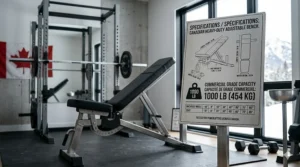
The $180 budget bench versus $550 commercial bench debate isn’t about triple the quality — it’s about matched use cases and total cost of ownership over 5-10 years.
Budget Benches ($180-300 CAD): Best for Beginners and Casual Lifters
Entry-level benches like the VEVOR flat bench or TXMO adjustable serve Canadian buyers who:
- Train 2-3 days per week with moderate intensity
- Use dumbbells under 35 kg per hand or barbells under 100 kg total
- Accept 3-5 year equipment lifespan before replacement
- Prioritize immediate affordability over long-term durability
These benches handle progressive beginner programs (Starting Strength, StrongLifts 5×5 initial phases) perfectly adequately. The steel is thinner (14 gauge vs. 11-12 gauge), welds are good-enough rather than exceptional, and padding compresses faster — but none of this matters until you’re moving serious weight. A 70 kg lifter benching 80 kg won’t stress a budget bench’s limitations.
Canadian budget bench buyers should expect to re-torque bolts every 2-3 months as thermal cycling loosens connections faster than commercial models. Plan for padding replacement by year 2-3 of regular use. Total 5-year cost: $180 initial + $75 padding replacement + 6 hours maintenance time = $255 plus labour. If you outgrow the bench and upgrade at year 3, resale value on Kijiji/Facebook Marketplace typically recovers $60-90 of the original investment.
Mid-Range Benches ($300-450 CAD): The Sweet Spot for Serious Home Gyms
Benches like HulkFit, BARWING, and TXMO premium models balance quality and cost for Canadian lifters who:
- Train 4-5 days weekly following structured programs
- Progress toward advanced strength levels (100+ kg bench press for males, 60+ kg for females)
- Want 5-7 year equipment lifespan without major component replacement
- Value adjustability for exercise variety
These benches use 12-13 gauge steel, better powder coating, and more refined adjustment mechanisms. The frame geometry handles dynamic loads confidently up to 180-200 kg total system weight (user + barbell/dumbbells). Canadian winters and humidity don’t cause premature failure like budget models experience.
Mid-range buyers typically spend $350 initial cost, no padding replacement for 4-5 years, minimal maintenance beyond annual deep cleaning and bolt checks. Total 7-year cost: $350 + 3 hours maintenance = better value per year than budget benches if you’re actually using the equipment regularly. Resale value holds at 40-50% of original price after 5 years of use, particularly for recognized brands like HulkFit.
Commercial Benches ($450-700 CAD): Investment for Decade-Long Training
AmStaff and professional-grade benches serve Canadian buyers who:
- Train 5-7 days weekly with periodized programming
- Operate small group training or home gym rental scenarios
- Require equipment lasting 10+ years with heavy multi-user abuse
- Prioritize biomechanical precision and safety over initial cost
Commercial construction using 11-12 gauge steel, industrial welds, and replaceable components means these benches outlast budget alternatives 2-3× over. The separate seat and back adjustments enable precise positioning that matters increasingly as you age — shoulder health at 45+ demands equipment that accommodates your biomechanics, not vice versa.
Canadian commercial bench buyers invest $550-700 upfront, replace padding once at year 5-6 ($100), and still have a fully functional bench at year 12. Total cost: $650-800 over 12 years = $54-67 annually. Compare this to buying a $200 budget bench three times over the same period ($600 total) plus significantly more maintenance time and the frustration of equipment limitations interfering with training progression.
The Canadian Climate Factor
Budget benches average 3-4 year lifespan in climate-controlled basements; drop that to 2-3 years in unheated garages or coastal humidity environments. Commercial benches maintain 8-10 year functionality even in harsh conditions. If you’re training in a Winnipeg garage or Halifax basement, the durability gap widens significantly. The $370 price delta between budget and commercial narrows to $185 when you account for doubled lifespan and reduced replacement frequency.
Frequently Asked Questions About Heavy Duty Weight Benches in Canada
❓ Can you build serious muscle with just a weight bench and dumbbells in Canada?
❓ What's the real difference between adjustable and flat benches for Canadian home gyms?
❓ How do Canadian warranty and return policies work for Amazon.ca weight bench purchases?
❓ Will a 1000 lbs capacity bench fit in my Canadian apartment without floor damage?
❓ What weight bench features matter most for older Canadian lifters (45+ years)?
Conclusion: Investing in Your Canadian Strength Journey
Selecting a heavy duty weight bench for Canadian conditions requires balancing immediate budget against long-term training goals while accounting for our unique climate challenges. The $200-700 CAD price spectrum isn’t about linear quality increases — it’s about matching construction durability to your training intensity, exercise variety needs, and environmental conditions.
Budget-conscious beginners in climate-controlled spaces can build serious strength with the TXMO Adjustable Weight Bench or VEVOR Flat Bench, accepting 3-5 year equipment lifespans as reasonable for $180-300 investments. Serious home gym builders training 4+ days weekly should consider the HulkFit or BARWING models in the $300-450 range, where better steel gauge and powder coating extend functional life to 6-8 years even through Canadian temperature and humidity extremes.
Lifters committing to decade-long strength progressions or operating small group training scenarios can justify the AmStaff commercial benches at $550-700 CAD. The cost-per-year calculation favours these investments when you factor in doubled lifespan, minimal maintenance requirements, and the biomechanical precision that becomes increasingly important as training age and chronological age advance.
Canadian buyers face shipping, warranty, and climate durability considerations that our American counterparts don’t encounter. Prioritize Amazon.ca-stocked inventory to avoid cross-border delays and unexpected customs fees. Verify powder coating quality and spring mechanism specifications if you’re training in unheated garages across the Prairies or coastal environments in BC and Atlantic Canada. Budget $50-100 CAD every 2-4 years for padding replacement regardless of bench quality — this is normal wear from consistent heavy use, not equipment failure.
The right heavy duty weight bench transforms training from an exercise in frustration (wobbling equipment, uncomfortable positioning, safety concerns) into a foundation for progressive strength development. Whether you’re pressing 60 kg in your first year or 140+ kg in year five, your bench should be the consistent variable that supports progression, not the limiting factor that caps potential.
Recommended for You: More Canadian Home Gym Guides
- 7 Best Olympic Weight Bench Canada 2026
- 7 Best Competition Bench Press Benches Canada 2026 – IPF Approved
- Best Weight Bench for Beginners Canada 2026
Disclaimer: This article contains affiliate links. As an Amazon Associate, I earn from qualifying purchases. If you purchase products through these links, we may earn a small commission at no additional cost to you.
✨ Found this helpful? Share it with your training partners! 💬🤗
