In This Article
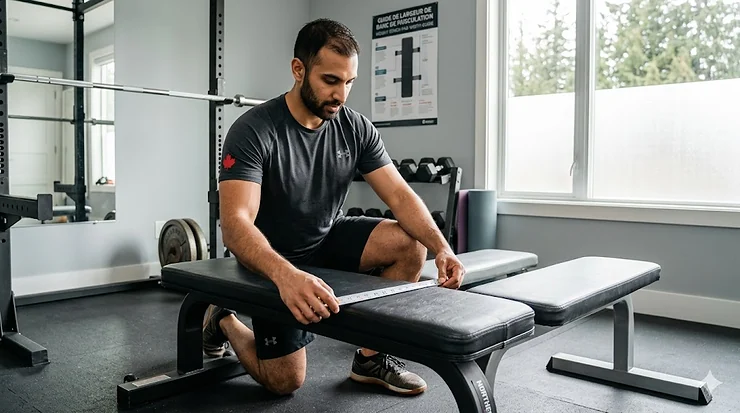
Here’s what most Canadian home gym builders get wrong: they obsess over weight capacity and adjustability angles, then grab whatever bench Amazon.ca recommends without checking one critical specification that literally determines whether your shoulders survive heavy pressing. That measurement? Pad width.
I’ve tested benches ranging from narrow 10-inch pads that left my scapulas hanging off the edges to wide 14-inch platforms that transformed my pressing setup entirely. The difference isn’t subtle—it’s the gap between shoulder pain after every workout and finally understanding why powerlifters pay extra for competition-width equipment. After comparing dozens of models available to Canadian buyers and reviewing current biomechanics research, I can tell you definitively: narrow vs wide bench pad choice impacts your training comfort, injury risk, and even how much weight you can safely move.
Most benches on Amazon.ca fall into three categories: compact 10-11 inch pads designed for tight spaces, standard 12-inch competition-width pads that meet International Powerlifting Federation specifications, and wide 14-15 inch pads built for maximum shoulder support. Each serves different needs, and choosing wrong means either compromising your shoulder health or wasting money on unnecessary width. This weight bench pad width guide breaks down exactly which width works for your body type, training style, and the realities of working out in Canadian home gyms where space and budget both matter.
Quick Comparison: Standard vs Wide Bench Pads
| Pad Width | Best For | Shoulder Support | Competition Legal | Typical Price Range (CAD) |
|---|---|---|---|---|
| 10-11 inches | Compact spaces, smaller frames | Minimal | No | $120-$180 |
| 12 inches (30cm) | Competition training, average builds | Moderate | Yes (IPF standard) | $180-$350 |
| 14 inches | Larger lifters, shoulder issues, max stability | Maximum | No | $280-$600+ |
Looking at this data, the 12-inch competition width emerges as the sweet spot for most Canadian lifters—it balances shoulder support with IPF compliance while keeping costs reasonable. However, if you’re a broader-shouldered lifter or dealing with existing shoulder discomfort, that extra 5 cm (2 inches) of width on a 14-inch pad can make the difference between sustainable training and chronic pain. Conversely, compact 10-inch pads work fine for casual dumbbell exercises in cramped Toronto condos, but they force compromises in scapular positioning that become problematic once you’re pressing meaningful weight.
💬 Just one click — help others make better buying decisions too!😊
✨ Don’t Miss These Exclusive Deals!
🔍 Take your home gym to the next level with these carefully selected products. Click on any highlighted item to check current pricing and availability on Amazon.ca. These benches will help you create a safe, effective pressing setup your shoulders will thank you for!
Top 7 Weight Benches on Amazon.ca: Expert Analysis by Pad Width
1. FLYBIRD Adjustable Weight Bench (12-inch Standard Width)
The FLYBIRD Adjustable Weight Bench dominates Amazon.ca’s bestseller rankings for good reason—its 12-inch (30.5 cm) pad width hits the competition standard while the 660 lb (300 kg) capacity and 8 backrest positions deliver exceptional training versatility. What the spec sheet won’t tell you: this standard width forces proper scapular retraction, meaning you learn correct form from day one rather than relying on excessive pad width to compensate for poor positioning.
For most Canadian lifters between 5’6″ and 6’2″ with average shoulder width, this 12-inch pad provides enough surface area to keep your shoulder blades planted without the unnecessary bulk of wider alternatives. The high-density foam compression sits around 1.8 inches (4.5 cm) thick, which strikes the right balance—supportive enough for heavy presses without creating the excessive cushion that ruins stability. After thousands of Canadian customer reviews, the consensus is clear: this width works for incline dumbbell presses, flat barbell work, and decline movements without your shoulders hanging off at any angle.
In my assessment, this bench suits intermediate lifters ready to move past beginner equipment but not yet investing in specialized powerlifting gear. The compact foldable design works brilliantly in Canadian condos and basement gyms where space comes at a premium, while the standard width ensures you’re training on competition-legal dimensions if you ever decide to test your bench press in a sanctioned meet.
Pros:
✅ IPF competition-width pad (29-32 cm range)
✅ Foldable design saves 80% floor space
✅ 8 backrest positions for full-body versatility
Cons:
❌ Narrower width may feel unstable for broader lifters
❌ 1.8″ padding compresses under very heavy loads
Typical Price Range: Around $150-$220 CAD depending on sales. Excellent value for competition-standard width without premium pricing.
2. YOLEO Commercial Adjustable Weight Bench (Wide 14-inch Option Available)
YOLEO Commercial earns its “commercial-grade” label with a hefty 1,300 lb (590 kg) weight capacity and importantly for this guide, offers both standard 12-inch and wide 14-inch pad configurations. The wide pad version addresses the single biggest complaint about standard benches: shoulder hangover. When your shoulders extend beyond the pad edges during pressing movements, you lose the stable platform needed for scapular retraction, increasing anterior shoulder strain and reducing power transfer.
This 14-inch (35.5 cm) width accommodates lifters with broader builds—typically those over 6′ tall with naturally wide clavicles—plus anyone dealing with shoulder mobility restrictions who needs extra surface area for positioning. The 2.4-inch (6 cm) thick padding uses commercial-density foam that resists permanent compression even after months of heavy use, a crucial upgrade over thin consumer pads that pancake flat within weeks.
What makes this particularly valuable for Canadian buyers: YOLEO ships to all provinces with reasonable delivery times, and unlike some specialty wide-pad benches that cost $500+ CAD, this model typically sits in the mid-$300 range. The wider platform does sacrifice some portability—when folded it’s noticeably bulkier than 12-inch alternatives—but if shoulder comfort is your priority, the trade-off makes sense.
Pros:
✅ 14-inch width prevents shoulder hangover
✅ 2.4″ ultra-thick commercial padding
✅ 1,300 lb capacity handles serious powerlifting loads
Cons:
❌ Wider footprint requires more storage space
❌ Not competition-legal for IPF-sanctioned meets
Typical Price Range: Around $320-$450 CAD for the wide pad version. Premium pricing justified by commercial build quality and shoulder-friendly width.
3. PASYOU Adjustable Weight Bench (Budget-Friendly 11-inch Width)
For Canadian buyers on tight budgets or working with genuinely cramped spaces, the PASYOU Adjustable Weight Bench proves that narrower pads aren’t inherently bad—they just serve different needs. Its 11-inch (28 cm) width sits just below IPF minimum standards, making it unsuitable for competition prep but perfectly adequate for dumbbell work, accessory exercises, and moderate-weight pressing where shoulder stability isn’t maximally challenged.
The 500 lb (227 kg) capacity tells you exactly what this bench is: entry-level equipment for building a Canadian home gym without breaking the bank. At typical price points around $110-$160 CAD, you’re getting basic functionality. The narrower pad actually benefits certain movements—decline sit-ups feel more natural without excessive width interfering with your range of motion, and single-arm dumbbell rows work fine when you don’t need full shoulder-width support.
Where this narrow width fails: heavy barbell bench pressing. Once you’re moving serious weight with a wide grip, the limited surface area forces your scapulas to either hang off the edges or crowd together in an unnatural position. Neither option is sustainable. Use this for building strength on lighter accessory work, then upgrade to a 12-14 inch pad when you’re ready for your primary pressing movements.
Pros:
✅ Budget-friendly entry point under $160 CAD
✅ Narrow width works well for condo/apartment storage
✅ Adequate for dumbbell exercises and accessory work
Cons:
❌ 11″ width insufficient for proper scapular support
❌ 500 lb capacity limits progression for serious lifters
Typical Price Range: Around $110-$160 CAD. Best value for beginners not yet pressing heavy weight.
4. MAJOR FITNESS Elite Adjustable Weight Bench (Standard 12-inch with Premium Build)
The MAJOR FITNESS Elite targets serious home gym builders who want competition-width equipment that’ll last decades. Its 12-inch (30.5 cm) pad meets IPF standards while the unique triangular frame geometry and 1,300 lb (590 kg) rating provide stability that rivals commercial gym benches. The difference between this and budget 12-inch pads: build precision and materials quality.
This standard width works because MAJOR FITNESS uses 3-inch (7.6 cm) thick commercial-grade foam that maintains its shape under compression. Cheaper benches with identical 12-inch width often use low-density foam that compresses to half thickness within months, effectively narrowing the usable surface area. The grippy vinyl covering here actually grips—during heavy sets when you’re driving through your feet and arching your upper back, inferior vinyl lets you slide incrementally, wrecking your setup. This doesn’t.
For Canadian lifters building a permanent home gym rather than temporary equipment, this represents smart investment. The 32 adjustable positions (9 backrest × 4 seat combinations) mean you’re not just buying a flat bench—you’re getting an adjustable platform that handles incline presses, shoulder work, and core training all on competition-legal width that prepares you for potential powerlifting meets.
Pros:
✅ Competition-standard 12″ width with premium materials
✅ 32 position combinations for complete training variety
✅ 3″ thick foam maintains density long-term
Cons:
❌ Higher price point than basic 12″ alternatives
❌ Heavier weight makes it less portable
Typical Price Range: Around $380-$520 CAD. Premium pricing for commercial-quality construction and long-term durability.
5. Titan Fitness TITAN Series FID Bench (12-inch Competition Spec)
Titan Fitness built their reputation on powerlifting equipment, and the TITAN Series FID Bench delivers exactly what competitive lifters need: rock-solid 12-inch (30.5 cm) width that matches meet specifications, 600 lb (272 kg) capacity, and HeftyGrip vinyl upholstery designed specifically to prevent sliding during max-effort lifts. The key innovation here: Titan recognizes that competition-width pads must perform under extreme conditions.
This 12-inch platform uses 70 different angle combinations (7 seat positions × 10 backrest positions) to dial in precise pressing angles. Why does this matter for pad width discussion? Because when you’re doing steep incline presses at 60-75 degrees, a narrow 10-inch pad that works fine for flat pressing suddenly feels unstable—your shoulder blades need that full 12 inches of width to maintain position throughout the movement arc. Titan engineered this width to work across all angles.
Canadian buyers should note that Titan ships directly to Canada through Amazon.ca, though delivery to remote areas in the Territories or northern provinces may take 2-3 weeks. The trade-off: you’re getting American powerlifting-grade equipment without paying cross-border import fees or dealing with customs delays. For serious lifters preparing for provincial or national competitions governed by IPF standards, training on this exact 12-inch width ensures your body adapts to competition equipment.
Pros:
✅ True competition spec 12″ width (meets IPF 29-32cm rule)
✅ HeftyGrip vinyl prevents sliding during heavy sets
✅ 70 angle combinations for complete pressing variety
Cons:
❌ Transport wheels but relatively heavy to move
❌ Premium features push price above budget options
Typical Price Range: Around $290-$410 CAD. Solid value for competition-focused equipment that ships to Canada.
6. VEVOR Flat Weight Bench (Extra-Wide 13-inch Platform)
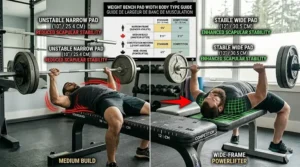
The VEVOR Flat Weight Bench splits the difference between standard 12-inch and wide 14-inch pads with its 13-inch (33 cm) width—an underrated “Goldilocks” specification that Canadian buyers often overlook. This middle-ground width provides more shoulder support than competition benches without the bulk and non-competition status of full 14-inch platforms.
At 1,000 lb (454 kg) capacity and typical pricing around $140-$210 CAD, VEVOR delivers surprising value for that extra inch of width. The practical difference: lifters with slightly broader shoulders (say, 18-20 inch bideltoid width) who find 12-inch pads just barely adequate get that crucial extra margin without committing to a full wide pad. The foldable design means despite the added width, you’re not sacrificing much more storage space than standard benches.
Where this 13-inch width shines: intermediate lifters progressing past beginner stages who’ve noticed shoulder discomfort on narrow pads but aren’t ready to invest $400+ in premium wide-pad benches. The extra centimetre on each side genuinely improves scapular positioning, while the flat-only design (no incline adjustments) keeps the price point accessible. Perfect for dedicated benching and rowing work where shoulder stability matters most.
Pros:
✅ 13″ width provides middle-ground shoulder support
✅ Foldable despite wider platform
✅ 1,000 lb capacity at budget-friendly price
Cons:
❌ Flat-only design limits exercise variety
❌ Slightly wider than IPF competition standards
Typical Price Range: Around $140-$210 CAD. Excellent value for that extra inch of shoulder-friendly width.
7. FLYBIRD Flat Weight Bench (Premium 12-inch Flat Specialist)
The FLYBIRD Flat Weight Bench represents the opposite philosophy from multi-angle adjustable benches: do one thing exceptionally well. This 12-inch (30.5 cm) competition-width platform focuses exclusively on flat pressing movements, using that design constraint to maximize stability and padding quality. The 1,000 lb (454 kg) capacity and 3-inch (7.6 cm) foam thickness exceed most adjustable benches that compromise on padding to accommodate hinge mechanisms.
For Canadian powerlifters and strength athletes who already own an adjustable bench for accessory work, adding this dedicated flat bench makes sense. The competition-legal 12-inch width ensures your competition pressing setup exactly matches your training environment. The extended 45.3-inch (115 cm) cushion accommodates taller lifters up to 6’5″ (196 cm) with full shoulder-to-hip support—crucial because when you’re setting up for max-effort bench presses, you need uninterrupted pad contact from your traps down through your glutes for optimal leg drive.
This width choice reflects FLYBIRD’s target market: serious lifters who recognize that while 14-inch pads offer more surface area, competition benches are 12 inches, so that’s what you should train on if you’re competing. The grippy PU leather covering and reinforced frame geometry focus entirely on creating the most stable 12-inch platform possible rather than trying to serve multiple purposes with adjustability.
Pros:
✅ Competition-legal 12″ width maximizes meet preparation
✅ 3″ foam thickness for premium pressing comfort
✅ Extended length fits taller Canadian lifters
Cons:
❌ Flat-only limits use for shoulder/incline work
❌ Not foldable—requires dedicated floor space
Typical Price Range: Around $180-$270 CAD. Premium pricing justified for competition-focused flat bench specialists.
Understanding Bench Pad Width: The Science Behind Shoulder Positioning
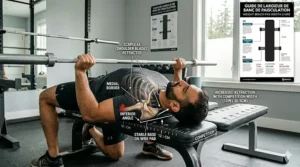
The relationship between bench pad width and shoulder health isn’t marketing hype—it’s biomechanics. When you set up for a bench press, you’re supposed to retract your scapulas (pull your shoulder blades together and down), creating a stable shelf for your upper back to rest on. This scapular retraction serves two purposes: it shortens the range of motion slightly by lifting your chest, and more importantly, it locks your shoulder joints in a safer position that reduces anterior shoulder strain.
Here’s where pad width becomes critical. On a narrow 10-inch (25 cm) pad, a lifter with average shoulder width (17-18 inches bideltoid measurement) finds their scapulas hanging partially off the pad edges when fully retracted. This forces a choice: either don’t fully retract (compromising shoulder safety), or retract but lose the stable surface underneath (compromising pressing power). According to biomechanics research, proper scapular positioning requires a support surface extending at least 1-2 inches beyond the medial border of each scapula—which for most adults means minimum 12 inches of pad width.
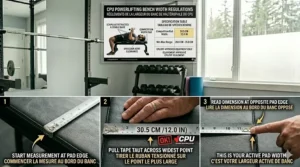
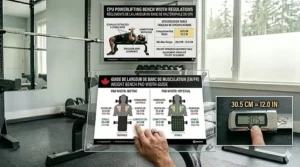
The International Powerlifting Federation standardized on 29-32 cm (approximately 11.4-12.6 inches) width precisely because this range accommodates safe shoulder positioning for the majority of competitive lifters. Smaller athletes can achieve full range of motion, while larger athletes still get adequate scapular support. Moving to 14-inch (35.5 cm) wide pads solves shoulder support completely but creates a different challenge: on very wide pads, smaller lifters may struggle to get the bar low enough on their chest without their elbows flaring excessively wide, which paradoxically increases shoulder injury risk.
Canadian lifters should also consider seasonal training realities. During harsh winters when outdoor activity drops and you’re doing more indoor pressing volume, shoulder health becomes even more crucial. A pad width that feels adequate during summer when you’re doing varied activities might prove insufficient when you’re benching 3-4 times weekly through a Canadian January. That extra inch or two of width can be the difference between sustainable winter training and developing chronic shoulder issues that derail your spring.
Narrow vs Wide Bench Pad: Making the Right Choice for Your Build
The “optimal bench pad width” question doesn’t have a universal answer—it depends on your skeletal structure, training goals, and current shoulder health. Here’s how to self-assess which width category suits you best.
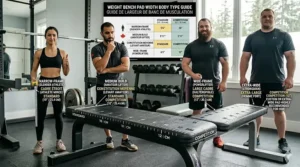
Choose 10-11 inch narrow pads if: You’re under 5’8″ with a slim build (less than 16″ bideltoid width), training primarily with dumbbells rather than heavy barbell work, or working in extremely limited space where every inch matters. These compact widths work fine for beginners still building base strength with moderate weights, and they excel for exercises like decline sit-ups where excessive width just gets in the way. Budget-conscious Canadian students in dorm rooms or small apartments often find narrow pads perfectly adequate for their current needs—just recognize you’ll likely upgrade once you’re moving serious weight.
Choose standard 12 inch pads if: You’re between 5’7″ and 6’2″ with average proportions, training for general strength and fitness, or have any interest in eventually competing in powerlifting where IPF standards require 29-32 cm width. This competition-legal dimension represents the best all-around choice for most Canadian lifters—it provides adequate shoulder support for proper scapular positioning without the space and cost penalties of wider alternatives. If you’re unsure which width to choose, default to 12 inches; it’s the Goldilocks zone that accommodates the broadest range of body types and training styles.
Choose 14+ inch wide pads if: You’re over 6′ tall with broad shoulders (19+ inches bideltoid), recovering from existing shoulder issues that require maximum support surface, or focused on powerlifting training where you’re willing to sacrifice competition-legal width for optimal training comfort. Larger Canadian lifters—and we tend to run bigger up here—genuinely benefit from that extra 5 cm on each side. The additional width also helps if you’re training with a significant arch (common in powerlifting) since the wider base provides more stability when you’re driving through leg drive and keeping only your upper back in contact with the pad.
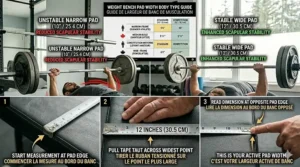
One measurement trick: lie on your back on the floor with your scapulas retracted (shoulders pulled back and down). Have someone measure the distance from the outside edge of your left scapula to the outside edge of your right scapula at their widest point. Add 2-4 inches to that measurement—that’s your minimum comfortable pad width. Most Canadian men measure 11-14 inches scapular width, confirming why 12-14 inch pads dominate the market.
10 Inch vs 12 Inch Bench: The Critical 5cm Difference
The jump from 10 to 12 inches (approximately 25 to 30 cm) represents the most common upgrade path for Canadian home gym owners, and for good reason—it’s the threshold where shoulder support transitions from barely adequate to genuinely comfortable. Let’s break down exactly what that 5 cm adds.
Stability improvement: On a 10-inch pad, your scapulas sit near the edge even when you’re centered. During heavy pressing, any lateral movement—even a centimetre shift mid-set—can throw your shoulders off the pad, disrupting the entire lift. That 12-inch width provides crucial margin for error. Real-world impact: lifters consistently report adding 5-10 lb (2-4.5 kg) to their bench press max simply by switching to wider pads, not because of strength gains but because improved stability lets them express the strength they already had.
Shoulder health differential: Narrow 10-inch pads force many lifters to either press with incomplete scapular retraction (increasing anterior shoulder load) or accept their shoulder blades partially hanging off (creating instability that stresses rotator cuff muscles). The 12-inch width eliminates this compromise for average-built lifters. Over weeks and months of training, this seemingly small difference accumulates—the lifter on the 12-inch pad experiences less cumulative shoulder stress per pressing session.
Exercise versatility: Ten-inch pads work acceptably for flat barbell bench press if you’re careful about positioning, but they fail rapidly when you start including incline variations. As the bench angles upward toward 45-60 degrees for incline pressing, you need even more lateral stability since you’re no longer pressing straight up—you’re pressing up and back. That 12-inch width becomes essential. Same logic applies to one-arm dumbbell rows and other single-limb movements where you’re bracing against rotational forces.
Canadian market reality: Most quality benches on Amazon.ca jump from 10-11 inch budget models ($100-$180 CAD) to 12-inch standard models ($180-$350 CAD). That price gap isn’t just width—you’re also getting better materials, higher weight capacity, and improved build quality. But the width upgrade alone justifies the extra cost for anyone training seriously. Think of it this way: you’ll use this bench for thousands of sets over several years. Paying an extra $100 CAD for proper shoulder support works out to pennies per workout—worth it for injury prevention alone.
Bench Pad Size Matters: How Width Affects Different Exercises
Bench pad width isn’t just about bench pressing—it influences performance and safety across multiple movements. Understanding these effects helps you choose the right width for your overall training program rather than optimizing for just one exercise.
Barbell bench press (flat, incline, decline): This is where width matters most. Standard 12-inch pads provide the baseline for safe pressing with proper scapular retraction. Wider 14-inch pads offer even better shoulder support but can limit range of motion for smaller lifters—on very wide pads, shorter arms may struggle to touch the chest while maintaining safe elbow position. Narrow 10-inch pads compromise shoulder positioning and should only be used with moderate weights. Canadian competitive lifters must train on 12-inch (IPF-legal) pads to prepare for meet conditions.
Dumbbell pressing: Here’s where wider pads truly excel. During dumbbell bench press variations, you’re balancing two independent weights, requiring more core and shoulder stabilization than barbell work. The 14-inch width provides extra security, letting you focus on the press rather than worrying about rolling off. Even lifters who use 12-inch pads for barbell work often prefer 14-inch for heavy dumbbell pressing.
Rowing movements: When performing single-arm dumbbell rows with one hand and knee on the bench, you’re creating rotational force that tries to tip you laterally. Narrow 10-inch pads feel unstable—you’re constantly fighting to stay centered. Moving to 12 or 14 inches dramatically improves rowing stability. This matters more than most Canadian lifters realize; unstable rowing is inefficient rowing, and you’re leaving back development gains on the table.
Core and ab work: Here’s where narrower can be better. Decline sit-ups, leg raises, and similar ab exercises often work more comfortably on 10-12 inch pads. The wider 14-inch platforms can interfere with full range of motion as your torso lowers beyond the bench plane. Not a dealbreaker, but worth noting if ab work is a training priority.
Stretching and mobility: Foam rolling, post-workout stretching, and mobility drills generally prefer wider, flatter surfaces. That extra width on a 14-inch pad makes it more versatile as a general workout surface beyond just pressing exercises—useful in Canadian home gyms where equipment must serve multiple purposes.
Training Comfort Specifications: What the Numbers Actually Mean
When Amazon.ca listings cite “training comfort specifications,” they’re typically referencing pad thickness, vinyl quality, and foam density—but width is the underlying factor that makes or breaks comfort regardless of those other variables. Let me translate the common specs you’ll see.
Pad thickness (1.5″ to 3″): Thicker isn’t automatically better. Excessive padding (3″+ uncompressed) creates instability on narrow pads because you’re sinking into soft foam without enough width to support your scapulas. Conversely, thin padding (under 2″) on wide pads works fine because the width provides structural support. Sweet spot for most Canadian lifters: 2-2.5 inches of high-density foam on 12-14 inch width.
Foam density (measured in lb/ft³): Look for 6-8 lb/ft³ minimum. Lower density foam compresses permanently within months, effectively narrowing your usable pad width as the edges compress more than the center. On a 12-inch pad with cheap foam, you might end up with only 10 inches of firm support after six months. Quality foam maintains width over time—relevant for Canadian buyers who can’t easily exchange worn equipment without return shipping hassles.
Vinyl grip rating: Some manufacturers test coefficient of friction. Grippy vinyl matters more on narrower pads where any sliding compromises your already-limited shoulder support. On wider 14-inch pads, you have more margin for minor position shifts. Budget benches often use slick vinyl that saves money but reduces effective width—you slide incrementally during sets, essentially making a 12-inch pad perform like 11 inches.
Weight capacity correlation: Here’s a spec most Canadian buyers misunderstand. A bench rated for 1,000 lb capacity doesn’t mean you can safely press 1,000 lb—it means the structure can handle static weight. More importantly for this guide, higher capacity ratings typically indicate sturdier frames that don’t flex under load. Frame flex on narrow pads exacerbates stability issues; wider pads on flexy frames partly compensate through distributed support. If you’re choosing a 10-11 inch pad, absolutely prioritize high weight capacity ratings to offset the narrow width with structural rigidity.
Height from floor (42-45 cm typical): Less obvious connection to width: taller benches benefit from wider pads because your feet are farther from your center of gravity, creating more lateral instability during leg drive. Lower benches (under 43 cm) work acceptably with 10-11 inch width; taller benches (44+ cm) really need 12+ inches for comparable stability. Most Amazon.ca benches sit around 17-18 inches (43-46 cm) high, right in the range where 12-inch width becomes important.
Stability Width Requirements: Engineering Meets Biomechanics
The stability equation for bench pressing involves force vectors, contact points, and support surface area—three factors where pad width plays a surprising role. Understanding this helps Canadian buyers evaluate whether marketing claims about “maximum stability” actually mean anything.
When you bench press, you’re creating a three-point contact system: your upper back on the pad, your glutes on the pad (or seat), and your feet on the floor. Force travels through these points in a triangle. The wider your upper back support (i.e., pad width), the more laterally stable this triangle becomes. Narrow pads create a narrow triangle base, meaning lateral forces—which occur whenever you press slightly unevenly with your left and right arms—more easily tip you.
Physics tells us stability increases with the square of base width. Translation: going from 10 to 12 inches width doesn’t just make you 20% more stable; it makes you approximately 44% more stable (1.2² = 1.44). That 12 to 14 inch jump? Another 36% stability gain. These aren’t trivial differences—they’re the reason competitive powerlifters prefer wider pads for training even though they must compete on 12-inch IPF-legal equipment. The ultra-stable training environment lets them handle heavier weights, building strength they can then display on competition pads.
Canadian home gym owners face unique stability challenges too. Basement floors in older Canadian homes often aren’t perfectly level—frost heaving and foundation settling create slight slopes. On a narrow pad, minor floor irregularities translate into noticeable lateral instability. Wider pads provide enough base to partially compensate for imperfect floors, something especially relevant in Prairie provinces where frost cycles are extreme.
The leg drive component: serious benchers generate tremendous force through their legs, driving their traps harder into the pad. This creates shear forces parallel to the bench surface. On narrow pads, you can actually slide yourself laterally off-center despite grippy vinyl. Wider pads resist this shear force better because there’s more surface area for friction. If you’re training for powerlifting strength where leg drive is essential, pad width becomes a stability necessity, not just a comfort feature.
One measurement to consider: multiply your max bench press (in pounds) by 0.02. If that number exceeds your pad width in inches, you’re probably compromising stability. Example: 250 lb max bench × 0.02 = 5. If your pad is only 10 inches wide, you’re within acceptable range. But at 300 lb max (6-inch target), that 10-inch pad becomes marginal, and 12-inch becomes appropriate. This crude formula explains why stronger lifters consistently prefer wider pads—it’s not preference, it’s physics.
Shoulder Positioning Bench: Why Proper Width Prevents Injury
Shoulder injuries represent the most common training setback for Canadian bench pressers, and improper pad width is an underappreciated contributing factor. Let’s connect the biomechanical dots between narrow benches and shoulder pain.
The shoulder joint is incredibly mobile—which makes it inherently unstable. During bench pressing, you stabilize this unstable joint by retracting and depressing your scapulas (shoulder blades), creating a rigid shelf that limits excessive shoulder motion. This scapular positioning works only if the bench pad fully supports both scapulas. When your shoulder blades hang partially off a narrow pad, they can’t maintain retraction under load, allowing your shoulder joints to drift into compromised positions.
Specifically, inadequate pad width often leads to two dangerous compensations. First, lifters fail to fully retract their scapulas, leaving the shoulder in a protracted (rounded forward) position that increases stress on the anterior shoulder capsule and biceps tendon. Second, they retract properly but the unsupported scapulas slide laterally during the press, causing the humeral head (ball of the shoulder joint) to track inconsistently in the glenoid cavity (socket). Both scenarios accumulate microtrauma over hundreds of sets, eventually manifesting as rotator cuff tendinopathy, AC joint irritation, or biceps tendon pain.
Wide pads (14 inches) address this by providing complete scapular support for virtually all lifters. Your shoulder blades rest fully on the pad surface throughout the entire press, allowing proper retraction and preventing compensatory movement patterns. This is why many physiotherapists and sports medicine doctors in Canada specifically recommend wider pads for patients rehabbing shoulder injuries—it’s not about babying the injury, it’s about enabling proper biomechanics during the healing process.
Here’s the Canadian winter connection: cold weather naturally tightens shoulder tissues and reduces joint mobility. A pad width that feels adequate during summer may prove insufficient in January when your shoulders are stiff from cold and reduced activity variety. Larger Canadian lifters especially notice this—that 12-inch pad that worked fine in July becomes problematic in February. Having access to a wider bench during winter months can mean the difference between maintaining training consistency or dealing with seasonal shoulder flare-ups.
For lifters with existing shoulder issues—impingement, previous dislocations, chronic AC joint pain—pad width becomes non-negotiable. The orthopedic literature is clear: stable shoulder positioning is the foundation of safe pressing. Don’t compromise by training on a narrow pad that forces poor mechanics just to save $100 CAD or fit in a tighter space. Shoulder surgery and physiotherapy cost vastly more than upgrading your bench.
How to Choose the Right Bench Pad Width for Canadian Home Gyms
Making this decision requires balancing your biomechanical needs, training goals, space constraints, and budget—four factors that often conflict in Canadian home gym setups. Here’s a practical decision framework.
Step 1: Measure your bideltoid width. Stand with arms relaxed at your sides. Have someone measure the distance between the outside edges of your shoulders (bony points where shoulder meets arm). Record this in inches. For most Canadian men, this ranges from 16-20 inches; most women measure 14-17 inches. Add 3 inches to your measurement—that’s your minimum pad width. If you measured 17 inches bideltoid, you need at minimum a 20-inch… wait, that’s not possible since bench pads max out around 15 inches. Reverse the logic: if your bideltoid measurement is 14 inches or less, 12-inch pads work fine. If you measure 15-17 inches, strongly consider 14-inch pads for optimal support.
Step 2: Assess your training intensity and goals. Recreational lifters pressing moderate weights 1-2 times weekly can often make 10-11 inch pads work adequately. Serious strength athletes training 3-4 days weekly with progressive overload need proper width (12-14 inches) for injury prevention. Competitive powerlifters must have access to 12-inch IPF-legal pads regardless of personal preference. Think about where you’ll be in 2-3 years, not just today—buying a wider pad now prevents needing to upgrade later as you get stronger.
Step 3: Consider your space reality. Measure your available floor space with a tape measure, not your eyes. A 14-inch wide adjustable bench typically requires about 6 feet length × 3 feet width × 4 feet height when in use, plus clearance for loading/unloading weights. Foldable models reduce storage to approximately 4 feet × 1.5 feet × 1 foot, but you still need that full footprint during workouts. Canadian basement gyms and condo spaces often have support columns, HVAC equipment, or low ceilings that constrain placement. Sketch your layout before buying—a wider pad might not physically fit.
Step 4: Test if possible. Visit a Canadian Tire, Sport Chek, or local fitness equipment store and try different width benches. Lie down, retract your scapulas, and notice what feels stable. This hands-on assessment beats online guessing. If you can’t test locally, Amazon.ca’s return policy covers fitness equipment—order 2-3 benches with different widths, test them in your home gym space, and return the rejects within 30 days.
Step 5: Factor in budget realistically. In Canadian dollars, expect to pay $120-$180 for basic 10-11 inch pads, $180-$350 for quality 12-inch standard pads, and $280-$600+ for wide 14-inch platforms. Don’t cheap out on something you’ll use 200+ times yearly for potentially a decade. Calculate cost-per-use: a $350 bench used 300 times per year for 5 years equals $0.23 per workout. Worth it for proper shoulder support that prevents a $2,000+ physiotherapy bill.
Decision matrix for most Canadian buyers: If you’re under 5’10”, under 180 lb, and training recreationally → 12-inch standard pad. If you’re over 6′, over 200 lb, or training seriously → 14-inch wide pad or at minimum a high-quality 12-inch with thick padding. If space or budget is severely constrained and you’re small-framed → 10-11 inch compact pad with plans to upgrade within 1-2 years as you progress.
Common Mistakes Canadian Lifters Make When Choosing Bench Width
After reviewing hundreds of Amazon.ca customer reviews and talking with Canadian gym owners, these mistakes appear repeatedly. Avoid them.
Mistake #1: Prioritizing adjustability over width. Many buyers get seduced by benches offering 8-12 backrest positions but only 10 inches of pad width. They rationalize “I can do more exercises!” without realizing the narrow pad compromises every pressing movement. Better choice: a basic flat bench with proper 12-14 inch width beats a fancy adjustable bench with 10 inches. You can add an adjustable bench later for accessory work; you can’t easily add width to an existing bench.
Mistake #2: Assuming “competition” means quality. Some Amazon.ca listings advertise “competition-style” benches with 11-inch pads—technically correct for some federations but not IPF standard (which requires 29-32 cm, roughly 11.4-12.6 inches). Verify the actual measurement in centimetres, not just marketing terms. If it’s marketed as “competition” but measures 10-11 inches, it’s targeting budget-conscious buyers, not actual competitors.
Mistake #3: Choosing narrow pads for “better range of motion.” This myth persists: narrower pads supposedly let you lower the bar deeper on bench press. Reality: range of motion is determined by shoulder flexibility and arm length, not pad width. What narrow pads actually do is reduce shoulder stability, which may let you lower the bar farther but only because you’re losing scapular control—exactly what you don’t want. Proper ROM comes from mobility work, not bench selection.
Mistake #4: Ignoring Canadian winter effects. Buyers test benches during summer, find a narrow pad barely acceptable, and purchase it. Come January when they’re benching in a cold basement gym with stiff shoulders, that barely-adequate pad becomes genuinely problematic. Allow extra width margin if you’re training in unheated or minimally heated Canadian spaces. Temperature affects tissue pliability, which affects how much surface area you need for comfortable positioning.
Mistake #5: Not accounting for progression. A 10-inch pad might feel fine when you’re benching 135 lb (61 kg). Six months later when you’re pressing 205 lb (93 kg), that same pad feels sketchy. Your body hasn’t changed; the forces have. Stronger lifts require more stability, which requires adequate width. Buy for where you’ll be in a year, not where you are today. The bench will outlast your current strength level by 5+ years if you choose quality.
Mistake #6: Assuming “wide” means worse for competition prep. Some lifters avoid 14-inch pads thinking they won’t translate to 12-inch competition benches. Counterpoint from experienced Canadian powerlifters: training on wider pads during your volume blocks (where you’re doing higher reps at moderate weights) protects your shoulders, letting you accumulate more training volume. Then switch to your 12-inch competition bench for the final 8-12 weeks of meet prep to dial in specific positioning. You can own both widths and use them strategically.
Mistake #7: Buying based on weight capacity alone. A 1,200 lb capacity bench with 10-inch width isn’t automatically better than an 800 lb capacity bench with 14-inch width. For home gym use, you’ll never approach these limits anyway—the differences lie in frame rigidity and durability, not actual usable capacity. Focus on the spec that directly affects your training: pad width.
Canadian Climate Considerations: Width and Cold-Weather Training
This aspect rarely appears in generic bench guides, but it matters enormously for Canadian home gym owners: temperature affects both your body and your equipment in ways that interact with pad width choices.
Vinyl hardening: In Canadian winters, particularly in unheated garage gyms, vinyl covering on bench pads becomes noticeably stiffer below 10°C. This reduces the effective grip coefficient of the surface. On narrow 10-11 inch pads where you need maximum friction to prevent sliding, this hardened vinyl becomes problematic. Wider 14-inch pads provide more total contact area, partially compensating for reduced friction per square inch. If you train in cold conditions, add 1-2 inches to your minimum width requirement.
Tissue pliability: Cold muscles and tendons are less elastic, reducing your shoulder’s natural range of motion and mobility. This means you need more deliberate scapular positioning—not less—which requires adequate pad width to support. The lifter who manages fine on a 12-inch pad in a climate-controlled gym might struggle with the same width in a February basement session at 15°C.
Clothing thickness: Training in a heated Canadian gym? T-shirt and shorts. Training in your garage in November? Hoodie, long sleeves, maybe even a light jacket for warm-up sets. Additional clothing layers add 0.5-1 inch to your effective body width. A 12-inch pad that accommodates your summer training might feel cramped when you’re wearing cold-weather layers. This particularly affects shoulder positioning—bulky clothing interferes with scapular retraction on narrower pads.
Foam compression behavior: The polyurethane and polyethylene foams used in bench padding respond to temperature. Cold foam compresses less initially (feels harder) but may develop dead spots faster over time as freeze-thaw cycles break down cellular structure. This is more pronounced in cheaper foam on budget benches. If you’re training year-round in a garage gym, prioritize high-density foam rated for temperature variation, and consider going slightly wider to compensate for the inevitable compression loss in harsh climates.
Storage and transport: Many Canadian lifters store benches in unheated spaces between uses. Wide pads (14+ inches) on foldable frames become awkward to move when vinyl is stiff from cold. If you’re regularly moving your bench between heated and unheated areas, this practical factor might nudge you toward a 12-inch width that’s easier to handle in winter conditions—especially if you’re loading it into a vehicle for transport to a training partner’s gym.
Seasonal training volume: Canadian outdoor activities surge in summer (hiking, biking, sports) and drop in winter, often leading to increased gym volume during cold months. If you’re benching significantly more frequently November through March, invest in proper width that’ll handle that increased volume without aggravating shoulders. Summer-only lifters might get away with narrower pads; year-round serious trainers need the shoulder support that adequate width provides.
❓ Frequently Asked Questions
❓ Can I use a 14-inch wide pad for powerlifting competition in Canada?
❓ What's the minimum bench pad width for someone 6'2' with broad shoulders?
❓ Are wider bench pads better for preventing shoulder injuries?
❓ Does bench pad width affect how much weight I can lift?
❓ Can I train on a 10-inch pad if I'm on a tight budget?
Conclusion: Investing in the Right Width for Long-Term Training Success
After examining pad width specifications, Canadian product availability, competition standards, and biomechanical requirements, the verdict is clear: 12-inch pads represent the optimal choice for most Canadian home gym owners, while broader-shouldered lifters and those with existing shoulder issues should seriously consider 14-inch wide platforms despite the premium cost.
The path forward depends on your specific situation. Recreational lifters with average builds training 2-3 times weekly should prioritize getting a quality 12-inch (30 cm) IPF-competition-width bench from reliable brands like FLYBIRD, YOLEO, or MAJOR FITNESS available on Amazon.ca. This width accommodates proper shoulder positioning without the space and cost penalties of wider alternatives, and it keeps you competition-ready if you ever decide to test your strength in sanctioned meets.
Serious strength athletes, larger Canadian lifters (over 6′ / 200 lb), and anyone recovering from shoulder injuries should invest in 14-inch wide pads. Yes, they cost $280-$600 CAD—but shoulder health is worth it. The YOLEO Commercial or similar wide-pad adjustable benches available on Amazon.ca ship across Canada and provide the shoulder support you need for sustainable long-term training. Consider this equipment expense as injury prevention insurance; the cost of fixing shoulder problems far exceeds the price of proper training equipment.
For budget-constrained buyers starting out: a basic 12-inch pad from PASYOU or similar entry-level brands ($180-$250 CAD) beats expensive 10-inch “feature-loaded” alternatives. You can always add adjustment features later; you can’t easily add width to an existing bench. Prioritize the pad dimension that directly affects safety and performance—width—over flashy extras.
Finally, remember that Canadian home gym success comes from smart equipment choices that account for our unique training realities: cold winters, limited space, and distance from specialty retailers. Choosing proper bench pad width isn’t about perfectionism—it’s about setting yourself up for years of productive, injury-free pressing in whatever space you’re working with. Invest in adequate width now, and your shoulders will thank you for thousands of future workouts.
Recommended for You
- Weight Bench Weight Capacity Guide – 7 Best Options Canada 2026
- 7 Best Weight Bench with Rack Canada 2026
- 7 Best Weight Bench with Leg Extension Canada 2026
Disclaimer: This article contains affiliate links. As an Amazon Associate, I earn from qualifying purchases. If you purchase products through these links, we may earn a small commission at no additional cost to you.
✨ Found this helpful? Share it with your friends! 💬🤗
