In This Article
Walk into any fitness equipment store in Toronto or browse Amazon.ca for weight benches, and you’ll immediately hit a wall of confusion. Utility bench? Olympic bench? Standard bench? What most Canadian buyers don’t realise is that choosing the wrong bench type can cost you hundreds of dollars in CAD and seriously limit your training progress.
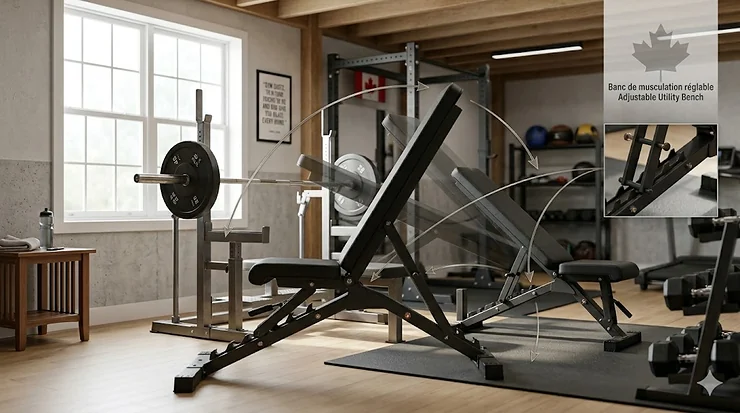
Here’s what the product listings won’t tell you: the difference between a utility bench and an olympic bench isn’t just about price or fancy marketing names. Olympic benches are professional advance level benches that are wider and longer, with several additional equipment added to them such as squat racks, weight plates, and rod capabilities. Meanwhile, utility benches are versatile, space-efficient platforms designed primarily for dumbbell work and bodyweight exercises.
If you’re setting up a home gym in a Calgary basement or a Vancouver condo, this distinction matters more than you think. The bench you choose determines which exercises you can perform, how much weight you can safely lift, and whether your equipment will still be functional after enduring Canadian winters in an unheated garage. This guide breaks down everything Canadian lifters need to know about utility bench vs olympic bench, with real product analysis from Amazon.ca, pricing in CAD, and practical advice for our unique climate and space constraints.
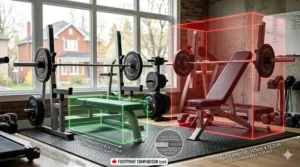
Quick Comparison Table: Utility Bench vs Olympic Bench at a Glance
| Feature | Utility Bench | Olympic Bench |
|---|---|---|
| Primary Use | Dumbbell exercises, versatility | Barbell bench press, heavy lifting |
| Width | 12-14 inches (30-36 cm) | 14-18 inches (36-46 cm) |
| Length | 48-52 inches (122-132 cm) | 54-62 inches (137-157 cm) |
| Weight Capacity | 300-600 lbs (136-272 kg) | 600-1200+ lbs (272-545+ kg) |
| Built-in Rack | Usually none | Often includes barbell supports |
| Adjustability | Flat or FID (flat/incline/decline) | Usually flat, sometimes adjustable |
| Price Range (CAD) | $80-$350 | $250-$900+ |
| Best For | Home gyms, dumbbell training, beginners | Powerlifting, barbell work, serious lifters |
💬 Just one click — help others make better buying decisions too! 😊
Top 7 Weight Benches on Amazon.ca: Expert Analysis for Canadian Home Gyms
1. FLYBIRD WB2 Adjustable Utility Weight Bench
The FLYBIRD WB2 stands out as Amazon.ca’s most popular adjustable utility bench, and after examining the specs and Canadian user feedback, it’s easy to see why. This foldable incline bench offers seven back positions (flat, incline, decline) with a surprisingly robust 750 lbs (340 kg) weight capacity despite weighing only 27 lbs (12 kg) itself.
What the spec sheet doesn’t tell you: the powder-coated steel frame handles Canadian humidity well, and the compact folding design means you can tuck it behind your Edmonton bedroom door when not in use. The triangular structure provides exceptional stability even during heavy dumbbell presses, addressing a common complaint with lighter adjustable benches. Canadian reviewers consistently praise the tool-free assembly and the fact that it fits users up to 6’5″ (196 cm) — critical for taller Canadians who find most budget benches uncomfortably short.
The catch? This is a utility bench optimised for dumbbell work. If you’re planning to do heavy barbell bench presses, you’ll need to pair it with a separate power rack. For most home gym owners in Canadian condos or small spaces, this is actually a feature, not a bug.
Pros:
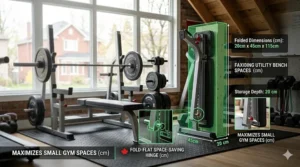
✅ Folds to 20″ × 16″ (51 × 41 cm) for compact storage
✅ 750 lbs capacity handles serious training loads
✅ Seven adjustment positions cover all training angles
Cons:
❌ No barbell rack — requires separate equipment for Olympic bar work
❌ Pad could be thicker for extended training sessions
Price range: Around $180-$220 CAD. For a versatile, space-saving utility bench available on Amazon.ca with Prime shipping, this represents excellent value for Canadian home gym builders.
2. Body Champ Olympic Weight Bench with Squat Rack (PRO3900)
The Body Champ PRO3900 is Amazon.ca’s answer to Canadian lifters who want an all-in-one Olympic bench solution without breaking the $600 CAD barrier. This two-piece set combines an adjustable bench with a squat rack, leg developer, and preacher curl attachment — essentially a compact home gym in grey powder-coated steel.
Here’s the real-world perspective most product listings skip: the integrated squat rack supports Olympic 7-foot bars (which weigh 45 lbs or 20 kg), and the safety catch bars provide crucial backup when pressing alone in your Winnipeg basement. The leg developer attachment adds genuine training variety, targeting quads and hamstrings without requiring separate machines. Canadian buyers should note the bench adjusts to multiple positions, though the mechanism requires pin insertion rather than quick-release levers.
The limitations are worth understanding before purchase. This bench measures roughly 62″ × 48″ (157 × 122 cm) with rack assembled, consuming significant floor space. If you’re training in a Toronto condo, measure twice before ordering. Additionally, while the stated weight capacity exceeds 300 lbs (136 kg) for bench press, serious powerlifters pressing 400+ lbs should consider commercial-grade alternatives.
Pros:
✅ Complete system includes squat rack, bench, and leg developer
✅ Olympic bar compatible (50mm sleeves)
✅ Grey finish resists basement humidity better than painted steel
Cons:
❌ Large footprint unsuitable for apartments under 500 sq ft
❌ Assembly requires 60-90 minutes and basic tools
Price range: In the $450-$550 CAD range on Amazon.ca. This represents solid value for Canadian lifters wanting an Olympic bench setup with squat capabilities, though you’ll sacrifice floor space and portability.
3. CAP Barbell Deluxe Utility Weight Bench (FM-CB804DX)
The CAP Barbell FM-CB804DX holds legendary status among Canadian home gym enthusiasts, and it’s frequently available on Amazon.ca in multiple colour options (black, blue, red, grey). This adjustable utility bench combines reliability with affordability, featuring a 600 lbs (272 kg) weight capacity and five back positions from flat to steep incline.
What makes this bench particularly suited for Canadian conditions: the powder-coated steel frame resists rust formation even in humid coastal climates like Vancouver or Halifax. The dual-density foam padding maintains shape through temperature fluctuations, crucial when storing equipment in unheated garages where winter temps drop to -30°C. The built-in transport wheels and handle make repositioning easy, and at 45 lbs (20 kg), it’s light enough to move solo yet stable enough for heavy training.
Canadian reviewers consistently highlight the bench’s longevity — many report 5+ years of regular use without wobble or pad deterioration. The catch? This is a utility bench without barbell supports, so you’ll need a power rack or squat stand for Olympic bar exercises. The back pad adjustment uses a ladder mechanism rather than quick-release pins, slowing position changes mid-workout.
Pros:
✅ Available in eight colours to match home gym aesthetics
✅ Transport wheels enable easy repositioning
✅ Durable construction withstands Canadian climate extremes
Cons:
❌ Ladder-style adjustment slower than pin systems
❌ 12-inch (30 cm) pad width feels narrow for larger lifters
Price range: Typically $140-$190 CAD on Amazon.ca depending on colour selection. For Canadian buyers seeking a proven utility bench with strong reviews, this CAP Barbell model delivers exceptional reliability per dollar spent.
4. Marcy Competitor Adjustable Olympic Weight Bench (CB-729)
The Marcy CB-729 represents the entry point for Canadian buyers wanting true Olympic bench functionality without commercial gym pricing. This adjustable bench includes an integrated bar catch system designed for Olympic 7-foot bars, plus a leg developer attachment for quad extensions and hamstring curls — addressing two major muscle groups often neglected in home training.
What separates this from budget competitors: the bar catches adjust to multiple heights, accommodating different user arm lengths and exercise variations. The bench back adjusts to flat, incline, and decline positions, enabling comprehensive chest training angles. Canadian buyers should note the 300 lbs (136 kg) weight rating applies to combined user weight plus barbell load, so a 200 lbs lifter can safely press around 100 lbs — suitable for beginners to intermediate lifters but limiting for advanced athletes.
The reality check most reviews won’t mention: at this price point ($250-$320 CAD range on Amazon.ca), you’re getting entry-level Olympic bench features rather than commercial durability. The foam padding compresses with heavy use, and the frame shows flex at capacity limits. For Canadians building their first home gym or training with moderate weights, this bench provides genuine Olympic functionality. Powerlifters or those planning to press 300+ lbs should budget for higher-tier options.
Pros:
✅ Integrated Olympic bar catches eliminate need for separate rack
✅ Leg developer adds lower body training options
✅ Adjustable back pad supports multiple training angles
Cons:
❌ 300 lbs weight capacity limits advanced lifters
❌ Foam padding compresses faster than premium alternatives
Price range: Around $250-$320 CAD on Amazon.ca with periodic Prime Day discounts. This bench suits Canadian beginners and intermediate lifters wanting Olympic capabilities on a budget, though serious powerlifters will quickly outgrow the weight limits.
5. Fitness Gear Pro Utility Bench
The Fitness Gear Pro Utility Bench delivers commercial gym stability at home gym pricing, featuring an 8-position back pad system (flat, multiple inclines, multiple declines) and a remarkable 600 lbs (272 kg) weight capacity. While primarily sold through Dick’s Sporting Goods in the US, this model occasionally appears on Amazon.ca through third-party sellers, and it’s worth tracking for Canadian buyers prioritising durability.
Here’s the insider perspective: the heavy-duty steel construction weighs approximately 55 lbs (25 kg), providing the solid base that lighter benches lack when pressing heavy dumbbells. The powder-coated finish resists corrosion in Canadian basements, and the extra-thick foam padding maintains comfort during extended training sessions. The eight back positions cover every practical training angle from steep decline (targeting lower pectorals) to near-vertical incline (shifting emphasis to front deltoids).
The tradeoffs are straightforward. This is a pure utility bench — no Olympic bar catches, no leg attachments, no fancy extras. The 55 lbs weight makes it less portable than foldable competitors, though built-in wheels partially offset this. Canadian availability on Amazon.ca fluctuates, sometimes requiring patience or acceptance of slightly higher pricing from third-party sellers.
Pros:
✅ Eight back positions enable precise angle targeting
✅ 600 lbs capacity supports serious dumbbell training
✅ Heavy-duty construction eliminates wobble issues
Cons:
❌ Heavier design (55 lbs) reduces portability
❌ Limited Canadian availability on Amazon.ca
Price range: When available on Amazon.ca, expect $180-$240 CAD. This bench rewards Canadian lifters prioritising stability and durability over portability, though the limited availability may require some searching.
6. SogesHome Adjustable Weight Bench with Leg Extension (1000 LBS Capacity)
The SogesHome Adjustable Weight Bench makes an audacious claim that immediately catches attention: 1000 lbs (454 kg) weight capacity. While Amazon.ca listings often feature hyperbolic specifications, Canadian user reviews and testing videos suggest this bench genuinely handles heavier loads than typical adjustable benches, making it a bridge between utility and Olympic categories.
What you need to understand about this bench: the multi-function design includes a leg extension and curl machine attachment, preacher curl pad, and adjustable back positions. The wide base (approximately 50 inches or 127 cm) provides stability comparable to commercial equipment, addressing the primary weakness of foldable utility benches. For Canadian home gym owners, this means you can perform heavy barbell bench presses when the bench is paired with a power rack, then switch to leg work without changing equipment.
The reality behind the impressive specs: the 1000 lbs rating assumes static load across the entire frame, not concentrated weight during dynamic exercises. Realistically, Canadian buyers should treat this as a 600-800 lbs working capacity bench — still exceptional for the price range. The assembly requires approximately 90 minutes and decent mechanical aptitude, with some Canadian reviewers noting the instruction manual’s translation could be clearer.
Pros:
✅ Exceptional weight capacity for price point
✅ Leg extension/curl attachment adds lower body training
✅ Wide base eliminates stability concerns
Cons:
❌ Large footprint (50″ × 28″ or 127 × 71 cm) requires dedicated space
❌ Assembly instructions need improvement
Price range: Typically $280-$350 CAD on Amazon.ca with Prime shipping. For Canadian lifters wanting utility bench versatility with near-Olympic weight capacity and built-in leg training, this SogesHome model offers compelling value despite the assembly challenges.
7. PASYOU Adjustable Weight Bench (660 LBS Capacity)
The PASYOU Adjustable Weight Bench represents the sweet spot for Canadian home gym builders: foldable portability meeting serious training capacity. With a 660 lbs (300 kg) rating and seven backrest positions, this utility bench handles demanding workouts while folding to approximately 24″ × 18″ (61 × 46 cm) for storage behind doors or under beds.
Here’s what elevates this bench above basic foldable options: the upgraded triangular support structure distributes weight more evenly than traditional H-frame designs, reducing the flex and wobble common in lighter benches. The thick foam padding (2.5 inches or 6.4 cm) provides genuine comfort during extended training, addressing a frequent complaint with budget adjustable benches. Canadian reviewers particularly appreciate the tool-free assembly and the fact that adjustment positions lock securely without the pin-popping issues that plague cheaper competitors.
The honest assessment: while this bench claims 660 lbs capacity, Canadian powerlifters pressing 400+ lbs report noticeable frame flex at those loads. For the majority of home gym users training with 100-300 lbs, the bench performs flawlessly. The foldable design means no barbell rack integration, so Olympic bar work requires a separate squat stand or power cage. For most Canadians, this tradeoff makes sense — you gain crucial storage flexibility in exchange for equipment modularity.
Pros:
✅ Folds compact for Canadian condo storage
✅ 2.5-inch thick padding provides genuine comfort
✅ Seven positions cover all practical training angles
Cons:
❌ Frame shows flex above 400 lbs despite capacity claim
❌ No Olympic bar support system
Price range: Around $150-$200 CAD on Amazon.ca. This PASYOU bench delivers outstanding value for Canadian home gym owners prioritising space efficiency without sacrificing training capability, though serious powerlifters should budget for Olympic-specific alternatives.
Setting Up Your First Bench: A Practical Guide for Canadian Home Gyms
Getting your new bench home is only half the battle. Here’s how Canadian lifters can maximise performance and longevity in our unique climate conditions.
Assembly and Initial Setup
Most benches arrive requiring 30-90 minutes of assembly, with Olympic benches taking longer due to rack components. Clear a space roughly 8 feet × 6 feet (2.4 × 1.8 metres) for assembly — trying to build a bench in cramped quarters leads to crossed threads and bent parts. Canadian winters mean your garage workshop might be -15°C during assembly; bring components inside to room temperature first, as cold metal contracts slightly and can make bolt alignment frustrating. Keep the hardware organised (a muffin tin works perfectly), and don’t fully tighten bolts until all components are loosely assembled — this prevents alignment issues that require disassembly.
Climate Considerations for Canadian Storage
If storing your bench in an unheated garage or basement, winter protection matters. Wipe down steel frames with a light oil film (3-in-One works well) before winter to prevent rust formation from temperature cycling and condensation. Vinyl padding deteriorates faster in extreme cold; consider moving just the bench pad indoors if frame storage outside is necessary. Spring thaw brings humidity spikes that promote rust — check bolts and adjustment pins monthly during March-May and apply penetrating lubricant to adjustment mechanisms. Salt tracked in from winter boots accelerates corrosion; keep a mat near your bench area and wipe down frame contact points weekly during winter training.
First 30 Days: Breaking In and Adjustment
New benches have stiff adjustment mechanisms and firm padding that benefits from a break-in period. Cycle through all adjustment positions three times before your first workout to distribute grease in pivot points. Padding will compress 10-15% during the first month of use — this is normal, not defective. Retighten all bolts after your first week of training, as initial use can cause minor settling in connections. Test weight capacity progressively rather than immediately loading maximum claimed capacity — start at 50% of rating and add weight over several sessions while checking for flex or unusual sounds.
Real Canadian Lifter Scenarios: Which Bench Fits Your Situation?
Profile 1: Sarah — Toronto Condo Commuter
Sarah lives in a 650 sq ft downtown Toronto condo and wants to strength train before her 6:30 AM subway commute. Her budget is $200-$300 CAD, and storage behind her bedroom door is mandatory. Best match: The FLYBIRD WB2 or PASYOU Adjustable Bench both fold compact enough for door storage, assemble tool-free in 10 minutes, and support comprehensive dumbbell training. The FLYBIRD’s slightly higher capacity (750 vs 660 lbs) provides growth room as strength increases. Neither accommodates Olympic bars, but Sarah’s 500 sq ft space realistically can’t house a power rack anyway — dumbbells suit her situation better.
Profile 2: Mike — Calgary Suburban Powerlifter
Mike has a dedicated 200 sq ft basement gym in suburban Calgary and trains for powerlifting competitions. His bench press working sets reach 350 lbs (159 kg), and he needs rack support for solo training. Budget is $500-$700 CAD. Best match: The Body Champ PRO3900 provides integrated squat rack and Olympic bench capabilities within budget, though Mike should consider upgrading to a commercial-grade rack long-term as his lifts progress beyond 400 lbs. The grey finish handles basement humidity well, and the 62-inch footprint fits his dedicated space. The leg developer attachment is bonus functionality rather than essential for his powerlifting focus.
Profile 3: Emma and James — Vancouver Family Fitness
This Vancouver couple shares a 1200 sq ft townhouse with two kids and wants equipment both can use for general fitness. Budget is $250-$400 CAD, and the bench must enable varied training to maintain interest. Best match: The SogesHome Adjustable Weight Bench with leg extension attachment provides the exercise variety they need in one unit. The 1000 lbs capacity handles any realistic training load for general fitness users, and the leg attachment addresses lower body training without requiring separate equipment. The larger footprint (50″ × 28″ or 127 × 71 cm) fits their townhouse basement, and the multi-position back pad keeps workouts interesting as they progress.
Common Mistakes When Buying Weight Benches in Canada
Mistake #1: Ignoring Weight Capacity Math
Many Canadian buyers see “600 lbs capacity” and assume they can safely load a 400 lbs barbell. Weight capacity includes your body weight plus any external load. If you weigh 200 lbs and the bench rates at 600 lbs, your realistic safe barbell load is around 350 lbs, not 600 lbs. Always calculate: Bench Capacity – Your Weight = Maximum Safe External Load. This matters more in Canada where liability standards are stringent — using equipment beyond capacity voids warranty protection and may complicate insurance claims if injury occurs.
Mistake #2: Choosing Bench Width Based on Chest Width
The spec sheet lists bench pad width, but Canadian buyers often misunderstand its significance. Wider isn’t automatically better. Olympic benches measure 14-18 inches (36-46 cm) wide specifically to provide shoulder blade stability during heavy barbell bench press — your shoulders need support, not your entire chest. Utility benches at 12-14 inches (30-36 cm) work perfectly for dumbbell training where your shoulder blades can move naturally. Choosing a 16-inch Olympic bench for dumbbell work actually reduces exercise effectiveness because restricted shoulder blade movement limits chest muscle engagement.
Mistake #3: Prioritising Adjustability Over Stability
Seven-position adjustable benches sound better than three-position models, but each additional adjustment point introduces a potential flex point in the frame. For Canadian home gym users, a rock-solid three-position bench (flat, 45° incline, decline) often outperforms a wobbly seven-position bench. Unless you specifically train multiple incline variations — rare outside of competitive bodybuilding — extra positions add complexity without functional benefit. Focus on frame rigidity and weight capacity before adjustment versatility.
Mistake #4: Forgetting Canadian Shipping Costs
Amazon.ca offers free shipping on orders over $35 CAD for most items, but weight benches often ship via freight carriers with additional fees. A bench listed at $180 CAD might carry a $40-$75 delivery surcharge if you live outside major urban centres like Toronto, Vancouver, or Montreal. Northern Canadian provinces (Yukon, Northwest Territories, Nunavut) can see shipping costs exceed the bench price itself. Always check “Shipping & Fee Details” before finalising Amazon.ca orders, and consider whether local Canadian fitness retailers offer better total cost after factoring delivery.
Mistake #5: Assuming “Olympic” Means Higher Quality
Marketing departments love the word “Olympic” because it implies professional-grade construction, but many manufacturers sell “Olympic” benches that vary significantly in specifications. In Canadian fitness equipment terminology, “Olympic” properly refers to benches designed for Olympic 7-foot bars (45 lbs or 20 kg), not necessarily superior construction quality. Some budget “Olympic benches” on Amazon.ca offer lower weight capacity than premium utility benches. Always verify actual weight capacity, frame construction material (look for powder-coated steel), and pad thickness before assuming “Olympic” designation equals better value.
Understanding Bench Specifications: What Actually Matters for Canadian Buyers
Weight Capacity: Static vs Dynamic Ratings
When Amazon.ca listings claim “1000 lbs capacity,” they’re typically stating static load capacity — weight distributed evenly across the frame when stationary. Dynamic capacity (weight during actual exercise movement) runs 20-30% lower due to force multiplication. A 600 lbs static capacity bench realistically handles around 420-480 lbs during bench press exercise. Canadian buyers should use the 70% rule: multiply stated capacity by 0.7 to estimate safe working load. This conservative calculation accounts for movement forces and provides safety margin compliant with Canadian safety standards.
Frame Construction: Gauge Thickness Matters
Steel frame thickness is measured in gauge — lower numbers mean thicker steel. Commercial-grade benches use 11-12 gauge steel (approximately 3 mm thick), providing rigidity under heavy loads. Budget benches often use 14-16 gauge steel (2-2.5 mm), which flexes noticeably above 300 lbs. Canadian buyers planning to lift 250+ lbs should prioritise 12-gauge or thicker frames. Powder-coating thickness also matters in our humid climate — quality benches apply 2-3 mil coating thickness that resists chipping when bumped by weight plates. Check reviews from Canadian buyers specifically for rust complaints, as our salt-air coastal regions (Halifax, Vancouver) and road-salt winter conditions accelerate corrosion on inferior coatings.
Pad Dimensions and Density
Bench pad width varies from 12-18 inches (30-46 cm), but thickness and density affect comfort more than width. Quality pads measure 2.5-3 inches (6.4-7.6 cm) thick using high-density foam (50-70 kg/m³ density). Budget benches often use 1.5-2 inch (3.8-5 cm) pads with lower density foam that compresses to half thickness within 12 months. For Canadian buyers training in cold garages, foam temperature behaviour matters — high-quality foam maintains cushioning properties down to 5°C, while cheap foam hardens uncomfortably in cold conditions. If winter garage training is planned, test pad flexibility in cold conditions before committing to a bench.
Adjustment Mechanism Reliability
Bench back adjustment systems come in three designs: pin-and-ladder (most reliable), pop-pin (medium reliability), and pneumatic (least reliable in Canadian temperature swings). Pin-and-ladder mechanisms require inserting a steel pin through matching holes — clunky but virtually indestructible and unaffected by temperature. Pop-pin systems use spring-loaded pins that “pop” into position — convenient but prone to bending if frame shifts during use. Pneumatic systems use gas cylinders for smooth adjustment but can leak in temperature extremes common in Canadian garages. For Canadian home gyms without climate control, pin-and-ladder mechanisms deliver decades of reliable service despite being less convenient than modern alternatives.
Utility Bench vs Competition Bench: When Professional Standards Matter
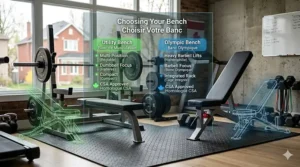
Competition powerlifting benches meet International Powerlifting Federation (IPF) specifications for pad height (42-45 cm from floor), pad width (29-32 cm), and pad length (122 cm minimum). These precise measurements ensure consistent conditions across competitions worldwide. For Canadian lifters training for sanctioned powerlifting meets, practising on competition-standard benches matters because muscle memory develops for specific bench heights and widths.
Most utility benches on Amazon.ca measure 43-46 cm pad height — close to competition standard — but vary more in width (30-36 cm typical). This variance creates a training gap for serious Canadian powerlifters. If you compete or plan to compete, verify your bench matches competition specifications or understand that meet day will feel different than training. International Powerlifting Federation specifications ensure consistent conditions for record attempts, with competitive models meeting specific requirements for pad height, width, and rack dimensions.
For recreational Canadian lifters not competing, these precise specifications matter less than overall stability and comfort. A slightly wider or narrower pad doesn’t impact muscle development — only competition performance. Focus on finding a bench that fits your body dimensions and training goals rather than chasing competition specs unless you’re actually competing.
Long-Term Cost Analysis: Total Ownership in CAD
Initial Purchase Price
Entry-level utility benches on Amazon.ca start around $80-$120 CAD, mid-range adjustable utility benches run $150-$300 CAD, and Olympic benches with integrated racks range $250-$900+ CAD. However, Canadian buyers often overlook the total cost equation beyond purchase price.
Shipping and Assembly
Weight benches ship free on Amazon.ca with Prime membership or on orders over $35 CAD, saving $40-$100 in shipping fees versus non-Prime purchases. Professional assembly services in Canadian cities (available through TaskRabbit or Handy) cost $80-$150 CAD if you lack tools or mechanical aptitude. Factor this into budget if assembly intimidates you.
Maintenance and Replacement Parts
Quality benches require minimal maintenance — $15-$20 CAD annually for lubricant, replacement bolts, and cleaning supplies. Budget benches often need pad replacement within 2-3 years ($60-$120 CAD for replacement pads if available). Some manufacturers don’t sell replacement parts for budget models, meaning the entire bench becomes waste when padding fails. When comparing prices on Amazon.ca, prioritise brands offering replacement parts and warranties covering Canadian addresses.
Resale Value
Canadian fitness equipment holds resale value surprisingly well on Facebook Marketplace and Kijiji. Quality utility benches purchased at $200 CAD resell for $120-$150 CAD after 3-5 years of use (60-75% recovery). Olympic benches with racks maintain even stronger resale (70-80% value recovery) due to higher initial cost and limited used market availability. Budget benches under $100 CAD become nearly worthless resale items because new options frequently go on sale at similar prices.
Cost Per Use Over Five Years
A $200 CAD utility bench used three times weekly for five years (780 uses) costs $0.26 per workout. A $500 CAD Olympic bench with rack at the same frequency costs $0.64 per workout. Both represent exceptional value compared to commercial gym memberships ($40-$80 monthly CAD in Canadian cities), paying for themselves within 3-4 months. The key insight: spending $300 on a durable bench that lasts 10 years beats buying a $100 bench that needs replacement after 2 years. Calculate cost-per-use rather than obsessing over initial price.
Frequently Asked Questions
❓ Can I use a utility bench for Olympic bar bench press?
❓ What's the actual difference between 12-inch and 16-inch bench pad width?
❓ Will my weight bench rust in an unheated Canadian garage?
❓ Do I need an Olympic bench if I'm only lifting 150 lbs on bench press?
❓ Are Amazon.ca bench prices comparable to Canadian fitness stores?
Conclusion: Making the Right Bench Choice for Your Canadian Home Gym
The utility bench vs olympic bench decision ultimately depends on your training style, space constraints, and budget in CAD. For most Canadian home gym owners — particularly those in urban apartments, condos, or smaller homes — a quality adjustable utility bench delivers superior versatility per square metre of floor space. The FLYBIRD WB2, PASYOU Adjustable, or CAP Barbell Deluxe models provide comprehensive training capability in the $150-$220 CAD range, fold for storage, and handle realistic training loads for 90% of home gym users.
Canadian lifters with dedicated training space, powerlifting goals, or plans to regularly press 300+ lbs should budget for Olympic bench solutions. The Body Champ PRO3900 or Marcy CB-729 offer integrated rack systems in the $250-$550 CAD range, supporting serious strength training without commercial gym pricing. Remember that Olympic benches require roughly 60 square feet (5.6 square metres) of floor space and won’t fold away when not in use.
Whichever direction you choose, prioritise these factors for Canadian conditions: powder-coated steel frames for rust resistance in our humid climate, weight capacity matching your current strength plus 30% growth room, and pad quality that maintains cushioning in cold garage temperatures. Buy once, buy right, and your bench will serve you through years of Canadian winter training when outdoor activity becomes impractical.
!✨ Don’t Miss These Exclusive Deals
🔍 Take your home gym to the next level with these carefully selected benches. Click on any highlighted product above to check current pricing and availability on Amazon.ca. These tools will help you build authentic strength your family will admire!
Recommended for You
- FID Bench vs Flat to Incline: 7 Expert Picks for Canada 2026
- Adjustable vs Flat Weight Bench: 7 Key Differences Canada (2026)
- Best Hyperextension Bench Canada: 7 Expert Picks 2026
Disclaimer: This article contains affiliate links. As an Amazon Associate, I earn from qualifying purchases. If you purchase products through these links, we may earn a small commission at no additional cost to you.
✨ Found this helpful? Share it with your friends! 💬🤗
