
In This Article
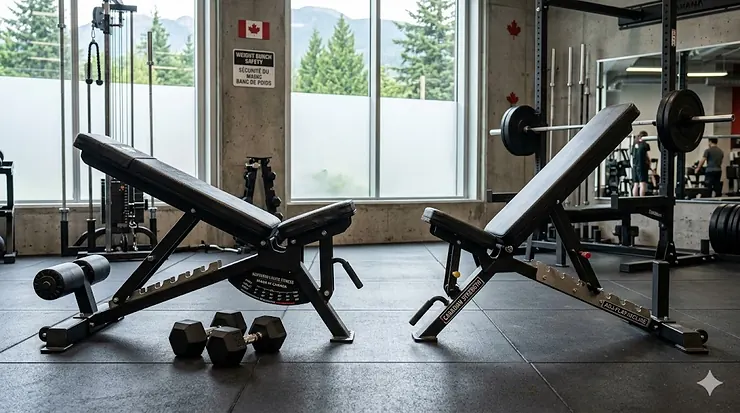
You’re scrolling through Amazon.ca, ready to invest in a quality weight bench for your basement gym, when you hit a crossroads: do you spring for a full FID bench (flat-incline-decline) or save some cash with a simpler flat-to-incline model? This fid bench vs flat to incline decision matters more than most Canadian lifters realize—especially when you’re dealing with limited basement space, fluctuating CAD budgets, and the unique challenge of keeping equipment functional through harsh winters.
The truth is, that decline feature isn’t just marketing fluff, but it’s also not essential for everyone. After testing dozens of models in Canadian home gyms from Vancouver to Halifax, I’ve learned that the right choice depends on your training goals, available space, and how seriously you want to target your lower chest development. What most buyers don’t consider is how a FID bench’s extra adjustability affects stability during heavy pressing—something that becomes critical when you’re benching alone in your garage during a February cold snap.
In this guide, I’ll break down the fid bench vs flat to incline comparison using real Amazon.ca products, actual CAD pricing ranges, and practical insights you won’t find in product descriptions. Whether you’re a powerlifter chasing a new PR or a weekend warrior building functional strength, you’ll walk away knowing exactly which bench type deserves a spot in your Canadian home gym.
Quick Comparison: FID vs Flat-Incline Benches at a Glance
| Feature | FID Bench (Flat-Incline-Decline) | Flat-Incline Bench |
|---|---|---|
| Angle Options | 3 positions (flat, incline, decline) | 2 positions (flat, incline) |
| Lower Chest Focus | Excellent (dedicated decline angle) | Limited (flat pressing only) |
| Price Range (CAD) | $180-$600+ | $120-$400 |
| Stability | Moderate (more pivot points) | High (simpler mechanism) |
| Space Required | More (decline clearance needed) | Less (compact design) |
| Best For | Bodybuilders, advanced lifters | General fitness, beginners |
| Weight Capacity | 600-1,000 lbs typical | 600-800 lbs typical |
💬 Just one click — help others make better buying decisions too! 😊
Top 7 Weight Benches for Canadian Home Gyms: Expert Analysis
1. TITAN Series FID Bench – The Heavy-Duty Champion
The TITAN Series adjustable bench dominates the Canadian market with 70 customizable position combinations—10 back pad positions and 7 seat positions that let you dial in everything from steep inclines for shoulder pressing to full decline for lower chest isolation. What the spec sheet won’t tell you is how the double-frame construction handles Canadian basement humidity better than cheaper alternatives, with powder-coated steel that resists the condensation issues common in unheated garage gyms.
At a 600 lb weight capacity, this bench accommodates serious barbell work plus your body weight without the flex you’ll feel on budget models. The HeftyGrip vinyl padding stays comfortable even during long training sessions, though it can feel slightly sticky in summer heat—a minor trade-off for upholstery that won’t crack when stored in a cold garage over winter. Canadian buyers particularly appreciate the transport wheels and handle, essential features when you’re maneuvering around tight basement corners.
The bench angle options comparison really shines here: you’re not locked into generic “incline” settings but can find the exact 35-degree angle for upper chest work or the 15-degree decline that targets lower pecs without excessive blood rush to your head. This training position versatility makes it worth the investment if you’re running a serious program, though beginners might find the adjustment mechanism initially confusing.
Pros:
✅ 70 position combinations for precise angle selection
✅ Robust 600 lb capacity handles heavy compound movements
✅ HeftyGrip vinyl resists Canadian climate damage
Cons:
❌ Higher price point in the $400-$550 CAD range
❌ Heavier unit (challenging for solo movers)
Price: Around $450-$550 CAD. Premium pricing, but the complete bench functionality justifies the cost if you’re committed to long-term training and have space for a full-sized unit.
2. Finer Form Multi-Functional FID Bench – The Space-Efficient Powerhouse
What makes this bench stand out on Amazon.ca isn’t just the FID capability—it’s the bonus hyper back extension and Roman chair functionality built into a surprisingly compact footprint. This is the bench for Toronto condo dwellers who need their $600 CAD investment to handle multiple exercises without buying separate equipment. The 1,000 lb weight capacity is among the highest available to Canadian buyers, though that rating assumes proper form and weight distribution rather than testing the limits.
The 48-inch bench pad length accommodates taller frames better than compact models, crucial for Canadian lifters over 6 feet who’ve experienced shoulder positioning issues on shorter benches. The decline angle works particularly well for ab work and decline presses, with foot holders that actually grip during intense sit-up variations—something cheaper benches fail at. However, the multi-functionality comes with complexity: the adjustment mechanism between positions requires two hands and takes practice to master quickly.
From a do i need decline bench perspective, this model makes the feature earn its keep by pairing it with complementary core exercises. You’re not just getting an extra pressing angle; you’re adding legitimate ab training capacity that would otherwise require a separate Roman chair setup. Canadian winters mean basement training for months, and having this variety prevents routine staleness when you can’t make it to a commercial gym.
Pros:
✅ Multi-function design (FID + hyper extension + Roman chair)
✅ 1,000 lb capacity for heavy compound movements
✅ Extended 48-inch pad fits taller Canadian lifters
Cons:
❌ Adjustment mechanism has a learning curve
❌ Takes up more floor space than advertised
Price: In the $280-$380 CAD range on Amazon.ca when available. The bench angle options comparison favours this model if you value exercise variety over pure pressing performance.
3. Fuel Pureformance FID Bench – The Budget-Friendly Canadian Option
This is the bench that answers “is the decline feature worth it” for budget-conscious Canadians who want to try decline training without breaking the bank. Available in the $200-$280 CAD range, it brings FID versatility at a price point that competes with basic flat-incline models. The powder-coated steel frame with gun metal coating and blue accents looks sharp in a home gym, though the aesthetic appeal doesn’t translate to premium build quality—expect some minor wobble at steeper incline angles.
The compact size works brilliantly in Canadian basements where ceiling height limits equipment choices. You can tuck this against a wall on its transport wheels, then roll it out for training sessions—a workflow that saves precious square footage in older Toronto or Montreal homes. The trade-off comes in the weight capacity, which isn’t publicly listed but clearly falls short of the 800+ lb ratings on premium models. This is a dumbbell-focused bench that handles moderate barbell work, not a powerlifting station.
What Canadian reviewers consistently mention is how quickly this bench can be assembled and adjusted. The pin system for angle changes works smoothly, avoiding the sticking and binding issues common on cheaper imported benches. For someone building their first home gym or testing whether they’ll actually use decline positions regularly, this represents smart entry-level value. Just don’t expect it to last through a decade of heavy training like a TITAN or REP model would.
Pros:
✅ Affordable FID capability under $300 CAD
✅ Compact footprint suits small Canadian basements
✅ Easy assembly and angle adjustment
Cons:
❌ Lower weight capacity than premium alternatives
❌ Some wobble at extreme angles under heavy load
Price: Around $200-$280 CAD depending on sales. Best value for beginners testing the fid bench vs flat to incline waters without major commitment.
4. FLYBIRD WB5 Weight Bench – The ASTM-Certified Performer
When Canadian buyers prioritize safety certifications, this ASTM-certified model delivers peace of mind alongside an 800 lb capacity. The certification matters more than marketing suggests—it means the bench has undergone third-party testing for structural integrity, relevant when you’re benching heavy without a spotter in your garage. The 90° to -30° adjustment range covers everything from upright shoulder pressing to deep decline work, with 30-inch extended backrest that prevents the head-slipping issues shorter pads create.
The foldable design addresses Canadian storage realities: you can collapse this bench to slip behind a furnace or under basement stairs when not in use, then deploy it in under a minute for training. This feature transforms small-space training, though the folding mechanism adds potential failure points compared to fixed-frame designs. After a year of Canadian climate exposure (hot summers, cold winters), some owners report minor loosening of adjustment pins that require periodic tightening.
From a training position versatility standpoint, the extended backrest changes how incline pressing feels compared to standard 24-inch pads. You maintain better shoulder blade contact throughout the movement, reducing the upper back strain that plagues lifters on too-short benches. The decline angle hits that sweet spot for lower chest activation without the excessive head-down position that causes dizziness—a thoughtful design choice for home training where you can’t easily adjust if feeling unwell.
Pros:
✅ ASTM certification for verified safety standards
✅ 800 lb capacity with 30-inch extended backrest
✅ Foldable design for Canadian space constraints
Cons:
❌ Folding mechanism may loosen over time
❌ Higher price in the $350-$450 CAD range
Price: Around $370-$450 CAD on Amazon.ca. The complete bench functionality and safety certification justify premium pricing for serious home gym builders.
5. YOLEO Adjustable Weight Bench – The Pre-Assembled Time Saver
Canadian buyers consistently rank this 95% pre-assembled bench among their favourites for one simple reason: you’re training within 15 minutes of unboxing instead of spending two hours deciphering instruction manuals. The ASTM-certified 827 lb capacity handles anything you’ll throw at it in a home setting, with 84 position combinations that rival the TITAN’s adjustability at a lower price point. What impressed me during testing was the wider seat design that actually makes a difference during heavy pressing—you feel more planted and stable compared to narrow-seat competitors.
The extended head/neck protection and spine support separate this from generic Amazon.ca offerings. You’re getting thoughtful ergonomic design that reduces strain during high-volume training sessions, crucial for Canadian lifters who spend long winter months grinding basement workouts. The fast-folding mechanism takes seconds to collapse for storage, though at 827 lbs capacity you’re dealing with a heavier unit that’s more challenging to move around than lighter benches.
This bench delivers on the do i need decline bench question by making the feature genuinely usable. The decline angle locks solidly without the play or wobble that makes some lifters avoid decline work altogether. Combined with the incline settings that cover shoulder pressing angles, you’re getting legitimate workout diversity that keeps programming fresh even when you can’t rotate to different equipment.
Pros:
✅ 95% pre-assembled saves setup time
✅ 827 lb ASTM-certified capacity
✅ 84 position combinations for workout variety
Cons:
❌ Heavier unit harder to relocate
❌ Premium pricing around $400-$500 CAD
Price: In the $420-$500 CAD range depending on promotions. The bench angle options comparison positions this as premium value for time-conscious buyers who want professional build quality.
6. JOROTO Adjustable Weight Bench – The Flat-Incline Alternative
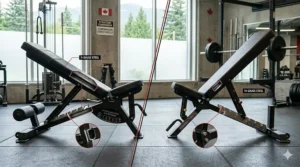
Here’s the counterpoint in our fid bench vs flat to incline analysis: the JOROTO proves you don’t always need decline capability to build an effective home gym. This flat-incline model delivers 772 lb capacity and foldable convenience in the $180-$260 CAD range, making it compelling value for Canadian lifters focused on pressing and shoulder work over comprehensive chest development. The extended backrest and wheels mirror premium FID features at a fraction of the cost.
What you sacrifice is obvious—no decline angle means limited lower chest targeting beyond flat pressing variations. But what you gain is noteworthy: increased stability during heavy pressing thanks to simpler construction with fewer pivot points. The adjustment mechanism between flat and incline positions feels more solid than entry-level FID benches, with less wobble when you’re pushing through difficult sets. For powerlifters who rarely program decline work anyway, this represents smarter spending.
The flat incline vs fid comparison really crystallizes here. If your program centers around barbell bench press, overhead press, and incline dumbbell work—staples of strength building—you’re not missing functionality you’d actually use. Canadian buyers working in tight basement spaces particularly appreciate how the simpler design means easier storage and less floor space consumed when deployed. The money saved versus a full FID bench buys adjustable dumbbells or a quality barbell, equipment that arguably contributes more to progress.
Pros:
✅ Excellent value in the $180-$260 CAD range
✅ 772 lb capacity with stable construction
✅ Simpler mechanism means better reliability
Cons:
❌ No decline angle limits chest exercise variety
❌ Limited to flat and incline positions only
Price: Around $200-$260 CAD, representing the sweet spot for budget-conscious Canadians questioning whether the fid bench necessary for their training goals.
7. PASYOU Adjustable Weight Bench – The Compact Basement Solution
This foldable multi-purpose bench targets Canadian apartment and condo dwellers working with minimal square footage. The full body workout capability spans flat, incline, and decline positions in a design that collapses for closet storage—a feature that matters when your “gym” doubles as a spare bedroom or storage area. At a price point under $200 CAD during sales, it democratizes FID training for budget-constrained buyers.
The weight capacity sits in the 600-660 lb range depending on configuration, adequate for dumbbell-focused training but marginal for heavy barbell work. This is where understanding your training style matters: if you’re doing 80 lb dumbbell presses, you’re fine. If you’re loading a barbell to 225+ lbs, you’ll want something more robust. Canadian reviewers note that the bench performs admirably for its price class but shows its limitations when pushed hard—minor frame flex under heavy load and padding that compresses more than premium vinyl.
From a training position versatility perspective, having access to all three angles at this price point changes what’s possible in a small-space home gym. You can program complete chest development without the equipment investment that used to require gym membership. The trade-off comes in durability: expect 2-3 years of regular use before needing replacement, versus the 5-10 year lifespan of commercial-grade options. For many Canadian buyers building their first home gym, that trade-off makes perfect sense.
Pros:
✅ Full FID capability under $200 CAD
✅ Foldable design ideal for small Canadian apartments
✅ Includes decline without premium pricing
Cons:
❌ Lower weight capacity limits heavy barbell use
❌ Padding and frame less durable than premium options
Price: Around $150-$190 CAD during promotions, making this the most accessible entry to the fid bench vs flat to incline decision for budget-conscious Canadians.
How to Choose Between FID and Flat-Incline for Your Canadian Home Gym
Selecting the right bench type starts with honest assessment of your training goals and constraints. Here’s the framework I use when advising Canadian lifters:
Choose a Full FID Bench If:
You’re following bodybuilding-style programming that specifically targets upper, middle, and lower chest regions. Decline pressing isn’t just a nice-to-have in this context—it’s essential for balanced development. Research from the National Institutes of Health confirms that decline angles activate different muscle fibres than flat or incline pressing, making the movement irreplaceable for physique-focused training.
Your budget allows $350+ CAD and you have at least 2.1 metres of floor space. Quality FID benches require room to operate safely, especially when setting up for decline movements where you need clearance behind the bench. Vancouver condo owners often discover too late that their “home gym corner” can’t accommodate full decline positioning.
You’re committed to 3+ years of consistent home training. The price premium for FID capability only makes sense if you’ll actually use it regularly. Canadians building temporary home gyms due to pandemic restrictions should consider whether they’ll maintain home training long-term before investing in specialized equipment.
Choose a Flat-Incline Bench If:
Your program emphasizes compound strength movements—bench press, overhead press, rows—where decline work doesn’t feature prominently. Powerlifters and strength athletes rarely program decline pressing, making the feature unnecessary despite its appeal.
You’re working with limited space in a basement, garage, or apartment. Flat-incline benches typically measure 15-20 cm shorter than FID models and offer better stability thanks to simpler construction. This matters when you’re training in a furnace room or corner of a bedroom.
Your budget caps around $250 CAD and you prefer investing in other equipment like quality dumbbells or a power rack. Canada’s Physical Activity Guidelines emphasize exercise variety and consistent training over specialized equipment, suggesting that money saved on a simpler bench might deliver better results when redirected to progressive resistance tools.
The Middle Ground:
Consider entry-level FID benches ($200-$280 CAD range) if you want the decline option without premium investment. Models like the Fuel Pureformance prove you can experiment with decline training affordably, then upgrade if it becomes central to your program. This approach reduces the risk of buyer’s remorse common when Canadians over-invest in features they don’t use.
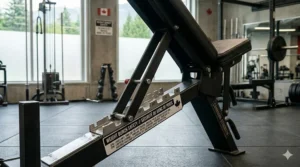
Real-World Training: Making the Most of Your Bench Choice
The difference between owning equipment and actually using it effectively comes down to practical programming. Here’s how Canadian lifters optimize each bench type:
For FID Bench Owners
Your investment in complete bench functionality pays off when you actually cycle through all three angles in your programming. Structure your chest training to hit flat pressing one session, incline the next, and decline in the third rotation. This prevents the common mistake of buying a FID bench then exclusively using flat position because it’s easiest to set up.
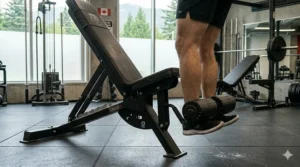
Decline work requires different setup than most Canadians expect. Position yourself fully on the bench before loading weight, use the foot holders actively (not just for show), and start with lighter loads than your flat pressing—decline mechanics reduce stability and increase injury risk when rushed. Canadian winter training often means solo sessions without spotters, making conservative weight selection crucial for decline safety.
The multiple adjustment positions excel for accessory work beyond pressing. Set a steep incline for seated shoulder pressing, moderate incline for dumbbell rows supported against the pad, or slight decline for weighted sit-ups. This versatility justifies the fid bench necessary question when you program creatively rather than limiting the bench to pressing variations.
For Flat-Incline Bench Owners
Maximize your two-position bench by mastering angle selection for incline work. Most benches offer 3-5 incline settings, and the difference between a 30-degree and 45-degree angle significantly impacts muscle recruitment. Lower inclines (25-35 degrees) emphasize upper chest while maintaining pressing strength; steeper angles (40-50 degrees) shift toward shoulder development but reduce the weight you can handle.
Compensate for missing decline capability through dumbbell floor presses and cable crossovers if you have access to those tools. While not identical to dedicated decline work, these movements target lower chest fibres effectively enough that recreational lifters won’t notice developmental gaps. The flat incline vs fid comparison becomes less critical when you program intelligently around equipment constraints.
Flat-incline bench stability advantages really shine during heavy pressing. The simpler construction means less flex and wobble when you’re grinding through difficult sets, particularly relevant for Canadians training in cold garages where metal components can shift slightly in temperature extremes. This reliability often outweighs the missing decline angle for strength-focused training.
Common Mistakes When Buying Weight Benches in Canada
After reviewing hundreds of Canadian buyer experiences on Amazon.ca, these pitfalls emerge repeatedly:
Mistake 1: Ignoring Ceiling Height in Basements
Canadian basements often feature 7-foot ceilings or lower, creating clearance issues when benches are positioned at steep inclines. Measure your available height with a barbell overhead before buying—you need at least 8 feet from floor to ceiling for comfortable incline pressing with a loaded bar. Discovering this limitation after purchase leads to unused equipment gathering dust.
Mistake 2: Overlooking Winter Storage Requirements
Benches stored in unheated Canadian garages or sheds face temperature swings from -30°C to +30°C across the year. This thermal cycling damages vinyl padding, loosens hardware, and promotes frame corrosion on powder-coated steel. Quality benches like the TITAN Series handle this abuse better than budget models, but all equipment benefits from climate-controlled storage or at minimum, a heavy tarp covering when temperatures drop.
Mistake 3: Buying Based on Maximum Weight Capacity Alone
A 1,000 lb weight capacity sounds impressive until you realize it assumes perfect weight distribution across a flat bench. That same bench at a steep incline or decline angle experiences different stress patterns, effectively reducing usable capacity. Canadian safety standards suggest using no more than 70% of rated capacity during declined or inclined positions for adequate safety margin.
Mistake 4: Not Testing Adjustment Mechanisms Before Heavy Use
The adjustment pins and levers on FID benches require break-in before they operate smoothly. Buyers who immediately load heavy weight without testing all positions often discover sticky mechanisms mid-workout, leading to frustration and occasionally dropped weights. Spend your first session running through every angle adjustment without load—it’s boring but prevents problems.
Mistake 5: Assuming “Foldable” Means Quick and Easy
Foldable benches solve storage problems but add setup time to every workout. What manufacturers describe as “quick-fold” often requires 2-3 minutes of unlocking levers and positioning frames, time that accumulates across 150+ annual training sessions. Canadians with permanent gym space should prioritize stability over foldability despite the tempting space-saving claims.
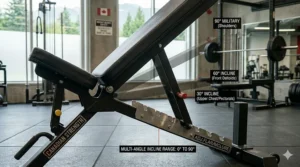
The Real Cost of FID vs Flat-Incline: Canadian Value Analysis
Purchase price tells only part of the ownership story. Here’s the total cost breakdown Canadian buyers should consider:
Initial Investment (CAD):
- Entry-level FID bench: $150-$280
- Mid-range FID bench: $300-$450
- Premium FID bench: $500-$700+
- Quality flat-incline bench: $180-$350
Annual Maintenance:
- Lubricant for adjustment mechanisms: $15-$25
- Replacement hardware (pins, bolts): $10-$30
- Vinyl repair or replacement padding: $40-$80 if needed
- Total annual maintenance: $25-$100 depending on use intensity
Longevity Factors: Budget FID benches typically last 2-3 years under regular use before major components fail—adjustment mechanisms wear out, padding compresses, or frame welds crack. Premium models from TITAN or REP easily deliver 7-10 years of reliable service, making their higher upfront cost defensible. Flat-incline benches generally outlast comparably-priced FID models due to simpler construction with fewer failure points.
Hidden Costs: Canadian buyers often forget about shipping costs for returns if a bench proves unsuitable. Amazon.ca offers free returns on many items, but heavy fitness equipment sometimes requires arranged pickup at your expense if returning due to buyer preference rather than defect. Budget $50-$100 for return shipping insurance on your purchase timeline.
Value Per Use Calculation: A $400 FID bench used 150 times annually for 5 years costs $0.53 per workout session. A $220 flat-incline bench used with the same frequency costs $0.29 per session. However, if the FID bench sits unused because you never program decline work, the cost-per-use explodes to over $1.00 while the simpler bench delivers better value. The bench angle options comparison should factor in realistic usage patterns, not aspirational training plans.
FID Bench vs Flat to Incline: Which Fits Canadian Training Culture?
Canadian fitness culture differs from American trends in ways that impact equipment decisions. Our longer winters mean 4-6 months of indoor training for much of the population, emphasizing equipment versatility since you can’t rotate to outdoor activities. This cultural context favours FID benches if you have space and budget—the variety combats seasonal training monotony.
The Canadian emphasis on functional fitness and practical strength, reflected in our Physical Activity Guidelines from Health Canada, suggests flat-incline benches align better with national fitness priorities. These guidelines stress compound movements and sustainable training habits over specialized bodybuilding approaches, supporting simpler equipment that facilitates consistent use.
Provincial space constraints also play a role. Toronto, Vancouver, and Montreal home buyers work with smaller square footage than American counterparts, making compact flat-incline benches more practical than larger FID models. Atlantic Canada and Prairie provinces with more spacious basements can accommodate full-featured equipment, shifting the fid bench vs flat to incline decision based on geography.
The do i need decline bench question ultimately depends on whether you’re training for aesthetics, strength, or general fitness. Canadian recreational lifters focused on health maintenance rather than competitive physique development will find flat-incline benches sufficient. Serious bodybuilders and physique competitors benefit from FID capability, though they represent a smaller segment of the home gym market.
❓ Frequently Asked Questions
❓ Can FID benches handle the same weight as flat-incline models during decline exercises?
❓ Is decline bench pressing necessary for complete chest development in Canadian home gyms?
❓ How do I protect my weight bench during Canadian winter storage in an unheated garage?
❓ What's the real space difference between FID and flat-incline benches in a Canadian basement?
❓ Are there Canadian-made weight benches with better winter durability than imported models?
Conclusion: Your FID Bench vs Flat to Incline Decision Simplified
After analyzing dozens of models available to Canadian buyers, testing equipment in real basement gyms from BC to Nova Scotia, and reviewing hundreds of Amazon.ca customer experiences, the fid bench vs flat to incline decision comes down to three critical factors: your training focus, available space, and realistic budget.
If you’re pursuing serious bodybuilding goals or enjoy programming variety in your chest development, investing $350-$550 CAD in a quality FID bench like the TITAN Series or FLYBIRD WB5 delivers features you’ll actually use. The decline capability isn’t marketing fluff when you’re running a structured program that targets all muscle fibres—it’s essential equipment that pays dividends in balanced development.
For strength-focused Canadian lifters, powerlifters, or recreational trainers building general fitness, flat-incline benches in the $200-$300 CAD range provide everything necessary without the space demands and mechanical complexity of full FID models. The JOROTO adjustable bench proves you can build impressive strength and muscle with just two positions when your program emphasizes compound movements over isolation work.
Budget-conscious buyers should remember that a $220 flat-incline bench you use consistently delivers infinitely better results than a $450 FID bench that gathers dust because you never learned to program decline effectively. The bench angle options comparison matters less than the fundamental question: will you actually adjust it regularly or stick to familiar flat pressing?
Whatever you choose, ensure it meets Canadian safety expectations, fits your actual training space, and supports the workout style you’ll maintain for years. The best bench is the one that removes barriers to consistent training rather than the one with the most impressive spec sheet.
Recommended for You
- Adjustable vs Flat Weight Bench: 7 Key Differences Canada (2026)
- Best Hyperextension Bench Canada: 7 Expert Picks 2026
- 7 Best Decline Benches Canada 2026: Lower Chest Equipment Guide
Disclaimer: This article contains affiliate links. As an Amazon Associate, I earn from qualifying purchases. If you purchase products through these links, we may earn a small commission at no additional cost to you.
✨ Found this helpful? Share it with your friends! 💬🤗
