In This Article
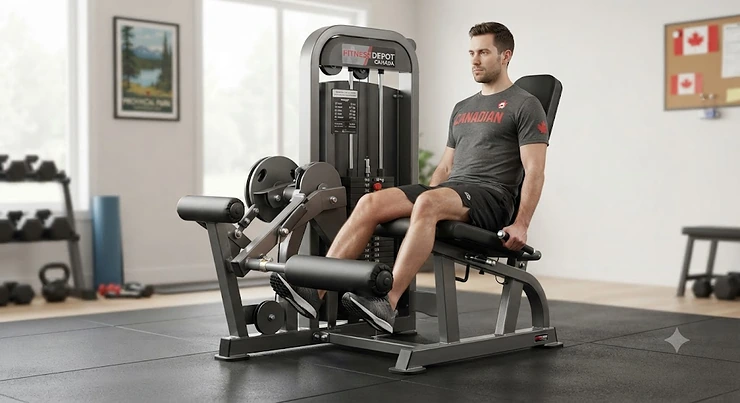
There’s a particular kind of frustration that comes with owning a small home gym: you’ve got a rack, a bench, maybe a bar and some plates, and yet your quads and hamstrings are somehow the most neglected muscle groups in the house. Squats and deadlifts do a lot of heavy lifting, pun intended, but they don’t isolate the way a dedicated machine can — and that’s exactly the gap a combo leg curl and extension machine is built to fill. In plain terms, a combo leg curl and extension machine is a single piece of equipment, usually plate-loaded or stack-loaded, that lets you perform seated leg extensions (targeting the quadriceps) and lying or seated leg curls (targeting the hamstrings) without swapping stations or clearing floor space for two separate machines.
For Canadians training in basements, garages, and condo dens where every square foot counts, that two-in-one design isn’t a gimmick — it’s the whole point. A basement gym in Winnipeg or a garage setup in Barrie doesn’t have room for a leg extension bench on one wall and a lying curl bench on the other, so a combo unit becomes the pragmatic answer. This guide breaks down seven real machines currently sold through Amazon.ca, compares how they stack up on load capacity, adjustability, and footprint, and walks through the buying decisions that actually matter — the kind of detail that Public Health Agency of Canada guidance on muscle-strengthening activity supports but rarely gets specific about equipment. Whether you’re outfitting a first home gym or replacing a machine that’s outgrown your space, you’ll leave this article knowing exactly which combo leg curl and extension machine fits your training goals, your ceiling height, and your budget.
Quick Comparison Table
Before diving into the full breakdown, here’s a scannable snapshot of how the seven machines compare on the specs that actually decide a purchase.
| Machine | Load Type | Weight Capacity | Footprint | Best For |
|---|---|---|---|---|
| Body-Solid GCEC-STK | 210 lb weight stack | Commercial-rated | Large | Serious home gyms wanting stack convenience |
| Titan Fitness Plate-Loaded | 2″ plate loaded | 300 lb rated | Medium | Budget lifters who already own plates |
| Valor Fitness CC-4 | 1″/2″ plate loaded | 150 lb rated | Compact | Tight spaces and light-to-moderate loads |
| XMARK XM-7615 | 2″ plate loaded | 225 lb rated | Medium | Rotary adjustability and durability |
| Finer Form GLX Bench | Plate loaded, bench-based | 330 lb (leg attachment) | Compact | Multi-use benches for small home gyms |
| LIONSCOOL V4.0 | 2″ plate loaded, cable | 800 lb frame rated | Compact-medium | Budget buyers wanting high frame rating |
| Mikolo Leg Machine | Plate loaded, triple system | Home-gym rated | Compact | First-time buyers on a tight budget |
Looking at the table, the split is really about load-delivery method more than raw strength. The Body-Solid GCEC-STK trades footprint for stack convenience — you’re not hunting for plates between sets — while plate-loaded leg machines for quad and hamstring training like the Titan Fitness, Valor Fitness CC-4, and XMARK XM-7615 ask you to already own or buy standard iron but reward you with a smaller price tag and, often, a smaller footprint. If your basement ceiling is under eight feet or your garage bay also parks a car half the year, the Finer Form GLX, LIONSCOOL V4.0, and Mikolo models earn their keep as genuinely space-saving leg machine options.
💬 Just one click — help others make better buying decisions too!😊
Top 7 Combo Leg Curl and Extension Machines: Expert Analysis
1. Body-Solid GCEC-STK Pro Select — commercial-grade weight stack convenience
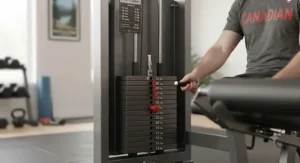
The standout here is the 210 lb selectorized weight stack, which means no plate-loading fuss between the extension and curl motion — you pull a pin, insert it in the stack, and go. That single-pin design is worth dwelling on: pulling the pin lets you move straight from a quad-focused extension into a hamstring-focused curl on the same seat, so a full lower-body superset takes seconds, not minutes of plate-swapping. The frame uses commercial-grade steel construction, and the stack is upgradable to 310 lb for lifters who eventually outgrow the base resistance — a detail that matters more than it looks, because it means the machine can grow with you instead of becoming a ceiling on progress. Based on the spec comparison against the plate-loaded models on this list, the GCEC-STK is the pick for anyone who values training efficiency over compactness; you’re paying a premium in both price and floor space for the convenience of never touching a plate. Reviewers consistently note the 8-inch foam rollers and durafirm padding as noticeably more comfortable than budget alternatives, which matters on high-rep hamstring days when knee and ankle contact points start to chafe on thinner padding. Where it falls short is portability — this isn’t a machine you fold up or tuck behind a door, so measure your space before you buy. Expect this machine to land in the C$1,400-C$1,800 range depending on retailer promotions, positioning it firmly as a premium, long-term investment rather than an entry-level purchase.
Pros:
- ✅ Weight stack eliminates plate-loading between sets
- ✅ Commercial-grade steel frame built for daily heavy use
- ✅ Upgradable stack extends resistance ceiling over time
Cons:
- ❌ Large footprint unsuitable for tight basements or condos
- ❌ Highest price point of the seven machines featured
2. Titan Fitness Plate-Loaded Adjustable — best balance of price and build quality
What stands out immediately is the 300 lb rated capacity paired with a genuinely adjustable frame, which puts this machine in a sweet spot between the budget compact units and the commercial stack machines. The seat depth, backrest angle, and thigh pad all adjust independently, so taller and shorter users in the same household can both get a proper range of motion without compromise — something the fixed-geometry budget machines on this list can’t offer. On paper this means a 6’2″ partner and a 5’4″ partner can share one machine and both train with correct joint alignment, which matters more for injury prevention than most buyers realize going in. Aggregated reviewer sentiment on Titan Fitness equipment generally praises the brand’s welds and powder coating for holding up under repeated plate-loading and unloading, a stress point that wears cheaper machines faster than the lifting itself does. Here’s what to weigh: this is a plate-loaded machine, so you’ll need your own 1″ or 2″ plates on hand, and the machine itself doesn’t include them — factor that into your total cost. Priced in the C$400-C$550 range at the time of research, it undercuts the Body-Solid stack machine by roughly a third while still delivering serious build quality, making it the machine most reviewers land on when they want durability without paying for commercial-gym features they won’t use.
Pros:
- ✅ Independently adjustable seat, backrest, and thigh pad
- ✅ 300 lb capacity suits intermediate and advanced lifters
- ✅ Reputation for durable welds and long-term reliability
Cons:
- ❌ Plates sold separately, adding to true total cost
- ❌ Medium footprint still needs a dedicated corner
3. Valor Fitness CC-4 — most budget-friendly true combo machine
The standout feature is flexibility in plate compatibility: it’s built to accept both standard 1-inch weight plates and 2-inch Olympic plates, so whatever iron you already own from a home barbell setup likely fits without buying an adapter — unless you’re running true Olympic plates, in which case the adapter sleeve is sold separately. With 8 thigh positions and 6 back positions, the adjustability is respectable for the price point, though the 150 lb max load ceiling is the clear trade-off; this is a machine built for beginners, rehab-focused training, or anyone using leg extensions and curls as accessory work rather than a primary strength driver. What most buyers overlook about this model is that its stable frame and secure thigh support are doing real injury-prevention work, not just comfort work — keeping the knee joint tracking correctly during extension is exactly the kind of detail that separates a machine built by people who understand biomechanics from one that just looks similar in a product photo. Reviewers highlight the compact assembly and small-business build quality as pleasant surprises at this price tier, though a handful note the padding is firmer than premium competitors. At a price typically under C$300, it’s the easiest entry point on this list for someone testing whether a dedicated leg machine earns a permanent spot in their routine.
Pros:
- ✅ Works with both 1-inch and 2-inch weight plates
- ✅ 8 thigh and 6 backrest adjustment positions
- ✅ Lowest price point among true combo machines here
Cons:
- ❌ 150 lb capacity limits long-term progressive overload
- ❌ Olympic plate adapter sold as a separate add-on
4. XMARK XM-7615 Rotary Leg Extension and Curl — best rotary adjustability
The 12-position adjustable thigh pad combined with a 20-position adjustable press arm is the headline feature, and it’s a meaningful one: most combo machines offer a handful of fixed settings, but this level of granularity means you can dial in the exact pivot point for your femur length rather than settling for “close enough.” That precision translates directly into cleaner quad and hamstring balance training, because a poorly matched pivot point is one of the most common reasons lifters feel extensions in their hip flexors instead of their quads. The 225 lb loadable capacity sits comfortably in the middle of this list, and the extra-thick 3-inch Duraguard vinyl cushioning is a genuine upgrade over the thinner pads found on entry-level competitors — reviewers specifically call out reduced pressure points during longer sets. XMARK has built its reputation over 25 years as a US small-business manufacturer, and that experience shows in the rock-solid steel frame, which several aggregated reviews describe as noticeably more rigid under load than similarly priced alternatives. The rotary design does mean a slightly steeper learning curve for first-time users figuring out the pin positions, so budget a few extra minutes on setup day. Expect a price in the C$350-C$450 range, positioning it as a strong mid-tier choice for lifters who prioritize fit and adjustability over sheer weight capacity.
Pros:
- ✅ 12-position thigh pad and 20-position press arm
- ✅ Extra-thick vinyl cushioning reduces pressure points
- ✅ Rigid steel frame from an established manufacturer
Cons:
- ❌ Setup and pin adjustment has a learning curve
- ❌ 225 lb capacity caps progression for advanced lifters
5. Finer Form GLX Adjustable Weight Bench with Leg Attachment — best for multi-use small spaces
This one earns its spot by not being a dedicated leg machine at all — it’s an FID adjustable bench with a leg extension and curl attachment built in, rated for a 330 lb leg-extension load on top of a 1,200 lb total bench capacity. For anyone whose home gym is really one room doing five jobs, that dual identity is the whole appeal: you get a flat/incline/decline bench for pressing work and a genuine two-in-one strength equipment solution for leg day, all folding into roughly the same floor space a leg machine alone would occupy. Based on the spec sheet, the preacher pad attachment adds another layer of versatility for arm training, which matters if you’re trying to consolidate a full-body home gym into a single piece of furniture-sized equipment. Aggregated customer sentiment describes the FID adjustment mechanism as smooth and the leg attachment as sturdy for its size, though several reviewers note the leg extension range of motion is shorter than on dedicated machines — a natural trade-off of a hybrid design. What the spec sheet won’t tell you, but reviewers note, is that the workout chart included in the box is genuinely useful for beginners who aren’t sure how to sequence a leg day around a multi-function bench. Priced typically in the C$250-C$350 range, it’s a strong value pick specifically for buyers who need the bench functionality anyway and don’t want to buy two separate pieces of equipment.
Pros:
- ✅ Doubles as a full flat/incline/decline bench
- ✅ 330 lb leg extension capacity is strong for a hybrid
- ✅ Includes preacher pad and workout chart
Cons:
- ❌ Shorter leg extension range of motion than dedicated units
- ❌ Not ideal if you already own a separate bench
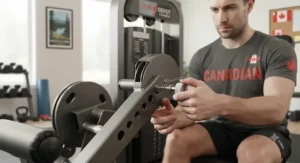
6. LIONSCOOL V4.0 — best frame rating for the price
The 800 lb frame weight capacity is the number that jumps out here, and while no one is loading anywhere close to that onto the leg curl and extension movements themselves, a heavily over-built frame means less flex, less wobble, and a noticeably more stable feel during high-effort sets. The 2-inch plate-loaded cable system covers both seated leg extension and lying/prone leg curl positions, giving you genuine exercise variety from one compact frame — a real advantage for quad and hamstring balance training, since prone curls and seated curls each recruit the hamstring group slightly differently across the hip and knee joint. Based on the spec comparison, this machine punches above its price class on raw structural durability, even if the padding and pivot adjustability are a step behind the XMARK and Titan Fitness models. Reviewers consistently report that assembly, while involved, results in a machine that feels commercial-grade once bolted together, with minimal play in the joints even under repeated loading and unloading. It’s a cable-operated system rather than a direct-lever design, which some lifters prefer for smoother resistance curves through the full range of motion. At a price generally in the C$300-C$400 range, it’s a compelling pick for anyone prioritizing long-term structural durability over fine-tuned adjustability.
Pros:
- ✅ 800 lb frame rating for exceptional structural stability
- ✅ Supports both seated extension and prone curl positions
- ✅ Cable system delivers a smoother resistance curve
Cons:
- ❌ Fewer adjustment positions than premium competitors
- ❌ Assembly is more involved than simpler bench-style units
7. Mikolo Leg Extension and Curl Machine — best entry-level pick for first-time buyers
The triple loading system is the standout here — Mikolo’s design accepts a wider combination of plate sizes than most entry-level competitors, which removes one of the most common early frustrations of buying a first leg machine and discovering your existing plates don’t fit. Both seated leg extension and lying leg curl positions are supported on one compact frame, and the 1:1 resistance system is engineered so the felt resistance matches the loaded weight more predictably than on some budget cable setups, where friction losses can make a loaded plate feel lighter than it should. For a first-time buyer unsure whether dedicated leg isolation work will actually stick as a habit, this lower financial commitment matters — it’s a reasonable way to test the format before investing in a Titan Fitness or Body-Solid unit down the line. Aggregated review sentiment describes the assembly process as beginner-friendly with clear instructions, and the compact footprint as genuinely apartment- and condo-friendly, though a recurring theme in feedback is that taller users (above roughly 6’1″) find the frame’s adjustment range a bit limiting. Reviewers also note the padding, while adequate, is noticeably firmer than on the premium machines featured here. Typically priced under C$300, it’s the most accessible true combo machine on this list for anyone building out their very first home leg-day setup.
Pros:
- ✅ Triple loading system fits a wide range of plate sizes
- ✅ 1:1 resistance system tracks loaded weight accurately
- ✅ Compact frame suits apartments and condo gyms
Cons:
- ❌ Limited adjustment range for users over 6’1″
- ❌ Padding is firmer than premium alternatives
Practical Usage Guide: Setup, First 30 Days, and Maintenance
Getting a combo leg curl and extension machine into a routine that actually sticks starts before your first rep — it starts with placement. Give the machine at least 60-90 cm of clearance on the loading side so you’re not fumbling plates against a wall, and check that your flooring can handle the point-load of a plate-loaded frame; rubber gym mats aren’t just for noise control, they protect concrete and hardwood alike from dropped plates. During your first week, resist the urge to load heavy — dial in your seat and thigh pad positions first, because a machine set up for someone else’s leg length will bias the movement toward your hip flexors instead of your quads, and that habit is hard to unlearn once it’s grooved in. A common mistake in the first 30 days is treating the leg curl and leg extension as equally weighted movements; most lifters can extension far more than they can curl, since the hamstrings are proportionally weaker as a muscle group, so don’t be surprised or discouraged if your curl weight sits well below your extension weight. Maintenance is minimal but not optional: wipe down vinyl padding weekly to prevent cracking, check pivot bolts monthly for any looseness that develops from repeated plate-loading impact, and lubricate any exposed pulleys or cables on cable-operated models like the LIONSCOOL every few months to keep the resistance curve smooth.
Real-World Scenarios: Matching the Machine to the Lifter
Consider three fairly typical Canadian home-gym buyers. First, a university student in a small Toronto apartment training three times a week on a tight budget — for them, the Mikolo or Valor Fitness CC-4 makes the most sense, since both prioritize footprint and price over raw capacity, and neither demands more than the plates a beginner would already own. Second, a suburban homeowner in their 40s rebuilding strength after years away from consistent training, working out in a finished basement with decent ceiling height and a moderate budget around C$400-C$500 — the Titan Fitness Plate-Loaded or XMARK XM-7615 fit well here, offering enough adjustability and capacity to grow with rebuilt strength over a year or two without becoming a limiting factor. Third, a dedicated garage-gym lifter training five days a week who has already outgrown entry-level equipment and wants a machine that won’t be the weak link in a serious program — for that lifter, the Body-Solid GCEC-STK is the logical upgrade, trading footprint for the stack convenience and higher functional ceiling that frequent, heavy training demands. In each case, the “right” machine isn’t the best-reviewed one in the abstract — it’s the one whose capacity, footprint, and price line up with how often and how heavy that specific person actually trains.
Leg Curl Machine vs Leg Extension Machine: What’s the Real Difference?
Separating out leg curl machine vs leg extension machine functionality helps explain why the combo format exists in the first place. A dedicated leg extension machine isolates the quadriceps through knee extension — you’re lifting a pad positioned across your shins while seated, and the movement almost entirely bypasses the hip joint. A dedicated leg curl machine, by contrast, targets the hamstrings through knee flexion, either in a seated, lying, or prone position, and depending on the variation it can also involve the hip joint slightly, especially in seated curl designs. On paper this means the two machines train opposing muscle groups around the same joint, which is exactly why bodybuilders and physiotherapists alike pair them — undertraining one relative to the other is a well-documented contributor to knee instability and injury risk, since the quadriceps and hamstrings act as stabilizing counterweights across the knee. Buying two separate single-function machines gives you marginally better biomechanics for each specific movement, since dedicated designs can optimize their pivot geometry for one motion only. But for anyone without a dedicated commercial-sized training room, that marginal advantage rarely outweighs the practical cost of doubling your equipment footprint and your equipment budget — which is precisely the gap the combo format is built to close.
Plate-Loaded Leg Machines for Quad and Hamstring Training: What Sets Them Apart
Plate-loaded leg machines for quad and hamstring training differ from stack-loaded machines in ways that go beyond price. The most obvious is granularity: most plate-loaded frames accept standard 2.5, 5, and 10 lb (or 1.25-5 kg) plates, letting you make small, precise jumps in resistance that a stack machine’s 10-15 lb pin increments can’t always match, which matters for hamstrings specifically since they tend to respond to smaller, more frequent load increases than quads do. Plate-loaded designs are also generally more repairable — a bent pin or worn cable on a plate-loaded frame is a simple part swap, whereas a damaged internal stack mechanism on a commercial unit often requires a service call. The trade-off is convenience: switching between extension and curl on a plate-loaded machine sometimes means physically moving plates or reconfiguring the pin position, versus the near-instant pin swap of a stack machine. For buyers who already own a barbell and plate set, going plate-loaded also means not duplicating an investment you’ve already made — the Titan Fitness, Valor Fitness CC-4, XMARK XM-7615, and LIONSCOOL V4.0 all lean into this efficiency, letting your existing iron do double duty across your whole home gym rather than sitting unused while a dedicated stack collects dust beside it.
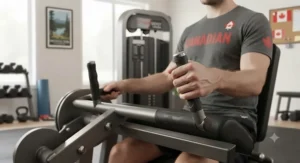
Space-Saving Leg Machines for Small Home Gyms
A space-saving leg machine isn’t just about the footprint printed on the spec sheet — it’s about how that footprint interacts with the rest of your room. Canadian home-gym demand has been climbing for years now; back during the pandemic, CBC News reported a sharp spike in home fitness equipment sales as Canadians shifted training out of commercial gyms and into basements and garages, a trend that has held rather than reversed. That means most buyers today are optimizing for square footage, not maximizing it. Among the seven machines here, the Mikolo, Valor Fitness CC-4, and Finer Form GLX post the smallest true footprints, with the Finer Form earning extra credit for folding bench functionality into the same space a standalone leg machine would otherwise occupy alone. What most buyers overlook about footprint is that loading clearance matters as much as the machine’s static dimensions — a compact frame that needs 90 cm of plate-loading space on one side isn’t actually saving you room if that clearance eats into your squat rack’s working area. Measure not just the machine, but the “working envelope” around it, including the arc your body needs for a lying curl position, before assuming a compact spec sheet number translates to a genuinely space-saving setup.
Two-in-One Strength Equipment: Is It Worth the Investment?
The case for two-in-one strength equipment comes down to cost-per-use math over a multi-year horizon. Buying two dedicated single-function machines — even budget ones — typically runs C$500-C$900 combined once you account for both units, versus C$300-C$800 for a genuinely capable combo machine covering the same two movements. Over three to five years of consistent use, that upfront gap matters less than the recurring value: total cost of ownership on a combo unit is essentially one maintenance schedule, one set of replacement pads, and one footprint’s worth of flooring investment, rather than two of everything. Here’s what to weigh against that: combo machines involve compromise in adjustability or range of motion compared to purpose-built single-function equipment, as the Finer Form GLX’s shorter extension range illustrates. For most home-gym buyers training two to four times weekly rather than competing as physique athletes, that compromise is a rounding error against the practical savings in cost, space, and setup complexity — which is exactly why the combo format dominates the budget and mid-range tiers of the Canadian home gym market rather than remaining a niche commercial product.
Quad and Hamstring Balance Training: Why It Matters
Quad and hamstring balance training isn’t fitness-influencer jargon — it’s a documented injury-prevention principle rooted in how the knee joint actually works. The Canadian Physical Activity Guidelines list weight machines, free weights, and cable pulleys among the core strength-training tools recommended for the upper and lower body, but guidelines rarely specify the ratio between opposing muscle groups, leaving that detail to trainers and physiotherapists. The generally accepted target is a hamstring-to-quadriceps strength ratio somewhere around 60-80%, meaning your hamstrings should be roughly two-thirds to three-quarters as strong as your quads through comparable movements; ratios well below that are associated with higher rates of hamstring strains and anterior knee pain in recreational lifters and runners alike. A combo machine makes tracking that ratio dramatically easier than juggling two separate pieces of equipment, since your extension and curl numbers live on the same pin or plate-loading system and get logged in the same session. Reviewers across nearly every machine on this list mention discovering, once they started tracking both numbers, that their curl strength lagged further behind their extension strength than they’d assumed — a pattern common enough among lifters who’ve spent years squatting and pressing without dedicated hamstring isolation work.
Common Mistakes When Buying a Combo Leg Machine
The most frequent mistake is buying on weight capacity alone without checking adjustability — a machine rated for 800 lb does you no good if the fixed thigh pad position puts your knee joint 5 cm off the pivot point. A second common error is skipping the plate-compatibility check: buyers assume all plate-loaded machines take both 1-inch and 2-inch plates, but several budget models, including some variants of the machines featured here, require a separate Olympic adapter sleeve that isn’t included in the base price. Third, many buyers underestimate loading clearance, ordering a “compact” machine that technically fits their room’s square footage but leaves no room to actually load plates onto the pin without bumping a wall or rack. Fourth is ignoring padding quality in favour of price — thin, low-density vinyl padding degrades faster and becomes genuinely uncomfortable on higher-rep hamstring days, a false economy that often means a second purchase within a year or two. Finally, buyers frequently skip checking real assembly reviews, and a machine that looks identical in product photos can take anywhere from 30 minutes to over two hours to assemble depending on hardware quality and instruction clarity — worth knowing before a Saturday afternoon disappears into an Allen key.
Safety, Setup, and Regulatory Considerations for Canadian Home Gyms
Home gym equipment sold in Canada isn’t subject to the same mandatory third-party certification as, say, electrical appliances, but a few practical safety habits matter regardless of which machine you choose. Always torque-check pivot bolts after the first few sessions, since new hardware tends to settle slightly under initial loading. If your home gym sits on an upper floor rather than a basement or garage slab, confirm your floor’s load rating before adding a plate-loaded machine plus a full plate set — concentrated point loads from stacked plates can exceed what older residential joists were designed to carry. Public Health Agency of Canada guidance notes that general physical activity recommendations apply to adults without a suspected or diagnosed medical condition, and advises consulting a health professional if you’re unsure what’s appropriate for you — a sensible starting point before ramping up loaded leg training after any knee, hip, or lower-back injury history. Finally, keep pinch points in mind: plate-loaded pivot arms and cable-operated frames both have moving parts near where hands naturally rest during setup, so make loading and unloading a habit done with the machine at rest, not mid-repetition.
Frequently Asked Questions
❓ What's the difference between a leg curl machine and a leg extension machine?
❓ Is a plate-loaded or stack-loaded combo leg machine better for home use?
❓ How much weight capacity do I actually need on a leg extension and curl machine?
❓ Can a combo leg curl and extension machine fit in a small apartment or condo?
❓ How often should I train quads and hamstrings on a combo machine?
Conclusion
Choosing the right combo leg curl and extension machine really comes down to three honest questions: how much floor space do you actually have, how heavy are you training right now versus where you expect to be in two years, and whether the convenience of a weight stack is worth its price and footprint premium over a plate-loaded frame. The Body-Solid GCEC-STK rewards buyers who’ve outgrown entry-level gear and want commercial-grade convenience; the Titan Fitness Plate-Loaded and XMARK XM-7615 hit a genuinely strong middle ground of adjustability and durability; and the Valor Fitness CC-4, Finer Form GLX, LIONSCOOL V4.0, and Mikolo all serve a real purpose for buyers prioritizing price, footprint, or bench versatility over raw capacity. None of these seven is objectively “the best” — they’re built for different rooms, different budgets, and different points in a lifter’s progression, which is exactly why running through the comparison table and case studies above matters more than chasing a single top pick. Whichever machine you land on, remember that consistent, balanced quad and hamstring training pays off in knee stability and everyday strength long after the “which machine” decision fades into the background.
✨ Ready to build stronger, more balanced legs?
🔍 Compare current prices and availability on the machines above before making your final call — home gym gear moves fast on Amazon.ca, and the right combo leg curl and extension machine for your space might not stay in stock for long!
Recommended for You
- Plate-Loaded Leg Curl Machine for Home Gym: 7 Best Picks 2026
- Budget Hack Squat Machine: 7 Affordable Picks for Canadians (2026)
- Belt Squat Machine: 7 Best Options for Pain-Free Legs (2026)
Disclaimer: This article contains affiliate links. As an Amazon Associate, I earn from qualifying purchases. If you purchase products through these links, we may earn a small commission at no additional cost to you.
✨ Found this helpful? Share it with your friends! 💬🤗
