In This Article
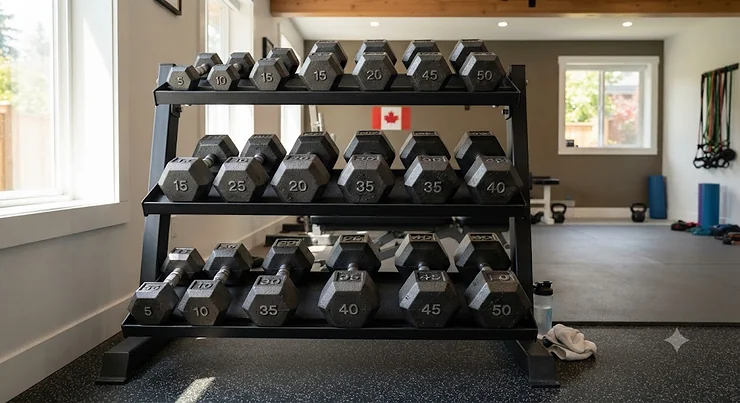
There’s a reason your gym’s oldest dumbbells are also its ugliest. Scratched, chipped, missing a fleck of enamel here and there — and still perfectly functional, decades after the shiny adjustable sets from the same era gave up the ghost. That’s cast iron dumbbells in a nutshell: unglamorous, occasionally messy, and almost impossible to actually break. If you’re outfitting a garage, basement, or spare bedroom in Canada and you keep landing back on the same plain hex-shaped weights every time you compare options, your instincts are probably right.
So, what is cast iron dumbbells, exactly? They’re fixed-weight hand weights cast from molten iron alloy, usually finished in baked enamel and shaped with a hexagonal head so they don’t roll off a bench or ramp. They’ve been the default strength-training tool in gyms for well over a century, evolving from the crude iron “halteres” of ancient Greece into the standardized hex shapes we recognize today.
This guide walks through seven real, currently available options sold to Canadian buyers, compares them against chrome-finished alternatives, and digs into the practical stuff nobody puts in a product listing — how these things hold up to a damp garage, what they’re actually worth when you go to sell them, and where the “just buy iron” advice falls apart. Every claim here is grounded in real specs and aggregated owner feedback, not a marketing sheet, so expect some blunt opinions along the way.
Quick Comparison Table
Before the deep dive, here’s the short version for anyone skimming on a coffee break.
| Product | Weight Range | Finish | Best For |
|---|---|---|---|
| CAP Barbell Black Cast Iron Hex Dumbbell | 3–120 lb (single or pair) | Baked black enamel | Best all-around budget pick |
| CAP Barbell SDG Gray Cast Iron Hex Dumbbell | 15–120 lb | Baked gray enamel | Heaviest fixed-weight range |
| Yes4All Vinyl Coated Cast Iron Dumbbell Set | 2–15 lb | Vinyl over iron core | Rehab, mobility, beginners |
| Yes4All Old School Adjustable Cast Iron Dumbbell Set | 40–200 lb total | Raw cast iron plates | Space-limited garages |
| Marcy Hammertone Cast Iron Hex Dumbbell | 3–100 lb | Hammertone enamel | Hiding scuffs long-term |
| WF Athletic Supply Cast Iron Set with A-Frame Rack | 5–25 lb pairs | Gray/black hex enamel | First-time buyers wanting a rack |
| Yes4All Chrome/Rubber Grip Encased Hex Dumbbell | 5–50 lb | Chrome handle, rubber head | Cold-hand comfort in unheated spaces |
A quick read of that table tells most of the story: if raw weight capacity matters most, the CAP Barbell SDG Gray Cast Iron Hex Dumbbell wins outright, while anyone tight on floor space should be looking at the Yes4All Old School Adjustable Cast Iron Dumbbell Set instead of stacking seven separate pairs. Buyers just starting out, or coming back from an injury, tend to be better served by the lighter, gentler Yes4All Vinyl Coated line than by anything described as “hardcore.” None of that means the others aren’t worth owning — it just means the “best” one depends entirely on what your space and your joints can handle.
💬 Just one click — help other Canadian lifters make smarter garage-gym decisions too! 😊
Top 7 Cast Iron Dumbbells: Expert Analysis
1. CAP Barbell Black Cast Iron Hex Dumbbell — anti-roll hex head, gym-standard grip
This is the dumbbell most Canadians picture when they hear the word “gym,” and there’s a reason it’s stuck around this long. The heads are cast from ASTM A48 Class 20 grey iron and joined by a cold-rolled 1018 steel handle, with the whole thing finished in a baked industrial enamel — which, translated out of spec-sheet language, means it’s genuinely hard to dent and won’t flake apart after a season of use. On paper, the medium-depth knurling sounds minor, but it’s the difference between a secure grip on rep 20 of a set and a dumbbell sliding out of a sweaty palm.
Based on the spec comparison against pricier brands, this is squarely a budget-conscious pick that doesn’t feel cheap in the hand — a rarity in this category. It suits beginners building a first rack and intermediate lifters who don’t need anything fancier than “heavy and reliable.” Reviewers consistently report that the hex shape genuinely stops the dumbbells from rolling off an incline bench, though a handful mention minor enamel chipping at the very edges of the hex points after repeated floor drops.
Pros:
- ✅ Hex head reliably prevents rolling on benches or floors
- ✅ Baked enamel resists chipping better than painted alternatives
- ✅ Widely available across the full 3–120 lb range
Cons:
- ❌ Enamel can show hairline chips at hex corners over years
- ❌ Handle diameter feels thin for lifters with larger hands
Expect somewhere around C$25-C$40 for a light single, climbing toward the C$150-C$250 range for a heavier pair — solid value for the durability on offer.
2. CAP Barbell SDG Gray Cast Iron Hex Dumbbell — heaviest range, up to 120 lb per side
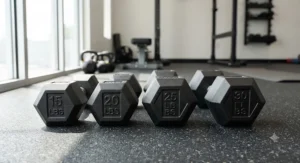
If the standard black CAP line is the everyday option, this gray “SDG” version is its heavyweight sibling, built for lifters who eventually outgrow lighter sets. These are essentially 100% cast iron construction, including a knurled steel handle made from round bar stock, finished with a baked gray enamel and white weight markings that stay legible long after paint on cheaper brands has worn off.
What most buyers overlook about this model is how much the increment spacing matters at the top end — going from 15 lb all the way to 120 lb in consistent 5 lb steps means a genuinely progressive overload path without needing a second brand to fill gaps. This is the pick for garage-gym owners planning years ahead, not just the first six months. Aggregated owner feedback on this SDG line and comparable CAP heavy hex dumbbells points to strong long-term durability, with occasional complaints centred on freight damage during shipping rather than the product itself.
Pros:
- ✅ Full 5 lb increments all the way to 120 lb per side
- ✅ Legible painted markings that resist fading
- ✅ All-metal build with no plastic components to crack
Cons:
- ❌ Heavier pairs are genuinely awkward to ship without damage
- ❌ Premium weight range costs noticeably more per pound
Pricing climbs steeply with weight — expect roughly C$40-C$60 for a lighter single up into the C$300-C$500 range for the heaviest pairs, which is fair for the sheer volume of iron you’re getting.
3. Yes4All Vinyl Coated Cast Iron Dumbbell Set — colour-coded and joint-friendly
This is the dumbbell for people who wince at the phrase “clanging iron.” A cast iron core is wrapped in a soft vinyl shell, colour-coded by weight so a physio client or a beginner doesn’t need to squint at stamped numbers mid-set. The hexagon head keeps the anti-roll benefit of the CAP models while the coating quiets impact noise dramatically.
Here’s what the spec sheet won’t tell you: vinyl-coated iron is noticeably gentler on hardwood and laminate floors than bare enamel, which matters a lot for condo dwellers or anyone training in a finished basement rather than a concrete garage. This is squarely the choice for rehab work, senior fitness, aerobics classes, and anyone whose top priority is comfort over sheer training capacity — it tops out around 15 lb, so serious strength lifters will outgrow it fast. Reviewers consistently note the coating stays odour-free longer than cheaper neoprene alternatives, though a smaller subset mention the vinyl can develop small tears at the seam after a couple of years of daily use.
Pros:
- ✅ Colour-coding makes weight identification instant
- ✅ Significantly quieter and gentler on indoor flooring
- ✅ Comfortable grip for extended high-rep sets
Cons:
- ❌ Weight range tops out too low for serious strength goals
- ❌ Vinyl shell can tear at seams after years of daily use
At around C$20-C$45 for a pair depending on weight, this is genuinely good value for its intended lighter-duty use case — just don’t expect it to double as a heavy-lifting tool.
4. Yes4All Old School Adjustable Cast Iron Dumbbell Set — space-saving plate-loaded system
For anyone eyeing seven separate pairs of fixed dumbbells and doing the math on floor space, this adjustable system is the practical alternative. Two 14–18 inch handles, a stack of cast iron plates in 1.25, 5, and 10 lb increments, star-lock collars, and an optional connector to turn the pair into a makeshift barbell — all told, it scales from roughly 40 lb up to 200 lb total depending on the configuration purchased.
Based on the spec comparison with fixed hex dumbbells, the trade-off here is obvious and worth stating plainly: changing weight takes 30-60 seconds of unscrewing collars and swapping plates, compared to instantly grabbing a different fixed pair. What most buyers overlook is that this slower changeover is actually a feature for structured strength programs, where you’re doing fewer weight changes per session anyway — it’s less ideal for fast-paced circuit or HIIT-style training. Reviewers report strong satisfaction with the value-per-pound here, with recurring praise for the diamond-knurled chrome handle grip, though several mention the star-lock collars can loosen slightly during aggressive sets and need periodic re-tightening.
Pros:
- ✅ Dramatically less floor and shelf space than fixed sets
- ✅ Connector accessory doubles as an improvised barbell
- ✅ Strong cost-per-pound compared to premium fixed hex sets
Cons:
- ❌ Slower to change weight than grabbing a fixed pair
- ❌ Collars can loosen under heavy, fast-paced use
Depending on total weight purchased, expect a range from around C$110-C$180 for a 40 lb set up to C$280-C$380 for the 135-200 lb configurations — genuinely strong value per pound of iron.
5. Marcy Hammertone Cast Iron Hex Dumbbell — textured hammertone finish hides wear
Hammertone is one of those finishes that sounds like marketing but is actually a legitimate functional choice. Instead of a smooth enamel coat that shows every scratch under garage lighting, the Marcy hammertone finish has a deliberately textured, mottled surface that camouflages years of dings and floor contact.
The specs land in familiar cast iron dumbbell territory — solid hex heads, a knurled steel handle, sold individually rather than in matched pairs, spanning 3 to 100 lb. What that individual-sale structure means in practice is you can build an oddly specific collection (say, a 12 lb and an 18 lb for unilateral work) without paying for a matched set you don’t need. On paper, this makes the Marcy line particularly well-suited to lifters who already know their exact training numbers rather than beginners still figuring out starting weights. Aggregated review sentiment for this hammertone line leans positive on long-term cosmetic durability specifically, with the textured finish reportedly aging far more gracefully than glossy black enamel competitors, while a minority of buyers note the per-unit pricing adds up quickly if you’re building a full rack from scratch.
Pros:
- ✅ Hammertone texture visibly hides scratches and wear
- ✅ Sold individually for precise, mix-and-match weight building
- ✅ Established brand with long production history
Cons:
- ❌ Buying a full matched set individually costs more overall
- ❌ Less widely stocked than CAP or Yes4All in Canada
Single units run roughly C$15-C$130 depending on weight selected, which is competitive but adds up fast if you’re buying a dozen individual pieces at once.
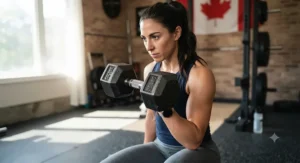
6. WF Athletic Supply Cast Iron Dumbbell Set with A-Frame Rack — rack included, no assembly required
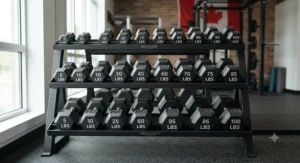
This one solves a problem the other six don’t: where do you actually put the dumbbells once you own them? The set bundles a 5-25 lb range of gray or black hexagon cast iron dumbbells with a matching A-frame storage rack, and — genuinely useful for a first-timer — arrives needing no assembly.
The dumbbells themselves are standard solid hexagon cast iron construction, nothing exotic, which is honestly the right call here; the value proposition is the bundled rack and organization, not a novel weight design. What most first-time buyers overlook is how much a dedicated rack changes daily training behaviour — dumbbells left loose on a garage floor get skipped more often than ones sitting at eye level, ready to grab. This is the pick specifically for someone setting up their very first home gym corner and wanting one purchase that solves both the weights and the storage problem simultaneously. Reviewers consistently highlight the rack’s sturdiness relative to its price point, though a few note the rack’s footprint is larger than expected and worth measuring for before ordering.
Pros:
- ✅ Includes a genuinely sturdy A-frame rack, no separate purchase
- ✅ No assembly required out of the box
- ✅ Solid entry-level weight range for beginners
Cons:
- ❌ Rack footprint is larger than many small spaces expect
- ❌ Weight range won’t satisfy intermediate or advanced lifters
Bundled sets like this typically land in the C$150-C$250 range, which is a fair premium over buying loose dumbbells once you factor in a rack purchased separately would cost extra anyway.
7. Yes4All Chrome/Rubber Grip Encased Hex Dumbbell — chrome handle hybrid for cold-hand comfort
The last entry is a deliberate hybrid, and it’s here because “cast iron dumbbells” and “chrome dumbbells” aren’t actually two entirely separate categories — they overlap more than most buying guides admit. This model uses a rubber-encased cast iron head for floor protection and noise reduction, paired with a chrome-plated handle instead of painted steel.
That chrome handle isn’t just cosmetic. In an unheated Canadian garage in January, a bare steel or enamel-coated handle gets genuinely cold to the touch, while chrome plating conducts heat differently and, combined with the anti-slip texture, tends to feel less unpleasant on bare hands during a quick warm-up set. The rubber-encased head also means dropped dumbbells won’t crack concrete or leave the dents that bare cast iron can. This suits garage and basement lifters in colder climates more than anyone training in a heated indoor studio. Reviewers report the chrome plating holds up well against surface rust specifically, with the rubber encasement doing double duty protecting both floors and the iron core underneath — though some mention the rubber can develop a faint odour in humid storage conditions before it airs out.
Pros:
- ✅ Chrome handle stays noticeably more comfortable in cold spaces
- ✅ Rubber encasement protects both floors and the iron core
- ✅ Better rust resistance at the handle than painted steel
Cons:
- ❌ Rubber can develop a temporary odour in humid storage
- ❌ Heavier per pound than bare cast iron of the same weight
Expect roughly C$30-C$70 for a single depending on weight, climbing into the C$200-C$350 range for higher-weight pairs — a reasonable premium over bare iron for the added floor and cold-weather comfort.
| Product | Price Range (CAD) | Rated Range | Best For |
|---|---|---|---|
| CAP Barbell Black Cast Iron Hex Dumbbell | ~C$25-C$250 | 3–120 lb | Everyday budget pick |
| CAP Barbell SDG Gray Cast Iron Hex Dumbbell | ~C$40-C$500 | 15–120 lb | Long-term heavy lifting |
| Yes4All Vinyl Coated Cast Iron Dumbbell Set | ~C$20-C$45 | 2–15 lb | Rehab and light training |
| Yes4All Old School Adjustable Cast Iron Dumbbell Set | ~C$110-C$380 | 40–200 lb total | Small garages, tight budgets |
| Marcy Hammertone Cast Iron Hex Dumbbell | ~C$15-C$130 | 3–100 lb | Custom weight building |
| WF Athletic Supply Set with A-Frame Rack | ~C$150-C$250 | 5–25 lb | First-time buyers |
| Yes4All Chrome/Rubber Grip Encased Hex Dumbbell | ~C$30-C$350 | 5–50 lb | Cold garages, floor protection |
Looking at the full lineup side by side, the split is really between three buyer types: the CAP Barbell duo rewards anyone building a long-term, heavy-capacity home gym, the Yes4All trio covers everything from rehab work to space-constrained adjustable training, and the WF Athletic Supply and Marcy picks fill specific gaps — a starter bundle and a custom-weight builder, respectively. None of these are objectively “the best cast iron dumbbells” in isolation; the right pick depends entirely on how much floor space, budget, and long-term ambition you’re working with.
✨ Don’t Miss These Exclusive Deals! 🔍
Take your home gym to the next level with these carefully selected picks. Click on any highlighted product to check current pricing and availability — a few of these sell out of specific weight increments faster than you’d expect. 🏋️♂️
Setting Up and Maintaining Your Cast Iron Dumbbells
Getting cast iron dumbbells home is the easy part. The first thirty days are where most of the avoidable damage happens — to the equipment and occasionally to a floor. Start by deciding where they’ll actually live: a rack or mat, never bare on finished flooring, since even a gentle set-down can dent laminate over time. Wipe every piece down on arrival; shipping oils and warehouse dust are common, and a dry cloth pass takes two minutes.
For the first few weeks, get in the habit of a light wipe-down after humid or sweaty sessions specifically — that’s when moisture actually sits on the enamel long enough to matter. A thin coat of machine oil or a silicone-based protectant applied monthly in a damp basement or unheated garage goes a long way toward keeping the classic reddish rust bloom off bare metal edges and handle ends where enamel coverage is thinnest. Common first-month mistakes include stacking dumbbells directly on concrete (which traps moisture underneath), storing them near a garage door where temperature swings cause condensation, and skipping the wipe-down because “it’s just going to get sweaty again anyway” — which is backwards logic, since sweat left to dry is exactly what accelerates surface corrosion. A simple weekly five-minute maintenance pass — wipe, inspect handles for looseness, check the rack is level — keeps a set functional for decades rather than years.
Real-World Scenarios: Who Actually Needs Cast Iron Dumbbells
The apartment-to-garage upgrader. Say you’re a 28-year-old in Calgary who’s outgrown resistance bands and a single 20 lb kettlebell, moving into a house with an unheated garage bay. Budget sits around C$300, frequency is four sessions a week, and floor space is generous but temperature swings widely between seasons. The CAP Barbell Black Cast Iron Hex Dumbbell in a spread of increments, paired with a basic rack, covers this almost perfectly — durable enough for the temperature swings, affordable enough to buy a full range at once.
The condo-dwelling beginner. A 45-year-old in a Toronto condo, cleared for light resistance work after a shoulder injury, training twice weekly in a living room with hardwood floors and downstairs neighbours to consider. Noise and floor protection matter more than raw capacity here — the Yes4All Vinyl Coated Cast Iron Dumbbell Set is close to the only sensible option, since bare enamel iron on hardwood is a recipe for both dents and complaints.
The space-constrained intermediate lifter. A university student in a Halifax basement suite with maybe six square feet to spare and a training budget that needs to last through weight increases over two years, training three to five times weekly. Seven pairs of fixed dumbbells simply won’t fit. The Yes4All Old School Adjustable Cast Iron Dumbbell Set solves the space problem directly, and Canada’s own physical activity research backs the underlying habit: only about half of Canadian adults currently meet the recommended muscle-strengthening guidelines, so removing friction — like space constraints — genuinely matters for consistency.
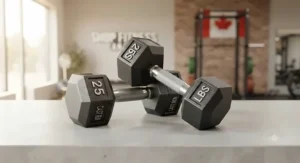
Common Problems With Cast Iron Dumbbells (And How to Fix Them)
Problem: surface rust appearing on handle ends. This is almost always a moisture-and-storage issue rather than a defect. Solution: relocate storage away from garage doors or basement window wells, and apply a thin machine oil coat to exposed metal monthly during humid seasons.
Problem: enamel chipping at the hex corners. Usually caused by repeated floor drops rather than a manufacturing flaw — cast iron itself is tough, but baked enamel is a coating, not the substrate. Solution: use a rubber gym mat under your rack, and consider the rubber-encased Yes4All Chrome/Rubber Grip Encased Hex Dumbbell for anyone who drops weights frequently by habit.
Problem: mismatched or missing weights from a set bought used. Common when buying second-hand off a local marketplace. Solution: weigh individual pieces on a bathroom scale before finalizing a used purchase, since cast iron weight markings can wear off or be inaccurate on older stock.
Problem: a wobbly or loosening handle on adjustable systems. Star-lock collars and threaded handles can back off slightly under aggressive training. Solution: check torque weekly for the first month of ownership, then monthly after that; a loose collar is a genuine safety issue, not just an annoyance.
Problem: unpleasant odour from rubber-coated or vinyl-coated models. Usually a byproduct of humid storage trapping moisture against the coating. Solution: air out new purchases in a ventilated space for 24-48 hours before first use, and avoid sealed plastic storage bins for coated dumbbells.
How to Choose Cast Iron Dumbbells: 6 Criteria That Matter
Choosing the right set comes down to six practical questions, roughly in order of importance:
- Weight range for your actual training age. Beginners rarely need anything past 25-30 lb per hand initially; buying a 120 lb capacity set on day one wastes budget that could go toward a fuller increment spread.
- Storage space available. Fixed dumbbells need shelf or rack space per pair; adjustable systems trade convenience for a smaller footprint.
- Flooring underneath. Concrete garages tolerate bare enamel iron fine; hardwood or laminate spaces genuinely benefit from vinyl- or rubber-coated options.
- Climate control of the training space. Unheated garages and damp basements favour chrome-handled or rubber-encased models over bare painted steel.
- Increment granularity. Look for 5 lb steps at minimum in the working range you’ll actually use most — big weight jumps stall progress more than most beginners expect.
- Budget per pound, not just sticker price. A larger set often has a lower cost-per-pound than buying several small pairs separately over time.
Features That Actually Matter (And Those That Don’t)
The hexagon head shape genuinely matters — it’s not a gimmick, since a round-headed dumbbell rolling off an incline bench mid-set is a real hazard, not a hypothetical one. Handle knurling depth matters too, though “aggressive” knurling marketed for advanced lifters is often unnecessary and uncomfortable for casual training; medium depth suits most home users better than the deepest options available.
What matters less than the marketing suggests: colour variety on bare iron models (it’s cosmetic, full stop), and branded “proprietary” enamel formulas, which in practice perform similarly to any quality baked industrial coating regardless of the name attached. Weight marking style — stamped versus painted — is a minor convenience factor, not a durability one, despite how it’s sometimes framed in product descriptions.
Common Mistakes When Buying Cast Iron Dumbbells
The single biggest mistake is buying the full weight range you eventually want on day one, rather than the range you’ll actually use in the first six months — unused heavy pairs just take up space while beginner weights get worn from overuse. A close second is ignoring floor type entirely; buyers in condos regularly purchase bare cast iron, only to discover the noise and dent risk after the fact. Third, skipping increment planning: jumping straight from 10 lb to 25 lb with nothing between leaves an awkward gap exactly where most progressive overload happens. Fourth, underestimating shipping weight and cost on heavier pairs, which can meaningfully change the total price versus buying in-store where available. Finally, many first-time buyers assume all “cast iron” listings are equivalent, when coating quality, handle diameter, and increment spacing vary meaningfully between brands even at similar price points.
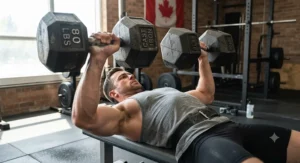
Cast Iron vs Chrome Finish: Which Wins for a Home Gym
This comparison gets asked constantly, and the honest answer is: it depends on what “chrome” actually means in the listing, because the term gets used two different ways. Sometimes “chrome dumbbells” means solid chrome-plated steel plates on a barbell-style system; more often in the fixed-dumbbell world, it means a chrome-plated handle paired with a cast iron or rubber-encased head — which is exactly what the Yes4All Chrome/Rubber Grip Encased Hex Dumbbell offers.
| Factor | Bare Cast Iron (Enamel) | Chrome-Handle Hybrid |
|---|---|---|
| Cold-weather grip comfort | Noticeably colder to bare hands | More comfortable in unheated spaces |
| Rust resistance at handle | Moderate, depends on enamel condition | Generally stronger |
| Floor protection | None unless separately padded | Often rubber-encased, protects floors |
| Weight per pound | Standard | Slightly heavier due to rubber shell |
| Typical price per pound | Lower | Modestly higher |
The analysis here is straightforward: bare cast iron wins on raw cost-per-pound and simplicity, while chrome-handle hybrids win on comfort and rust resistance specifically at the handle, where bare enamel is thinnest and most vulnerable. Garage gym owners in colder Canadian regions — Winnipeg, Thunder Bay, rural Alberta — tend to get more practical value from the chrome-handle hybrid despite the modest price premium, simply because the comfort difference is felt every single session in winter.
Chrome Dumbbells Review: What Aggregated Owner Feedback Says
Pulling together real review themes across chrome-handled cast iron and hybrid models, a few patterns repeat consistently. Owners report the chrome plating resists surface tarnish noticeably better than painted enamel in humid storage, which lines up with chrome’s known corrosion-resistant properties as a plating material. The trade-off reviewers mention most often is weight: rubber-encased chrome-handle models run heavier per pound than bare iron of the same nominal weight, which occasionally causes confusion when a “10 lb” dumbbell feels bulkier in hand than expected.
A smaller but recurring complaint theme involves the chrome plating on lower-cost hybrid models showing thin spots or minor pitting after several years of heavy daily use — a legitimate concern, though one that seems concentrated in budget-tier products rather than established brands like Yes4All’s mid-range hybrid lines. Overall aggregated sentiment leans positive specifically for cold-climate and floor-conscious buyers, and more neutral for anyone training in a heated, carpeted, or already floor-protected space where the extra features matter less.
Cast Iron Dumbbells for Garage Gyms: Humidity, Cold and Rust Prevention
A garage is, functionally, the worst storage environment cast iron regularly encounters short of an actual outdoor shed. Temperature swings between a cold overnight low and a sun-warmed afternoon create condensation on bare metal — and that condensation, not rain or snow directly, is usually what actually starts rust. Cast iron becomes meaningfully more prone to rusting once ambient humidity climbs past roughly 65%, a threshold many uninsulated Canadian garages cross regularly between spring thaw and late fall.
Practical rust prevention for a garage setup comes down to a short list: keep dumbbells off bare concrete using a mat or rack (concrete wicks and holds moisture), apply a light oil or silicone protectant to exposed metal every four to six weeks during humid months, avoid storing directly beside garage doors where condensation forms fastest, and wipe equipment down after any session where sweat or humidity was noticeably high. Insulating or heating even a small dedicated corner of a garage reduces the temperature-swing problem more effectively than any product treatment alone. For anyone specifically shopping for cast iron dumbbells for garage gym use in a colder province, prioritizing the chrome-handle or rubber-encased options discussed earlier isn’t just about comfort — it’s a genuine, measurable rust-mitigation strategy given how thin enamel coverage typically is at handle ends and hex corners.
Long-Term Cost, Maintenance and Dumbbell Resale Value
Cast iron’s biggest long-term financial advantage isn’t the purchase price — it’s how little value it loses. Unlike adjustable dial-based systems with plastic components that can crack or mechanisms that can fail, bare cast iron dumbbells have essentially no moving parts to break, which keeps used listings genuinely functional rather than “for parts” purchases.
| Consideration | Bare Cast Iron | Adjustable/Coated Systems |
|---|---|---|
| Typical resale retention | High — often 50-70% of original price | Lower — mechanisms and coatings degrade faster |
| Common resale platforms | Local marketplace, Kijiji, Facebook Marketplace | Same, but pickier buyers |
| Buyer trust factor | High — visually easy to inspect | Lower — hidden internal wear |
| Maintenance cost over 10 years | Minimal — occasional oil | Higher — replacement collars, worn coatings |
That resale strength holds up because cast iron dumbbells are about as easy as home fitness equipment gets to inspect in person — a buyer can see chips, check weight markings, and spot rust immediately, none of which requires trusting a seller’s word about internal condition the way an adjustable dial system does. If you’re buying or selling second-hand, Health Canada’s guidance on evaluating used products is a genuinely useful read before finalizing a private-sale deal, since it covers what to check and what red flags to walk away from — advice that applies just as well to fitness equipment as anything else on a garage sale table. In practice, well-maintained cast iron dumbbells routinely resell locally for well over half their original price years after purchase, which meaningfully lowers the real cost of ownership compared to gear that depreciates toward zero.
FAQ
❓ Are cast iron dumbbells better than rubber-coated ones?
❓ Do cast iron dumbbells rust in a garage?
❓ What is the average lifespan of cast iron dumbbells?
❓ Can you resell cast iron dumbbells for a good price?
❓ Is chrome or cast iron better for cold garages?
Conclusion
Cast iron dumbbells aren’t exciting. They don’t have an app, a Bluetooth connection, or a colour drop that changes every season — and that’s precisely the appeal for anyone tired of gym equipment that needs a firmware update to function. What they offer instead is decades of reliable use for a modest upfront cost, genuine resale value if your goals change, and a level of durability that adjustable and coated alternatives simply can’t match pound for pound.
The right pick from this list really does come down to your specific situation: budget-focused all-rounders in the CAP Barbell Black Cast Iron Hex Dumbbell, heavy long-term capacity in the CAP Barbell SDG Gray Cast Iron Hex Dumbbell, gentler training in the Yes4All Vinyl Coated Cast Iron Dumbbell Set, space efficiency in the Yes4All Old School Adjustable Cast Iron Dumbbell Set, custom weight building in the Marcy Hammertone Cast Iron Hex Dumbbell, an easy first purchase in the WF Athletic Supply Cast Iron Dumbbell Set with A-Frame Rack, and cold-climate comfort in the Yes4All Chrome/Rubber Grip Encased Hex Dumbbell. Whichever set ends up in your garage, a little rust prevention and a rack off the bare concrete will make sure it outlasts nearly everything else you own for home fitness.
Recommended for You
- 7 Best Rubber Hex Dumbbells In Canada For 2026
- Fixed Weight Dumbbells for Home Gym: 7 Best Picks (2026)
- 7 Best Ironmaster Style Adjustable Dumbbells in Canada (2026)
Disclaimer: This article contains affiliate links. As an Amazon Associate, I earn from qualifying purchases. If you purchase products through these links, we may earn a small commission at no additional cost to you.
✨ Found this helpful? Share it with your friends! 💬🤗
