In This Article
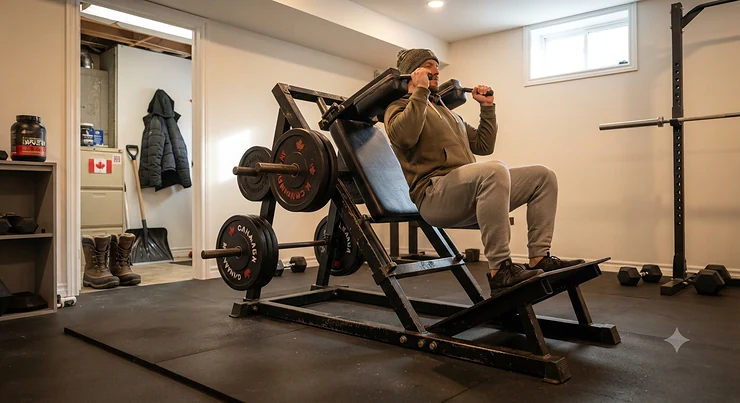
Leg day has a footprint problem. A full commercial hack squat machine wants a corner of a warehouse gym, a 220-volt outlet for the motor that doesn’t exist, and a budget that makes your car payment look reasonable. None of that describes the average Canadian basement, garage, or condo storage locker — which is exactly why the budget hack squat machine has quietly become one of the most searched pieces of strength equipment in the country. A hack squat machine is a plate-loaded strength machine that guides your body along a fixed sled track at a fixed back angle, letting you load your quads heavily without a spotter or the balance demands of a free-weight squat. The appeal for home training is obvious: knee-friendly mechanics, no bailing-out-from-under-a-bar moment, and — increasingly — price tags that don’t require a second mortgage.
This guide skips the marketing copy and gets into what actually matters when you’re comparing a budget hack squat machine against pricier commercial-style units: weight capacity that’s realistic rather than theoretical, footprint numbers you can tape off on your garage floor tonight, and the kind of frame tolerances that separate “solid for the price” from “returned within a month.” We researched seven real, currently available models spanning entry-level to prosumer, cross-referenced their specs against aggregated buyer feedback, and built out genuine comparisons — not a repackaged spec sheet. Canada’s own 24-Hour Movement Guidelines recommend muscle-strengthening activity at least twice a week for adults, and a hack squat machine happens to be one of the more approachable ways to hit that target without driving to a commercial gym in February.
Whether you’re outfitting a first apartment gym, replacing a squat rack that’s outgrown your basement ceiling height, or just trying to figure out if a compact hack squat machine can actually replace a full leg day at the gym, you’ll find the real trade-offs below — including where “budget” quietly becomes “you get what you paid for.”
Quick Comparison Table: Budget Hack Squat Machines at a Glance
| Machine | Weight Capacity | Footprint | Price Range (CAD) | Best For |
|---|---|---|---|---|
| Garvee Leg Press Hack Squat Machine 2-in-1 | 1,400 lb | ~80″ x 38″ | Under C$700 | Best overall budget value |
| Syedee Compact Leg Sled Machine | 1,000 lb | Compact (sub-70″ length) | Under C$600 | Tightest apartment/condo footprint |
| ANYTHING SPORTS Leg Press/Hack Squat | 1,000 lb | 83″ x 34″ | C$500-C$650 range | Lowest entry price point |
| Titan Fitness Leg Press/Hack Squat Combo | 1,000 lb | 84″ x 40″ | C$650-C$850 range | Best steel-for-the-dollar durability |
| Mikolo LP10 Compact Leg Sled | 1,000 lb | 67″ x 52″, ~24 sq. ft. | C$700-C$900 range | Best for knees and lower-back sensitivity |
| RitFit Leg Press Hack Squat Machine | 1,200 lb | Mid-size, folds for storage-friendly angles | C$750-C$950 range | Most adjustment angles for the price |
| Bowflex Hack Squat Attachment | Varies by base unit | Near-zero added footprint | C$300-C$450 range (attachment only) | Owners of an existing Bowflex home gym |
Looking at the table, the split between the sub-C$700 crowd and the C$750-C$950 tier tells you most of what you need to know: the cheaper machines trade a bit of adjustability and steel gauge for accessibility, while the pricier options add angle options and tighter tolerances that reduce sled wobble under heavy loads. If your ceiling height or floor space is the binding constraint, the Mikolo LP10 Compact Leg Sled and Syedee Compact Leg Sled Machine are worth prioritizing over raw capacity numbers, since a 1,400 lb-rated machine you can’t fit in the room isn’t actually the budget option.
💬 Just one click — help others make better buying decisions too!😊
Top 7 Budget Hack Squat Machines: Expert Analysis
1. Garvee Leg Press Hack Squat Machine 2-in-1 — best overall value under C$700
The Garvee Leg Press Hack Squat Machine 2-in-1 earns the top spot mostly because it doesn’t force a trade-off between price and build quality — a rare combination in this category. It’s built from 50mm x 50mm steel tubing at roughly 1.5mm wall thickness, uses a linear bearing carriage instead of the cheaper rolling-wheel systems, and is rated to a 1,400 lb combined load — genuinely high for anything under the C$700 mark.
In practice, the linear bearing system is the detail that matters most: rolling-wheel sleds tend to develop side-to-side play after a few months of heavy use, while linear bearings track straighter for longer, which translates to less wobble under a loaded bar and a quieter set. The hydraulic handle lets you flip between leg press and hack squat mode in seconds rather than requiring a full pin-and-bolt reconfiguration, and four angle settings plus six total guard/safety-stop positions give it more built-in adjustability than most machines twice its price.
Based on the spec comparison, this is the machine for someone who wants a genuine hack squat machines for home strength training setup without spending Titan or RitFit money — it’s not the smoothest or quietest machine on this list, but it’s the best-equipped one at its price tier. Reviewers consistently report straightforward assembly (most cite an afternoon with a second set of hands) and note the linear bearings feel noticeably smoother than the wheeled systems on cheaper alternatives they’d previously owned; a recurring complaint is that the included instructions are sparse, so budgeting extra time for the first build is wise.
Pros:
- ✅ 1,400 lb capacity is unusually high for this price bracket
- ✅ Linear bearing sled tracks straighter than wheel-based rivals
- ✅ Four angle settings plus six safety-stop positions
Cons:
- ❌ Assembly instructions are thin compared to pricier competitors
- ❌ Standard-size footprint still needs a real garage or basement bay
At a price that typically lands in the C$550-C$700 range depending on promotions, the Garvee Leg Press Hack Squat Machine 2-in-1 is the clearest “buy this first” recommendation on this list for anyone building a budget home gym from scratch.
2. Syedee Compact Leg Sled Machine — tightest footprint for small spaces
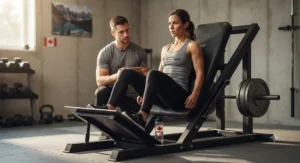
If square footage is your real constraint rather than price, the Syedee Compact Leg Sled Machine is the one to look at first. It’s rated to 1,000 lb, which is plenty for the vast majority of home lifters, but the real selling point is a compact machine footprint that undercuts most of its full-size competitors by a meaningful margin — this is the model built for condo storage lockers and single-car garages that still need to fit an actual car.
What most buyers overlook about compact-format hack squat machines is that a smaller footprint usually means a shorter sled track, which can slightly reduce range of motion for taller lifters (over roughly 6’2″) — worth checking against your own height before buying. For anyone in the 5’2″-6’1″ range, though, the trade-off is close to invisible in daily use, and the smaller footprint means it’s realistic to tuck against a wall between sessions rather than dedicating permanent floor space to it.
Aggregated review sentiment for this model skews positive on stability for its size, with users noting the frame doesn’t flex noticeably even loaded near capacity; the recurring critique is that the included cushioning on the back pad is thinner than on the pricier machines on this list, so a slip-on foam cover is a common first upgrade.
Pros:
- ✅ Smallest floor footprint of any machine on this list
- ✅ 1,000 lb capacity is more than enough for home use
- ✅ Frame stays stable even near max load
Cons:
- ❌ Shorter sled track may limit taller lifters’ range of motion
- ❌ Back pad cushioning is thinner than pricier alternatives
Typically priced under C$600, the Syedee Compact Leg Sled Machine is the strongest pick specifically for anyone whose home gym plan starts with “will this even fit.”
3. ANYTHING SPORTS Leg Press/Hack Squat Machine — lowest entry price point
Not a household name in fitness equipment, but the ANYTHING SPORTS Leg Press/Hack Squat Machine earns its spot here for a simple reason: it’s consistently one of the least expensive genuinely dual-function machines you can find, and it doesn’t skimp on the basics to get there. It carries a 1,000 lb weight capacity, three lockout safety positions, and an adjustable footplate and back support, with a narrower 34-inch-wide footprint than most full-size competitors — useful if your gym space is long but not particularly wide.
Here’s what the spec sheet won’t tell you, but the build quality suggests: at an assembled weight of roughly 325 lb, this machine is surprisingly heavy-duty for its price class, which generally correlates with a more stable lifting experience than lighter, thinner-gauge competitors in the same bracket. On paper, this means less sled sway under a heavy set than you’d expect from the price tag alone — a detail that matters more for hack squats specifically, where the fixed back angle makes any lateral play in the frame more noticeable than it would be on a leg press.
The honest trade-off is brand support: this isn’t a company with the customer-service infrastructure of Titan or RitFit, so replacement parts and warranty claims are likely to be slower and less predictable. For a budget-first buyer who mainly wants working iron and is comfortable troubleshooting minor assembly issues solo, that’s a reasonable bet; for someone who wants white-glove support, it’s a real downside to weigh.
Pros:
- ✅ Among the least expensive true 2-in-1 machines available
- ✅ Surprisingly heavy assembled weight for the price (~325 lb)
- ✅ Narrower 34-inch footprint suits long, narrow spaces
Cons:
- ❌ Limited brand history and slower customer support
- ❌ Fewer angle adjustments than pricier competitors
Expect a price generally in the C$500-C$650 range, making the ANYTHING SPORTS Leg Press/Hack Squat Machine the pick for shoppers whose primary filter is simply “the lowest number that still gets real steel.”
4. Titan Fitness Leg Press/Hack Squat Combo — best steel-for-the-dollar durability
Titan built its reputation on delivering commercial-adjacent build quality at a fraction of commercial pricing, and the Titan Fitness Leg Press/Hack Squat Combo continues that pattern. It’s rated to a 1,000 lb capacity, includes two weight-storage horns so plates don’t end up scattered across the floor, and offers an adjustable-angle footplate and backrest with three lockout safety positions — a fairly complete feature set for a machine that still qualifies as affordable strength equipment.
Reviewers consistently note the frame itself feels overbuilt relative to the price, with thicker gauge steel than several nominally pricier competitors — Titan’s manufacturing scale seems to be doing real work here. What the spec sheet won’t tell you is that the padding is noticeably thinner than on the RitFit or Mikolo machines on this list, which matters most on high-rep sets where the back pad is under sustained pressure; some lifters solve this with an aftermarket pad wrap, which is a cheap fix for an otherwise minor issue.
The honest downside is the warranty: Titan’s coverage on this unit runs a single year, shorter than RitFit’s lifetime-limited coverage on a comparable machine, and shorter than most buyers expect from a company with Titan’s reputation. Combined with a full-size 84″ x 40″ footprint, this is a machine built for someone with real garage space who’s optimizing for steel quality over adjustability or footprint.
Pros:
- ✅ Thicker-gauge steel frame than several similarly priced rivals
- ✅ Two built-in weight-storage horns keep plates organized
- ✅ Three lockout safety positions for confident heavy sets
Cons:
- ❌ One-year warranty is short relative to competitors
- ❌ Full 84″ x 40″ footprint rules out tight spaces
Generally priced in the C$650-C$850 range, the Titan Fitness Leg Press/Hack Squat Combo is the choice for buyers who’ll happily trade a shorter warranty for the reassurance of heavier steel.
5. Mikolo LP10 Compact Leg Sled — best for knees and lower-back sensitivity
Most hack squat machines default to a 45-degree sled angle, which is aggressive on the knees and lower back for anyone coming back from injury or simply new to loaded leg training. The Mikolo LP10 Compact Leg Sled breaks from that norm with a 30-degree positive angle instead, which meaningfully changes the exercise: the shallower angle improves quad isolation while reducing the shear force through the knee and the compressive load through the lower back compared to standard 45-degree machines.
At roughly 67 inches long by 52 inches wide — about 24 square metres… no, roughly 24 square feet of footprint — this is genuinely one of the more compact full-featured units on the market, reportedly using close to a third less floor space than comparable combo machines while still offering seven adjustable positions across the backrest and foot pedals, plus a removable shoulder pad with three height settings for different body types.
Based on the spec comparison, this is the clear pick for anyone training around a pre-existing knee or lower-back issue, or anyone whose physiotherapist has specifically recommended reduced-shear quad work. Aggregated review sentiment highlights the smoothness of the linear bearing track as a standout feature relative to competitors at a similar price, with a recurring note that the shallower 30-degree angle initially feels “less intense” than lifters expect from a hack squat — which is, functionally, the entire point of the design.
Pros:
- ✅ 30-degree angle reduces knee and lower-back stress
- ✅ Compact ~24 sq. ft. footprint saves real garage space
- ✅ Seven adjustable backrest and footplate positions
Cons:
- ❌ Shallower angle means less peak quad overload than 45-degree rivals
- ❌ Pricier than the base-tier budget options on this list
Typically found in the C$700-C$900 range, the Mikolo LP10 Compact Leg Sled is worth the premium over the cheapest options specifically for joint-conscious lifters.
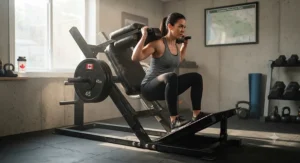
6. RitFit Leg Press Hack Squat Machine — most adjustment angles for the money
RitFit has built its brand around affordable-but-sturdy equipment, and the RitFit Leg Press Hack Squat Machine with linear bearing is the clearest expression of that pitch on this list. It offers five hack squat angles and three leg press angles — more total adjustment positions than any other machine here — built on an alloy steel frame rated to 1,200 lb, with a diamond-textured footplate designed to reduce foot slip mid-set and side-rail safety catches that lock the sled in place between reps.
What most buyers overlook about angle count specifically is that it’s not just a marketing number: more angle options mean you can fine-tune the exercise toward more quad-dominant or more glute-and-hamstring-dominant variations without buying a second machine, which is genuinely useful as your training goals shift over a year of consistent use. On paper, that versatility is what separates this machine from single-angle budget units — you’re paying for flexibility, not just steel.
Reviewers consistently point to RitFit’s lifetime-limited warranty as a standout relative to Titan’s one-year term, and a common thread in aggregated feedback is that the switch between leg press and hack squat mode — flipping the back pad and lowering the footplate — is faster and smoother than on some pricier competitors. The most common complaint is that the unit ships in multiple boxes that can arrive on separate days, which is a minor logistics annoyance rather than a product flaw.
Pros:
- ✅ Most angle adjustment options on this list (5 hack squat + 3 leg press)
- ✅ Lifetime-limited warranty beats most budget competitors
- ✅ Diamond-plate footing reduces slip risk mid-set
Cons:
- ❌ Ships in multiple packages that may arrive separately
- ❌ Sits at the higher end of the “budget” price bracket
Generally priced in the C$750-C$950 range, the RitFit Leg Press Hack Squat Machine is the pick for lifters who want the most versatility their budget will realistically stretch to.
7. Bowflex Hack Squat Attachment — best for existing Bowflex home gym owners
The odd one out on this list, and deliberately so: the Bowflex Hack Squat Attachment isn’t a standalone machine, it’s an add-on designed to bolt onto an existing Bowflex home gym system. For the specific reader who already owns a Bowflex Revolution or Xtreme-series unit and doesn’t have room for an entirely separate hack squat machine, this is arguably the single most space-efficient option in this entire guide — near-zero additional footprint for a genuinely new movement pattern.
Based on the spec comparison, the trade-off is real resistance style: Bowflex systems use their proprietary Power Rod resistance rather than plate-loaded iron, so the loading curve and feel are noticeably different from every other machine on this list, and maximum resistance is capped by whatever your base Bowflex unit supports rather than by how many plates you own. That makes it a poor fit for anyone chasing serious progressive overload on quads specifically, but a genuinely smart fit for someone who wants exercise variety without buying, assembling, and housing a second large machine.
Because it depends on an existing Bowflex base unit, direct customer-review data on the attachment in isolation is limited — what’s verifiable is that it integrates with Bowflex’s established installation system, and what isn’t independently verifiable is long-term durability under heavy hack squat-specific use, so we’re flagging that honestly rather than guessing.
Pros:
- ✅ Near-zero added floor space beyond your existing Bowflex unit
- ✅ Fast installation onto a compatible base system
- ✅ Adds a genuinely new movement pattern without a second machine
Cons:
- ❌ Requires an existing compatible Bowflex home gym to use
- ❌ Power Rod resistance caps out lower than plate-loaded rivals
Priced roughly C$300-C$450 as an attachment (on top of an existing Bowflex system), this is a narrow but genuinely useful pick for the right household.
Setting Up Your Machine: The First 30 Days
Getting a hack squat machine into your home is only half the job — how you set it up in the first month determines whether it becomes a daily habit or an expensive coat rack. Start with assembly on a flat, level surface; even a slight floor slope can introduce sled play that no amount of tightening will fully correct, so check with a level before you start bolting the frame together. Budget more time than the manual suggests — most of the machines above take a genuine two to three hours with a second person, longer solo.
Once assembled, spend your first two sessions with empty or near-empty loading specifically to learn the angle adjustments and safety-stop positions before adding real weight; on a hack squat, the fixed back pad means poor angle setup translates directly into knee or lower-back strain in a way that free-weight squats don’t punish as immediately. Re-torque every bolt after the first week of use — vibration from loaded reps loosens hardware faster than most first-time owners expect, and a five-minute monthly check afterward prevents the sled wobble that ruins an otherwise solid machine’s feel over time. A light coat of dry PTFE lubricant on the sled rails every few weeks keeps linear-bearing systems tracking smoothly and quietly, which matters more in an apartment or shared-wall garage than most spec sheets acknowledge.
Real-World Scenarios: Who Should Buy Which Machine
Picture three different Canadian households, because “best hack squat machine” genuinely depends on who’s asking. First, the first-apartment lifter — mid-20s, training three times a week in a 200-square-foot storage room, budget capped around C$600. For this profile, the Syedee Compact Leg Sled Machine or the compact-footprint Mikolo LP10 make more sense than a full-size unit, even if it means slightly less headroom on plate capacity; a machine that doesn’t fit the room isn’t a budget option at all, it’s a return shipping cost.
Second, the basement family gym — two adults sharing equipment, an unfinished basement with real floor space, budget around C$700-C$900, priority on durability since multiple people with different lifting experience will use it. Here the Titan Fitness Leg Press/Hack Squat Combo or RitFit Leg Press Hack Squat Machine are the stronger fits: both are built to handle inconsistent maintenance habits and varied user weights better than the lighter-gauge budget options.
Third, the garage-gym enthusiast rebuilding a knee injury under a physiotherapist’s guidance, training four to five times weekly, prioritizing joint-friendly mechanics over maximum load. This is the exact use case the Mikolo LP10‘s 30-degree angle was designed for — the reduced knee shear and lower-back compression aren’t marketing fluff here, they’re the entire reason to pick this machine over a steeper-angle rival.
How to Choose a Budget Hack Squat Machine
What is the best way to choose a budget hack squat machine? Match weight capacity to your realistic 2-3 year training goals, measure your actual floor space before shopping, and prioritize frame material and bearing type over flashy extras — those three factors predict long-term satisfaction better than price alone.
- Measure your space first, shop second. Note your ceiling height, floor length and width, and doorway clearance for delivery — a compact hack squat machine that can’t get through your basement door is not actually compact for you.
- Match weight capacity to real goals, not aspirational ones. A 1,000 lb-rated machine handles the overwhelming majority of home lifters comfortably; don’t pay extra for 1,400 lb capacity you’ll realistically never approach.
- Check bearing type before angle count. Linear bearings consistently outlast wheel-based rolling systems under heavy, frequent use — this matters more long-term than an extra angle setting or two.
- Weigh warranty length against brand track record. A one-year warranty from an established brand may be more reliable in practice than a longer warranty from a newer company with limited support infrastructure.
- Consider your joints, not just your ego. A steeper 45-degree angle allows heavier loading; a shallower angle like the 30-degree Mikolo design is gentler on knees and lower backs — pick based on your body, not the biggest number.
- Factor in assembly and delivery logistics. Multi-box shipments, second-person assembly requirements, and stairs all affect real-world cost and hassle beyond the sticker price.
- Read aggregated review themes, not star ratings alone. A 4.3-star average with a recurring complaint about thin padding tells you more than the number itself — look for the pattern, not the average.
Common Mistakes When Buying a Hack Squat Machine
The single most common mistake is buying on weight capacity alone, without checking footprint against actual measured floor space — a 1,400 lb-rated machine is worthless if it can’t physically fit through your basement stairwell door, and returns on heavy gym equipment are expensive and logistically painful. A close second is skipping the angle question entirely: buyers who don’t consider knee or lower-back sensitivity often end up with a 45-degree machine that aggravates an existing issue, when a 30-degree design like the Mikolo LP10 would have been the better fit from the start.
A third recurring mistake is skipping any check against recognized equipment standards — Canada’s stationary training equipment standards address structural stability and safety-stop performance under load, and cross-referencing a machine’s stated specs against that framework takes a few minutes and can flag an unrealistic capacity claim before you buy. A fourth common mistake is underestimating assembly time and difficulty, then attempting a two-hour job solo in an afternoon — most of the machines on this list genuinely benefit from a second set of hands and a full afternoon, and rushed assembly is a common source of the sled-wobble complaints that show up in aggregated reviews. Finally, many first-time buyers ignore warranty terms entirely until something breaks; comparing the Titan Fitness‘s one-year coverage against RitFit‘s lifetime-limited warranty before purchase, not after a bolt snaps, is the difference between an annoyance and an unplanned replacement cost.
✨ Ready to stop comparing and start training? Check today’s availability on the models above.
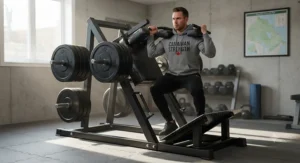
Hack Squat Machines vs Traditional Squat Racks
The comparison Canadian home-gym shoppers ask about most is hack squat machine versus a traditional squat rack with a barbell, and the honest answer is that they serve overlapping but genuinely different purposes. A squat rack demands more technical skill, engages a wider range of stabilizer muscles through balance demands, and is more versatile since it also handles bench press, overhead press, and pull-ups — but it also requires either a spotter or safety pins set correctly, and free-weight squatting under heavy load carries real injury risk for lifters with imperfect form.
A hack squat machine trades some of that versatility for guided safety: the fixed sled track removes the balance component entirely, letting you push closer to genuine muscular failure without a spotter, which is precisely why physiotherapists frequently recommend machines over free-weight squats during return-to-training phases. The mechanical guidance also isolates the quads more directly, since less energy goes toward stabilization and more goes into the target muscle group.
For a home gym on a real budget, the practical answer for most readers is that a hack squat machine is the better sole investment if your training goal is quad-focused hypertrophy and injury-conscious progression, while a squat rack remains the better choice if full-body barbell training is the actual priority. Buyers building a truly complete home gym over time often add a hack squat machine as a second purchase specifically because it fills the gap a squat rack leaves — reliable heavy quad work without needing a training partner present.
Long-Term Cost & Home Gym Budget Planning
Sticker price is only the first number in a hack squat machine’s real cost — smart home gym budget planning means accounting for what comes after the purchase. Weight plates typically aren’t included, and outfitting a machine for meaningful progressive overload (roughly 200-300 lb of plates for an intermediate lifter) can add several hundred dollars on top of the machine itself, so factor that into your total budget before falling in love with a specific model. Replacement pads, occasional bearing lubricant, and the very rare bolt or bushing replacement round out ongoing costs, which for any machine on this list should stay modest — typically under C$50 a year for a well-maintained unit.
The real long-term math, though, is a value-per-use comparison against a gym membership. A mid-tier Canadian gym membership commonly runs in the C$50-C$70 monthly range; at that rate, even a C$900 machine pays for itself in roughly 13-18 months of consistent use, before accounting for commute time or availability during peak hours. That said, affordable strength equipment isn’t automatically the better financial choice for everyone — someone who trains inconsistently, or who values the social and coaching aspects of a commercial gym, may find the membership better value regardless of the math. The honest framework is to weigh total cost of ownership against your actual, historical consistency with home workouts, not your optimistic intentions for next year.
Safety, Standards, and What “Certified” Actually Means in Canada
Fitness equipment safety in Canada isn’t governed by a single blanket law the way some buyers assume — instead, a patchwork of standards applies depending on the product. Electrical components on motorized equipment fall under Canadian Standards Association requirements, which are mandatory for electrical products sold in every province and territory, though a purely mechanical, plate-loaded machine like the ones in this guide typically has no electrical components to certify in the first place. For stationary strength equipment specifically, the applicable standards address stability, structural integrity, and safety-stop performance under defined loads.
In practice, what this means for a budget hack squat machine shopper is straightforward: look for a stated weight capacity that’s independently plausible given the steel gauge and welds visible in product photos, prioritize machines with multiple physical safety-stop or lockout positions rather than relying on a single mechanism, and treat “certified” claims with mild skepticism unless the specific standard is named. None of the seven machines in this guide are motorized, which sidesteps most electrical certification questions entirely — the safety story here is almost entirely mechanical: weld quality, bearing type, and lockout redundancy.
Features That Actually Matter (And Those That Don’t)
Marketing copy on budget hack squat machines tends to lean hard on total weight capacity as the headline number, but for the overwhelming majority of home lifters, the gap between a 1,000 lb-rated and 1,400 lb-rated machine is functionally invisible — almost nobody is loading either machine anywhere near its ceiling. What actually matters more: bearing type (linear consistently outperforms wheel-based systems over time), weld quality at stress points, and the number of independent safety-stop positions.
Angle adjustability is a genuine, meaningful feature — not hype — because it changes the actual muscle emphasis and joint stress of the movement, unlike, say, an extra colour option or a cosmetic shroud over the frame. Weight-plate storage horns are a small but real quality-of-life feature that keeps a garage gym organized, while transport wheels matter far less for a machine that’s realistically staying in one spot for years. The genuinely important spec that most buyers skip entirely is footprint-to-ceiling-height compatibility — a machine that fits the floor plan but clips a low basement joist during use is a mistake that only shows up after delivery.
✨ Don’t Miss These Exclusive Deals!
🔍 Take your home gym setup to the next level with these carefully selected machines. Click on any highlighted product to check current pricing and availability before you commit to a corner of your garage.
Frequently Asked Questions
❓ Is a budget hack squat machine actually good enough for serious training?
❓ How much floor space does a compact hack squat machine really need?
❓ What weight capacity do I actually need for home use?
❓ Can a hack squat machine replace a squat rack entirely?
❓ Do I need weight plates included, or are they sold separately?
Conclusion
A genuinely good budget hack squat machine isn’t the cheapest one on the page — it’s the one that actually fits your space, matches the load your training realistically needs, and survives daily use without turning into a wobbly, squeaky liability by month six. Among the seven real options covered here, the Garvee Leg Press Hack Squat Machine 2-in-1 stands out as the strongest all-around pick for most Canadian buyers building a home gym from zero, pairing a linear bearing sled and high rated capacity with a price that stays genuinely affordable. For tighter spaces, the Syedee Compact Leg Sled Machine and Mikolo LP10 Compact Leg Sled solve the footprint problem without meaningfully compromising the training experience, and for buyers optimizing durability or adjustability specifically, Titan Fitness and RitFit each make a legitimate case.
The right call ultimately comes down to the three factors this guide keeps returning to: your measured floor space, your realistic training goals over the next two to three years, and how your knees and lower back respond to a steeper versus shallower sled angle. Get those three right, and any of the seven machines above will earn its spot in your home gym.
Recommended for You
- Belt Squat Machine: 7 Best Options for Pain-Free Legs (2026)
- Hack Squat Machine for Home Gym: 7 Top Picks for 2026
- 7 Best Seated Row Machines for Home Gym in 2026 (No Duds)
Disclaimer: This article contains affiliate links. As an Amazon Associate, I earn from qualifying purchases. If you purchase products through these links, we may earn a small commission at no additional cost to you.
✨ Found this helpful? Share it with your friends! 💬🤗
