
In This Article
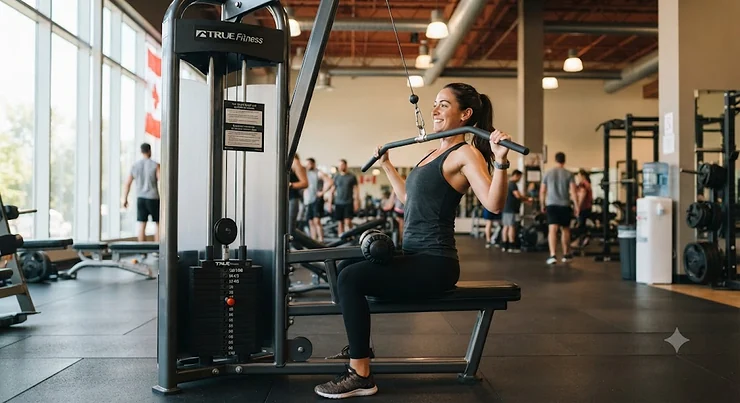
Here’s a confession every home-gym owner eventually makes: the pull-up bar in the garage has been used exactly twice, and both times ended with a grunt, a wobble, and a quiet retreat to the kitchen for a snack. A seated lat pulldown machine solves that awkward gap between “I want a wide, strong back” and “I cannot currently do a single pull-up.” What is a seated lat pulldown machine? It’s a cable-based strength training station where you sit beneath an overhead pulley, pull a bar down toward your chest, and build your latissimus dorsi, biceps, and rear shoulders through a controlled, adjustable-resistance range of motion — no bodyweight ceiling required.

For Canadians furnishing a basement, garage, or condo corner, the appeal is obvious: our winters aren’t exactly encouraging outdoor pull-up sessions from November through March, and a good seated lat pulldown machine turns a spare 6×6 foot patch of floor into a year-round back day. This guide walks through seven real machines currently sold to Canadian buyers on amazon.ca, spanning plate-loaded budget frames to commercial-grade selectorized units, with honest commentary on where each one shines and where it falls short. We’ll also dig into the mechanics that most listings gloss over — the biomechanics behind the pull-down movement and why the “combo” versions that add a low row option tend to deliver more bang for your workout-per-square-foot ratio.
Whether you’re weighing a lat pulldown low row combo against a single-function tower, sizing up a cable lat pulldown home gym setup for a condo, or just trying to figure out if the knee pad adjustment on a budget model will actually fit your frame, you’ll find the specifics below — not marketing fluff.
Quick Comparison Table
| Machine | Type | Weight Capacity | Best For |
|---|---|---|---|
| Body-Solid Powerline PLM180X | Plate-loaded | 250 lb | Tightest budget |
| VANSWE Lat Pulldown Machine | Plate-loaded, multi-attachment | Olympic/standard plates | Compact home gyms |
| XMark Lat Pull Down/Low Row | Plate-loaded, heavy-duty | 400 lb max load | Serious lifters on a budget |
| Titan Fitness Lat Tower | Selectorized | 300 lb stack | Quick-pin convenience |
| BodyKore Isolation Series GR638 | Selectorized | 220 lb stack | Interchangeable seat design |
| Legend Fitness SelectEDGE | Selectorized, commercial | 250-300 lb stack | Effortless pulldown-to-row switching |
| TuffStuff Evolution CLM-855WS | Selectorized, commercial | 200+ lb stack | Long-term commercial durability |
Looking at the table, the split between plate-loaded and selectorized machines is really a split between your wallet and your patience. Plate-loaded units like the Powerline and XMark ask you to buy weight plates separately and physically load them, which saves money upfront but adds friction to every session. Selectorized machines — the Titan, BodyKore, Legend, and TuffStuff — cost more but let you change resistance with a single pin, which matters enormously if you’re training with a partner or just want zero excuses on a Tuesday night.
💬 Just one click — help others make better buying decisions too!😊
Top 7 Seated Lat Pulldown Machines: Expert Analysis
1. Body-Solid Powerline PLM180X — best all-around budget entry point
The PLM180X strips the seated lat pulldown machine down to its essentials, and that simplicity is precisely why it’s survived in Body-Solid’s lineup for years. The frame uses heavy-gauge steel with a 1-inch diameter weight post and a 250 lb weight capacity, meaning it can grow with you well past beginner strength as long as you’re supplying standard (non-Olympic) plates or an adapter sleeve. Dual-position 8-inch foam rollers lock your thighs in place during the low row switch, and Body-Solid’s patented nylon bushings keep the carriage gliding rather than grinding, which is where a lot of budget machines fall apart within a year. Based on the spec comparison, this is squarely a machine for someone who already owns a plate collection and wants a dedicated back station rather than another all-in-one tower.
Reviewers consistently note that assembly is straightforward — often under two hours solo — and that the switch from lat pulldown to seated row takes only a minor cable reconfiguration, described by owners as “less than a minute.” A recurring theme in aggregated feedback is that the plastic sleeve on the weight runner wears with heavy use, so budget owners often order a spare set proactively.
Pros:
- ✅ Genuinely low price for a real cable station
- ✅ 10-year frame warranty from Body-Solid
- ✅ Compact 48″L x 25″W footprint for tight rooms
Cons:
- ❌ Weight plates and collars sold separately
- ❌ Taller users (6’3″+) report a cramped top position
Expect this machine in the C$500-C$650 range for the frame alone in Canada, excluding plates — check current price, as freight and plate costs shift the real total meaningfully.
2. VANSWE Lat Pulldown Machine with Low Row — best cable lat pulldown home gym for small spaces
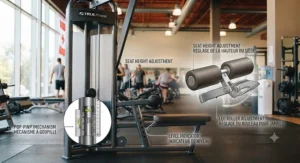
The VANSWE unit was clearly engineered around one problem: most home gyms don’t have room for a sprawling functional trainer. With a 55-inch by 24-inch footprint, three adjustable seat pad heights, and a removable flip-up foot plate, it manages to squeeze a lat pulldown, seated row, ab crunch harness, and ankle-strap kickback station into a genuinely small footprint. The 14-gauge stainless steel frame and 7-core steel cable under a tear-resistant TPU sheath are the kind of details that matter more in year three of ownership than on day one. What most buyers overlook about this category of machine is that the 2-inch adapter sleeves make it compatible with both standard and Olympic plates, which future-proofs your plate purchases if you ever upgrade elsewhere.
Aggregated buyer sentiment frames this as the pick for apartment and condo dwellers who need one machine to do the job of three; several owners specifically praise being able to do seated rows “without re-connecting cables,” a design touch not every budget unit bothers with.
Pros:
- ✅ Six attachments included out of the box
- ✅ Three adjustable seat heights for different body types
- ✅ Compact enough for condo or basement corners
Cons:
- ❌ Plates not included, adding to true cost
- ❌ Ball-bearing pulley smoothness varies by unit, per owner reports
Price typically falls in the C$450-C$600 range at the time of research; prices may vary by retailer and current promotions.
3. XMark Lat Pull Down and Low Row Cable Machine — best for serious lifters on a working budget
XMark built this one for people who intend to actually load real weight onto it. The 11-gauge steel, 2-inch by 3-inch mainframe and 1-inch bolted hardware translate into a machine rated for a 400 lb maximum load, with nylon-coated aircraft cables rated to a 2,200 lb tensile strength. Here’s what the spec sheet won’t tell you outright: the 35 height adjustments spaced two inches apart on the seat and pulley system mean this machine actually fits a much wider range of body heights than most budget-tier competitors, which typically offer three or four fixed positions. A 2:1 adjustable pulley ratio versus a 1:1 lat pull ratio gives you genuine flexibility in how heavy a given cable pull feels.
Reviewers regularly point to the 3-inch Duraguard vinyl cushioning and 4.33-inch thigh pads as unusually plush for this price bracket, and the freight-shipped, reinforced-crate delivery signals this isn’t a machine that arrived as an afterthought.
Pros:
- ✅ 35 adjustable height positions accommodate most body types
- ✅ 400 lb rated load capacity for long-term headroom
- ✅ Extra-thick vinyl cushioning and thigh pads
Cons:
- ❌ Freight delivery requires a valid contact number and scheduling
- ❌ No shroud covering the weight plates on the base model
Budget around C$700-C$900 for the frame in Canada, plates sold separately; check current price and freight terms before ordering.
4. Titan Fitness Lat Tower (300 lb Selectorized) — best for quick-pin convenience and knee pad adjustment range
Titan’s Lat Tower moves you into selectorized territory, where a magnetic pin swaps resistance instead of a wrench and a stack of plates. The 300 lb weight stack adjusts in 10 lb increments, and a 1:1 pulley ratio keeps tension honest through the full range of motion — no mechanical trickery inflating the felt weight. Based on the spec comparison, the standout feature here is the adjustable thigh pad and footplate combination, which lets taller and shorter lifters both lock in properly rather than fighting a fixed knee pad position that was clearly sized for someone else. The aircraft-grade cable system and stainless multi-grip knurled lat bar round out a package that feels closer to commercial-gym equipment than its price tag suggests.
What most buyers overlook about the Titan Lat Tower is that it’s compatible with landmine and Y-Dip attachments, meaning your first purchase can quietly expand into a small functional-training station later without buying an entirely new frame.
Pros:
- ✅ Selectorized 10 lb increments, no loose plates needed
- ✅ Adjustable thigh pad and footplate for varied body sizes
- ✅ Compatible with landmine and Y-Dip attachments
Cons:
- ❌ Low row handle sold separately from the base unit
- ❌ Larger overall footprint (87″H x 41″W x 57″D) than plate-loaded options
Expect a price in the C$1,300-C$1,600 range; check current price, as Titan periodically runs promotions on the full Lat Tower bundle.
5. BodyKore Isolation Series GR638 — best interchangeable seat for pulldown-to-row switching
The BodyKore GR638 takes a different mechanical approach to the pulldown/row switch: rather than swapping cables or handles, the seat itself is interchangeable between the lat pulldown and low row configurations. Paired with a 220 lb weight stack and 4-position adjustable foam rollers, this machine is aimed squarely at someone who wants commercial-feel stability without a commercial-sized price. On paper, this means less fumbling mid-workout — you reposition the seat rather than reconfiguring the entire cable path, which reviewers describe as meaningfully faster once you’ve done it a few times.
Reviewers consistently highlight the intuitive foot placement and stability during heavier pulls, and the fact that this is manufactured by a smaller, specialized brand rather than a mass-market importer shows in the fit and finish, according to aggregated buyer sentiment. If you cannot verify granular long-term durability data for a specific batch, that’s an honest gap — but the design philosophy itself addresses a real usability complaint found across cheaper combo machines.
Pros:
- ✅ Interchangeable seat design speeds up exercise switching
- ✅ 220 lb weight stack suits intermediate to advanced lifters
- ✅ 4-position foam rollers improve stability under load
Cons:
- ❌ Heavier and larger than plate-loaded alternatives
- ❌ Premium positioning means a higher upfront cost
Pricing generally lands in the C$2,200-C$2,700 range at the time of research; prices may vary by seller and shipping method.
6. Legend Fitness SelectEDGE Lat Pulldown/Low Row Combo — best for effortless exercise transitions
Legend Fitness designed the SelectEDGE around a single engineering question: how do you make switching between pulldowns and rows require the least possible thought? Their answer is a two-position seat that moves between configurations without disconnecting a single handle or footplate, paired with a UHMW polymer footplate that doubles as the row handle rest when not in use. A 250 lb weight stack in 10 lb increments comes standard, with upgrades available for heavier trainees, and the partially hidden aviation-grade cables run inside a steel tower shroud for a cleaner, safer-looking setup around kids or pets.
What the spec sheet won’t tell you, but the engineering clearly signals, is that this machine is built for facilities where dozens of different bodies use it daily — which is exactly the kind of stress-testing that benefits a home buyer looking for a “buy it once” purchase. Made in the USA, with no-cost two-tone upholstery options, this is Legend Fitness’s answer to the person who has outgrown budget combo machines and wants something that will still feel tight in a decade.
Pros:
- ✅ No handles or footplates need removing to switch exercises
- ✅ Hidden aviation-grade cables and steel tower shroud
- ✅ Made in the USA with a commercial-grade warranty
Cons:
- ❌ Premium pricing reflects its commercial-grade construction
- ❌ Overkill for casual, occasional home users
Expect this machine to sit in the C$3,800-C$4,600 range converted to CAD; check current price directly, as commercial equipment often ships via freight quote rather than a fixed listing.
7. TuffStuff Evolution CLM-855WS — best for long-term commercial-grade durability
The TuffStuff Evolution line has built its reputation in actual commercial gyms, and the CLM-855WS lat pulldown/low row combo carries that pedigree into the home market. It’s positioned at the top of this list because the fully welded frame construction and heavy-duty pulley system are engineered for thousands of reps a week across many different users — a bar that most home-market machines never have to clear. Reviewers consistently frame it as the machine you buy when you’re tired of “upgrading” every two years, since the components are simply overbuilt relative to typical home use.
Based on the spec comparison against lighter combo units, the CLM-855WS trades some footprint efficiency for structural rigidity, and honest reviewers note that a garage or basement gym needs real ceiling clearance and floor space to accommodate it properly. For a serious lifter who has already burned through a cheaper combo machine and wants the last one they’ll ever need to buy, this is the realistic ceiling of the home-gym category before you’re genuinely buying commercial equipment.
Pros:
- ✅ Fully welded, commercial-grade frame construction
- ✅ Built to handle heavy, frequent, multi-user training loads
- ✅ Reputation for minimal long-term maintenance needs
Cons:
- ❌ Requires more floor space and ceiling height than combo alternatives
- ❌ Among the pricier options on this list
Pricing typically runs in the C$2,700-C$3,300 range converted to CAD at the time of research; always check current price given fluctuating freight costs on commercial equipment.
Practical Usage Guide: Setup, First 30 Days, and Maintenance
Getting a cable lat pulldown home gym machine assembled correctly matters more than most buyers expect, because a slightly misaligned pulley bracket will translate into uneven cable wear within months, not years. Start by laying out every bolt and bracket before touching the manual — most assembly complaints in aggregated reviews trace back to skipped steps rather than defective parts. Budget two hours solo or one hour with a helper for plate-loaded frames, and closer to three hours for selectorized units with a full weight stack to install.
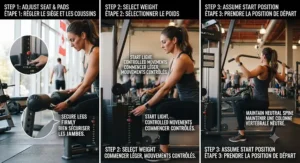
In your first 30 days, resist the urge to max out the knee pad adjustment and thigh restraint bar settings without testing your seated position first — sit down, grab the bar, and confirm your knees are bent at roughly 90 degrees with feet flat before locking anything in permanently. A common first-month mistake is leaving cables slightly slack, which causes a jarring “clunk” at the top of each rep; a quarter-turn on the adjustment bolt behind the main tower usually resolves it. For long-term maintenance, lubricate pulleys every two to three months with a silicone-based spray (never oil-based, which attracts dust), and inspect cable fraying points near the pulley wheels every six months — catching a fraying cable early is dramatically cheaper than replacing one that snaps under load.
Real-World Scenarios: Matching Machines to Buyer Types
Picture three very different Canadian buyers walking into this decision. The first is a university student in a shared basement apartment in Kingston, training three times a week on a tight budget with limited storage — the VANSWE or Body-Solid Powerline fits that life, since both prioritize footprint and price over commercial-grade longevity. The second is a parent in suburban Calgary converting a two-car garage bay into a family fitness space used by three different body types across a week; here the Titan Fitness Lat Tower’s adjustable thigh pad and footplate genuinely earn their keep, since one machine needs to fit a 5’2″ frame on Tuesday and a 6’2″ frame on Wednesday.
The third buyer is a former CrossFit-gym regular in Toronto who has already worn out two budget machines and finally wants to stop replacing equipment — for that person, the Legend Fitness SelectEDGE or TuffStuff Evolution combo represents the “buy once” decision, even though the upfront cost stings more. In each case, the deciding factor isn’t really the exercise itself; it’s honestly assessing how many people, how often, and how roughly the machine will actually be used.
How to Choose a Seated Lat Pulldown Machine
- Confirm your ceiling height first. Most selectorized towers need 7.5 to 8 feet of clearance for the pulley system and cable travel; measure before falling in love with a specific model.
- Decide between plate-loaded and selectorized early. Plate-loaded machines cost less upfront but require you to already own or buy plates; selectorized stacks cost more but add convenience for every single session.
- Check the thigh restraint bar and knee pad adjustment range. If more than one household member will use the machine, a wide adjustment range prevents someone always training in an ill-fitting position.
- Match weight capacity to your realistic long-term goal, not your current strength — a 150 lb stack that feels generous today can become limiting within a year of consistent training.
- Look at footprint and floor-space realities, not just the “compact” marketing language; cross-reference the actual assembled dimensions against your available room.
- Weigh warranty length against your budget tier. A 10-year frame warranty on a budget machine is a meaningfully different promise than a 1-year parts warranty on a premium one.
- Read aggregated review themes, not star ratings alone. A 4.3-star average tells you less than knowing whether recurring complaints involve cable wear, assembly difficulty, or fit issues for taller users.
Seated Lat Pulldown Machine vs Functional Trainer
A dedicated seated lat pulldown machine and a dual-stack functional trainer solve overlapping but distinct problems, and conflating them leads to buyer’s remorse in both directions. The lat pulldown/low row combo is purpose-built for one movement pattern executed correctly and repeatedly — you sit, you pull, you row, and the machine’s single-purpose geometry keeps your form honest in a way that a fully adjustable functional trainer, with its dozens of possible cable heights and angles, simply doesn’t enforce. Reviewers consistently note that beginners progress faster on a dedicated combo machine precisely because there are fewer setup decisions to get wrong.
A functional trainer, by contrast, earns its higher price and larger footprint by replacing an entire rack of accessories — cable crossovers, tricep pushdowns, standing rows, and more — with adjustable pulley heights on independent towers. If your home gym already includes a squat rack and bench and you specifically need dedicated back training without duplicating equipment you already own, the seated lat pulldown machine is the more efficient purchase. If you’re building a single all-in-one station from scratch with no other equipment, a functional trainer’s versatility may justify the extra cost and space, even though it demands more assembly and calibration time to get pulley angles right for each exercise.
Common Mistakes When Buying a Lat Pulldown Low Row Combo
The single most common and costly mistake is ordering a plate-loaded machine and forgetting that plates, collars, and sometimes an adapter sleeve are sold separately — several of the machines on this list look deceptively affordable until that true total is added. A close second is skipping the ceiling-height check entirely; a machine rated for a 7-foot ceiling will simply not function in a basement with exposed ductwork at 6’8″. Buyers also frequently underestimate assembly time, treating a two-person, two-hour job as a solo, thirty-minute one, which leads to rushed, improperly torqued bolts and premature wobble.
Another overlooked pitfall is ignoring the knee pad adjustment range relative to who will actually use the machine — a single, fixed-height thigh restraint bar that fits a 5’9″ primary user poorly serves a 6’2″ partner or teenager sharing the space. Finally, don’t assume a lower sticker price automatically means lower long-term cost; a budget frame that needs cable replacement within eighteen months can end up costing more per year of use than a pricier, better-built alternative.
What to Expect: Real-World Performance
Knee Pad Adjustment in Daily Use
The knee pad — sometimes called the thigh pad — exists to keep your body anchored to the seat as the resistance tries to lift you off it, and its adjustment range is one of the most underrated specs on any spec sheet. On machines like the XMark, with 35 height positions spaced two inches apart, most adult users find a position that locks their knees at a comfortable 90-degree bend without hunting through awkward gaps. Budget machines with only three or four fixed positions can leave taller or shorter users compromising on either knee angle or seat height, which subtly changes the exercise’s leverage and can shift strain toward the lower back over time.
Thigh Restraint Bar and Stability Under Load
The thigh restraint bar (often the same component as the knee pad, though occasionally a separate rolling bar) becomes most noticeable the moment you start loading serious weight — anything under about 60% of your max effort rarely reveals a weak restraint system, but heavier pulls expose looseness immediately as your hips lift off the seat mid-rep. Reviewers across nearly every machine on this list flag “hips lifting” as the first sign that either the restraint bar needs tightening or the resistance has exceeded what proper form can control. A well-designed restraint bar, paired with foam rollers rated for repeated heavy use, is one of the clearest signals that a manufacturer built the machine for genuine strength training rather than light toning.
Long-Term Cost & Maintenance: Total Cost of Ownership
A seated lat pulldown machine’s sticker price is only the opening bid in its real cost of ownership. Plate-loaded frames require you to already own, or separately purchase, enough plates to progress meaningfully — often adding C$150-C$400 in Canada depending on how much resistance you eventually want available. Selectorized machines bundle that cost into the stack but generally carry a higher purchase price to begin with, so the total spend often converges more than the sticker prices initially suggest.
Ongoing maintenance costs are modest across this category but not zero: expect to replace a primary cable roughly every three to six years under regular use, budgeting C$40-C$90 per replacement depending on the machine, plus occasional silicone lubricant purchases that run a few dollars every few months. Warranty length matters disproportionately here — Body-Solid’s 10-year frame warranty on the Powerline effectively insures you against the most expensive failure mode, while premium commercial machines like the TuffStuff Evolution or Legend Fitness SelectEDGE are built to a standard where major frame failures are rare enough that the warranty period matters less than the underlying engineering quality.
Features That Actually Matter (And Those That Don’t)
Cable diameter and tensile rating matter enormously; a 2,200 lb rated cable on the XMark isn’t marketing puffery, it’s the difference between a component that outlasts the frame and one that becomes the first failure point. Weight stack increment size also matters more than most buyers initially weigh it — 10 lb jumps on a selectorized stack can stall progressive overload for smaller or less experienced lifters who’d benefit from 5 lb increments, though most combo machines don’t offer that finer adjustment.
On the other hand, the number of “included attachments” that budget combo machines love to advertise is often overstated in practical value — a triceps rope and an ankle strap are genuinely useful, but a fifth or sixth accessory frequently gathers dust after the first month. Similarly, cosmetic details like chrome-plated versus painted weight posts affect appearance far more than function, and shouldn’t move the needle on a purchase decision the way core structural specs should.
Safety Considerations for Home Gym Cable Machines in Canada
Health Canada’s own physical activity guidance for adults recommends muscle-strengthening activities targeting major muscle groups at least twice a week, and a seated lat pulldown machine is a genuinely efficient way to meet that guideline — but only if it’s used safely. Always inspect cables and pulley housings before heavy sessions, since a fraying cable under load is one of the few genuinely dangerous failure modes on this type of equipment. If children or pets share the space, look for machines with shrouded weight stacks, and always store the selector pin or remove loose plates when the machine isn’t supervised.
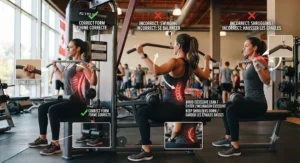
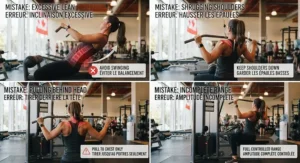
According to ParticipACTION’s most recent national report card, only about a third of adults in Canada currently meet the muscle-strengthening activities guideline, which makes consistent, safely-executed home training a meaningful lever for closing that gap. Bolt any freestanding frame to a wall stud if your model doesn’t include a wide, weighted base, particularly in homes with young children who might attempt to climb the frame. Finally, always use a full range of motion rather than momentum-driven “cheat” pulls, since jerking the bar down places unnecessary shock loading on both the cable system and your shoulder joints.
Lat and Back Development: What This Machine Actually Builds
Building genuine lat and back development on a seated lat pulldown machine comes down to consistent range of motion more than raw weight stacked on the pin. The Canadian Society for Exercise Physiology’s movement guidelines note that muscle-strengthening work should target all major muscle groups, and the pulldown movement itself involves downward rotation and depression of the shoulder blades combined with adduction and extension of the shoulder joint, meaning your upper back and shoulder blades are doing meaningfully different work than your arms, even though your grip is what’s visibly moving the bar. A wide, moderate-tension pulldown genuinely does target the outer lats more directly than a narrow grip, giving you a practical reason to alternate grip widths across your training week rather than sticking with a single default setup.
For lat and back development specifically, the low row half of these combo machines complements the vertical pulling pattern of the pulldown with a horizontal one, hitting the mid-back and rear shoulders in a way that a pulldown-only station simply can’t replicate. Rotating between wide-grip pulldowns, close-grip pulldowns, and seated rows across a week gives your back musculature the varied stimulus it needs for balanced, functional strength rather than a narrowly developed movement pattern.
✨ Don’t Miss These Exclusive Deals!
🔍 Take your back day to the next level with these carefully selected seated lat pulldown machines. Click on any highlighted product above to check current pricing and availability on amazon.ca. These picks will help you build the strong, well-developed back you’ve been chasing! 💪
FAQ
❓ What is the best seated lat pulldown machine for a small space?
❓ Is a lat pulldown low row combo better than a separate lat machine and row machine?
❓ How much weight capacity do I actually need on a seated lat pulldown machine?
❓ Can I adjust the knee pad and thigh restraint bar for different family members?
❓ How often should I maintain a cable lat pulldown home gym machine?
Conclusion
Choosing a seated lat pulldown machine really comes down to being honest about three things: your available floor space, your realistic long-term training volume, and how many different people will actually use it. Budget plate-loaded options like the Body-Solid Powerline PLM180X and VANSWE combo genuinely deliver for space-constrained, cost-conscious buyers, while selectorized machines from Titan Fitness, BodyKore, Legend Fitness, and TuffStuff trade a higher upfront cost for daily convenience and, in the premium tier, genuine commercial-grade longevity.
None of these machines will build a stronger back on their own — that still requires showing up consistently, adjusting the knee pad and thigh restraint bar properly, and progressively loading more resistance over months, not days. But picking equipment that fits your body, your space, and your budget removes the excuses that keep so many home gyms gathering dust after February. Check current pricing on amazon.ca before you commit, since availability and promotions shift regularly across this whole category.
Recommended for You
- Compact Cable Crossover vs Full Size Cable Crossover: 7 Picks (2026)
- Compact Cable Crossover Machine: 7 Best Picks for 2026
- Commercial Cable Crossover Machine: 7 Top Picks for 2026 (Canada)
Disclaimer: This article contains affiliate links. As an Amazon Associate, I earn from qualifying purchases. If you purchase products through these links, we may earn a small commission at no additional cost to you.
✨ Found this helpful? Share it with your friends! 💬🤗
