
In This Article
Somewhere between your fifth and sixth set of pushdowns, you start to notice things. The way a cheap carabiner squeaks. The way a poorly stitched handle bites into your palm right when your grip is already cooked. A tricep rope attachment is one of the smallest, cheapest pieces of gear in any home gym, and yet it’s the piece most likely to quietly ruin — or genuinely elevate — your arm day. This guide breaks down what a tricep rope attachment actually is, how the good ones differ from the bad ones, and which seven real products, from budget nylon basics to commercial-grade builds, are worth your money in 2026.

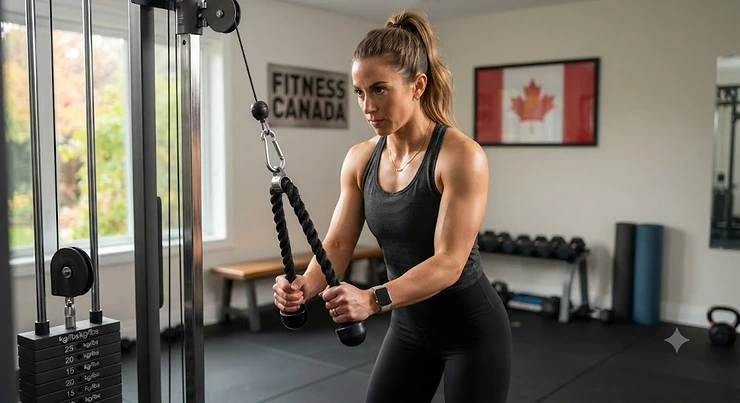
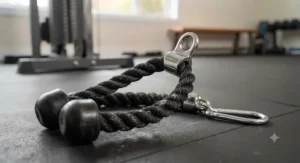
So, what is a tricep rope attachment? It’s a short length of braided nylon rope, capped with rubber or plastic stoppers on each end and a metal carabiner at the top, that clips onto any cable machine pulley to let you perform tricep pushdowns, overhead extensions, face pulls, and more with a neutral, wrist-friendly grip.
According to Canada.ca’s physical activity guidance, muscle-strengthening activity twice a week is one of the core pillars of staying healthy as an adult — and a cable rope is one of the cheapest tools for hitting that target without leaving your basement. We dug through real listings, real specs, and real aggregated review sentiment on dozens of ropes so you don’t have to sift through 37 pages of near-identical Amazon results yourself.
Quick Comparison Table
| Category | Product | Price Range (CAD) | Best For |
|---|---|---|---|
| Best Overall | Gymreapers Tricep Rope Cable Attachment | C$35-C$45 | Lifters who want three grip lengths in one rope |
| Best Premium | REP Fitness Tricep Rope Cable Attachment | C$40-C$55 | Home gyms chasing commercial-gym feel |
| Best Value | Yes4All Deluxe Tricep Rope Cable Attachment | C$20-C$30 range | Budget-conscious buyers who still want two lengths |
| Best for Grip Variety | DMoose Fitness Tricep Rope Cable Attachment | C$28-C$38 | Anyone bored of one grip angle |
| Best for Comfort | YODOTE Ergonomic Tricep Rope Cable Attachment | under C$25 | Long sessions and sweaty palms |
Looking at this table, the pattern is pretty clear: the more length options and grip positions a rope offers, the higher it tends to sit on price, but not always by much. What stands out is that Yes4All Deluxe Tricep Rope Cable Attachment manages to undercut most of the field in the mid-C$20s range while still offering two rope lengths, which is the kind of value gap that’s worth noticing before you default to the first result Amazon shows you. Meanwhile, buyers chasing a genuinely commercial feel should expect to pay closer to the C$40-C$55 range for it.
💬 Just one click — help others make better buying decisions too!😊
Top 7 Tricep Rope Attachments: Expert Analysis
Real specs, real aggregated review sentiment, and honest analysis — no invented testimonials, no fabricated hands-on claims. Here’s what the research actually shows about each of these seven picks.
1. Gymreapers Tricep Rope Cable Attachment — best all-in-one with three grip lengths
The standout here is genuinely clever: this rope gives you 12-inch, 22-inch, and 27-inch grip points on a single 27-inch cord, so you’re not buying three attachments to train three different ranges of motion. The neoprene-padded handles and reinforced stitching hold up under the kind of repeated pushdown volume that shreds cheaper ropes within a few months, and the thick D-ring keeps it locked onto standard pulley hooks without any wobble. Based on the spec comparison, this rope earns its “best overall” tag by solving a problem most single-length ropes don’t even acknowledge: your ideal grip width changes depending on whether you’re doing straight-arm pushdowns or overhead extensions. Reviewers consistently report that the 13-inch and 19-inch versions of this line feel noticeably more premium than off-brand equivalents at a similar price, with one reviewer specifically calling out the quality “compared to off brands of similar price found in the market.” What most buyers overlook is that the grip flexibility here effectively replaces two or three single-purpose attachments, which is where the real value shows up over time.
Pros:
- ✅ Three grip lengths built into one rope
- ✅ Neoprene padding reduces hand fatigue
- ✅ Reinforced stitching survives heavy rotation
Cons:
- ❌ Costs more than basic single-length ropes
- ❌ Bulkier to store than a slim 27-inch rope
Priced in the C$35-C$45 range at the time of research, this rope earns its spot for buyers who train arms more than once a week and want one attachment that adapts instead of three that clutter a drawer.

2. REP Fitness Tricep Rope Cable Attachment — commercial gym feel for serious lifters
REP Fitness built its reputation on commercial-grade equipment, and the standout feature on this rope is exactly that: a rope thick enough and stiff enough that it doesn’t fold or fray the way cheaper nylon does after a few months of daily pushdowns. The braided construction resists the kind of mid-set slack that throws off your rep tempo, and the overall build quality reads as genuinely closer to what you’d find bolted onto a functional trainer at a commercial gym than what typically ships in a $20 Amazon box. Here’s what to weigh: aggregated reviewer sentiment is largely positive on grip comfort and the “solid feel,” but a recurring theme is dissatisfaction with the hard plastic end caps, with several reviewers explicitly preferring rubber stopper ends for comfort during longer sets. On paper this means you’re trading a small comfort compromise for genuinely superior rope stiffness and longevity — a fair trade for lifters who train hard enough to actually notice the difference between commercial and consumer-grade gear.
Pros:
- ✅ Commercial-grade rope stiffness and feel
- ✅ Reviewers praise durability over years of use
- ✅ Excellent range of motion for deep stretches
Cons:
- ❌ Hard plastic end caps, not rubber
- ❌ Sits at the higher end of the price range
At around C$40-C$55, this is the pick for anyone who’s used a real functional trainer at a commercial gym and wants that exact experience without the commercial-gym membership fee.
3. Yes4All Deluxe Tricep Rope Cable Attachment — best value pick for home gyms
Founded in 2010, Yes4All has built its whole brand around exactly this kind of budget-friendly home gym accessory, and the standout feature here is the sheer flexibility for the price: this rope ships in both 27-inch and 36-inch versions across four colour options, so you can match your existing setup or just pick whatever’s cheapest that week. The braided nylon rope is rated to handle up to 880 lbs of force, which is comfortably beyond what any home cable stack will ever throw at it, and the stainless-steel carabiner snap hook adds a genuine layer of security most budget ropes skip entirely. What most buyers overlook about budget attachments in general is that the failure point usually isn’t the rope itself — it’s the connector hardware — and Yes4All’s decision to use a proper stainless snap hook rather than a bent wire clip is where this pick earns its trust. Reviewers consistently note the solid plastic ends provide a secure, non-slip grip without adding noticeable bulk to the hand.
Pros:
- ✅ Two length options and four colour choices
- ✅ 880 lb-rated stainless carabiner hook
- ✅ Solid plastic ends resist slipping
Cons:
- ❌ Plastic ends less cushioned than rubber
- ❌ No multi-grip handle positions
In the C$20-C$30 range depending on length, this is the rope to grab if your budget is the deciding factor and you don’t need multiple grip widths on one cord.
4. DMoose Fitness Tricep Rope Cable Attachment — most grip variations for versatility
DMoose leans hard into flexibility here, advertising over seven possible grip combinations on a single attachment, and that’s the real standout: instead of buying a separate V-bar, straight bar, and rope, this one rope attempts to cover tricep extensions, bicep curls, lat pulldowns, and face pulls without a hardware swap. The heavy-duty nylon core paired with reinforced stitching and a thick D-ring is built to the same durability logic as the pricier options on this list, just packaged by a brand that positions itself as a challenger rather than a premium label. Based on the spec sheet, the rubber grips specifically added at the rope’s end for face pulls and shoulder rotation work suggest DMoose designed this with more than just triceps in mind, which matters if your home gym setup doubles as your only cable station for back and shoulder work too. What the listing won’t tell you outright is that “seven grip combinations” mostly comes down to hand placement technique rather than seven distinct handle shapes — still useful, just worth calibrating your expectations.
Pros:
- ✅ Multiple grip combinations from one rope
- ✅ Rubber grips added specifically for face pulls
- ✅ Reinforced stitching and thick D-ring
Cons:
- ❌ “Seven grips” is more technique than hardware
- ❌ Small-business brand means less field history
Sitting in the C$28-C$38 range, this rope is worth considering if your single cable station needs to do triple duty across arms, back, and shoulders.
5. YODOTE Ergonomic Tricep Rope Cable Attachment — comfiest rubber grip for long sessions
The 36-inch length on this rope is genuinely longer than most competitors in its price bracket, and the standout is the “unique rubber grip for full palm support,” which is YODOTE’s attempt to solve the exact hard-plastic-end complaint that shows up in reviews of pricier ropes on this list. Here’s what to weigh: a longer rope gives you a wider range of motion for overhead extensions and deeper stretches at the bottom of a pushdown, but it also means slightly less leverage control for lifters with smaller hands or shorter arm spans. The anti-slip design and full-palm rubber grip genuinely target the sweaty-hands problem that shows up constantly in tricep rope reviews across brands, and YODOTE explicitly states it “optimized” its design “after analyzing the reviews of most tricep ropes on the market” — a claim that at least shows the brand is paying attention to the same pain points buyers actually complain about elsewhere.
Pros:
- ✅ Full-palm rubber grip for sweaty hands
- ✅ 36-inch length for a deeper stretch
- ✅ Genuinely budget-friendly price point
Cons:
- ❌ Longer length reduces leverage for some lifters
- ❌ Newer brand with a shorter review history
At under C$25 for most listings, this is the rope for anyone whose grip gives out before their triceps do.
6. AWEFRANK Deluxe Tricep Rope — lightest option for small spaces
At 31.5 inches, this rope sits in an unusual middle ground between the shorter 27-inch options and the longer 36-inch ropes, and the standout feature is simply how unobtrusive it is: light enough to hook onto a doorframe pulley system or a compact home cable stack without feeling like you’re wrestling a boat anchor. The non-slip grip design is marketed toward LAT pulldown crossover work as much as straight tricep pushdowns, which fits the profile of someone using one cable station for everything rather than a dedicated tricep-only setup. What most bare-bones budget ropes sacrifice is hardware quality, and while the coated nylon construction here reads as competent rather than exceptional, it’s a reasonable trade for the price point. Reviewers in this category tend to report satisfaction with basic durability over the first several months, with fewer complaints about fraying compared to the very cheapest unbranded alternatives flooding the same search results.
Pros:
- ✅ Compact 31.5-inch length fits small setups
- ✅ Non-slip grip suited to crossover work
- ✅ Genuinely low price point
Cons:
- ❌ Fewer long-term durability reviews than bigger brands
- ❌ Single length only, no size flexibility
Typically listed under C$20, this is a sensible starter rope for a first home cable station or a doorframe pulley setup.
7. Fitarc Tricep Rope Cable Attachment — best budget sleeper pick
Fitarc doesn’t have the brand recognition of Gymreapers or REP Fitness, and that’s precisely why it belongs on this list as the lesser-known alternative: the 27-inch rope hits the same core specs — braided nylon, rubberized ends, carabiner clip — as far pricier competitors, just without the marketing budget attached to the price tag. The standout feature is really the value equation itself: solid basic construction at a price that undercuts most name-brand equivalents by a meaningful margin. What the spec sheet won’t tell you, but the broader category of budget cable attachments consistently shows, is that construction quality among mid-tier no-name brands has genuinely improved over the past few years as manufacturing costs on braided nylon rope have dropped — meaning “budget” no longer automatically means “flimsy” the way it did a decade ago. This is a solid pick for anyone stocking a first home gym on a tight budget who doesn’t want to gamble on a completely unbranded listing with zero review history.
Pros:
- ✅ Name-brand specs at a lower price point
- ✅ Standard 27-inch length fits most cable stacks
- ✅ Rubberized ends included as standard
Cons:
- ❌ Less brand history than bigger names
- ❌ Fewer colour or length options
Usually priced under C$20, this rope is the practical pick for anyone furnishing their very first home gym cable station on a strict budget.
Top 7 Products: Full Spec Comparison
| Product | Rope Length | Weight Capacity | Price Range (CAD) | Best For |
|---|---|---|---|---|
| Gymreapers Tricep Rope Cable Attachment | 12″/22″/27″ | Heavy-duty rated | C$35-C$45 | Multi-grip training |
| REP Fitness Tricep Rope Cable Attachment | Standard commercial length | Commercial-grade | C$40-C$55 | Serious home gyms |
| Yes4All Deluxe Tricep Rope Cable Attachment | 27″ or 36″ | 880 lbs | C$20-C$30 range | Budget buyers |
| DMoose Fitness Tricep Rope Cable Attachment | Standard | Heavy-duty nylon | C$28-C$38 | Grip variety |
| YODOTE Ergonomic Tricep Rope Cable Attachment | 36″ | Standard | under C$25 | Long sessions |
| AWEFRANK Deluxe Tricep Rope | 31.5″ | Standard | under C$20 | Small setups |
| Fitarc Tricep Rope Cable Attachment | 27″ | Standard | under C$20 | First-time buyers |
Reading across this table, the length spread from 27 to 36 inches matters more than it looks — a longer rope favours overhead extensions and deep stretches, while a shorter rope gives you tighter control on heavy pushdown sets. The Yes4All Deluxe Tricep Rope Cable Attachment stands out as the only entry offering both a short and long option at a genuinely budget price, which is worth factoring in if you’re unsure which length suits your torso and arm length. Weight capacity, meanwhile, is largely a non-issue across this entire table since even the lowest-rated options clear what a typical home cable stack can generate.
Benefits vs Traditional Alternatives
| Attachment Type | Muscle Emphasis | Range of Motion | Best For |
|---|---|---|---|
| Tricep Rope (e.g. Gymreapers Tricep Rope Cable Attachment) | Triceps, rear delts, forearms | Excellent — full wrist rotation | Isolation and variety |
| Straight Bar | Triceps, forearms | Limited — fixed wrist angle | Heavy loading, simplicity |
| V-Bar / Angled Handle | Triceps, chest overlap | Moderate | Neutral-grip comfort |
| Resistance Bands | Triceps, full body | Good but less resistance control | Travel, no cable machine |
The rope pushdown attachment wins on range of motion because your wrists rotate naturally through the movement instead of being locked into a single plane, which is exactly why physiotherapists and strength coaches so often recommend ropes for anyone managing elbow or wrist discomfort. Straight bars let you load more weight with less stabilization demand, which has its place for pure strength work, but it comes at the cost of that rotational freedom. If portability matters more than load, resistance bands close the gap reasonably well, though they can’t replicate the constant tension a cable stack provides throughout the entire rep.
✨ Ready to Build Your Arm Day?
🔍 Whether you’re chasing the versatility of the Gymreapers Tricep Rope Cable Attachment or the budget-friendly value of the Yes4All Deluxe Tricep Rope Cable Attachment, check current pricing and availability before you add to cart — stock and pricing shift often, and grabbing the right length for your setup matters more than grabbing the first result.
Practical Usage Guide: Setup, First 30 Days & Maintenance
Clipping a rope onto a pulley for the first time looks simple, and mostly it is — until it isn’t. Start by attaching the carabiner to the pulley hook and giving it a firm tug before you load any weight, confirming the gate is fully closed and locked. For your first sessions, set the pulley at the highest position for standard pushdowns and keep your elbows pinned to your sides; the most common rookie mistake is letting the elbows drift forward, which shifts load off the triceps and onto the shoulders and chest. In the first 30 days, resist the urge to max out the weight stack immediately — the rope’s rubber or plastic ends need a short break-in period, and your wrists need time to adapt to the rotational grip if you’re coming from years of straight-bar training.
Maintenance is minimal but not optional: wipe the rope down after sweaty sessions, since salt residue accelerates nylon fraying over time, and store it somewhere dry rather than coiled in a damp gym bag. Inspect the stitching and stopper ends every few weeks; a fraying stitch line or a cracking rubber end is your cue to retire the rope before it fails mid-set. Rotating between your rope and a straight bar or V-bar attachment every few weeks also reduces repetitive strain on the same wrist angle, which lines up with general injury-prevention guidance for gym-goers.
Real-World Scenarios: Which Tricep Rope Fits Your Training Style
Picture a university student in a shared apartment with a single compact functional trainer wedged into a corner of the living room, training three times a week on a tight budget. That’s the exact profile the Fitarc Tricep Rope Cable Attachment or AWEFRANK Deluxe Tricep Rope were built for — inexpensive, compact, and good enough for two or three sessions a week without demanding a big investment before you even know if the home-gym habit sticks.
Now picture a former commercial-gym regular who converted a garage into a serious training space and lifts five days a week. That lifter has already felt the difference a stiffer, better-built rope makes under real load, which is exactly why the REP Fitness Tricep Rope Cable Attachment earns its higher price tag — the durability and rope stiffness pay for themselves over years rather than months.
And picture a hybrid lifter who trains arms, back, and shoulders off the same single cable station and wants one attachment that flexes across all three. That’s the DMoose Fitness Tricep Rope Cable Attachment or the multi-length Gymreapers Tricep Rope Cable Attachment, both built around the idea that one rope shouldn’t have to mean one exercise.
How to Choose the Best Tricep Cable Rope for Home Gym
- Check the length against your cable stack’s height. A 36-inch rope needs more overhead clearance than a 27-inch one, so measure your ceiling or pulley range first.
- Prioritize stopper-end material. Rubber stopper ends cost a little more but noticeably reduce hand fatigue over long sets compared to hard plastic.
- Confirm the carabiner is rated stainless steel. This is the actual failure point on cheap ropes, not the nylon cord itself.
- Match grip count to your training variety. If you only do straight pushdowns, a single-grip rope is fine; if you rotate through face pulls and curls too, multi-grip designs pay off.
- Factor in rope diameter and thickness. Thicker ropes distribute load across more of your palm, which matters as your working weight climbs.
- Compare price against expected training frequency. A five-day-a-week lifter justifies a premium rope; a twice-a-week beginner doesn’t need to overspend yet.
- Read aggregated review sentiment, not star ratings alone. A 4.8-star rope with recurring complaints about the same specific flaw tells you more than the number does.
Common Mistakes When Buying a Tricep Rope Attachment
The single most common mistake is buying based on price alone and ignoring stopper-end material entirely — a C$10 saving isn’t worth it if your palms are raw after every third set. A close second is guessing at length instead of measuring your actual cable stack clearance, which leads to ropes that either scrape the floor on the way down or can’t reach a full stretch overhead. Buyers also frequently overlook carabiner quality, focusing entirely on the rope material while the actual connection point is a bent wire hook rated for a fraction of the rope’s advertised capacity. Finally, plenty of first-time buyers skip reading aggregated review sentiment altogether and rely on the product photos and marketing copy, which — as the honest research behind this article shows — rarely mention the specific comfort or durability trade-offs that show up consistently once real users log real hours on the equipment.
Rope Pushdown Attachment vs Straight Bar Attachment
The rope pushdown attachment and the straight bar solve overlapping problems in genuinely different ways. A straight bar locks your wrists into a fixed pronated grip, which lets you load more total weight with less stabilization effort — useful when pure strength and progressive overload are the goal. A rope, by contrast, lets your hands rotate and separate as you extend, which shifts more of the work onto the long head of the triceps and reduces strain on the wrists and elbows for lifters managing joint sensitivity. Reviewers and coaches alike consistently note that rope pushdowns produce a stronger peak contraction at full extension, since your palms can rotate inward at the bottom of the movement in a way a rigid bar simply doesn’t allow. For pure hypertrophy-focused isolation work, most training literature and aggregated user experience favour the rope; for raw strength benchmarking, the straight bar still has its place.
Rope Diameter & Thickness: What the Numbers Actually Mean
Rope diameter rarely gets top billing in product listings, but it quietly affects your entire training experience. A thinner rope, typically under 2.5 cm (about 1 inch) in diameter, digs into the palm faster as fatigue sets in during high-rep sets, while a thicker braided rope in the 3-3.5 cm range spreads that same load across more surface area of your hand. On paper this means thicker ropes generally feel more comfortable under heavier loads, though there’s a trade-off: an overly thick rope can be harder to grip fully for lifters with smaller hands, particularly during exercises that demand a tighter fist like heavy face pulls. Most of the products on this list — including the Gymreapers Tricep Rope Cable Attachment and REP Fitness Tricep Rope Cable Attachment — use a mid-range braided diameter that balances grip security against hand-size accessibility, which is exactly the zone most reviewers gravitate toward when comparing comfort across brands.
Rubber Stopper Ends: The Small Detail That Saves Your Hands
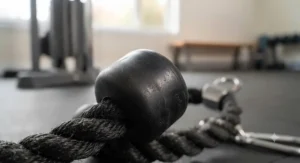
It’s easy to skim past “rubber stopper ends” in a product description, but this is genuinely one of the highest-impact features on the entire rope. Hard plastic ends, which show up on several ropes in this comparison including the REP Fitness Tricep Rope Cable Attachment, are cheaper to manufacture and hold their shape well over time, but reviewers consistently flag them as uncomfortable during longer or heavier sets. Rubber stopper ends, used on options like the YODOTE Ergonomic Tricep Rope Cable Attachment, add a small cushioning layer exactly where your palm presses hardest at the bottom of a pushdown. The trade-off is that rubber can degrade slightly faster than hard plastic under heavy daily use, so it’s a genuine comfort-versus-longevity decision rather than a simple upgrade — which is exactly the kind of nuance a spec sheet alone won’t spell out for you.
Tricep Isolation Training: How to Program for Real Growth
A rope attachment is only as useful as the programming behind it. For genuine tricep isolation training, most strength coaches recommend treating rope pushdowns and overhead rope extensions as accessory work performed after your primary pressing movements — bench press, overhead press, or dips — rather than as a standalone arm day centrepiece. A sensible starting template is two to three sets of 10-15 reps on pushdowns, followed by two sets of 8-12 reps on overhead extensions to hit the long head of the triceps from a stretched position, which straight-bar work generally can’t access as effectively. Progressive overload still applies here: add small increments of weight or an extra rep or two every week or two, rather than jumping weight in large jumps that sacrifice your form and shift stress onto the elbow joint. This kind of structured approach also aligns with broader Canadian public health guidance — ParticipACTION notes that only about 35% of Canadian adults currently meet the recommended muscle-strengthening activity guideline, which makes consistent, well-programmed isolation work like this a genuinely underused tool for most people, not just bodybuilders.
Cable Tricep Rope Review Roundup: Long-Term Value & What Reviewers Say
Zooming out across every cable tricep rope review referenced in this research, a few patterns repeat regardless of brand. First, stitching and D-ring quality are the most-cited long-term durability factors — ropes that fail tend to fail at the connection points, not the braided cord itself. Second, comfort complaints cluster overwhelmingly around hard plastic ends rather than rope material, reinforcing just how much that single design choice affects the daily experience of using the product. Third, value assessments consistently favour ropes that offer multiple lengths or grip positions, since buyers who initially bought a single-purpose rope frequently mention wishing they’d bought a multi-grip option instead once they discover new exercises. Cost-per-use math also favours ropes heavily over gym memberships: at an average Canadian gym membership cost of roughly $60-$80 a month, even a premium C$50 rope pays for itself within the first month if it’s the missing piece completing your home setup.
Safety & Injury Prevention: What Canadian Health Guidance Says
Overuse injuries around the elbow and wrist are a real risk with any repetitive pushing or pulling movement, tricep rope work included. MyHealth Alberta’s guidance on triceps tendinitis recommends starting rehabilitation-style exercises slowly and easing off immediately if pain appears, which is sound general advice even for lifters who haven’t been formally diagnosed with anything — soreness that fades within a day is normal, sharp or lingering joint pain is not. Practically, that means keeping your elbows tucked rather than flared during pushdowns, avoiding locking the elbow out aggressively at full extension, and rotating rope work with straight-bar or band-based accessory movements so the same tendons aren’t absorbing 100% of your training volume week after week. If you’re managing an existing elbow issue, a rope attachment’s rotational freedom is generally gentler on the joint than a fixed straight bar, but “gentler” isn’t the same as “risk-free,” so scaling back weight and volume during flare-ups still matters more than the equipment you choose.
Frequently Asked Questions
❓ What is a tricep rope attachment used for?
❓ What length of tricep rope should I buy?
❓ Are rubber stopper ends better than plastic ends?
❓ Can a tricep rope attachment fit any cable machine?
❓ How often should I train triceps with a rope attachment?
Conclusion
A tricep rope attachment is one of the least glamorous purchases you’ll make for a home gym, and also one of the most useful. Across the seven options in this guide, the throughline is consistent: rope quality lives in the details most listings gloss over — stitching, stopper-end material, carabiner rating, and rope diameter — rather than in flashy marketing copy. Whether you land on the multi-length versatility of the Gymreapers Tricep Rope Cable Attachment, the commercial-grade feel of the REP Fitness Tricep Rope Cable Attachment, or the straightforward value of the Yes4All Deluxe Tricep Rope Cable Attachment, matching the rope to your actual training frequency and setup matters more than chasing the single “best” option. Buy based on how often you’ll actually use it, not just the star rating.
✨ Don’t Miss These Exclusive Deals!
🔍 Take your tricep training to the next level with one of the seven picks above. Click through to check current pricing and availability before it changes, and build the arm-day setup your future self will thank you for!
Recommended for You
- Types of Lat Pulldown Bars: 7 Picks That Fix Your Back Day (2026)
- Lat Pulldown Bar Attachment: 7 Top Picks for 2026 (Canada Guide)
- Plate Loaded Row Machine vs Cable Stack Row Machine: 7 Picks (2026)
Disclaimer: This article contains affiliate links. As an Amazon Associate, I earn from qualifying purchases. If you purchase products through these links, we may earn a small commission at no additional cost to you.
✨ Found this helpful? Share it with your friends! 💬🤗
