In This Article
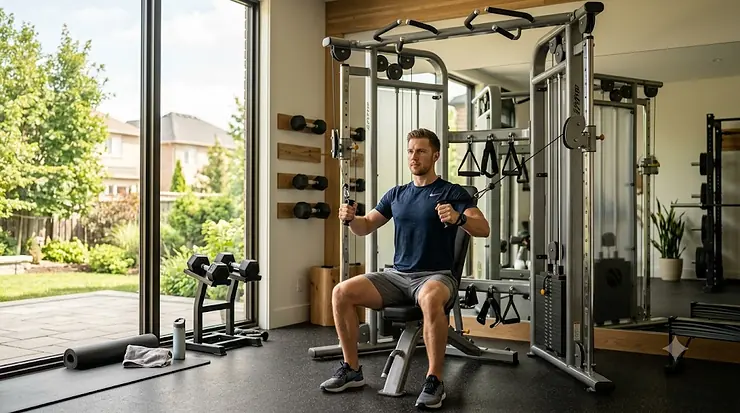
A dual adjustable pulley machine — sometimes sold as a “DAP machine,” wall-mounted cable station, or functional trainer — is a piece of strength equipment built around two independent cable pulleys that slide up and down a vertical track. Because each side moves on its own, you can set one pulley high for a lat pulldown and the other low for a cable row, or run both at chest height for a cable fly. It’s the closest thing to a commercial cable crossover machine that fits in a Canadian condo, garage, or basement gym.
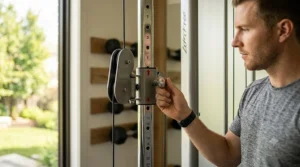
For a small space, that flexibility matters more than the spec sheet suggests. A flat bench and a barbell cover maybe a dozen movement patterns well. A dual adjustable pulley system covers upwards of a hundred, because the angle and height of the cable change the exercise entirely — and you’re not limited to pushing and pulling in a straight line the way a Smith machine forces you to.
Canadian shoppers researching this category face a slightly different reality than Amazon.com listings suggest. Selection on Amazon.ca is narrower, freight shipping on heavier freestanding units can take longer outside major centres, and a chunk of “best of” lists circulating online quote products that simply aren’t stocked north of the border. This guide sticks to machines that are genuinely available to Canadian buyers, with pricing framed in CAD and context for how these machines actually perform once a Canadian winter sets in and your garage gym drops below 10°C.
Quick Comparison Table
| Machine | Type | Resistance | Positions | Best For | Price Range (CAD) |
|---|---|---|---|---|---|
| Mikolo Wall Mount Cable Station | Wall-mounted | Plate-loaded (1″/2″) | 18 | Tightest spaces | Under $350 |
| Synergee Wall Mounted Dual Pulley | Wall-mounted | Plate-loaded | 17 | Renters, apartments | $350–$450 |
| Signature Fitness Fitvids M300 | Wall-mounted | Plate-loaded | ~19 | Absolute beginners on a budget | Under $320 |
| Valor Fitness Wall Mounted Cable Machine | Wall-mounted | Plate-loaded | 16 | All-in-one wall unit with handles included | $400–$550 |
| Body-Solid Powerline PFT100 | Freestanding | Dual weight stack | 20 | First “real” functional trainer | $1,900–$2,400 |
| Titan Fitness Functional Trainer | Freestanding | Dual 200 lb stacks | 20 | Heavier lifters, garage gyms | $1,600–$2,100 |
| Inspire Fitness FT1 | Freestanding | Dual 165 lb stacks (upgradeable) | 30+ | Long-term, daily-use home gym | $2,800–$3,500 |
The split here isn’t subtle: wall-mounted plate-loaded units cluster well under $600 CAD and trade weight stacks for your own bumper plates, while freestanding dual-stack functional trainers jump into four figures because you’re paying for a self-contained weight system, a steel frame that doesn’t need a stud wall, and usually a pull-up bar. If your ceiling height or wall studs are a question mark — common in older Canadian homes with plaster rather than drywall — that price jump to a freestanding unit often solves a real installation problem, not just a feature wishlist.
💬 Just one click — help others make better buying decisions too! 😊
✨ Don’t Miss These Exclusive Deals!
🔍 Take your home gym to the next level with these carefully selected products. Click on any highlighted item to check current pricing and availability on Amazon.ca. These tools will help you build a setup your whole household will actually use.
Top 7 Dual Adjustable Pulley Machines: Expert Picks
1. Mikolo Wall Mount Cable Station
The Mikolo Wall Mount Cable Station is the machine most often recommended to first-time buyers, and for a simple reason: it’s the cheapest legitimate way to get a true dual-pulley setup on Amazon.ca rather than a single fixed pulley dressed up as one.
It mounts to wall studs across four points, uses a detachable sleeve so it accepts both 1″ and 2″-opening plates, and offers 18 adjustable pulley positions on a frame that takes up roughly 27″ by 18″ of floor space. The nylon-coated cables are rated well past anything a home user will load onto them, so the actual limiting factor is your plate collection, not the machine.
What the listing won’t tell you: an 18-position wall unit like this only works if your wall studs line up where you need them, and in a lot of older Canadian houses — especially anything built before metric stud spacing became standard — that’s not guaranteed. Measure your studs before you buy, not after the box arrives. For an apartment or basement gym where floor space is the scarce resource, this is genuinely hard to beat for the money; for someone who wants to load it up past 150 lb and do explosive pulling movements, the wall-mount format will feel less stable than a freestanding frame.
Pros:
- ✅ Lowest cost of entry into true dual-pulley training
- ✅ Tiny footprint — ideal for condos and apartments
- ✅ Accepts both plate sizes without buying an adapter separately
Cons:
- ❌ Stability depends entirely on your wall stud layout
- ❌ No weight stack — you supply your own plates
Price & verdict: Under $350 CAD. If your budget tops out below the freestanding category, this is the rational starting point — just confirm stud placement first.
2. Synergee Wall Mounted Adjustable Dual Pulley Machine
The Synergee Wall Mounted Adjustable Dual Pulley Machine sits a step up from the Mikolo in build quality and is one of the few budget pulley brands with a dedicated Canadian storefront (synergeefitness.ca), which matters more than it sounds — it means parts, accessories, and customer support don’t route through a US-only operation if something needs replacing.
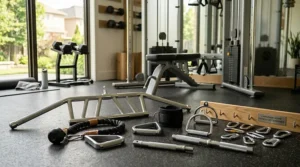
The frame stands 79.2″ tall on a 28.2″ by 30.9″ base, mounts at four points to studs, and offers 17 height positions with rubber-covered steel feet to protect flooring. It ships with two nylon handles and universal carabiner attachment points, so most third-party cable handles will fit without an adapter.
The standout practical detail is the mounting design: the bars are angled to clear baseboards and trim moulding, which is a recurring headache in older Canadian homes with thicker baseboard profiles than typical new-build US construction. That’s a small thing on a spec sheet and a real thing when you’re trying to mount a pulley machine flush against a wall that isn’t perfectly square.
Pros:
- ✅ Canadian-based brand presence for support and parts
- ✅ Mounting hardware clears trim and baseboards cleanly
- ✅ Compact footprint for the height it offers
Cons:
- ❌ Fewer pulley positions than some competitors (17 vs. 18–20)
- ❌ Handles included are basic; serious lifters will want to add attachments
Price & verdict: $350–$450 CAD. A solid pick for renters who want Canadian-based support without paying freestanding-trainer money.
3. Signature Fitness Fitvids M300 Wall Mount Cable Station
The Signature Fitness Fitvids M300 consistently shows up as the “people also bought” alternative on other wall-mount listings, and it earns that spot — it’s the most stripped-down, least expensive route into dual-pulley training that still functions properly.
It’s a no-frills plate-loaded wall station with a simple bracket-and-pin height adjustment system, roughly comparable positions to the Mikolo, and a narrower selection of included accessories. There’s no tablet holder, no branded handle kit, no extras — just two pulleys, a frame, and mounting hardware.
For a first-time buyer who isn’t sure they’ll stick with home training, that’s arguably the right amount of machine. Spending the least possible amount to find out whether cable training fits your routine is a more sensible financial decision in year one than committing to a $2,000 functional trainer you might resell in six months. The trade-off shows up in long-term durability — budget pulley bearings on units at this price point tend to develop play or minor squeaking faster than mid-range options, especially if you’re loading near the stated maximum regularly.
Pros:
- ✅ Cheapest functional entry point into the category
- ✅ Simple enough to assemble in under an hour
- ✅ Good “trial” purchase before committing to a bigger machine
Cons:
- ❌ Minimal accessory kit out of the box
- ❌ Pulley bearings show wear sooner under heavy regular use
Price & verdict: Under $320 CAD. Best treated as a starter machine, not a forever machine.
4. Valor Fitness Wall Mounted Cable Machine
The Valor Fitness Wall Mounted Cable Machine is the most complete wall-mount package on this list. Where the Mikolo and Synergee ship with two basic handles, Valor includes a V-handle, a triangle chest-pull attachment, and a tricep rope — the three accessories most people buy separately within the first month anyway.
It offers 16 height positions, a 200 lb plate-loaded capacity using 1″ plates (with a 2″ Olympic adapter sold separately), and a double bar track that Valor’s engineering keeps notably smoother under load than cheaper single-rail wall units. The compact, vertical design is specifically built to minimize floor footprint, which Canadian condo and apartment buyers will appreciate over a sprawling freestanding frame.
The practical takeaway for Canadian buyers: because the Olympic adapter is sold separately, anyone who already owns 2″ bumper plates (the standard size at most Canadian commercial gyms and CrossFit-style boxes) needs to budget for that add-on before the listed price tells the whole story.
Pros:
- ✅ Most complete accessory kit of the wall-mount options
- ✅ Smoother dual-bar track under heavier loads
- ✅ 16 positions cover the vast majority of common cable exercises
Cons:
- ❌ 2″ Olympic plate adapter is an extra purchase
- ❌ Fewer height positions than the Mikolo or Titan options
Price & verdict: $400–$550 CAD. The best-equipped wall-mount pick if you don’t already own 1″ plates.
5. Body-Solid Powerline PFT100 Functional Trainer
This is where the category jumps from “wall attachment” to “actual machine.” The Body-Solid Powerline PFT100 Functional Trainer is a freestanding dual-stack unit — no wall studs required, no plates to source — built around two 160 lb weight stacks (with 210 lb stacks available as an upgrade) and 20 independent height positions with 3.2″ hole spacing.
Body-Solid has manufactured fitness equipment for over three decades, and the PFT100 reflects that — a heavy-duty powder-coated frame, vertically adjustable pulleys that swivel through 180 degrees, and a “no-cable-change” design that lets you move between exercises without re-threading anything. For Canadian buyers in particular, freestanding eliminates the single biggest wall-mount headache: you’re not dependent on stud spacing, wall material, or whether your landlord allows permanent wall fixtures at all.
What most buyers overlook about this category jump is the freight reality. At roughly 476 lb, the PFT100 ships via freight, not a standard parcel carrier, which means a scheduled delivery window, a curbside drop-off, and the buyer handling assembly and disposal of packaging — a meaningfully different experience than the small-parcel wall units above it. Outside the Quebec City–Windsor corridor, build in extra time for that freight delivery and confirm someone will be home for the scheduled window.
Pros:
- ✅ No wall mounting — works in any room with enough ceiling height
- ✅ Dual stacks mean no plates to buy or store separately
- ✅ Upgrade path to 210 lb stacks if 160 lb becomes too light
Cons:
- ❌ Freight delivery adds lead time, especially outside major cities
- ❌ Needs roughly a 4′ x 3′ dedicated footprint plus clearance
Price & verdict: Roughly $1,900–$2,400 CAD. The natural step up once a wall unit’s weight ceiling stops being enough.
6. Titan Fitness Functional Trainer (200 LB Double Stack)
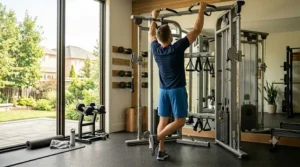
The Titan Fitness Functional Trainer is built for buyers who’ve outgrown lighter stacks. Its dual 200 lb weight stacks (in 10 lb increments) and 2:1 cable ratio give noticeably more top-end resistance than the Body-Solid or Inspire options on this list, which matters for anyone doing heavier rows, presses, or assisted pull-up work rather than purely isolation-style cable work.
The frame stands 82″ tall on a 64″ by 44″ base — a genuinely large footprint, so this is a garage or dedicated-room purchase rather than a spare-bedroom one. It comes with a full accessory set (rope, D-handles, long and short bars, strap handles) plus a built-in pull-up handle, and the 20 vertical pulley positions let you fine-tune the resistance angle for specific muscle isolation rather than just picking “high” or “low.”
The honest trade-off versus the Body-Solid or Inspire units: Titan’s frame and components are commercial-adjacent rather than commercial-grade, which is reflected in the price gap with Inspire’s premium-tier machine below. For a garage gym in a Canadian climate, that’s a relevant point — an unheated garage means metal components see real temperature swings, and slightly lower-spec finishes can show surface rust faster than a fully enclosed weight-stack housing if humidity gets in.
Pros:
- ✅ Heaviest stock resistance on this list (200 lb per side)
- ✅ Comprehensive attachment kit included at no extra cost
- ✅ 2:1 ratio rewards lifters who’ve outgrown lighter machines
Cons:
- ❌ Large footprint — needs a dedicated space, not a corner
- ❌ Unheated garage storage in Canadian winters accelerates wear on exposed metal
Price & verdict: $1,600–$2,100 CAD. The strongest stock resistance per dollar if you have the floor space.
7. Inspire Fitness FT1 Functional Trainer
The Inspire Fitness FT1 Functional Trainer is the premium pick, and the price reflects a genuinely different build tier rather than just brand markup. Dual 165 lb weight stacks (upgradeable with add-on kits), a fixed pull-up bar, sliding swivel pulleys with more than 30 adjustable starting positions, and a tablet holder for following workout programs round out a machine that’s narrow enough — about 54″ wide — to fit spaces that wouldn’t accommodate the Titan’s footprint.
Inspire backs the FT1 with a limited lifetime warranty on frame and parts, which is the strongest coverage of any machine on this list and a meaningful consideration for a purchase meant to last a decade rather than a few years. The “smooth-glide” pulley system is a genuine differentiator buyers consistently note — less friction at the top and bottom of each pulley position than less expensive dual-stack machines, which matters most on high-rep, controlled-tempo work rather than just maxing out a single heavy pull.
Who should actually spend the extra money over the Titan or Body-Solid: someone who’s certain this is a long-term, daily-use piece of equipment rather than a trial purchase, and someone who values the narrower footprint enough to trade away the Titan’s heavier 200 lb stacks. For most home users, 165 lb per side (with the upgrade path available) covers the vast majority of cable work; it’s specifically heavier compound pulling that will outgrow it sooner than the Titan.
Pros:
- ✅ Limited lifetime warranty — the strongest coverage on this list
- ✅ Narrower footprint than competing dual-stack machines
- ✅ Smoothest pulley glide reported across this category
Cons:
- ❌ Highest price point of the seven
- ❌ 165 lb stacks (pre-upgrade) are lighter than the Titan’s 200 lb
Price & verdict: Roughly $2,800–$3,500 CAD. The buy-it-once option if budget allows and you’re certain about long-term use.
How to Choose a Dual Adjustable Pulley Machine in Canada
- Confirm your wall studs before considering any wall-mounted unit. Older Canadian housing stock doesn’t always follow predictable spacing, and a wall-mount machine is only as stable as the studs it’s bolted to.
- Measure your ceiling height, not just floor space. Freestanding trainers in the 79–82″ range need real clearance, especially in basements with ductwork or low joists — common in pre-1980s Canadian builds.
- Decide whether you want a weight stack or plate-loaded resistance. Plate-loaded units are cheaper upfront but require you to already own (or buy) plates; weight stacks cost more but are self-contained.
- Match the stack or plate ceiling to your actual strength level, not your aspirational one. Buying a 200 lb stack you’ll never load past 80 lb is paying for capacity you don’t need.
- Factor in freight delivery timelines if you’re outside a major city. Freestanding units over 400 lb ship by freight carrier, and remote or northern delivery windows in Canada can run longer than the listing suggests.
- Check the included accessory kit before assuming the listed price is the full cost. Several wall-mount units sell plate adapters or premium handles separately.
- Weigh warranty length against how long you expect to keep the machine. A lifetime frame warranty matters far less on a $300 trial purchase than it does on a $3,000 long-term investment.
Setting Up & Getting the Most From Your Pulley Machine
Getting a dual adjustable pulley machine into your routine well starts before the first workout. For wall-mounted units, use a stud finder to confirm all four mounting points hit solid wood, not just drywall — anchors alone won’t hold a loaded plate stack safely over time. Torque the mounting bolts to the manufacturer’s spec and re-check them after the first two weeks of use; cables settling and frames flexing slightly under initial loads is normal, but a loose bolt isn’t.
For Canadian garages and unheated basements, a few climate-specific habits extend the life of any cable machine considerably. Cold temperatures stiffen cable coating and can make pulleys feel notably less smooth on the first few reps of a cold session — a light warm-up set or two before loading heavy resistance lets the system limber up. If humidity is a factor in your space (common in basements during spring thaw), wipe down exposed steel components periodically and apply a light coat of silicone-based lubricant to pulley bearings every few months rather than waiting for an audible squeak.
A common first-30-days mistake is over-tightening the height-adjustment pop-pin mechanism or forcing it into a position that’s slightly misaligned, which can bend the pin over time. If a position doesn’t slide in cleanly, the bracket is misaligned — don’t force it.
Real Canadian Buyer Scenarios
The Toronto condo dweller (450 sq ft spare room): A wall-mounted unit like the Mikolo or Synergee is close to the only realistic option — freestanding trainers simply won’t fit a condo’s typical ceiling height and floor plan once clearance is factored in. Budget around $350–$450 CAD, confirm the building allows wall fixtures in a rental, and prioritize a compact footprint over extra pulley positions.
The Calgary family of four with a finished garage: Floor space and ceiling height aren’t the constraint here — durability under shared, frequent use is. The Titan Fitness Functional Trainer’s heavier stacks and full accessory kit suit a household where multiple people of varying strength levels are using the same machine daily, and an unheated Calgary garage means the equipment needs to tolerate genuine temperature swings without much complaint.
The Ottawa long-term home gym owner: Someone who has already tried a wall-mounted unit, knows cable training is a permanent part of their routine, and has a dedicated room to commit is the right buyer for the Inspire Fitness FT1. The lifetime warranty pays off specifically because the purchase horizon is measured in years, not a single winter of New Year’s resolutions.
Dual Adjustable Pulley vs. Smith Machine & Power Racks
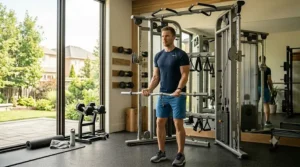
A Smith machine locks the bar to a fixed vertical (or near-vertical) path, which is excellent for controlled, lower-risk strength work but inherently restricts movement to one plane. A power rack with cable attachments gives you a barbell setup plus limited cable functionality bolted onto the same frame, which is efficient use of space but rarely matches a dedicated dual adjustable pulley machine’s range of independent height positions or smoothness.
The real distinction is training intent. Functional training — the category a dual adjustable pulley machine belongs to — emphasizes movement across multiple planes that mimic real-world or sport-specific motion, rather than isolating a muscle along one fixed bar path. A Smith machine is the better tool for someone prioritizing raw strength progression with training wheels on; a dual adjustable pulley system is the better tool for anyone who wants rotational, unilateral, or angle-varied movement that a fixed bar path simply can’t replicate. Many serious home gyms eventually own both rather than treating it as an either/or decision.
Common Mistakes When Buying a Dual Adjustable Pulley Machine in Canada
- Assuming a US Amazon listing ships to Canada at the same price. Cross-border shipping, duties, and currency conversion frequently make a US-listed “cheap” option more expensive landed in Canada than buying the Canadian-stocked equivalent outright.
- Ignoring stud spacing entirely until the box arrives. This is the single most common return reason for wall-mounted cable stations.
- Underestimating freight delivery timelines outside Ontario, Quebec, BC, and Alberta’s major centres. Remote and northern delivery windows can run considerably longer than a standard listing’s shipping estimate suggests.
- Buying a heavier weight stack than needed “to be safe.” Extra stack capacity adds cost and, on freestanding units, often adds footprint and shipping weight without functional benefit for most home users.
- Forgetting to check whether plate adapters are included. Several wall-mount machines on this list sell the 1″-to-2″ adapter separately — a detail buried in the fine print, not the headline spec.
Long-Term Cost, Maintenance & Duties: What It Really Costs in CAD
Buying through Amazon.ca rather than importing privately from a US retailer sidesteps a real cost most buyers don’t think to calculate: personal import duty. The Canada Border Services Agency’s guidance on paying duty and taxes confirms goods made in Canada, the US, or Mexico for personal use generally clear without duty under trade agreement rules — but cross-border same-day shopping trips don’t qualify for the personal exemptions that apply to longer absences, and freight-shipped commercial imports follow different rules entirely than a traveller’s suitcase. Buying domestically through an Amazon.ca-fulfilled listing avoids that calculation altogether, which is part of why “the US price looked cheaper” often doesn’t hold up once landed cost is factored in.
Ongoing maintenance costs for this category are low compared to motorized equipment — no motor, no belt, no electronics to fail. Realistic annual upkeep is a replacement cable or pulley bushing every few years on a frequently used machine (typically $20–$60 CAD per part) and occasional lubricant. The bigger long-term cost variable is accessories: most buyers end up purchasing 2–3 additional attachments (a different bar, an ankle strap, a rope) within the first year regardless of which machine they start with, so budgeting an extra $50–$100 CAD beyond the listed machine price is realistic.
Canadian Safety Standards & Wall-Mounting Considerations
Strength equipment like a dual adjustable pulley machine isn’t subject to the same mandatory third-party certification (like CSA marks) that applies to plug-in electrical appliances in Canada. It does fall under Health Canada’s broader Canada Consumer Product Safety Act, which prohibits the sale of any consumer product — sporting goods included — that poses an unreasonable danger to health or safety, and gives Health Canada authority to act on safety incidents or recalls. There’s no separate gym-equipment-specific Canadian standard beyond that general framework, which puts more of the practical safety burden on installation quality (proper stud mounting, correct bolt torque) than on certification badges.
If you’re affiliate-marketing or reviewing fitness products yourself, it’s worth knowing the disclosure rules apply regardless of platform: the Competition Bureau’s guidance on influencer marketing and the Competition Act requires clear, visible disclosure of any material connection — including affiliate links — between a reviewer and the product being promoted.
FAQ
❓ Can a dual adjustable pulley machine replace a full home gym?
❓ Do wall-mounted pulley machines work on drywall alone?
❓ Does cold storage in a Canadian garage damage a cable machine?
❓ Is it cheaper to import a US-listed pulley machine than buy on Amazon.ca?
❓ How much weight do I actually need on a dual pulley machine?
Conclusion
The right dual adjustable pulley machine for a Canadian home gym comes down to two honest questions: how much wall or floor space do you actually have, and is this a trial purchase or a long-term commitment? Renters and condo owners are almost always better served starting with a wall-mounted plate-loaded unit like the Mikolo, Synergee, or Valor Fitness options — cheap enough to walk away from if the habit doesn’t stick, compact enough to fit a small footprint. Buyers with a dedicated garage or basement room and a clear long-term plan get more lasting value from a freestanding dual-stack trainer, where the Body-Solid Powerline PFT100 sits at the accessible end and the Inspire Fitness FT1 sits at the buy-it-once end.
Whichever tier fits your space and budget, confirm wall studs before mounting anything, check whether plate adapters ship included, and build a little extra time into your expectations if you’re ordering a freestanding unit outside a major delivery hub. None of that shows up in a five-star rating, but it’s the difference between a machine that gets used for years and one that ends up listed on a local buy-and-sell group six months in.
Recommended for You
- 7 Best All-In-One Home Gym Machines in Canada (2026 Guide)
- 7 Best Smith Machines with Cable Attachment in Canada (2026)
- 7 Best Smith Machine Power Rack Combo Canada (2026 Guide)
Disclaimer: This article contains affiliate links. As an Amazon Associate, I earn from qualifying purchases. If you purchase products through these links, we may earn a small commission at no additional cost to you. Prices, availability, and Amazon.ca stock can change at any time — always check the current listing before buying.
✨ Found this helpful? Share it with your friends! 💬🤗
