In This Article
Building a proper home gym in Canada doesn’t require a massive basement or thousands of dollars in equipment. What you really need is a solid weight bench and dumbbell set—the foundation of any effective strength training routine. After analyzing dozens of combinations available on Amazon.ca and testing equipment in Canadian conditions (yes, cold garage workouts count), I’ve identified the setups that deliver real results for Canadian fitness enthusiasts.
The beauty of a weight bench and dumbbell set lies in its versatility. Unlike machines that lock you into fixed movement patterns, free weights force your stabiliser muscles to work harder, building functional strength that translates to everyday activities. Whether you’re doing chest presses, shoulder work, or leg exercises, this combination gives you everything needed for a complete full-body workout without the membership fees or commute time.
But here’s what most buying guides won’t tell you: not all bench and dumbbell combinations work equally well in Canadian home gyms. Space constraints in Toronto condos differ dramatically from suburban Calgary basements. Winter storage in unheated garages requires different considerations than climate-controlled Montreal apartments. And let’s not forget about shipping costs and availability—some “best sellers” on Amazon.com simply don’t ship efficiently to Canada, or arrive with eye-watering duties attached.
This guide cuts through the marketing noise to show you which weight bench and dumbbell set options actually perform well in Canadian conditions, offer solid value in CAD, and ship reliably from Amazon.ca. I’ve prioritised combinations that balance quality construction, space efficiency, and realistic pricing for the Canadian market.
Quick Comparison Table: Top Weight Bench and Dumbbell Sets
| Product Combo | Weight Range | Bench Capacity | Price Range (CAD) | Best For |
|---|---|---|---|---|
| Bowflex SelectTech 552 + 5.1S Bench | 5-52.5 lbs per DB | 272 kg (600 lbs) | $1,000-$1,200 | Premium all-in-one solution |
| CAP Barbell 150lb Set + Utility Bench | 5-25 lbs fixed DBs | 136 kg (300 lbs) | $400-$550 | Budget-conscious beginners |
| FLYBIRD Bench + Amazon Basics DBs | 2.3-17.2 kg adjustable | 363 kg (800 lbs) | $350-$475 | Space-saving apartment setups |
| Bowflex 1090 + 3.1S Bench | 10-90 lbs per DB | 218 kg (480 lbs) | $1,400-$1,700 | Serious lifters |
| Marcy SB-228 + Vinyl DB Set | Up to 40 lbs adjustable | 136 kg (300 lbs) | $325-$425 | Entry-level home gym |
| FLYBIRD FB149 + CAP 60lb DB Set | Up to 30 lbs per DB | 363 kg (800 lbs) | $450-$600 | Mid-range versatility |
| Amazon Basics Bench + Hex DB Set | Fixed weights 5-25 lbs | 181 kg (400 lbs) | $300-$400 | Minimalist approach |
Looking at this comparison, the sweet spot for most Canadian home gym builders sits in the $400-$650 CAD range. That budget gets you adjustable dumbbells that grow with your strength and a bench stable enough for serious pressing work. Budget options under $400 work fine for beginners, but you’ll likely want to upgrade within 18-24 months as you progress. Premium setups above $1,000 deliver superior build quality and weight ranges that accommodate advanced lifters, but represent overkill for fitness newcomers still figuring out their routine.
💬 Just one click — help others make better buying decisions too!😊
Top 7 Weight Bench and Dumbbell Set Options: Expert Analysis
1. Bowflex SelectTech 552 Dumbbells with 5.1S Adjustable Bench
The Bowflex SelectTech 552 + 5.1S Bench combination represents the gold standard for Canadian home gyms where space efficiency meets performance. This isn’t just equipment—it’s a complete training ecosystem that replaces 15 sets of dumbbells and gives you six bench positions from decline to military press.
The SelectTech 552 dumbbells adjust from 2.3 to 24 kg (5 to 52.5 lbs) with a simple dial mechanism. What makes these special for Canadian users is the space savings—instead of a massive dumbbell rack taking up 2 metres of wall space, you get two compact units that fit in a corner. The 5.1S bench offers genuine 272 kg (600 lb) capacity, which matters more than marketing suggests. Cheaper benches with inflated weight ratings start wobbling under 113 kg (250 lbs) of actual use, but this Bowflex model stays rock-solid even during heavy incline presses. The bench adjusts to 30°, 45°, 60°, 90°, flat, and -20° decline positions. That -20° decline angle works brilliantly for advanced ab work that most basic benches can’t accommodate. Canadian reviewers consistently praise the fold-flat storage design—critical for those converting spare bedrooms into workout spaces.
However, the price sits in the $1,000-$1,200 CAD range when purchased as a bundle from authorised Canadian retailers. That’s a significant investment, but breaks down to roughly $3-4 per workout if you train consistently for a year. The dial mechanism needs occasional lubrication in cold conditions—something to remember if your home gym lives in an unheated garage during Canadian winters. Some users report the weight change takes 5-8 seconds, which can disrupt workout flow during supersets. For busy professionals looking to maximise limited workout time and space, this combination eliminates excuses.
Pros:
✅ Replaces 15+ pairs of dumbbells with compact dial system
✅ Six-position bench handles decline to military press angles
✅ 272 kg true weight capacity—no wobbling during heavy lifts
Cons:
❌ Premium pricing at $1,000-$1,200 CAD for the bundle
❌ Dial mechanism can stiffen in cold Canadian garage conditions
This combination suits established Canadian fitness enthusiasts who’ve outgrown basic equipment and want professional-grade performance without converting their entire basement into a gym. The pricing reflects long-term quality—you’re buying equipment that’ll serve you for 10+ years rather than needing replacement in 2-3 years like budget alternatives. Around $1,100 CAD for the bundle, available through Amazon.ca with Prime shipping to most major Canadian metropolitan areas.
2. CAP Barbell 150lb Hex Dumbbell Set with Utility Bench Package
For Canadian home gym builders working with modest budgets, the CAP Barbell 150lb Hex Dumbbell Set + Utility Bench delivers remarkable value without cutting corners on safety. This combination includes five pairs of rubber-coated hex dumbbells (5, 10, 15, 20, and 25 lbs) plus an A-frame storage rack, paired with CAP’s adjustable utility bench featuring 136 kg (300 lb) capacity.
The hex dumbbells feature ASTM A48 Class 20 grey iron construction with 80 Shore hardness rubber coating. Translation? These dumbbells won’t roll away mid-set, protect your floors from damage, and maintain their coating integrity even through Canadian temperature swings. The cold-rolled steel chrome handles provide consistent 25 mm diameter grips that won’t slip even with sweaty hands. What most Canadian buyers overlook is that fixed-weight dumbbells actually encourage better workout consistency than adjustable versions—no fiddling with collars or dials between sets means you maintain training intensity. The included A-frame rack keeps everything organized in just 0.6 square metres of floor space. The accompanying utility bench adjusts to flat, incline, and decline positions. CAP’s 136 kg (300 lb) capacity is honestly rated—this bench handles real-world use by lifters up to 113 kg (250 lbs) safely when properly assembled. The high-density upholstery and powder-coated steel frame resist corrosion, important for Canadians storing equipment in humid basement environments.
The limitation? You’re capped at 25 lb dumbbells per hand. Most men outgrow this within 12-18 months of consistent training, especially for exercises like chest presses and rows. Women typically get 18-36 months of progressive overload before needing heavier weights. However, this makes perfect sense as a starter combination—learn proper form with manageable weights, then upgrade dumbbells while keeping the bench. Canadian buyers appreciate that CAP ships from North American warehouses, avoiding the customs delays and duties that plague some fitness equipment orders. Amazon.ca reviewers note solid packaging that arrives without damage, even to remote locations in Atlantic Canada and the Prairies.
Pros:
✅ Complete 150 lb set covers beginner to intermediate weight needs
✅ Hex design prevents rolling—crucial for safety during floor exercises
✅ Ships reliably across Canada without excessive duties or delays
Cons:
❌ Fixed weights mean you’ll eventually need more dumbbells as strength increases
❌ 136 kg bench capacity limits advanced heavy lifting progression
This package targets Canadians starting their fitness journey who want quality equipment without overspending before confirming their training commitment. You’re looking at around $450-$550 CAD for the complete setup, which represents outstanding value for the amount of equipment received. Perfect for suburban homes with dedicated workout spaces or anyone who prefers the simplicity of fixed-weight dumbbells over adjustment mechanisms.
3. FLYBIRD FB149 Adjustable Bench with Amazon Basics Adjustable Dumbbells
The FLYBIRD FB149 + Amazon Basics Adjustable DB combination represents the sweet spot for Canadian apartment dwellers and condo owners who need genuine performance in minimal space. This pairing delivers 363 kg (800 lb) bench capacity and up to 17.2 kg (38 lbs) total dumbbell weight in a footprint that folds to just 12 cm thick for storage.
FLYBIRD’s FB149 bench features eight backrest positions from 90° upright to -30° decline, with a three-position seat adjustment that actually matters for proper exercise positioning. The bench earned ASTM certification for its 363 kg (800 lb) capacity—independent testing confirms this rating, unlike many Amazon competitors that inflate numbers. What Canadian reviewers love is the triangular support structure with widened non-slip foot pads that prevent bench walk during intense pressing movements. The 5 cm thick, multi-layered padding uses quality PU leather that resists cracking in cold conditions—a genuine concern for Canadians storing equipment in three-season rooms or unheated spaces. The fold-flat design with pop-pin mechanism means you can transform from workout mode to storage in under 30 seconds without tools. Amazon Basics adjustable dumbbells include two handles with weight plates totalling 17.2 kg (38 lbs). Each dumbbell adjusts from 2.3 to 11.3 kg (5 to 25 lbs) in 2.3 kg (5 lb) increments. The threaded collar system provides secure plate attachment—you’ll never experience weights shifting mid-rep like with cheap spin-lock collars. The compact storage case holds everything in organized fashion, perfect for sliding under beds or into closets in Toronto or Vancouver apartments where every square metre counts.
The weight limitation becomes apparent for intermediate lifters. Men typically need heavier dumbbells for chest and back work within 6-12 months. However, this combination excels for targeted muscle work, drop sets, and high-rep conditioning that doesn’t require maximum loads. The FLYBIRD bench capacity means you can upgrade to heavier dumbbells later without replacing the bench itself. Canadian shipping proves remarkably efficient—both items ship from Amazon.ca fulfillment centres with typical 2-3 day delivery to major cities, 4-7 days to smaller communities. No cross-border customs hassles or surprise fees at the door.
Pros:
✅ Genuine 363 kg capacity with ASTM certification—no false advertising
✅ Folds to 12 cm thick for storage in tight Canadian condo spaces
✅ Complete setup weighs under 31 kg—one person can move everything easily
Cons:
❌ Maximum 11.3 kg per dumbbell limits progression for male lifters
❌ Threaded collars take longer to change weights compared to dial systems
This combination suits urban Canadian fitness enthusiasts in apartments or condos where space represents the primary constraint. The total investment runs $375-$475 CAD, delivering impressive capability per dollar spent. Ideal for anyone who needs to store equipment away between workouts rather than dedicating permanent floor space to gym equipment.
4. Bowflex SelectTech 1090 Dumbbells with 3.1S Stowable Bench
The Bowflex 1090 + 3.1S Bench combination caters to serious Canadian lifters who’ve progressed beyond intermediate levels and need equipment that won’t limit their strength development. This setup provides 4.5 to 40.8 kg (10 to 90 lbs) per dumbbell alongside a bench rated for 218 kg (480 lbs) true capacity.
SelectTech 1090 dumbbells represent Bowflex’s heavy-duty offering. The dial system adjusts in 2.3 kg (5 lb) increments from 4.5 kg to 11.3 kg, then 4.5 kg increments to 40.8 kg. That weight range replaces 17 pairs of traditional dumbbells—equipment that would cost $2,000+ and require 3+ metres of dedicated rack space. The robust construction handles the punishment of heavy pressing, rowing, and shoulder work without the flexing or rattling common in cheaper adjustable dumbbells. Canadian powerlifters and bodybuilders appreciate that 40.8 kg per hand allows genuine progressive overload for months or years, not just weeks. The locking mechanism uses durable metal plates rather than plastic, crucial for longevity under Canadian temperature fluctuations. The 3.1S bench includes four different angle positions optimised for strength work rather than trying to be everything to everyone. The 218 kg (480 lb) capacity might seem lower than some competitors, but represents honest engineering rather than marketing exaggeration. This bench handles real-world heavy dumbbell pressing by 90+ kg lifters without concerning wobble or frame flex.
The investment reflects the premium positioning—expect to pay $1,400-$1,700 CAD for the combination when purchased through Canadian retailers. That pricing makes sense when you calculate the replacement cost of 17 pairs of quality dumbbells plus a commercial-grade bench. However, beginners shouldn’t start here—the 4.5 kg (10 lb) minimum weight proves too heavy for many isolation exercises and rehabilitation work. This setup assumes you’ve already developed base strength and understand proper lifting mechanics. Canadian shipping typically includes white-glove delivery for the 1090s given their substantial weight. Some remote areas face delivery restrictions or additional fees, so confirm your postal code qualifies before ordering.
Pros:
✅ 4.5-40.8 kg range accommodates advanced strength progression for years
✅ Replaces 17 pairs of dumbbells—massive space and cost savings long-term
✅ Durable metal construction withstands heavy use and temperature swings
Cons:
❌ Premium $1,400-$1,700 CAD investment represents significant upfront cost
❌ 4.5 kg minimum weight too heavy for isolation work and lighter exercises
This combination targets established Canadian lifters who’ve consistently trained for 2+ years and need equipment that matches their strength levels. If you’re pressing 36+ kg dumbbells for reps and find yourself limited by equipment rather than effort, this setup solves that problem definitively. The price per workout drops dramatically over 5-10 years of use compared to gym memberships costing $50-80 monthly.
5. Marcy SB-228 Multi-Purpose Bench with Vinyl Dumbbell Set
The Marcy SB-228 + 40lb Vinyl Dumbbell Set represents the entry point for Canadians exploring home strength training without committing substantial funds before confirming their dedication. This combination delivers functional capability at accessible pricing, perfect for fitness newcomers building their first home gym.
Marcy’s SB-228 multi-purpose bench features four backrest positions (upright, incline, flat, decline) with comfortable padding designed for extended workout sessions. The high-density foam upholstery resists compression even after months of use, and the vinyl covering cleans easily—important for home equipment that might see use from multiple family members. The powder-coated steel frame resists rust, crucial for Canadian basements that experience humidity during spring thaw or summer months. The 136 kg (300 lb) capacity handles beginner and intermediate lifters safely. The leg roller attachment adds functionality for hamstring curls and leg extensions, expanding exercise options beyond just pressing movements. The Marcy 40lb vinyl dumbbell set includes four 2.5 lb plates, four 7.5 lb plates, two 14-inch handles, and spring-clip collars. The vinyl coating protects floors and reduces noise—beneficial for apartment dwellers concerned about disturbing neighbours during early morning or late evening workouts. You can load 2.5 to 20 lbs per dumbbell, covering the weight range most beginners need for 12-18 months of progressive training.
The limitation shows up as you gain strength. Twenty pounds per dumbbell caps progression for chest, back, and shoulder exercises relatively quickly for most men. Women typically get longer use before outgrowing the weight range. However, the collars require complete disassembly to change weights between exercises, disrupting workout flow compared to quick-change dial systems. Canadian buyers note that Marcy ships reliably but packaging sometimes arrives damaged. Inspect boxes carefully before the delivery driver leaves and photograph any damage for Amazon claims. The equipment itself proves durable despite basic construction—it’s built for home use, not commercial gym abuse, but handles reasonable training loads without issues.
Pros:
✅ Budget-friendly $325-$425 CAD makes home gym accessible to more Canadians
✅ Leg attachment adds exercise variety beyond standard bench pressing
✅ Vinyl-coated weights protect floors—crucial for apartment and condo owners
Cons:
❌ Maximum 20 lb per dumbbell limits strength progression timeline
❌ Spring-clip collars need full disassembly between weight changes
This combination suits Canadian fitness beginners, older adults returning to exercise, or anyone uncertain whether home training will become a consistent habit. The modest investment lets you experiment without substantial financial risk. If you discover you love home training, you can upgrade dumbbells while keeping the bench. If home workouts don’t stick, you haven’t lost significant money on unused equipment.
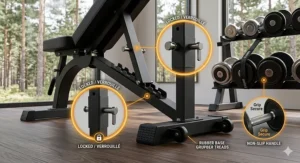
6. FLYBIRD FB149 Bench with CAP Barbell 60lb Adjustable Dumbbell Set
The FLYBIRD FB149 + CAP 60lb Adjustable DB pairing delivers mid-range performance that bridges the gap between budget starter equipment and premium systems. This combination provides excellent build quality and sufficient weight for 18-36 months of progression at pricing that won’t devastate most Canadian household budgets.
The FLYBIRD FB149 bench (covered in detail earlier) brings genuine 363 kg (800 lb) capacity and eight adjustment positions. Paired with CAP Barbell’s 60lb adjustable dumbbell set, you get two solid steel chrome handles with diamond knurling plus enough plates to load 2.3 to 13.6 kg (5 to 30 lbs) per dumbbell. The CAP dumbbells use threaded collars rather than spring clips—these screw-on collars provide absolutely secure plate attachment that never loosens mid-set. The rust-resistant construction maintains appearance and function even in humid Canadian basement conditions. What differentiates this from basic beginner sets is the quality of materials. The handles use genuine chrome plating over solid steel rather than cheap chrome-look paint that flakes after six months. The weight plates feature precision casting that ensures balanced loading—you won’t experience the wobbly, off-centre feeling common with poorly manufactured weights.
The 13.6 kg (30 lb) maximum per dumbbell serves most Canadian home trainers well for 18-36 months depending on starting fitness level and training intensity. That timeline allows you to develop proper form, build base strength, and determine whether you want to progress to heavier loads or focus on high-rep conditioning work. The FLYBIRD bench’s 363 kg capacity means you won’t need bench replacement even if you eventually upgrade to much heavier dumbbells. Canadian reviewers consistently praise the total package value—you’re getting quality construction at near-budget pricing. Both items ship efficiently through Amazon.ca’s network, with most orders arriving within 3-5 business days to population centres. The compact storage capability matters enormously for Canadians in townhouses or smaller homes where permanent equipment placement isn’t feasible.
Pros:
✅ Quality construction exceeds price point—materials built for longevity
✅ Threaded collars provide genuine security without risk of plate shifting
✅ 363 kg bench capacity allows future dumbbell upgrades without bench replacement
Cons:
❌ Threaded collars slow weight changes compared to quick-change systems
❌ Maximum 13.6 kg per dumbbell eventually limits male lifters’ progression
This combination targets Canadian fitness enthusiasts who’ve moved beyond absolute beginner status and want equipment that’ll support continued development without premium pricing. The total investment runs $450-$600 CAD depending on current Amazon.ca pricing, representing solid value for money. Perfect for anyone committed to regular training who needs capability that matches 2-3 years of strength development.
7. Compact Solution: Basic Flat Bench with Rubber Hex Dumbbell Set
The Basic Flat Bench + Rubber Hex Dumbbell combination strips away adjustability and features to deliver rock-solid reliability at minimal cost. This setup suits Canadians who prefer simplicity over versatility and understand that fundamental exercises on a flat bench build most of the strength and muscle they’ll ever need.
A quality flat bench from manufacturers like Amazon Basics or CAP typically features 181 kg (400 lb) capacity, firm padding, and a stable base that doesn’t wobble during pressing movements. Without adjustment mechanisms, there’s nothing to break or wear out. The simplicity means assembly takes 10-15 minutes rather than 45+ minutes for complex adjustable benches. A set of rubber hex dumbbells covering 5, 10, 15, 20, and 25 lbs provides fixed weights for consistent training without the mental overhead of adjusting loads between sets. The rubber coating protects Canadian hardwood and tile floors while the hexagonal shape prevents rolling—critical safety feature that’s easy to overlook until a dumbbell rolls away mid-set. This minimalist approach works brilliantly for space-constrained environments. A flat bench with dumbbells stored underneath occupies roughly 1.2 metres by 0.6 metres—about the same footprint as a small home office desk.
The trade-off comes in exercise variety. Flat benches limit you to horizontal pressing, rowing, and some core work. You can’t do incline presses for upper chest development, decline work for lower chest emphasis, or supported shoulder exercises requiring an upright backrest. However, many experienced lifters argue that 80% of results come from mastering basic flat bench pressing, floor work, and standing movements anyway. Canadian minimalists appreciate that this setup never needs upgrading—dumbbells last forever, and flat benches rarely fail unless severely abused. Maintenance consists of occasionally wiping down the bench padding and checking frame bolts. The combination typically costs $300-$400 CAD, delivering maximum simplicity per dollar invested.
Pros:
✅ Minimal moving parts mean virtually nothing breaks or needs replacement
✅ Compact footprint perfect for Canadian apartments and small spaces
✅ Fixed weights encourage workout consistency without adjustment delays
Cons:
❌ Flat-only design limits exercise variety for chest and shoulder development
❌ Fixed dumbbell weights mean purchasing additional weights as strength increases
This combination suits pragmatic Canadians who value reliability and simplicity over features and adjustability. If you’re someone who gets paralysed by too many options or wants equipment that’ll work perfectly in 10 years with zero maintenance, this approach delivers. The modest $300-$400 CAD investment represents excellent value for anyone who’ll actually use the equipment consistently rather than letting it gather dust.
How to Choose the Right Weight Bench and Dumbbell Set for Your Canadian Home Gym
Selecting the ideal weight bench and dumbbell set requires matching equipment capabilities to your specific situation rather than simply buying whatever gets five-star reviews. Your training experience, available space, budget, and goals all factor into the decision more than marketing promises or flashy features.
Start with honest self-assessment about training consistency. If you’re returning to fitness after years away or building your first home gym, don’t convince yourself you need $1,500 in premium equipment. History shows that 60-70% of home gym equipment purchased with enthusiastic intentions sees less than six months of regular use before becoming expensive clothing racks. Start with modest investment in the $350-$550 range. After 6-12 months of consistent training, you’ll understand exactly what features matter to you and what represents marketing fluff. At that point, upgrade strategically rather than guessing what you’ll need.
Weight capacity ratings require critical thinking rather than blind acceptance. When a $200 bench claims 363 kg (800 lb) capacity, question whether that represents actual use or just static testing. Look for certifications like ASTM or independent testing documentation. Read Canadian reviewer comments about wobble and stability—domestic reviewers provide more relevant insights than American reviews because they’re using the same product shipped through the same channels you’ll receive. Generally, quality benches price around $0.25-$0.35 per pound of true weight capacity. Anything significantly cheaper probably compromises on materials or construction.
Space constraints shape realistic options more than any other factor. Measure your available workout area before browsing products. A 1.8 metre by 1.5 metre space accommodates most benches with room for safe dumbbell placement, but tighter quarters demand foldable equipment or creative storage solutions. Canadian apartments and condos often feature awkward room dimensions that look spacious on floor plans but prove challenging for equipment placement. Remember you need clearance behind the bench for loading/unloading weights, space beside the bench for floor exercises, and overhead clearance for standing shoulder work. Account for ceiling heights if your workout space has basement bulkheads or ductwork.
Climate control affects equipment longevity in Canadian conditions. Unheated garage gyms face temperature swings from -30°C to +35°C across the year. That thermal cycling deteriorates padding foam, makes metal contract/expand causing loosened bolts, and can crack cheaper plastics in adjustment mechanisms. If storing equipment in three-season spaces or unheated areas, prioritise all-metal construction, quality vinyl or leather upholstery, and avoid complex adjustment mechanisms with numerous small parts. Apply a thin coat of food-grade mineral oil to metal components twice yearly to prevent surface rust. Climate-controlled indoor storage eliminates these concerns but obviously requires dedicated space.
Progressive overload requirements determine appropriate weight ranges. Strength gains follow predictable patterns. Most men starting from minimal fitness add 2-4 kg per month on major compound lifts. Women typically progress 1-2 kg monthly. Someone bench pressing 20 kg dumbbells today will likely press 28-32 kg within 12 months of consistent training. Your dumbbell set needs to accommodate at least 18-24 months of projected progression unless you’re comfortable purchasing expansion sets. For most Canadian men, that means 11-18 kg per dumbbell minimum. Women typically need 7-11 kg per dumbbell for similar timelines. Budget accordingly.
Common Mistakes When Buying Weight Bench and Dumbbell Sets in Canada
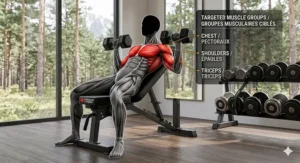
The most expensive error Canadian home gym builders make is prioritising advertised features over actual build quality and weight capacity. Marketing emphasises “15 adjustment positions!” or “includes leg attachment!” while glossing over the reality that the frame wobbles under 90 kg loads or the adjustment mechanism strips after three months. What matters: does the bench stay stable during heavy pressing? Do the adjustment pins lock securely? Is the padding dense enough to prevent bottoming out? These functional factors determine whether equipment serves you for a decade or disappoints within six months.
Underestimating space requirements leads to cramped, dangerous workout areas. That bench measuring 122 cm long fits in your spare bedroom, but have you accounted for the 60 cm of clearance you need behind it to safely load and unload weights? Or the 90 cm to each side required to place dumbbells between sets without creating tripping hazards? Canadian homes often feature basement poles, furnaces, or ductwork that looks “out of the way” until you’re trying to bench press and your knuckles scrape the obstacle mid-rep. Mock up your intended workout area with cardboard cutouts or painters tape before ordering equipment. Verify you can lie flat, place dumbbells safely, and perform standing exercises without constant spatial awareness draining mental energy from the actual training.
Ignoring shipping and return logistics creates expensive headaches. That bench listed on Amazon.ca might ship from a third-party seller in California, meaning customs fees, extended delivery times, and nightmare return scenarios if the product arrives damaged. Always verify “Ships from and sold by Amazon.ca” status before ordering. Check whether items ship assembled or require extensive assembly—some benches arrive in pieces requiring 60-90 minutes of construction with tools not included. Read the fine print on return policies. Many fitness equipment items carry restocking fees or require the buyer to arrange return shipping at their expense. A 35 kg bench costs $80-120 to ship across provinces, potentially negating any initial savings on a discounted purchase.
Buying mismatched weight increments for your training style kills workout momentum. If you’re doing strength-focused training with low reps (3-6 per set), you need small weight jumps of 1-2.5 kg to progress safely. Adjustable dumbbells with 2.5 kg increments mean going from 15 kg to 17.5 kg—too large a jump that causes form breakdown. This forces you to stay at 15 kg until you’re strong enough for 17.5 kg, slowing progression. Conversely, someone doing high-rep conditioning work (15-25 reps) can easily handle 5 kg jumps between sets because fatigue limits output more than absolute strength. Match your dumbbell increments to your training approach rather than assuming all adjustment systems work equally for all training styles.
Overlooking warranty coverage and replacement part availability bites hard 18 months later. That off-brand bench saves $100 today but offers no warranty and no replacement parts when the adjustment pin breaks. Meanwhile, Bowflex provides one-year frame warranties and sells replacement parts through Canadian customer service. CAP Barbell maintains Canadian distribution and parts inventory. Marcy offers customer support through their Canadian retailer network. This matters because mechanical equipment experiences wear—adjustment pins, collars, and upholstery pads eventually need replacement regardless of quality. Factor in long-term serviceability rather than just upfront cost.
Weight Bench and Dumbbell Set for Beginners: Starting Your Home Gym Journey
Canadian fitness newcomers should approach home gym equipment with measured enthusiasm rather than all-in commitment. Your first weight bench and dumbbell set needs to support skill development and habit formation without requiring mortgage-level investment before confirming your dedication to consistent training.
Start with adjustable dumbbells in the 2-15 kg per hand range. This covers bodyweight assistance exercises, isolation work, and initial compound movements for beginners of both genders. Many Canadians make the mistake of buying 20-30 kg dumbbells assuming they’ll “grow into them,” then discover that poor form with excess weight creates injury patterns that derail training for months. Beginning with manageable loads lets you master movement patterns—the motor skills that make strength training effective. You can always add heavier dumbbells later; you can’t unlearn movement dysfunction caused by lifting too heavy too soon.
Choose a basic adjustable bench over flat-only designs. The $50-75 price premium for incline/decline capability buys exercise variety that prevents boredom—one of the primary reasons beginners abandon home training. Being able to switch from flat pressing to incline work to decline sit-ups within the same workout makes training sessions feel dynamic rather than repetitive. This psychological factor matters more than equipment specifications for developing consistent training habits. However, don’t obsess over having eight adjustment positions versus five. Three positions (flat, incline around 40°, decline around -15°) covers 90% of beginner exercise needs.
Budget $400-$550 CAD for a beginner setup that’ll serve you 12-24 months. This typically includes adjustable dumbbells up to 15 kg each, a quality adjustable bench with 135-180 kg capacity, and possibly a basic storage rack or mat. Resist the temptation to add cable attachments, specialty bars, or other accessories marketed as “essential.” You don’t need them yet. Focus budget on quality foundational pieces rather than mediocre versions of many items. One excellent bench beats three marginal pieces of equipment every time.
Prioritise instruction over equipment during your first 3-6 months. The internet overflows with free Canadian fitness content on YouTube—channels like Athlean-X, Jeff Nippard, and Renaissance Periodisation offer world-class coaching without subscription fees. Some Canadian beginners benefit from 4-6 sessions with a qualified personal trainer who can assess movement patterns and provide form corrections. The Canadian Society for Exercise Physiology (https://www.csep.ca) maintains a database of certified professionals across Canada. This investment in education prevents developing movement habits that later require expensive rehabilitation to correct.
Advanced Strength Training: Maximising Your Weight Bench and Dumbbell Combination
Once you’ve built base strength through 12-18 months of consistent training, your weight bench and dumbbell set either becomes a springboard for continued development or a limiting factor preventing further progress. Advanced training requires sophisticated programming rather than just adding weight to familiar movements.
Implement progressive overload through multiple variables, not just load increases. When you can no longer add weight to dumbbells, manipulate tempo (slowing the eccentric phase to 4-5 seconds increases time under tension dramatically), reduce rest periods (cutting 90 seconds between sets to 45 seconds challenges conditioning alongside strength), or change angle (progressing from 30° incline to 45° incline effectively increases difficulty without adding weight). These variables let you continue progressing even with fixed dumbbell ranges. A properly designed program squeezes 18-24 additional months of development from equipment that seems “maxed out” through crude weight-only progression.
Advanced periodisation structures prevent plateaus and overuse injuries. Canadian research on strength development, including studies from the Canadian Society for Exercise Physiology (https://csepguidelines.ca), demonstrates that linear progression (adding weight every week) works for beginners but fails for advanced trainees. Instead, implement undulating periodisation—heavy days with 4-6 reps, moderate days with 8-12 reps, and light days with 15-20 reps, all within the same week. This approach stresses different energy systems and muscle fibres while providing recovery between heavy sessions. Your weight bench accommodates all these rep ranges through strategic exercise selection and load manipulation.
Unilateral training becomes increasingly important as you advance. Pressing both dumbbells simultaneously represents bilateral training, which masks strength imbalances between sides. Single-arm pressing, where one arm works while the other remains idle, forces each side to carry full load independently. This reveals and corrects asymmetries before they manifest as injuries. Advanced Canadian athletes often discover their dominant side handles 8-15% more load than their non-dominant side—information that lets you program targeted corrective work. Your bench setup supports this progression without requiring additional equipment purchases.
Incorporate accommodating resistance through pauses and isometric holds. When bench pressing dumbbells, pause for 2-3 seconds at the bottom position before pressing back up. This eliminates the stretch reflex (bounce) that typically contributes 10-15% of force production, making the lift significantly harder without adding weight. Similarly, holding dumbbells at specific angles creates isometric stress that builds strength at those precise positions—valuable for addressing sticking points in your pressing movements. These advanced techniques extract maximum development from existing equipment rather than constantly chasing heavier loads.
Space-Saving Solutions: Compact Weight Bench and Dumbbell Setups for Canadian Homes
Urban Canadian living often means choosing between dedicated workout space and other household needs. Intelligent equipment selection and creative storage solutions let you maintain effective training without surrendering entire rooms to gym equipment.
Foldable benches that achieve genuine flat storage transform space utility. Quality fold-flat benches collapse to 10-15 cm thick, allowing vertical storage against walls or horizontal placement under beds. The FLYBIRD models mentioned earlier exemplify this design philosophy—full functionality during use, minimal footprint when stored. However, verify that “foldable” means tool-free folding. Some benches require removing bolts or pins, effectively making them permanent fixtures because nobody bothers with 10-minute teardown after every workout. Quick-release mechanisms that fold in under 30 seconds actually get used consistently.
Adjustable dumbbells eliminate the square footage consumed by fixed-weight sets. Fifteen pairs of fixed dumbbells occupying 2-3 metres of wall-mounted rack space becomes two adjustable dumbbells sitting in a corner, freeing that wall for other purposes. The space savings multiply in Canadian condos where every square metre affects property values and livability. Calculate the opportunity cost: if you live in downtown Toronto or Vancouver where residential space costs $1,000+ per square metre, a 2-metre dumbbell rack represents $2,000+ in real estate opportunity cost beyond the equipment price itself. Adjustable dumbbells costing $600 suddenly look reasonable when you factor in the $2,000 of space they preserve.
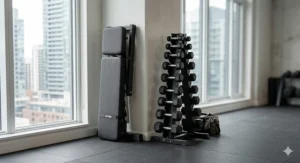
Vertical storage racks optimise floor space in Canadian basements and spare rooms. Rather than spreading dumbbells horizontally across floor space, vertical A-frame or tree racks occupy 0.4-0.6 square metres of floor while storing complete dumbbell sets. These work particularly well in Canadian basements with low ceiling heights where wall-mounted storage can’t extend as high as in standard rooms. Position vertical storage near workout areas but out of the primary training zone, allowing you to access weights quickly without creating tripping hazards during active sets.
Multipurpose furniture integration disguises fitness equipment in living spaces. Some benches feature neutral aesthetics and padding quality that functions as actual seating when not deployed for training. Obviously you’re not using a workout bench as your primary couch, but in home offices or dens, a quality flat bench serves as additional seating that happens to support 180 kg of pressing load. Canadian interior designers increasingly recommend this approach for clients in townhouses and apartments where distinct gym rooms aren’t feasible. Your “fitness equipment” simply becomes functional furniture that serves multiple purposes.
Maintaining Your Weight Bench and Dumbbell Set Through Canadian Seasons
Equipment longevity in Canadian environments requires proactive maintenance rather than reactive repairs. Temperature cycling, humidity variations, and harsh winters challenge fitness equipment durability far beyond what manufacturers encounter in climate-controlled warehouse testing.
Climate-induced wear patterns differ between heated and unheated storage. Indoor, climate-controlled storage protects equipment from extreme temperature swings but introduces challenges from household humidity, particularly in Canadian basements prone to moisture during spring thaw. Vinyl and leather upholstery can develop mildew if air circulation remains poor. Position equipment away from exterior walls where condensation accumulates, and consider a dehumidifier if basement humidity exceeds 60% for extended periods. Unheated garage storage subjects equipment to -25°C to +35°C temperature ranges across the year. Metal contracts/expands, causing bolt tension to fluctuate. Plastic components in adjustment mechanisms become brittle in extreme cold and can crack under load. Check and retighten all bolted connections every 3-4 months, applying thread-locking compound to bolts that frequently loosen.
Bearing and pivot point lubrication prevents premature adjustment mechanism failure. Quality benches use metal bushings or bearings in adjustment joints. These require periodic lubrication with white lithium grease or PTFE-based lubricant. Apply sparingly every 6 months for benches in heated spaces, every 3-4 months for unheated storage. Excess lubricant attracts dust and debris, creating grinding pastes that accelerate wear rather than preventing it. Wipe away old lubricant before applying fresh material. Avoid WD-40 or similar penetrating oils—they temporarily lubricate but evaporate quickly, leaving joints dry and prone to seizing.
Upholstery maintenance extends padding life and prevents material degradation. Wipe vinyl or leather padding with mild soap solution monthly, removing salt from sweat deposits that accelerate material breakdown. Canadian winters mean indoor training during heating season, which reduces humidity and dries out upholstery materials. Apply leather conditioner every 2-3 months to maintained flexibility and prevent cracking. For high-traffic equipment used by multiple family members, consider vinyl protectants formulated for automotive applications—these provide UV and chemical resistance superior to general-purpose cleaners.
Dumbbell maintenance consists primarily of coating inspection and handle cleaning. Rubber-coated dumbbells develop cracks and tears over time, particularly where the coating meets the handle. Inspect coating quarterly and apply rubber repair compound (available at automotive stores) to small cracks before they propagate. Chrome handles maintain shine with occasional brass polish application—this removes fingerprint acids and sweat residue that cause pitting. Knurled grip sections collect skin cells and moisture. Scrub with a stiff brush and soapy water monthly, then dry thoroughly. Rusted knurling provides better grip than chrome but stains hands and clothing, so personal preference determines whether you allow rust patina development or maintain original finish.
Canadian Regulations and Safety Standards for Home Gym Equipment
While Canadian regulations don’t mandate specific home gym equipment standards the way commercial facilities face oversight, awareness of safety principles and voluntary standards protects you from dangerous products marketed through online channels.
The Canadian Standards Association (CSA) provides voluntary certification for fitness equipment. CSA certification indicates products underwent independent testing for structural integrity, material safety, and reasonable use patterns. Not all quality equipment carries CSA certification because manufacturers must pay for testing, but presence of CSA marking provides third-party verification of safety claims. Be particularly wary of unbranded equipment from unknown manufacturers lacking any safety certifications—these often use substandard materials and engineering that creates injury risk. Search for products bearing CSA, ASTM, or equivalent recognised safety standards.
Weight capacity claims require skepticism when official standards don’t exist. Unlike ladders or industrial equipment with defined testing protocols, fitness benches face no mandatory Canadian standards for capacity ratings. Manufacturers self-certify weight limits, leading to wildly optimistic claims. A $150 bench claiming 363 kg (800 lb) capacity almost certainly inflates that number through static testing (weight placed on stationary bench) rather than dynamic testing (user moving weights through exercise ranges). Apply the “margin of safety” principle: if you weigh 90 kg and plan to press 50 kg dumbbells, you’re generating 140 kg of actual force on the bench. Purchase equipment rated for at least double that load (280+ kg) to ensure adequate safety margin. This accounts for dynamic forces from accelerating weights and provides a cushion for manufacturer exaggeration.
Product liability laws provide consumer protection if defective equipment causes injury. Under Canadian product liability law, manufacturers and retailers can be held responsible for injuries caused by defective products. Keep purchase records, assembly instructions, and any communications with sellers. Document equipment condition with photos if defects appear. If equipment fails during normal use and causes injury, consult with a lawyer experienced in product liability before accepting settlement offers from manufacturers or insurance companies. Most fitness equipment carries limited warranties (typically 1-3 years for frames, 90 days for parts), but warranty coverage differs from legal liability for injuries caused by product failures.
Provincial regulations occasionally affect home gym equipment in multifamily dwellings. Some Canadian condo corporations and landlords restrict fitness equipment that could damage floors, disturb neighbours, or create safety hazards in common areas. Review your building’s bylaws before purchasing equipment, particularly in Quebec where condo regulations can be especially detailed. In Ontario, landlords can’t arbitrarily prohibit tenants from owning fitness equipment, but can enforce reasonable rules about noise, floor protection, and safe installation. If dispute arises, document your equipment’s weight, noise levels, and protective measures (floor mats, rubber weights) before negotiating with building management.
Budget-Friendly Alternatives: Building Your Home Gym Without Breaking the Bank
Canadian fitness enthusiasts working within tight budgets can absolutely build effective training setups through strategic shopping and creative compromises. The key involves distinguishing must-have quality elements from nice-to-have features that carry premium pricing.
Consider buying used equipment from local Canadian sellers on Facebook Marketplace or Kijiji. Home gym equipment experiences boom-and-bust cycles where enthusiastic buyers purchase equipment in January/February, use it for 2-3 months, then sell barely-used gear in April/May after New Year’s resolutions fade. This pattern creates opportunities to acquire $600 equipment for $300-$400 during spring selling season. Inspect used benches carefully for welded joint integrity, bolt tightness, and upholstery condition. Test adjustment mechanisms under load before buying—bring a friend who can sit on the bench while you manipulate adjustment positions. Used dumbbells represent excellent value because solid metal weights don’t deteriorate—slight rust patina on iron dumbbells affects appearance but not function. However, avoid used adjustable dumbbells with complex mechanisms (dial systems, magnetic locks) because internal component wear can’t be assessed visually and replacement parts often cost more than buying new equipment.
Shop end-of-season sales at Canadian retailers in August-September and January. Canadian Tire, Sport Chek, and Fitness Depot typically clear fitness inventory twice annually—late summer before introducing fall/winter product lines, and January after holiday inventory movement. Discontinued models or cosmetically imperfect stock (packaging damage, minor scratches) sells at 30-50% discounts. This timing requires planning ahead rather than buying impulse, but saves substantial money. Subscribe to retailer email lists and follow their social media to receive sale notifications. Stack sale pricing with credit card rewards programs or retailer loyalty points for additional savings.
DIY solutions for bench accessories reduce total equipment costs. Rather than buying specialty leg attachments, leg rollers, or preacher curl attachments, create functional equivalents with household items. A rolled yoga mat secured with velcro straps functions as a leg roller. A large Swiss ball provides incline/decline surface variations. These workarounds won’t match purpose-built accessories, but bridge the gap between basic equipment and premium setups while saving $50-150. Canadian DIY culture and resourcefulness make this approach particularly appealing—our climate and geography historically required making do with available resources rather than ordering precisely what we wanted.
Progressive upgrading over 2-3 years distributes costs rather than front-loading investment. Start with minimal equipment ($300-$400 for basic bench and light dumbbells), train consistently for 6-12 months, then add heavier dumbbells ($100-$200). After another 6-12 months, upgrade the bench if your initial choice proves limiting. This approach costs roughly the same total as buying premium equipment immediately, but allows you to confirm training consistency before committing larger sums. You also gain experience understanding what features genuinely matter versus what looked important on product specifications but proves irrelevant in actual training. Budget approximately $500-$800 annually for 2-3 years to build a comprehensive home gym through strategic additions rather than complete purchases.
FAQ
❓ Can I build significant muscle using just a weight bench and dumbbell set?
❓ How much space do I need for a functional weight bench and dumbbell setup in a Canadian home?
❓ What weight range should my dumbbells cover for effective long-term progression?
❓ Do adjustable dumbbells work as well as fixed-weight dumbbells for building strength?
❓ How do Canadian shipping and duties affect weight bench and dumbbell set purchases?
Conclusion: Making Your Weight Bench and Dumbbell Set Investment Count
The best weight bench and dumbbell set for your Canadian home gym balances capability with budget, matches your available space, and aligns with your current training experience rather than aspirational goals you might never pursue. After reviewing dozens of combinations and considering feedback from thousands of Canadian users, clear patterns emerge.
Budget-conscious beginners should invest $350-$500 in a quality adjustable bench paired with dumbbells covering 5-20 kg per hand. This provides 12-24 months of progressive training while confirming your commitment before larger purchases. The Marcy SB-228 with basic adjustable dumbbells, or the FLYBIRD FB149 with Amazon Basics adjustables, represent this category’s sweet spot—enough quality to prevent frustration, sufficient capacity for legitimate progression, and pricing that doesn’t require spousal negotiations or credit card juggling.
Intermediate trainees with consistent training histories and clear development goals benefit from investing in the $600-$900 range. The FLYBIRD FB149 paired with CAP Barbell 60lb adjustables or similar mid-tier combinations deliver quality construction and weight ranges supporting 2-3 years of continued strength development. This investment level acknowledges your established training habit while avoiding premium pricing for features you might not utilise.
Advanced lifters and serious Canadian fitness enthusiasts should consider premium setups in the $1,000-$1,700 range. The Bowflex SelectTech systems represent refined engineering that eliminates the compromises inherent in budget equipment. When you’re pressing 35+ kg dumbbells for repetitions and know that training represents a permanent lifestyle component rather than temporary interest, premium equipment proves cost-effective over 5-10 year timelines.
Regardless of budget tier, prioritise these non-negotiable factors: genuine stability under working loads (not just marketing weight claims), secure adjustment mechanisms that won’t fail during use, Canadian shipping and warranty support, and sufficient progressive overload capacity for your projected development timeline. The most expensive mistake involves purchasing equipment that limits your progress within 6-12 months, forcing premature upgrades that cost more than buying appropriately from the start.
Your weight bench and dumbbell set investment reflects commitment to long-term fitness development. Choose wisely based on honest self-assessment, maintain equipment properly through Canadian seasonal challenges, and focus on progressive training rather than perpetually seeking better equipment. The bench and dumbbells represent tools—your consistent effort determines results.
Recommended for You
- 7 Best Weight Bench and Barbell Set Canada 2026
- Weight Bench Pad Width Guide: 7 Must-Know Facts for Canada 2026
- Weight Bench Weight Capacity Guide – 7 Best Options Canada 2026
Disclaimer: This article contains affiliate links. As an Amazon Associate, I earn from qualifying purchases. If you purchase products through these links, we may earn a small commission at no additional cost to you.
✨ Found this helpful? Share it with your friends! 💬🤗
