In This Article
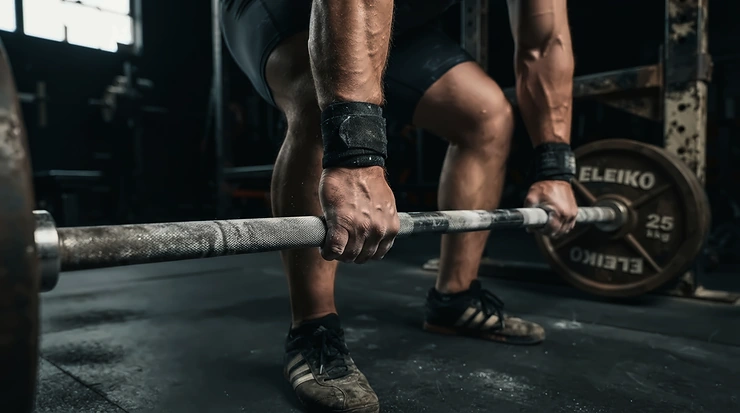
Your barbell is the only piece of gear that touches every single rep. Not your belt, not your shoes, not that lucky singlet. Every squat, every bench, every pull runs through one 20 kg (45 lb) length of steel, so choosing the best powerlifting barbell is the highest-leverage equipment decision you’ll make.
It’s also a confusing one. Two bars can both be “29 mm, 200K PSI, aggressive knurl” on paper and feel nothing alike in your hands. Prices swing from a couple of hundred dollars to well over C$1,500. Then there’s the jargon: whip, volcano knurl, bronze bushings, F-rating. 🏋️
This guide cuts through it. I researched seven real bars across budget, mid-range and premium tiers, using manufacturer specs and aggregated review sentiment from independent testers. Everything is framed for Canadian lifters, so you’ll find metric units first, CAD price ranges, and a look at how Canada Powerlifting’s equipment rules affect your choice.
What is the best powerlifting barbell? A power bar is a stiff, 29 mm-shaft, 20 kg barbell with deep knurling, centre knurling and powerlifting grip marks, built for the squat, bench press and deadlift. The best powerlifting barbell for you balances tensile strength, low whip, grip aggression and budget. For competitors it also means the bar meets federation specs. Knurling, that crosshatch grip texture, is one of the first things to understand before you buy.
Along the way we’ll cover a competition barbell review framework, the best weightlifting barbell for beginners, what tensile strength (PSI) actually tells you, how bar whip affects your lifts, and what knurling is for deadlifts.
Quick Comparison Table: Best Powerlifting Barbell Options at a Glance
| Bar | Shaft / Tensile Strength (PSI) | Knurl Style | Price Range (CAD, approx.) | Best For |
|---|---|---|---|---|
| Rogue Ohio Power Bar | 29 mm / 205,000 (200,000 stainless) | Deep, coarse, centre knurl | C$450-C$650 | All-round best powerlifting barbell pick for most lifters |
| Eleiko IPF Powerlifting Competition Bar | 29 mm / 215,000-236,000 (varies by listing) | Very sharp, bare steel | Well above C$1,500 | Federation meets and premium buyers |
| REP Fitness Black Diamond Power Bar | 29 mm / 200,000 | Aggressive mountain | C$500-C$750 | Deadlift-focused lifters |
| Texas Power Bar PRO | 29 mm / 200,000 | Aggressive or medium | C$500-C$700 | Lifters who want the Texas feel with IPF approval |
| Synergee Rhino Power Bar | 29 mm / 190,000 | Aggressive volcano, centre knurl | C$350-C$450 | Budget-minded serious lifters |
| Rogue B&R Bar 2.0 | 29 mm / 205,000 | Moderate, dual marks | C$450-C$600 | Beginners and hybrid training |
| XMARK Lumberjack | 28 mm / not published | Moderate, no centre knurl | C$200-C$300 | Garage gyms on a tight budget |
Prices are approximate, change often, and vary by retailer and Canadian province. Check current price before buying.
Looking at the table, the Rogue Ohio Power Bar delivers the best balance of spec and price for most lifters. If you’re headed to sanctioned meets, the Eleiko IPF Powerlifting Competition Bar is the benchmark, but you pay a steep premium for it. Budget buyers should note that the Synergee Rhino Power Bar trades a bit of tensile strength for a much lower entry price, while the XMARK Lumberjack is a capable all-rounder rather than a true power bar.
💬 Just one click — help others make better buying decisions too!😊
Top 7 Powerlifting Barbells: Expert Analysis
1. Rogue Ohio Power Bar — the benchmark most others get measured against
The Rogue Ohio Power Bar earns its spot by being the bar other bars get compared to. It’s machined and assembled in Columbus, Ohio, with a 29 mm shaft and 205,000 PSI tensile strength (200,000 PSI on the stainless version), per Rogue’s own specs.
That PSI figure translates to a shaft that stays rigid under heavy loads, which matters most on unracking a heavy squat or bench press. Bronze bushings and a snap-ring design give a smooth, consistent sleeve rotation. Rogue rates the durability at F8-R and backs the bar with a lifetime warranty against bending. The 20 kg version is IPF-approved, with powerlifting knurl marks and a centre knurl.
Based on the spec comparison, this is the bar for lifters who want zero drama: no flex surprises, predictable grip, proven reputation. Reviewers consistently describe it as extremely rigid with little to no whip, and independent reviewers have called it an outstanding deal for the money. A common caution in listings is that the knurling can feel rough for beginners’ hands.
Pros:
- ✅ Very rigid 205K PSI shaft
- ✅ IPF-approved 20 kg version available
- ✅ Lifetime warranty against bending
Cons:
- ❌ Aggressive knurl is hard on new hands
- ❌ Black zinc finish can wear with heavy use
Price: roughly C$450-C$650. For serious squatting, benching and pulling, this is excellent value.
2. Eleiko IPF Powerlifting Competition Bar — the Swedish gold standard for meets
The Eleiko IPF Powerlifting Competition Bar is the bar you see on the platform at sanctioned championships, and it’s priced accordingly. It’s IPF-certified, 29 mm in diameter, built in Sweden, and finished in bare, untreated steel to meet IPF rules.
Tensile strength is a good example of why you should read spec sheets carefully. Older listings show 215,000 PSI, while Eleiko’s current product sheet lists 236,000 PSI. Either way, the steel is among the strongest in the category. The 12 mm narrow flanges position plates closer to the centre for better control, and self-lubricating bronze bushings with graphite control rotation.
What the spec sheet won’t tell you outright: bare steel develops a cosmetic patina and needs regular brushing, especially if you use chalk. The knurling is rated 1.5 (“very sharp”), so hands matter here.
On review sentiment, I couldn’t verify user reviews on the listings I checked, so I won’t invent any. Independent coverage consistently highlights the bar’s competition pedigree and reputation.
Pros:
- ✅ IPF-certified for sanctioned competition
- ✅ Very sharp, uncoated grip
- ✅ Lifetime warranty on current models
Cons:
- ❌ Premium price tag
- ❌ Bare steel needs regular brushing
Price: well above C$1,500. Worth it for competitors who want exact specs; overkill for most garage gyms.
3. REP Fitness Black Diamond Power Bar — best deep-knurl pick for deadlift fans
The REP Fitness Black Diamond Power Bar is REP’s top-tier powerlifting bar, and its party trick is a deep mountain-style knurl built for heavy deadlifts. It’s a 29 mm, 20 kg bar with 200,000 PSI tensile strength, bronze bushings and IPF knurl marks for benching.
You can get it in Cerakote with Duracoat sleeves, or in stainless steel with chrome or stainless sleeves. Garage Gym Reviews scored the Double Black Diamond variant 4.5 and called it competitively priced for a high-end power bar. The flip side is spelled out in the same review: the knurling may be too aggressive for some, and the bar isn’t meant for versatile use.
That aggression is a feature if you pull heavy. On a deadlift, grip is often the first thing to fail, and a deep knurl gives you a bigger margin. For squats, it means your back and hands will feel it.
Customers on REP’s own storefront describe the knurl as aggressive without being painful, and REP’s EU store lists a 4.9 average across 122 reviews at the time of research (a retailer-hosted figure, so read it with that in mind).
Pros:
- ✅ Deep mountain knurl for heavy pulls
- ✅ Stainless steel option available
- ✅ Competitive price for a top-tier bar
Cons:
- ❌ Knurling may be too aggressive for some
- ❌ Not a versatile bar for Olympic lifting
Price: roughly C$500-C$750. Strong value if deadlifts are your priority.
4. Texas Power Bar PRO — legendary feel, now with IPF approval
The Texas Power Bar PRO is the modern evolution of one of the most iconic power bars ever made, and the key upgrade over the classic is IPF approval. The brand has been hand-building bars since 1980.
The specs: 29 mm shaft, 200,000 PSI tensile strength, a 16.5″ loadable sleeve, tighter straightness tolerance and a wider centre knurl than the Original. You choose between aggressive and medium knurling. The Texas Power Bar Original, by contrast, uses a 28.5 mm shaft at 190,000 PSI and is listed as not meeting all major competition specs, so don’t confuse the two.
Here’s a practical interpretation: the wider centre knurl gives more squat stability, and the choice of knurl aggression lets you tune the bar to your hands. It’s rare to get that option on a competition-grade bar.
Much of the praise for Texas bars appears on the brand’s own site, so independent review depth is thinner than for some rivals. I’d read it as strong heritage and an honest spec sheet rather than a verified consensus.
Pros:
- ✅ IPF-approved with 29 mm shaft
- ✅ Choice of aggressive or medium knurl
- ✅ Wider centre knurl for squat stability
Cons:
- ❌ Less independent review data online
- ❌ Priced above entry-level power bars
Price: roughly C$500-C$700. A great pick for lifters who care about heritage and knurl options.
5. Synergee Rhino Power Bar — best budget bar with real power-bar specs
The Synergee Rhino Power Bar proves you don’t need to spend premium money to get a real power bar. It has a 29 mm shaft, 190,000 PSI tensile strength, a listed 1,500 lb capacity, Cerakote finish, volcano knurling, a centre knurl and one set of powerlifting marks.
That 190K PSI figure sits slightly below the 200K+ bars here, which means a touch more flex in theory and a tad less stiffness at the extremes. For most lifters, in the gym and not on the world stage, that’s a rounding error. One reviewer called it a budget version of the Rogue Ohio Power Bar and noted that the knurl grips well without hurting the hands. That makes it a smart first power bar.
On sleeve feel, expect a power-bar-style rotation, slower and more controlled than a weightlifting bar. Synergee also doesn’t claim IPF approval in the listings I found, so competitors should confirm federation rules first.
Pros:
- ✅ Real 29 mm power bar at a low price
- ✅ Centre knurl and powerlifting marks
- ✅ 1,500 lb listed capacity
Cons:
- ❌ 190K PSI is lower than premium bars
- ❌ Not listed as IPF-approved
Price: roughly C$350-C$450. Excellent value for home lifters.
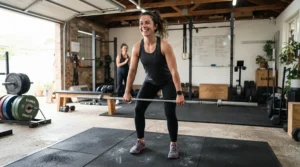
6. Rogue B&R Bar 2.0 — the multi-purpose bar that favours strength
The Rogue B&R Bar 2.0 is for lifters who want a power-style shaft without committing to a pure power bar. It was built to the specs of strength coaches Mike Burgener and Mark Rippetoe, with a 205,000 PSI shaft and dual knurl marks for both Olympic weightlifting (IWF) and powerlifting (IPF).
The knurl uses Rogue’s Ohio pattern, described as solid but non-abrasive. That’s a genuinely useful trait if you’re new to barbells and your hands aren’t calloused yet. It’s why this is my pick for the best weightlifting barbell for beginners who still want to chase a 200 kg squat someday. Customers on Rogue’s site describe a rigid feel with minimal whip.
Don’t expect the whip of a dedicated weightlifting bar. The listing itself positions this for heavy compound lifts, which makes it more strength-biased than a pure Olympic bar.
Pros:
- ✅ 205K PSI shaft at a mid-range price
- ✅ Dual IWF and IPF knurl marks
- ✅ Grippy but not harsh on hands
Cons:
- ❌ Not a true competition power bar
- ❌ Less whip than Olympic-specific bars
Price: roughly C$450-C$600. A balanced choice for beginners who may grow into powerlifting.
7. XMARK Lumberjack — the garage-gym starter with real versatility
The XMARK Lumberjack is the bar for lifters who want to get started without spending much. It’s a 7-foot, 28 mm bar with a 1,000 lb listed capacity, brass bushings, chrome sleeves, and a moderate flex designed for general strength training.
Honest framing matters here. This isn’t a true power bar: the shaft is thinner at 28 mm, there’s no centre knurl, and independent reviewers note it has some whip that might not suit very heavy benching. FitnessVolt calls it a powerlifting-style pick for garage gyms, and Garage Gym Reviews named it runner-up in its best barbell on Amazon roundup.
If low-bar squats are your thing, the lack of a centre knurl may push you toward a bar pad or a different bar. Check Amazon.ca for the current listing and availability, since stock varies.
Pros:
- ✅ Very affordable for a 28 mm bar
- ✅ Moderate flex suits mixed training
- ✅ Brass bushings for smooth rotation
Cons:
- ❌ No centre knurl for squat grip
- ❌ Not a stiff, true power bar
Price: roughly C$200-C$300. Great value for beginners and casual lifters.
Specs Compared Side by Side
| Bar | IPF Status | Whip Feel (per listings/reviews) | Warranty (per manufacturer) | Best For |
|---|---|---|---|---|
| Rogue Ohio Power Bar | Approved (20 kg) | Minimal | Lifetime vs bending | Serious all-round lifters |
| Eleiko IPF Powerlifting Competition Bar | Certified | Stiff | Lifetime | Competitors |
| REP Fitness Black Diamond Power Bar | IPF knurl marks | Minimal | Check REP | Deadlift-focused lifters |
| Texas Power Bar PRO | Approved | Stiff | Check brand | Heritage and knurl options |
| Synergee Rhino Power Bar | Not listed | Stiff-ish | Check Synergee | Budget power bar |
| Rogue B&R Bar 2.0 | Dual-marked | Minimal | Check Rogue | Beginners, hybrid use |
| XMARK Lumberjack | No | Moderate | Check XMARK | Starter garage gyms |
Reading across the table, the Rogue Ohio Power Bar and Eleiko IPF Powerlifting Competition Bar are the only two with clear IPF status plus strong durability promises. If you’re not competing, the Synergee Rhino Power Bar and Rogue B&R Bar 2.0 offer most of the practical benefit at a lower cost. The XMARK Lumberjack is the budget outlier: good value, but a different kind of bar.
Practical Guide: Setting Up and Caring for Your New Power Bar
A great bar can be ruined by bad habits. Here’s the first-30-days playbook. 🔧
Unbox and inspect. Roll the shaft on a flat surface to check straightness. Spin each sleeve and listen for grinding. Any wobble or noise right out of the box is a warranty conversation, not something to “break in.”
Set up your rack right. Make sure your J-hooks have UHMW plastic liners. Metal-on-knurl contact slowly wears the grip surface. Rogue notes the Rogue Ohio Power Bar has 51.5″ between sleeves, so it fits standard-width power racks.
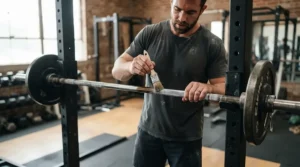
Clean the knurl weekly. Use a nylon (synthetic bristle) brush, not a steel one, particularly on stainless shafts, as Rogue itself recommends. Chalk packs into knurl valleys and holds moisture, which is how rust starts.
Oil lightly. A thin wipe of 3-in-1 oil on coated or bare steel bars every few weeks prevents surface rust. This matters in Canada, where winter garage humidity and temperature swings can sneak up on bare steel. Eleiko says its bare-steel bar develops a cosmetic patina, and brushing after use, especially with chalk, keeps it in good shape.
Common first-month mistakes: dropping the bar from lockout (power bars are for controlled lowering), storing it leaning against a wall (store it horizontally or in a vertical holder), and skipping collars when loading heavy. Add that up, and a few minutes of weekly care adds years to your bar’s life.
Real-World Scenarios: Which Bar Fits Which Lifter?
Numbers are great, but your situation decides the winner. Here are three profiles to match your own.
Scenario 1: The new garage lifter in Calgary. Budget around C$300, training three times weekly, still learning to squat. The XMARK Lumberjack keeps costs low and forgives sloppy early reps. If budget stretches to C$450, the Rogue B&R Bar 2.0 gives a stiffer shaft that grows with you, and its gentler knurl is kinder to beginner hands.
Scenario 2: The intermediate lifter chasing a 200/140/240 total. Home gym in Ontario, training four days a week, wanting real power-bar feel without the premium tax. The Synergee Rhino Power Bar is the value play, while the Rogue Ohio Power Bar is the “buy it once” upgrade. Prioritize centre knurl and powerlifting marks for consistency.
Scenario 3: The local-meet competitor. Entering provincial meets with an eye on nationals. Federation rules matter, so check what your meet director requires. The Eleiko IPF Powerlifting Competition Bar and Texas Power Bar PRO are federation-minded options, though most lifters train on a cheaper bar and simply lift the meet-day bar when it counts.
The pattern: pick for your next two years, not this month. A bar that’s slightly more than you need today avoids a repurchase later.
How to Choose the Best Powerlifting Barbell
Here’s the five-minute decision process I’d use.
- Decide on your federation needs first. If you’ll compete, confirm which bars your federation approves. Everything else is secondary.
- Check shaft diameter. Most dedicated power bars are 29 mm. Thinner 28 mm bars bend more and suit mixed training better.
- Compare tensile strength (PSI). Look for roughly 190,000 PSI at minimum for a power bar; 200,000+ is common on premium models.
- Match knurl aggression to your hands. Deep, sharp knurl helps heavy pulls but punishes squats and high-rep work.
- Confirm centre knurl and powerlifting marks. These make squat positioning repeatable and bench grip consistent.
- Look at sleeve mechanics. Bronze bushings give the slower, controlled rotation most powerlifters prefer.
- Read the warranty carefully. A bending warranty is a promise about the steel; shipping and coating terms often differ.
Tensile Strength (PSI): What the Number Really Means
Tensile strength (PSI) is a measure of how much stress the steel can take before it permanently deforms. Rogue’s own explanation says it measures the maximum load a barbell can support before bending. Higher PSI generally means a stiffer, more rigid shaft, which is why premium power bars cluster around 200,000 PSI.
But here’s what most buyers overlook: PSI is only one part of the durability story. Rogue itself says that a very high number can be inflated to the point it shortens the bar’s life, noting that 205K sits in an optimal range. Manufacturer methods also differ, which is why Rogue also publishes an F-scale durability rating (F8-R on the Rogue Ohio Power Bar).
For context, the bars in this guide range from 190,000 PSI (Synergee Rhino Power Bar) to 205,000 PSI (Rogue Ohio Power Bar, Rogue B&R Bar 2.0) and as high as 215,000-236,000 PSI on the Eleiko IPF Powerlifting Competition Bar, depending on the listing. For a lifter squatting 180 kg, any of these will hold up. Treat PSI as a tiebreaker, not the headline.
Bar Whip: Friend, Foe or Irrelevant?
Bar whip is the elastic flex of the shaft under load. A bar bends when loaded and accelerated, then springs back. Weightlifters love that, because whip can help drive the bar through a clean or snatch. Rogue’s guidance is that 29 mm bars are much stiffer than 28 mm bars, so some of that whip disappears in a power bar, and that whip is needed less in competition because powerlifts are less dynamic.
In practice, stiffness is a feature for squats and benches. You want the bar quiet and predictable on your back and chest. For deadlifts, a little whip can actually help, because the bar bends before the plates break from the floor. That’s why specialty deadlift bars exist, and we’ll get to those shortly.
So how much bar whip do you want? If you only train the big three, minimal whip is the safe default: the Rogue Ohio Power Bar, Texas Power Bar PRO and Eleiko IPF Powerlifting Competition Bar all fit. If you mix in Olympic lifts, a bar like the XMARK Lumberjack with moderate flex makes more sense.
What Knurling Is for Deadlifts?
Knurling is the diamond-pattern texture cut into the shaft so your hands and back don’t slip. For deadlifts, it’s the interface between you and the bar. The deeper the knurl, the more mechanical grip you get, which is why deadlift bars use aggressive patterns.
Per Barbell Medicine’s analysis of deadlift grip, knurling and chalk both improve friction, but muscular squeeze is still the main source of grip force. Translation: knurling helps, but it doesn’t replace hand strength.
There are three common knurl shapes. Hill knurls are the mildest. Volcano knurls strike a balance and show up on many modern competition bars. Mountain knurls are the most aggressive, like those on the REP Fitness Black Diamond Power Bar. There’s no industry-wide standard for grading knurl aggression, so check photos and reviews rather than relying on adjectives.
The trade-off is skin. A sharp knurl grips like Velcro and chews hands like sandpaper. If your deadlift sessions are high-rep, consider a bar with medium knurling, such as the medium option on the Texas Power Bar PRO.
Weightlifting Barbell for Beginners: Start Here
Choosing a weightlifting barbell for beginners comes down to forgiveness. Your hands aren’t conditioned, your technique is evolving, and you want a bar that works for squats, presses, rows and maybe a few clean attempts.
For most beginners, the sweet spot is a bar with moderate knurling, centre knurl optional, 28-29 mm shaft and decent sleeve rotation. The Rogue B&R Bar 2.0 meets that brief with a solid but non-abrasive grip and dual marks. The XMARK Lumberjack works well for lifters wanting to spend less.
Avoid buying a competition-grade bar too early. A very sharp knurl, like the Eleiko’s 1.5 rating, can tear up inexperienced hands and make you dread training. Get your technique first, then upgrade. When you do, you’ll know exactly what you want, and the gap between “starter” and “dream bar” shrinks.
Competition Barbell Review: IPF Rules and Canadian Equipment Standards
Any competition barbell review has to start with the rulebook. IPF-spec bars weigh 20 kg, use a 29 mm shaft, have an uncoated grip area, centre knurl and grip marks spaced 81 cm apart. The International Powerlifting Federation also doesn’t allow longer or thicker bars, per general references on powerlifting equipment.
What does this mean in Canada? According to Canada Powerlifting’s approved equipment list, IPF-approved equipment is required at National events. Until the end of 2026, regional and local meets may also use additional equipment on their lists. All equipment is subject to inspection to ensure it’s within IPF specs. Rules update, so confirm the current list with your provincial federation before buying a meet bar.
Canada Powerlifting also lists Rogue, Eleiko, Ivanko, Leoko and Titex as examples of 20 kg bars at its recognised training centres, which tells you what to expect at certified gyms. For a competition barbell review checklist, confirm approval status, check the sleeve spin, and verify that the shaft is straight and unbent.
Power Bar vs Deadlift Bar: Which Do You Need?
A power bar is the all-rounder: 29 mm, stiff, centre knurl. A deadlift bar is a specialist: typically 27 mm, longer (about 92.5″ or 235 cm on the Texas version), more whip, and no centre knurl. The Texas Deadlift Bar, for example, is USPA and IPL approved, but not IPF.
| Feature | Power Bar | Deadlift Bar |
|---|---|---|
| Shaft diameter | 29 mm | 27 mm |
| Whip | Low | High |
| Centre knurl | Yes | No |
| Federation use | IPF, widely accepted | Some federations only |
| Best For | All three lifts | Pull-focused lifters |
The table shows why one bar rarely does everything. If you train for IPF-style meets, a Rogue Ohio Power Bar or Texas Power Bar PRO is your daily driver. A deadlift bar is a luxury for lifters whose federation allows one and who want extra pull leverage. A worked example in Barbell Medicine’s grip article lists a whippier 27 mm Texas deadlift bar at a slightly higher pull than a stiffer 28.5 mm bar, but those are one lifter’s numbers, not a guarantee.
Long-Term Cost and Maintenance: What Your Bar Really Costs
A C$450 bar that lasts 15 years costs about C$30 a year. A C$1,800 bar that lasts 30 years costs C$60. Total cost of ownership matters more than sticker price, and a lifetime bending warranty is part of that maths.
| Tier | Example Bar | Approx. Price (CAD) | Value Note |
|---|---|---|---|
| Budget | XMARK Lumberjack | C$200-C$300 | Low cost, moderate flex |
| Value power bar | Synergee Rhino Power Bar | C$350-C$450 | Real power bar specs |
| Mid-range | Rogue Ohio Power Bar | C$450-C$650 | Best all-rounder |
| Premium | Eleiko IPF Powerlifting Competition Bar | C$1,500+ | Competition-grade |
The takeaway: the biggest jump in value is from budget to value power bar. Past mid-range, you’re paying for refinement, brand and federation pedigree. Maintenance costs are minimal: a nylon brush and a bottle of oil run under C$30 a year. Stainless steel options cost more up front but resist rust, which matters in humid Canadian basements. The Rogue Ohio Power Bar and REP Fitness Black Diamond Power Bar both offer stainless options.
Common Mistakes When Buying a Power Bar
Most regrets come from a handful of predictable errors.
Buying for a federation you don’t compete in. Competition specs cost money. If you train at home and never enter a meet, a strong non-certified bar is smarter.
Chasing the highest PSI. Past a certain point it’s marketing. A 205K bar and a 236K bar both outlast your career.
Ignoring knurl aggression. A knurl that’s too sharp will wreck your hands and your motivation.
Skipping the centre knurl. If you low-bar squat, the XMARK Lumberjack‘s lack of a centre knurl may be a deal-breaker.
Trusting only retailer reviews. Store-hosted ratings skew positive. Cross-check with independent testers.
Forgetting about shipping and duties. Many top bars ship from the US, so factor in duties, taxes and Canadian shipping times before you commit.
Frequently Asked Questions
❓ What is the best powerlifting barbell for a home gym in Canada?
❓ What tensile strength (PSI) should a power bar have?
❓ Is a stiffer bar better because of bar whip?
❓ What knurling is for deadlifts, and is sharper better?
❓ Do I need an IPF-approved bar for a Canadian meet?
Conclusion
The best powerlifting barbell is the one that fits your training, your hands and your goals, not the one with the biggest number on the spec sheet.
For most Canadian lifters, the Rogue Ohio Power Bar is the safest bet: rigid, well-reviewed and widely recognised. Competitors who want federation-level certainty should look at the Eleiko IPF Powerlifting Competition Bar or Texas Power Bar PRO. Deadlift-heavy lifters will appreciate the deep mountain knurl of the REP Fitness Black Diamond Power Bar. On a tighter budget, the Synergee Rhino Power Bar delivers real power-bar specs, while the Rogue B&R Bar 2.0 and XMARK Lumberjack make friendlier starting points for beginners.
If you’re competing, look up your nearest Canada Powerlifting certified training centre to try competition-spec bars before you buy. Whatever you choose, take care of it, and it’ll take care of your PRs for decades.
Recommended for You
- 20kg Olympic Barbell For Home Gym: 7 Ultimate Picks (2026)
- 45lb Olympic Barbell: 7 Best Picks For Canadians In 2026
- Best Dumbbell Set For Beginners: 7 Proven Picks In 2026
Disclaimer: This article contains affiliate links. As an Amazon Associate, I earn from qualifying purchases. If you purchase products through these links, we may earn a small commission at no additional cost to you.
✨ Found this helpful? Share it with your friends! 💬🤗
