In This Article
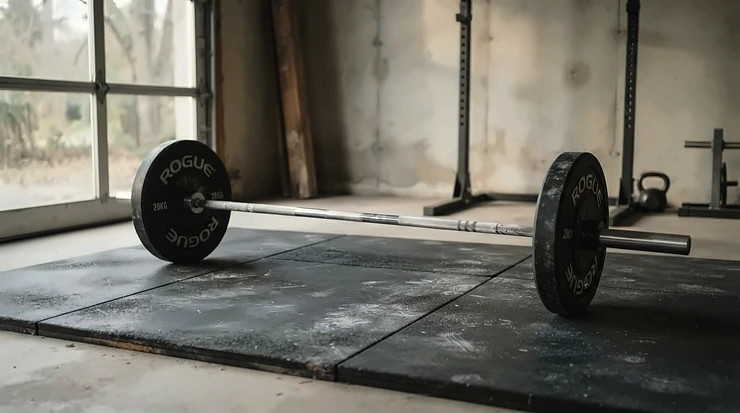
A 45lb olympic barbell is a 2.2-metre (7.2 ft) steel bar with 50 mm (2-inch) rotating sleeves that weighs 20 kg, or about 44 lb, and accepts any Olympic plate with a 2-inch hole. It is the global yardstick for squats, deadlifts, bench presses and Olympic lifts, as the Wikipedia entry on the barbell explains.
Here’s the quirk nobody mentions at checkout: the “45” is a friendly round-up. The real standard is 20 kg (44.09 lb). That’s why the same bar appears as 44 lb, 45 lb or “20 kg” depending on the seller, and why a few bars sold as “Olympic” weigh closer to 35 lb. Weight is the first thing to verify, and the easiest thing to get wrong.
Canadians have extra reasons to care. A bar that lives in an unheated garage faces January humidity, salt-slush boots and a long wait if something goes wrong. So the shopping list changes. Finish, knurling depth, bar load capacity and honest delivery terms matter more than the glossy photo.
I’ve worked through seven real options, from a budget training barbell that costs less than a few months of many gym memberships to a bar you could plausibly keep for a decade. A note on method: I haven’t lifted on any of these bars, so nothing below is claimed as personal testing. The analysis rests on published specs, aggregated review themes and independent roundups, with CAD price ranges that were current at the time of research and will drift. Check current prices on Amazon.ca before you commit.
By the end, you’ll know which 45lb olympic barbell fits your lifting, your budget and your postal code.
Quick Comparison: 7 Best 45lb Olympic Barbell Options at a Glance
Seven bars, one table, no scrolling required. Capacity figures are the sellers’ own listed ratings, and they vary by version, so treat them as a starting point.
| Bar | Listed bar load capacity | Sleeve system | Knurling feel | Price range (CAD) | Best For |
|---|---|---|---|---|---|
| CAP Barbell 7-Foot Olympic Barbell | 500 lb entry; 1,200 lb Pro Series | Basic (entry version) | Medium diamond | C$110–C$190 | First-time buyers on a tight budget |
| Mikolo 7ft Olympic Barbell | 1,500 lb | 8 needle bearings plus brass bushings | Medium, dual marks, no centre knurl | C$150–C$200 | All-round home gyms |
| HANDBODE 7ft Olympic Barbell | 1,000 lb (1,500 lb variant) | Hybrid needle-bearing | Dual IWF/IPF marks | C$100–C$150 | The cheapest route to bearings |
| PAPABABE 7ft Olympic Barbell | 1,000–1,500 lb | Hybrid bearings and bushings | Moderate | C$140–C$200 | Beginners building a first rack setup |
| RitFit Elite 7ft Olympic Barbell | 500 lb | Needle bearings | Passive | C$150–C$220 | High-rep, hand-friendly training |
| XMARK Lumberjack 7ft Olympic Bar | 1,000 lb | Brass bushings | Medium, tacky, dual marks | C$160–C$240 | Strength-focused lifters |
| Synergee Regional Barbell | 1,500 lb | Needle bearings | Diamond, medium | C$220–C$300 | Lifters who want a long-term bar |
Looking at the comparison above, HANDBODE is the cheapest way into a bar with bearings, while Mikolo matches the 1,500 lb headline rating of Synergee Regional at a lower price. CAP Barbell wins on availability and entry cost, but its entry version trades away spin and capacity headroom. If you plan to lift for years, Synergee Regional looks like the one that is an upgrade rather than a compromise.
💬 Just one click — help others make better buying decisions too!😊
Top 7 45lb Olympic Barbell Picks: Expert Analysis
1. CAP Barbell 7-Foot Olympic Barbell — the budget gateway bar
CAP Barbell is the name most Canadians meet first. A third-party tracker of Amazon search behaviour ranks the CAP Classic 7-Foot Olympic Bar as the top-clicked result for “45lb barbell,” at roughly one click in five.
The frame takes 2-inch plates, with medium-depth diamond knurling. Versions differ, and that’s the catch. The entry bar carries a 500 lb (227 kg) rating, while the Pro Series climbs to 1,200 lb (544 kg) at about 44 lb, with no centre knurl. A 500 lb rating is generous if you squat 100 kg (220 lb). It gets tight once you add dropped deadlifts and a few years of progress. This is a budget training barbell for plain strength work — squat, press, pull, repeat — rather than snatch practice. One roundup advises stepping up to a bar with bearings for daily Olympic lifting.
Reviewer sentiment is broad but not uniform. A roundup counts more than 2,500 reviews averaging 4.7 stars on CAP’s entry 7-footer, though that is the lighter variant. A Canadian retailer’s listing for a 44 lb CAP bar shows a buyer complaining that the delivered bar didn’t match its advertised spec. Read the variation on the Amazon.ca page before ordering.
Pros:
- ✅ Very low entry price for a full-length bar
- ✅ Widely stocked with a deep review history
- ✅ Pro Series raises capacity to 1,200 lb
Cons:
- ❌ Versions differ in weight and capacity, so verify
- ❌ Basic spin is a poor fit for frequent Olympic lifts
Expect roughly C$110–C$190 depending on version and seller. The verdict: unbeatable floor-level value, if you confirm the version first.
2. Mikolo 7ft Olympic Barbell — big capacity, needle-bearing spin
Mikolo sells a premium-sounding spec sheet at a mid-budget price. It’s listed at 20 kg (45 lb), with 190,000 PSI tensile strength, a 1,500 lb (680 kg) rating, eight needle bearings plus brass bushings, a 28 mm shaft and dual-marking knurl for powerlifting and Olympic hand positions.
In practice, that 28 mm shaft is thinner than a 29–30 mm power bar. That means a touch more whip and an easier hold for smaller hands. Needle bearings let the sleeves turn under load, which keeps cleans from twisting your wrists. The 190,000 PSI figure is the one that separates bars that resist permanent bending from bargain bars. The 1,500 lb headline is a ceiling you’ll never approach. The real value is the quality of the spin and knurl.
Based on the spec comparison, this suits the generalist who squats, pulls and occasionally dabbles in cleans. Reviewers on retail listings repeatedly praise the knurl quality, the spin, and bars arriving rust-free and dry. The common complaint is the missing centre knurl. Back-squat specialists should note that it can let the bar slide on a sweaty back.
Pros:
- ✅ Eight needle bearings for smooth sleeve rotation
- ✅ Dual knurl marks for both lifting styles
- ✅ 28 mm shaft suits smaller hands
Cons:
- ❌ No centre knurl, which squatters may miss
- ❌ Price swings between colours and sellers
Plan on about C$150–C$200. The verdict: the best-rounded mid-budget pick on this list.
3. HANDBODE 7ft Olympic Barbell — cheapest route to bearings
HANDBODE is the bar for shoppers who want the bearing-equipped feel without the bearing-equipped price. The 45 lb (20 kg) alloy-steel bar uses a hybrid needle-bearing sleeve design, which the seller says dampens noise when dropped. It comes in 1,000 lb (454 kg) and 1,500 lb variants, with dual IWF and IPF knurl marks.
Those dual marks matter more than they sound. They give you two reference points for hand placement, which makes your grip repeatable from session to session. The 1,000 lb rating comfortably covers a beginner-to-intermediate lifter.
There is a demand signal worth noting: a tracker of Amazon search data shows HANDBODE converting at a higher rate than CAP Barbell on the “45lb barbell” search. That tells you buyers are happy at the point of purchase. It does not prove long-term durability. I couldn’t verify a deep pool of written reviews, as the retail listings I found showed only small review counts. Treat it as a promising value pick rather than a proven one.
Pros:
- ✅ Cheapest bar here with hybrid bearings
- ✅ Dual IWF and IPF knurl marks
- ✅ 1,000 lb rating beats basic bars
Cons:
- ❌ Few verifiable written reviews to lean on
- ❌ 1,000 lb and 1,500 lb variants are easy to confuse
Expect around C$100–C$150. The verdict: the lowest-risk way to get bearings on a budget, if you check the variant.
4. PAPABABE 7ft Olympic Barbell — hybrid bearings for first-rack buyers
PAPABABE targets the person assembling a first power rack setup. A roundup names it best overall for beginners, with 190,000 PSI steel, a 45 lb weight and a rating of 1,000 lb (1,500 lb on a larger variant). It combines needle bearings and bushings, and lists a 30 mm grip diameter.
That grip is a hair thicker than the 28 mm found on Mikolo and Synergee Regional. It feels sturdier in larger hands and slightly stiffer on dynamic lifts. The hybrid bearing-bushing design aims to balance spin with durability, and it fits standard power cages and Olympic plates.
The review picture is useful because it’s candid. A verified Amazon reviewer in January 2026 called the knurling decent but a touch smooth, and flagged the bearings as a possible weak point for Olympic lifts or heavy deadlifts. A reseller page showed a review count above one thousand, which suggests a large buyer pool, but I couldn’t confirm the rating itself. If you drop heavy pulls from the floor, treat the bearings as the part to watch.
Pros:
- ✅ Hybrid sleeves balance spin and durability
- ✅ 190,000 PSI steel at a budget price
- ✅ 30 mm grip feels solid in larger hands
Cons:
- ❌ Knurling reads smooth to some buyers
- ❌ Bearings may suffer under repeated heavy drops
Allow about C$140–C$200. The verdict: a sensible beginner bar for strength work, less ideal for heavy dropped deadlifts.
5. RitFit Elite 7ft Olympic Barbell — needle bearings with a gentle knurl
RitFit Elite is the hand-friendly option. It’s a 45 lb, 7 ft bar with needle bearings and a 28 mm shaft, and a roundup lists it at a 500 lb (227 kg) capacity for light-to-moderate home gyms.
RitFit also sells variants rated 500, 700 or 1,000 lb, and reviewers describe the knurling on its 7 ft bars as relatively passive, though with dual marks. Passive knurling is kind to your palms in high-rep sets and circuits. It’s a limitation on heavy deadlifts without chalk, because the bar has less bite when your hands are slick.
Capacity is the question. At 500 lb you have room for most beginners and intermediates. A lifter who expects to pull 200 kg (440 lb) within a couple of years should look at the higher-rated variant or another bar. I couldn’t verify Elite-specific review totals, so I’m leaning on roundups and brand-level notes. One reviewer of RitFit bars flagged packaging, so inspect the tube on arrival.
Pros:
- ✅ Needle bearings at a modest price
- ✅ Passive knurl suits high-rep comfort
- ✅ 28 mm shaft favours dynamic lifts
Cons:
- ❌ 500 lb rating limits long-term growth
- ❌ Passive knurl slips under heavy pulls
Budget around C$150–C$220. The verdict: pay for the bearings only if you’ll genuinely use them.
6. XMARK Lumberjack 7ft Olympic Bar — tacky knurl, honest dual marks
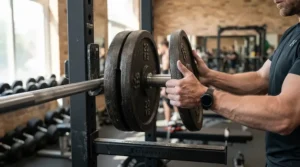
XMARK Lumberjack is the strength-leaning pick. It has a 28 mm shaft, a 1,000 lb (454 kg) rating, medium-depth fine knurling with dual IWF and IPF marks, a black manganese phosphate shaft, and chrome sleeves on brass bushings.
Brass bushings over bearings is a deliberate trade. Bushings give a slower, steadier spin that powerlifters often prefer. They won’t whip around for snatches the way bearings do. The black manganese phosphate finish resists corrosion and tends to feel grippier than bright chrome. Retailer listings show the bar’s weight differently from site to site, so confirm that you’re getting a true 20 kg class bar before you buy.
An independent reviewer who compared three XMARK bars said the XMARK Lumberjack nearly took top honours, praising its sticky, medium-textured knurl, and noted it is the most reviewed bar in the brand’s lineup. That sentiment matches the spec sheet: it’s built for lifters who want predictable grip more than flashy spin.
Pros:
- ✅ Tacky medium knurl with real dual marks
- ✅ Manganese phosphate shaft resists corrosion
- ✅ Most-reviewed bar in its brand lineup
Cons:
- ❌ Bushings spin slower than needle bearings
- ❌ Listed bar weight varies between retailers
Plan on C$160–C$240. The verdict: a strong powerlifting-leaning value if you don’t need bearing-quick spin.
7. Synergee Regional Barbell — the bar you grow into
Synergee Regional is the one that treats a home gym as a long-term project. The 20 kg version runs 86.36 inches (about 219 cm) with a 28 mm shaft, 16.4-inch loadable sleeves, 190,000 PSI tensile strength, needle bearings and a 1,500 lb (680 kg) rating. It comes in black phosphate or hard chrome, with dual knurl marks.
Those long sleeves leave room for serious plate loads, and the manufacturer says a loaded bar withstands repeated drops, even from overhead. An independent reviewer calls it a versatile, no-nonsense multipurpose bar for under US$200, with diamond knurling that grips well without a “cheese-grater” bite. The same reviewer flags the short one-year warranty, coatings that aren’t the toughest on the market, and knurl marks that aren’t exactly IPF or IWF standard.
Interpretation: the compromises are about polish, not performance. If you want one bar that handles cleans, squats and deadlifts for years, this is the most credible candidate here. Synergee also sells through its own channels, so confirm the Amazon.ca listing and seller.
Pros:
- ✅ Needle bearings with 190,000 PSI steel
- ✅ Black phosphate or hard chrome finish options
- ✅ Long 16.4-inch sleeves for heavy loading
Cons:
- ❌ One-year warranty is short
- ❌ Coatings are less durable than premium bars
Allow about C$220–C$300. The verdict: the best long-term value, and the priciest here.
Top 7 45lb Olympic Barbell Specs Side by Side
| Bar | Tensile strength | Shaft | Sleeve system | Review signal | Best For |
|---|---|---|---|---|---|
| CAP Barbell | Not consistently listed | Not consistently listed | Basic (entry) | Very large pool on entry bar | Budget starters |
| Mikolo | 190,000 PSI | 28 mm | 8 needle bearings plus bushings | Praise for knurl and spin | Generalists |
| HANDBODE | Not stated | Not stated | Hybrid needle-bearing | Few reviews; strong conversion | Bearing seekers on a budget |
| PAPABABE | 190,000 PSI | 30 mm | Hybrid bearings and bushings | Large pool; bearing caveat | Beginners |
| RitFit Elite | Not stated | 28 mm | Needle bearings | Limited verifiable data | High-rep training |
| XMARK Lumberjack | Not stated | 28 mm | Brass bushings | Well regarded in brand | Strength-focused lifters |
| Synergee Regional | 190,000 PSI | 28 mm | Needle bearings | Praised value in independent review | Long-term home gyms |
Looking at the table, the gaps in the “not stated” cells are a finding in themselves: if a seller won’t publish tensile strength, you can’t compare it. Three bars list 190,000 PSI, which is the figure to anchor on. For beginners, PAPABABE and Mikolo offer the clearest spec transparency, while Synergee Regional is the one to choose when you want the headroom to grow.
✨ Ready to compare live listings?
🔍 Open the product pages on Amazon.ca, check the variation selector for weight and capacity, and compare current pricing and availability before you decide. A few minutes of checking now saves you a return later!
Setup and First 30 Days: A Practical Guide to Your New 45lb Olympic Barbell
Unboxing a bar is oddly satisfying, and oddly easy to rush. Run this checklist once and your 45lb olympic barbell will start life in good shape.
- Check straightness. Roll the bar across a flat floor. A wobble or lopsided roll means a bent shaft. Report it before you use it.
- Wipe off the shipping coating. Many bars arrive oiled. Clean the shaft and knurling with a rag, then add a thin coat of light machine oil.
- Spin the sleeves. They should turn smoothly and quietly. Grinding or sticking on day one is a warranty conversation, not a break-in period.
- Warm up from the cold. A bar that spent the night in a Canadian garage grows condensation when brought inside. Wipe it dry before it can bloom into rust.
- Always use collars. Spring collars keep plates from creeping, and uneven loading is a classic first-week mistake.
Over the first 30 days, keep a nylon brush handy for chalk and skin, and don’t drop an unloaded bar on concrete. One buyer of a bargain 300 lb set reported that the bar bent after an empty drop, a plausible failure on a low-spec bar. Store the bar horizontally on a rack or in a vertical holder, and re-oil monthly through damp months.
Real-World Scenarios: Matching a 45lb Olympic Barbell to Your Life
The Canadian 24-Hour Movement Guidelines recommend muscle-strengthening activities at least twice a week, and a barbell is a very efficient way to hit that target. The right bar depends on who you are.
Scenario 1: The basement beginner. Budget around C$300 total, a spare corner, three short sessions weekly. Pair a HANDBODE or CAP Barbell with a starter plate set. You need function, not finesse, and either bar delivers a full-length, 2-inch platform.
Scenario 2: The garage strength lifter. Four sessions weekly, a squat rack, a heavier load, a cold winter. The XMARK Lumberjack or Mikolo makes sense here. A tacky medium knurl and a corrosion-resistant finish matter more than spin speed.
Scenario 3: The cross-trainer learning cleans. Four to five sessions weekly, bumper plates, lots of dropped bars. Go straight to Synergee Regional. The needle bearings, long sleeves and drop-ready build are what you’ll use daily.
The pattern is consistent: match the sleeve system to the lifts, match the capacity to your future numbers, and pay for durability only when you’ll genuinely stress the bar.
How to Choose a 45lb Olympic Barbell: 7 Steps
- Verify the true weight. The standard is 20 kg (44.09 lb). If a listing shows something like 15 kg or 35 lb, it isn’t the same product.
- Match capacity to your ceiling. Based on the spec comparison, pick a rating comfortably above the heaviest load you expect to lift, plus margin for drops.
- Choose your sleeve system. Needle bearings favour Olympic lifts; bushings favour steady power lifts; hybrids split the difference.
- Pick a knurling feel. Passive suits high reps, medium suits most people, aggressive suits heavy pulls.
- Check shaft diameter. 28 mm suits dynamic lifts and smaller hands; 29–30 mm feels stiffer.
- Think about finish. Black oxide and phosphate grip better, chrome resists rust in humid basements.
- Confirm delivery and returns. A heavy, long box deserves a clear return policy and a delivery date you can plan around.
Knurling Depth: How Much Bite Do You Need?
Knurling depth is the single most polarizing feature on a bar. Rep Fitness’s knurling guide breaks it into three levels: shallow or passive knurling is comfortable and barely noticeable, medium is a step up and common on multi-use bars, and aggressive is deeper and feels a little stabby but is incredibly helpful on heavy, grip-limited pulls.
Pattern matters too. Hill-style diamond knurling tends to feel passive, while mountain-style peaks dig in hard. Finish changes the feel again, and bare or phosphate-coated steel feels sharper than chrome.
Here’s how the seven bars line up. Mikolo, XMARK Lumberjack and Synergee Regional sit in the comfortable medium zone. RitFit Elite leans passive, and PAPABABE drew a “tad smooth” comment from one reviewer. Listings often cite a 1.2 mm depth for medium knurling.
For most Canadians training in a cold garage with dry hands, medium knurling depth is the sweet spot. Go more passive only if high-rep hand comfort is your priority, and more aggressive only if you chase heavy deadlift numbers.
Bar Load Capacity: What the Number Really Means
Bar load capacity is a seller’s rating of how much weight the bar can carry, and the numbers on our seven bars range from 500 lb to 1,500 lb. That 1,500 lb (680 kg) headline is mostly a bragging right.
Here’s the honest reading. The rating reflects static load, not a bar dropped from lockout. Capacity is best read alongside tensile strength: 190,000 PSI is the figure associated with higher-end bars, while a Canadian retailer’s listing for one budget bar showed 63,800 PSI, and a buyer there pointed out that pro bars are rated around 1,500 lb at 190,000 PSI.
Do the maths for your own lifting. If your heaviest squat will be 140 kg (about 309 lb), a 500 lb (227 kg) bar leaves headroom, but not generous headroom once drops and years of progress are included. A 1,000 lb (454 kg) rating gives you room to forget about the bar and focus on the lift.
My rule of thumb, as reasoning rather than a standard: choose a bar load capacity at least double your planned top weight, and don’t pay extra for ratings beyond what you’ll realistically lift.
Budget Training Barbell: Where to Save and Where to Spend
A budget training barbell doesn’t have to feel cheap, but it does demand clearer priorities. Here’s the split.
Save on: colour options, brand glamour, bundled accessories, and extreme headline capacities. A 1,900 lb rating on a listing is marketing, not a reason to buy.
Spend on: tensile strength you can verify, a weight that matches the 20 kg standard, and a sleeve system that suits your lifts. If you do cleans, spend a little more for needle bearings. If you only squat, press and pull, a bushing bar is perfectly fine.
Think in cost per year. A bar that lasts a decade at C$200 beats a C$110 bar you replace in two years. On this list, HANDBODE and CAP Barbell are the lowest-cost routes to a proper 7 ft platform, while Mikolo adds bearings and a bigger capacity for a modest step up. For anyone who plans to keep lifting beyond the first year, a budget training barbell is smartest when it’s the bar you won’t outgrow.
Buy Olympic Barbell and Weight Plate Set: Is the Bundle Worth It?
If you want to buy olympic barbell and weight plate set options in one go, the convenience is real, but so are the trade-offs. A typical 300 lb cast-iron bundle includes plates of 2.5, 5, 10, 25, 35 and 45 lb, a 7 ft bar and spring collars.
The catch is the bar. The CAP Barbell 300-Pound Olympic Set lists its bar at 40 lb with a 500 lb capacity, which isn’t a true 45 lb bar. The Signature Fitness Cast Iron Olympic Set lists a 45 lb bar with a 700 lb rating. A deal-forum thread about one Amazon bundle described confusion over whether the listing delivered both bar and plates, so read the variation selector carefully before you buy olympic barbell and weight plate set listings.
| Option | What you get | Trade-off | Best For |
|---|---|---|---|
| Bundled 300 lb set (such as the CAP Barbell 300-Pound Olympic Set) | Bar, plates and collars in one order | Bar spec is often basic and lighter than 45 lb | People who want one box and one checkout |
| Bar only plus separate plates | Choose each part on its merits | More research and more orders | Lifters who care about the bar |
| Bar plus a starter plate pair | Fast, cheaper entry | You’ll buy more plates later | HANDBODE or Mikolo buyers |
Looking at the table, bundles win on convenience, while buying separately wins on bar quality. If the bar matters to you, buy it separately and add plates over time.
Amazon.ca Prime Shipping for a 45lb Olympic Barbell: What to Check
A barbell is long, heavy and awkward, so delivery terms deserve a few minutes of attention. Amazon.ca Prime shipping can be a real advantage. Amazon Canada has said it removed the $25 minimum on items eligible for Prime Free One-Day Delivery to most Canadian cities and towns, with free two-day shipping on millions of items.
Eligibility, though, varies by listing, seller and postal code. Before you order, look for the Prime badge, confirm the estimated delivery date, and check whether the seller is Amazon or a third party. Heavy or oversized items may carry different terms, so verify at checkout rather than assuming.
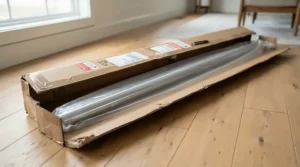
Practical tips: bars often arrive in long tube boxes, so photograph any damage before opening. Know the return window. Winter storms can add days, so don’t schedule your first lift around a delivery date. Buying through a link doesn’t get you a better price, and Amazon.ca Prime shipping doesn’t change the price of the bar itself; it changes how quickly and how cheaply it arrives.
45lb Olympic Barbell vs Standard Barbell vs Trap Bar
How does a 45lb olympic barbell compare with its cousins? Mostly it comes down to sleeve size. Olympic sleeves are 50 mm (2 inches) and rotate, while standard bars use 25 mm (1 inch) sleeves that usually don’t rotate, so the two plate systems simply don’t mix.
| Feature | 45lb olympic barbell | Standard 1-inch bar | Trap bar |
|---|---|---|---|
| Sleeve size | 2 inches (50 mm) | 1 inch (25 mm) | Typically 2 inches |
| Plate compatibility | Olympic plates only | 1-inch plates only | Olympic plates |
| Typical use | Squat, bench, deadlift, Olympic lifts | Light general use | Deadlifts, shrugs, carries |
| Rotating sleeves | Yes | Usually no | Varies |
| Best For | Serious, long-term lifting | Casual, light training | Lower-back-friendly pulling |
Looking at the table above, the Olympic bar is the only one that scales smoothly from beginner to advanced. Standard bars are cheaper but top out quickly, and a trap bar is a great complement rather than a replacement. If you only have room or budget for one, the Olympic bar is the version that won’t box you in.
Common Mistakes When Buying a 45lb Olympic Barbell
- Trusting the label weight. The Amazon Basics 7ft Olympic Barbell lists a 500 lb rating and an item weight of 15,750 g (about 35 lb), and a deal-forum commenter noted that it has centre knurling and isn’t a standard 45 lb bar. It may suit some people, but it isn’t a 20 kg bar.
- Ignoring tensile strength. A listing showing 63,800 PSI isn’t comparable to one showing 190,000 PSI, whatever the headline capacity says.
- Forgetting centre knurling. Back-squatters can find a bar without it slides, while some deadlifters find it scrapes. Know your lifts first.
- Chasing absurd ratings. A 1,900 lb headline is a marketing number, not a reason to pick a bar.
- Skipping the variation selector. Weight, capacity and colour often change the product. Read before you buy.
FAQ
❓ Can I load standard 1-inch plates on an olympic barbell?
❓ How many plates do I need to start with a 45lb olympic barbell?
❓ Is an empty 45lb olympic barbell too heavy for a first-timer?
❓ Do I need collars on a 45lb olympic barbell?
❓ How do I keep a chrome olympic barbell from rusting in a cold Canadian garage?
Conclusion
The right 45lb olympic barbell isn’t the one with the biggest number on the listing. It’s the one whose weight, sleeve system and knurling depth match how you actually train.
Here’s the short version. If budget is the priority, HANDBODE and CAP Barbell get you a full-length bar for the least money, as long as you verify the variant. If you want one all-round bar with bearings, Mikolo is the strongest mid-budget pick. PAPABABE is a sensible beginner choice with a caveat about heavy drops. RitFit Elite suits hand-friendly, high-rep work, XMARK Lumberjack suits strength-focused lifters, and Synergee Regional is the one to buy if you want a bar you won’t outgrow.
Whichever you choose, check the true weight, read the variation selector, and confirm Amazon.ca Prime shipping terms for a long, heavy box. Then oil it, collar it and lift something heavy this week. Your future self, standing taller in a cold garage, will thank you.
✨ Don’t Miss These Exclusive Deals!
🔍 Take your strength training to the next level with these carefully selected bars. Click on any highlighted product to check current pricing and availability. These tools will help you build the strong, confident home gym your whole family will love!
Recommended for You
- Best Dumbbell Set For Beginners: 7 Proven Picks In 2026
- Dumbbell Sets Vs Adjustable Dumbbells For Home Gym: 7 Best Picks 2026
- Compact Dumbbell Sets: 7 Proven Picks For Canada (2026)
Disclaimer: This article contains affiliate links. As an Amazon Associate, I earn from qualifying purchases. If you purchase products through these links, we may earn a small commission at no additional cost to you.
✨ Found this helpful? Share it with your friends! 💬🤗
