In This Article
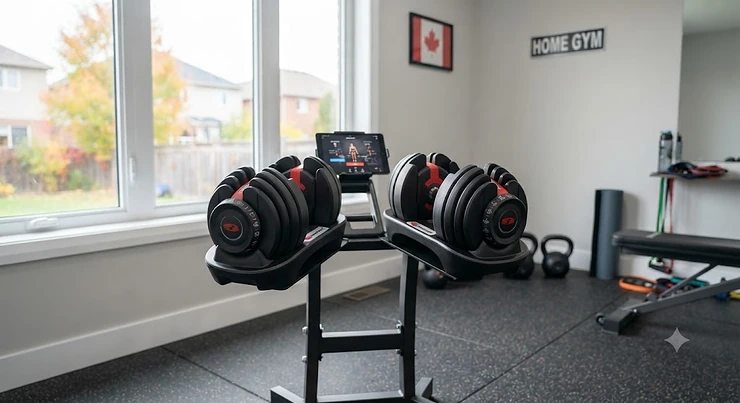
Somewhere in every Canadian basement is a dumbbell rack that seemed like a great idea in January and a guilt-inducing dust collector by March. Bowflex SelectTech dumbbells were built to solve exactly that problem, and the fact that the 552 model has survived — largely unchanged — for the better part of two decades tells you something about how well the core idea holds up. Bowflex SelectTech dumbbells are a line of adjustable, dial-based dumbbells that let you turn a single pair of handles into anywhere from ten to seventeen “sets” of traditional weights, all stored in a footprint smaller than a bath mat. That’s the 40-60 word version. The longer version is messier, because “adjustable dumbbells” now covers dial systems, pin-select blocks, and twist-handle designs from half a dozen brands, and picking the wrong mechanism for your training style is an easy, expensive mistake.
This guide pulls apart Bowflex’s own SelectTech lineup and stacks it against six genuinely competitive alternatives — from a $200-ish pin-select starter set to an 80-pound handle-dial monster — using real specifications, real aggregated review sentiment, and honest math about long-term cost. As CBC News reported, demand for home fitness gear spiked hard once Canadians learned to shop early to avoid disappointment, and adjustable dumbbells were near the top of that list for a simple reason: space. If you’ve ever tried to fit a full rack of round dumbbells into a Toronto condo or a Calgary basement office, you already understand the appeal. What follows is the analysis I wish existed before I’d made my own dumbbell decisions — spec by spec, increment by increment, and yes, including what actually happens when you try to return one.
Quick Comparison Table
| Product | Weight Range | Mechanism | Price Range (CAD) | Best For |
|---|---|---|---|---|
| Bowflex SelectTech 552 | 2.3–23.9 kg (5–52.5 lb) | Dial | C$550–C$600 | All-around home use |
| Bowflex SelectTech 1090 | 4.5–40.8 kg (10–90 lb) | Dial | C$900–C$1,000 | Advanced lifters |
| PowerBlock Elite EXP (Stage 1) | 2.3–22.7 kg (5–50 lb) | Pin-select | C$200–C$280 | Budget expandable |
| PowerBlock Elite USA 90 | Up to 40.8 kg (90 lb) | Pin-select | C$650–C$850 | Heavy compound lifts |
| NordicTrack Select-a-Weight 55 | 4.5–25 kg (10–55 lb) | Dial | C$400–C$500 | App-driven beginners |
| NÜOBELL 50 lb | 2.3–22.7 kg (5–50 lb) | Handle-twist | C$800–C$900 | Fast-paced circuits |
| Core Home Fitness Set | 2.3–22.7 kg (5–50 lb) | Twist-lock | C$450–C$550 | Tightest budgets |
A quick scan of that table already tells an honest story: price and weight capacity climb together almost in lockstep, but the mechanism is the variable that decides how the dumbbell actually feels mid-workout. The Bowflex SelectTech 552 sits at the exact centre of the Canadian market — enough weight for most strength goals, priced like a mid-tier appliance, not a mortgage payment. Buyers chasing serious hypertrophy or powerlifting-adjacent work will keep bumping into the 552’s 52.5 lb ceiling, which is where the Bowflex SelectTech 1090 or PowerBlock Elite USA 90 earn their higher price tags. Budget-conscious buyers shouldn’t assume “cheap” means “compromised” either — the PowerBlock Elite EXP and Core Home Fitness set both use genuinely different (and arguably more durable) mechanisms than a simple price ranking would suggest.
💬 Just one click — help others make better buying decisions too!😊
Top 7 Bowflex SelectTech Dumbbells & Adjustable Alternatives: Expert Analysis
1. Bowflex SelectTech 552 — the reigning all-rounder for Canadian home gyms
The standout here isn’t raw weight — it’s how unremarkable the 552 has become, in the best possible sense; it’s the adjustable dumbbell most people picture when they hear the category name. Each dumbbell adjusts from 2.3 to 23.9 kg (5 to 52.5 lb) across 15 settings, with 2.5 lb jumps through the first 25 lb and 5 lb jumps after that, selected by turning a dial at the end of the handle. In practice, that lower-weight granularity matters more than the spec sheet suggests: shoulder work and rehab-style accessory lifts genuinely need 2.5 lb steps, and plenty of competitors skip straight to 5 lb jumps the whole way through.
Based on the spec comparison against nearly every dial competitor on this list, the 552’s main advantage is maturity — the JRNY app integration, the moulded storage trays, and the dial mechanism itself have all been refined over multiple product generations rather than launched fresh and left alone. That maturity shows up in aggregated review sentiment too: reviewers consistently report that the dial rarely sticks or slips once broken in, though a recurring theme across owner reviews is that the dumbbell’s physical length stays constant at every weight setting, so a 5 lb “setting” still feels like holding a much bigger object than a traditional 5 lb dumbbell. For beginners building a base, intermediate lifters doing accessory work, or anyone who wants one dumbbell system to just quietly work for years, this is the reasonable default. For people who already know they’ll be pressing past 50 lb within a year, it’s worth reading the 1090 entry below before buying.
Pros:
- ✅ Fine 2.5 lb increments through the lower weight range
- ✅ JRNY app support with on-demand strength classes
- ✅ Compact footprint with included storage trays
Cons:
- ❌ Dumbbell length never shrinks, even at 5 lb
- ❌ Caps out at 52.5 lb for advanced lifters
At the time of research, the Bowflex SelectTech 552 sits in the C$550–C$600 range on bowflex.ca, with occasional promotional pricing — always check the current price before buying. For anyone starting a home strength routine from scratch, this remains one of the strongest value propositions in the category.
2. Bowflex SelectTech 1090 — heavy-duty dial dumbbell for advanced lifters
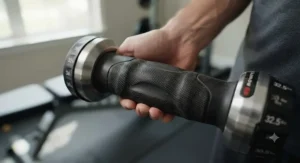
Where the 552 tops out, the 1090 keeps going — this is the SelectTech built for buyers who’ve already outgrown lighter adjustable sets. Each dumbbell runs from 4.5 to 40.8 kg (10 to 90 lb) in seventeen 5 lb increments, controlled by the same turn-dial mechanism as the 552, just scaled up to handle a genuinely heavy weight stack. What most buyers overlook about this model is that the 10 lb floor is a real limitation, not a footnote: unlike the 552, you can’t dial the 1090 down for light warm-up sets or rehab work, so pairing it with a lighter pair (or a resistance band) for accessory movements is a smart workaround rather than an admission of failure.
Based on the spec comparison, the 1090’s 90 lb per-hand ceiling puts it in direct competition with premium pin-select systems like the PowerBlock Elite USA 90, and the two trade blows depending on what you value. Reviewers consistently note that the dial system, while proven, adjusts from the end of the dumbbell rather than the handle itself — a small ergonomic difference that becomes noticeable once you’re doing supersets and want to change weight quickly. A recurring complaint in aggregated feedback is that the plastic-and-rubber shell shows cosmetic wear faster than the all-steel construction found on some rivals, though this doesn’t appear to affect the internal weight-selection mechanism in most reports. JRNY’s motion-tracking features add a layer of guided programming that the 552 doesn’t include in the same way, which matters if you want structure rather than a blank slate.
Pros:
- ✅ Wide 4.5–40.8 kg range covers advanced compound lifts
- ✅ JRNY app includes motion-tracking workout guidance
- ✅ Proven dial mechanism shared with the 552
Cons:
- ❌ Can’t adjust below 10 lb for light accessory work
- ❌ Bulkier and heavier to manoeuvre than lighter models
Bowflex.ca lists the 1090 in the C$900–C$1,000 range at the time of research, occasionally with a temporary discount — prices may vary, so confirm the current listing. It’s a strong pick for someone who has already been lifting for a year or two and knows their strength curve is heading past what a 552 can offer.
3. PowerBlock Elite EXP (Stage 1) — the expandable pin-select starter set
The standout feature is right there in the name: this is the one adjustable dumbbell on the list explicitly designed to grow with you, rather than being replaced once you outgrow it. The Stage 1 Elite EXP adjusts from 2.3 to 22.7 kg (5 to 50 lb) per hand using a magnetic selector pin rather than a dial, and — this is the clever part — it’s expandable to 90 lb per hand with separately sold Stage 2 and Stage 3 kits, so the upfront cost buys into a system rather than a ceiling.
Here’s what to weigh before assuming pin-select is automatically superior to a dial: the compact, squared-off block shape means it genuinely doesn’t roll on the floor the way round dial dumbbells can, which is a small but real safety upside for home gyms with hard flooring. On the other hand, aggregated owner and reviewer feedback flags a recurring frustration — the selector pin can occasionally get misaligned or feel stuck if it’s not seated exactly right, turning a two-second weight change into a fumbling ten-second one. The block shape also takes real adjustment for anyone used to gripping a traditional round dumbbell handle; it’s not a dealbreaker, but it’s not nothing either. For a Canadian buyer who wants to start light and invest further only if their training actually demands it, this expandability is hard to beat on paper.
Pros:
- ✅ Expandable to 90 lb with add-on kits later
- ✅ Compact block shape resists rolling on floors
- ✅ Lowest entry price among expandable systems
Cons:
- ❌ Selector pin can occasionally misalign or stick
- ❌ Block-style grip feels unfamiliar to some lifters
Canadian retailers such as Northern Fitness list the Stage 1 Elite EXP in the C$200–C$280 range at the time of research, frequently discounted from a higher list price — check current price before ordering, since PowerBlock’s promotional pricing shifts often.
4. PowerBlock Elite USA 90 — compact, all-steel pin-select for heavy lifting
The advantage here is density: this is a set built to deliver a genuinely heavy 40.8 kg (90 lb) per-hand ceiling in a footprint noticeably more compact than urethane-coated rivals of the same capacity, because the plates are all-steel and welded rather than moulded. On paper, that welded steel construction with knurled stainless-steel grips reads as a durability upgrade over rubber-clad dumbbells, and reviewers researching the line consistently position it as PowerBlock’s best value option for lifters who want heavy weight without a bulky dumbbell.
What the spec sheet won’t tell you outright is the trade-off for that density: steel-on-steel plates are audibly louder in use than urethane-coated alternatives, which matters if you’re training in a condo with shared walls or floors below you. The expandable design starts at 50 lb and stretches to 90 lb via micro weights in 2.5–5 lb increments, so — much like the Elite EXP — you’re not locked into buying the full weight capacity on day one. Based on the spec comparison against the Bowflex 1090, the Elite USA 90 is more compact for the same top-end weight, but it lacks the JRNY app ecosystem entirely; you’re buying a mechanical tool, not a connected fitness platform, and for a lot of serious lifters that’s precisely the point.
Pros:
- ✅ All-steel welded build at a genuine 90 lb ceiling
- ✅ More compact than urethane-coated 90 lb rivals
- ✅ Knurled stainless grips aid control on heavy lifts
Cons:
- ❌ Noticeably louder than urethane-plated alternatives
- ❌ No connected app or guided workout ecosystem
PowerBlock doesn’t publish one fixed Canadian price across all retailers, but comparable 90 lb-per-hand PowerBlock sets have historically sold in the C$650–C$850 range through Canadian fitness retailers — always verify the current listing, since availability and pricing shift with stock levels.
5. NordicTrack Select-a-Weight 55 — budget-friendly dial dumbbell with iFIT ties
The standout feature is accessibility: this is the most consistently discounted adjustable dumbbell on this list, regularly appearing well under its list price at Canadian retailers. Each dumbbell adjusts from 4.5 to 25 kg (10 to 55 lb) across fifteen settings, using 1, 2, and 5 kg (roughly 2.5, 5, and 10 lb) increments, with a custom-moulded tray for storage and quick visual reference of the current setting.
Based on the spec comparison, the 55 lb ceiling puts this squarely in the same tier as the Bowflex 552, and reviewers researching both frequently describe the Select-a-Weight as “a solid, reliable, and safe set… at a price point right in the middle of the market,” which tracks with what NordicTrack charges before sale pricing kicks in. Here’s what to weigh: the dumbbell’s full potential — guided workouts, form coaching, structured programming — lives behind an iFIT membership that costs extra on top of the hardware, so buyers who want the connected-fitness experience should budget for that subscription separately rather than assuming it’s bundled indefinitely. Without iFIT, you still get a fully functional dial dumbbell; you simply lose the software layer that NordicTrack builds its marketing around.
Pros:
- ✅ Frequently the most heavily discounted set in this range
- ✅ Custom tray keeps weight settings clearly visible
- ✅ Solid mid-range weight ceiling for most home users
Cons:
- ❌ Full iFIT experience requires a separate paid membership
- ❌ 55 lb ceiling limits long-term headroom for advanced lifters
At Canadian retailers like Best Buy Canada, the NordicTrack Select-a-Weight 55 typically lists in the C$400–C$500 range, though it has been observed well below that during promotional periods — prices may vary, so check current availability.
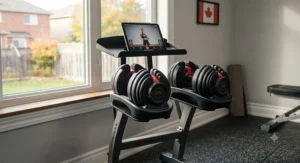
6. NÜOBELL 50 lb — the fastest-adjusting handle-dial dumbbell on the market
The standout feature is speed: instead of a separate end-cap dial, the weight-selection mechanism lives directly in the handle, so changing weight is a single twisting motion without moving your grip. Each dumbbell adjusts from 2.3 to 22.7 kg (5 to 50 lb), replacing up to sixteen pairs of traditional dumbbells, and a locking cradle system only allows adjustment while the dumbbell is seated in its stand — a deliberate safety feature that prevents the weight from shifting mid-lift.
Reviewers consistently note that this is the quickest adjustable dumbbell to use for supersets, drop sets, or any workout style where you and a training partner are swapping weights back and forth constantly; one detailed comparison put it bluntly, noting they hadn’t “seen any other dumbbells that are as quick and easy to adjust as the NÜOBELLs.” What most buyers overlook is the cradle precision required — aggregated feedback flags that the dumbbell needs to be seated exactly right when returning it to the stand, or the locking mechanism can catch awkwardly. On a pure price-per-pound basis, the NÜOBELL sits at the premium end of this list, but its dumbbell length changes far less dramatically between settings than a Bowflex dial system, which several reviewers single out as the more natural-feeling option in hand.
Pros:
- ✅ Handle-integrated dial adjusts faster than end-cap systems
- ✅ Length changes less across settings than comparable rivals
- ✅ Locking cradle prevents accidental mid-lift adjustment
Cons:
- ❌ Premium price relative to its 50 lb weight ceiling
- ❌ Must be seated precisely in the cradle to avoid sticking
Canadian retailers carrying authentic NÜOBELL stock, such as Northern Fitness, typically price the 50 lb version in the C$800–C$900 range at the time of research, with the 80 lb version running meaningfully higher — always confirm current pricing before ordering.
7. Core Home Fitness Adjustable Dumbbell Set — the most affordable twist-lock entry point
The standout feature is price: this is the lowest-cost genuinely adjustable dumbbell system on this list that still uses a proper locking mechanism rather than loose spin-collar plates. Each dumbbell runs from 2.3 to 22.7 kg (5 to 50 lb) in ten settings, adjusted with a proprietary Twist-Lock mechanism operated entirely with one hand — twist, lift, and the plates lock automatically at the selected weight.
Based on the spec comparison, the 50 lb ceiling and 5-lb-only increments mean this set trades fine-grained progression for affordability, which is a reasonable compromise for beginners who need to build a habit before they need to optimize percentages. Core Home Fitness backs the set with a 2-year limited warranty and a 30-day return window, both of which compare favourably against some cheaper spin-lock alternatives that offer little beyond a manufacturer’s basic guarantee. A recurring theme in comparative reviews is a mild preference among lifters for knurled grips over the Core Home Fitness rubber handle, though this comes down to personal feel rather than a functional flaw. For anyone furnishing a first home gym on a tight budget who still wants a real dial-free locking system rather than loose collars and plates, this is a legitimate entry point rather than a compromise pick.
Pros:
- ✅ Lowest price point of any true locking adjustable set here
- ✅ One-handed Twist-Lock mechanism requires no separate dial
- ✅ Backed by a 2-year limited warranty and 30-day returns
Cons:
- ❌ Fixed 5 lb increments limit fine progression
- ❌ Rubber handle less preferred than knurled alternatives by some lifters
At the time of research, the Core Home Fitness Adjustable Dumbbell Set lists in the C$450–C$550 range depending on whether it’s bundled with the stand — check current price, as bundle discounts shift regularly.
Setting Up and Getting the Most From Your Adjustable Dumbbells
Unboxing day is where most of the early mistakes happen, and none of them are catastrophic — they’re just avoidable friction that a little planning removes. First, measure your actual floor space before the dumbbells arrive: dial systems like the Bowflex SelectTech 552 and 1090 need a flat surface for their trays, while pin-select blocks like the PowerBlock Elite EXP are more forgiving about uneven placement. Second, resist the urge to skip the manufacturer’s break-in guidance — dial mechanisms in particular can feel slightly stiff for the first few sessions, and forcing a dial past resistance is a common way to introduce a squeak or misalignment that wasn’t there out of the box.
Once you’re past week one, build a simple maintenance habit: wipe down handles after sweaty sessions (moisture is the enemy of any metal selector mechanism), and periodically check that the tray or cradle is sitting level, since a slight tilt is often the real culprit behind a dial that “feels stuck.” A common first-30-days mistake is jumping straight to your old fixed-weight numbers on a new adjustable system — the added length and shifted weight distribution of an adjustable dumbbell changes the leverage on certain lifts, particularly overhead presses, so dropping 10-15% off your usual load for the first two weeks is a sensible optimization trick rather than an admission of weakness. Finally, label or memorize your two or three most-used settings; the seconds saved by not fumbling for the right dial position add up meaningfully over a year of consistent training.
Real-World Scenarios: Who Should Buy Which Set
The condo-dwelling beginner (Toronto, 500 sq ft, brand-new to strength training): budget matters as much as capability here, and a 50 lb ceiling is plenty for the first year of consistent progressive overload. The Core Home Fitness Adjustable Dumbbell Set or the PowerBlock Elite EXP Stage 1 both fit this profile well — cheap enough to justify as an experiment, capable enough to not need replacing within six months.
The intermediate home-gym builder (suburban Alberta, has a garage, lifts 3-4x weekly): this is the classic Bowflex SelectTech 552 buyer, and for good reason — the 2.5 lb increments through the lower range support genuine linear progression, and the JRNY app fills in structure for someone who doesn’t want to write their own programming from scratch.
The advanced lifter chasing hypertrophy (anywhere, already benching bodyweight or more): the 552’s ceiling becomes a real limiter fast, and this is where the Bowflex SelectTech 1090, PowerBlock Elite USA 90, or NÜOBELL 50/80 lb earn their higher price tags — the extra capacity and, in NÜOBELL’s case, adjustment speed, matter more than saving a few hundred dollars upfront once you’re training with real intent.
How to Choose Bowflex SelectTech Dumbbells (and Their Rivals)
- Start with your realistic ceiling, not your aspirational one. If you’re not currently pressing 40+ lb per hand, the 552’s 52.5 lb cap will likely outlast your first two years of training.
- Weigh increment size against your goals. Strength-focused lifters chasing linear progression benefit from finer 2.5 lb jumps; general fitness users are usually fine with 5 lb steps.
- Decide how much you care about app integration. JRNY and iFIT both add structure and cost — factor the subscription into your total budget, not just the hardware price.
- Measure your actual floor space, including tray clearance. Dial systems need a level surface; pin-select blocks are more flexible about placement.
- Consider noise if you live in a condo or shared building. Steel-on-steel systems like the PowerBlock Elite USA 90 are noticeably louder than rubber- or urethane-coated alternatives.
- Check the return window before you buy, not after. Bowflex’s 30-day policy (detailed below) is generous by industry standards, but restocking fees can apply.
- Price it per pound of total capacity, not per unit. A more expensive set with double the weight range can be the cheaper long-term option if it saves you from buying twice.
None of this matters much without consistency, of course — ParticipACTION notes that Canadian adults should aim for muscle-strengthening activity at least twice a week alongside regular aerobic movement, which is a helpful frequency benchmark to keep in mind before investing in any dumbbell system at all.
Dial vs Pin-Select Adjustable Dumbbells: Which Mechanism Wins?
This is the question that actually decides satisfaction more than brand loyalty does, so it deserves a real comparison rather than a gut-feeling verdict.
| Factor | Dial (Bowflex, NordicTrack) | Pin-Select (PowerBlock) | Handle-Twist (NÜOBELL) |
|---|---|---|---|
| Adjustment speed | Moderate — turn at each end | Fast — pull and reposition pin | Fastest — twist in-hand |
| Rolls on floor | Yes, round profile | No, block profile | Minimal, low-profile shape |
| Failure point | Dial mechanism wear | Pin misalignment | Cradle-seating precision |
| Best For | Structured, app-guided training | Expandable, budget-first setups | Fast-paced supersets |
Reading that table straight through, the honest takeaway is that there’s no universal winner — only a better or worse fit for how you actually train. Dial systems like the Bowflex SelectTech 552 and 1090 trade a fraction of adjustment speed for a mechanism that’s been refined across multiple product generations, and reviewers consistently note it rarely fails outright even if it occasionally feels stiff. Pin-select systems like the PowerBlock Elite EXP win on floor safety (no rolling) and long-term expandability, at the cost of an occasional fiddly pin. Handle-twist designs like the NÜOBELL win outright on raw speed, which matters enormously if your workouts involve frequent weight changes, but that speed comes at a real price premium. If you’re the kind of lifter who sets a weight and does 4-5 sets before changing it, mechanism speed barely matters — durability and floor space should drive the decision instead.
Pin-Select Adjustable Dumbbells for Home Gym: Where They Fit
Pin-select systems occupy a specific and genuinely useful niche in the Canadian home-gym market: they’re the mechanism of choice for buyers who value expandability and floor-space efficiency over adjustment speed. The core engineering idea — a selector pin that locks into a stacked series of weight plates housed inside a rectangular block — means the dumbbell’s shape stays largely rectangular rather than round, and that has two underrated benefits. First, it genuinely doesn’t roll away if set down on an uneven surface, which matters more than it sounds like it should once you’ve chased a rogue round dumbbell across a sloped garage floor. Second, because the block housing is modular, brands like PowerBlock can sell expansion kits rather than requiring a full system replacement, which is precisely why the PowerBlock Elite EXP and PowerBlock Elite USA 90 appear at both ends of this list’s price spectrum despite sharing a design philosophy.
The trade-off, based on aggregated owner feedback, is a learning curve around grip: a block-shaped handle simply feels different from a traditional round or hex dumbbell, and lifters coming from years of standard gym equipment often need a session or two to stop noticing it. For a Canadian buyer furnishing a home gym for the first time with an eye toward scaling up over several years — rather than buying their final weight capacity on day one — pin-select is arguably the most financially sensible mechanism on this entire list, even though it isn’t the flashiest.
Bowflex SelectTech App Compatibility: JRNY and Beyond
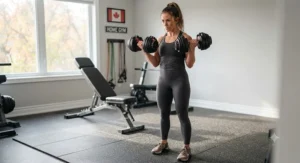
Bowflex’s SelectTech line — specifically the 552 and 1090 models covered above — ties into the JRNY app ecosystem, which layers on-demand strength classes and, on the 1090, motion-tracking feedback during your sets. This isn’t a case of a hardware company bolting software on as an afterthought; JRNY has been positioned as a core part of the SelectTech value proposition for several product generations, and it’s worth understanding what that actually buys you before assuming every SelectTech purchase comes with full access indefinitely.
Here’s what to weigh: JRNY functions as a companion app that guides workout structure and can track reps or motion depending on the dumbbell model and connectivity setup, but as with most connected-fitness ecosystems, ongoing access to the full feature set has historically depended on account status and app version — details that shift over time and are worth confirming directly on bowflex.ca before purchase rather than assuming permanence based on older marketing. What most buyers overlook is that the app isn’t mandatory: both the 552 and 1090 function perfectly well as purely mechanical dial dumbbells with zero app involvement, so a buyer who simply wants a great adjustable dumbbell without any software layer isn’t losing core functionality by ignoring JRNY entirely. Competing systems handle this differently — NordicTrack ties its Select-a-Weight line to the separate iFIT subscription, while PowerBlock, NÜOBELL, and Core Home Fitness all ship as fully mechanical systems with no companion app at all, which some buyers will consider a feature rather than a gap.
Dumbbell Weight Increments Explained: Why 2.5 lb Steps Matter
Weight increments sound like a footnote until you’re three reps into an overhead press and realize the jump from your current setting to the next one is too big to complete the set, and too small a jump back down to feel like real progress. This is the practical reality behind the spec sheet: the Bowflex SelectTech 552 offers 2.5 lb (roughly 1.1 kg) jumps through its first 25 lb before switching to 5 lb increments, while the heavier 1090 and the NordicTrack Select-a-Weight use 5 lb steps throughout their entire range once you’re past the lowest settings.
On paper this means smaller-increment systems suit lifters focused on shoulders, arms, and any accessory movement where strength gains happen in small, frequent steps — a 2.5 lb jump on a lateral raise is often the difference between “challenging but completable” and “not close.” Larger 5 lb or 10 lb jumps, by contrast, are far less limiting on big compound lifts like presses, rows, and squats, where the working muscle groups are large enough that a slightly bigger jump barely registers. What the spec sheet won’t tell you outright is that pin-select systems like PowerBlock generally offer the finest control of all, since “micro weight” add-on plates in 2.5-5 lb increments can be layered onto the base selection — a genuine advantage for lifters chasing precise progressive overload rather than big, infrequent jumps.
Bowflex Return Policy and Warranty: What Canadian Buyers Need to Know
This is one of the most searched, least understood parts of buying Bowflex equipment, and it deserves a straight answer rather than marketing language. Bowflex customers who aren’t satisfied with their purchase can generally contact customer care within 30 days of delivery for a full refund of the purchase price, though return shipping and handling costs are typically excluded from that refund. Separately, parts-focused return documentation notes that returned items can be subject to a restocking fee of up to 20% off the item’s original cost, and items must come back in like-new condition with original packaging to qualify for that refund — so the “free 30-day trial” framing some buyers assume isn’t quite accurate in practice.
Retailer-listed specifications for the SelectTech 1090 cite a 3-year parts warranty as part of the standard coverage, which is a meaningfully longer commitment than several budget competitors offer; Core Home Fitness, for comparison, backs its adjustable set with a 2-year limited warranty and a 30-day return window of its own. Here’s what to weigh before assuming any return is frictionless: Bowflex’s own return-policy documentation notes that returns are generally handled as curbside pickups, and if a unit is fully assembled it needs to be moved to an accessible outside location for the extraction team — a detail that matters far less for a compact dumbbell set than it does for a full home gym machine, but it’s a useful reminder that return logistics for fitness equipment generally aren’t as simple as dropping a box at a post office. Always confirm the current terms directly on bowflex.ca before purchasing, since policy details and time windows are the kind of thing that shift between product launches.
Common Mistakes When Buying Adjustable Dumbbells
Even experienced lifters get tripped up by the same handful of errors when shopping this category, so it’s worth naming them plainly. The first is buying based on maximum weight capacity alone, without checking increment size — a 90 lb ceiling is meaningless if the jumps between settings are too coarse for the lift you actually need fine control over. The second is ignoring floor space requirements for the tray or cradle system; dial dumbbells in particular need a dedicated, level home, and skipping that measurement leads to awkward workarounds later.
A third common mistake is assuming app compatibility is permanent and unconditional across every SelectTech or Select-a-Weight purchase, when in reality connected-fitness features and subscription requirements have shifted over product generations — verify current terms rather than relying on older reviews or marketing copy. Fourth, buyers frequently underestimate noise: an all-steel pin-select system like the PowerBlock Elite USA 90 is a poor fit for a shared-wall condo, regardless of how good its build quality is. Finally, and this one is purely financial, many buyers compare list prices without checking return and warranty terms side by side — a slightly more expensive set with a genuinely generous return window and multi-year parts warranty is very often the better long-term value, even if it loses on the sticker price alone.
Long-Term Cost & Maintenance: Price-Per-Pound and ROI vs a Commercial Gym
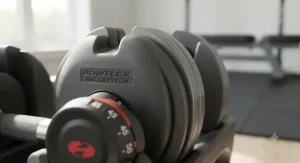
Adjustable dumbbells are one of the rare fitness purchases where the math genuinely favours the buyer over time, provided you pick a set sized to your actual training trajectory rather than your current one. the average Canadian home gym investment sits around $2,530, and at a typical mid-range gym membership of roughly $52 per month, that investment pays for itself in about four years — a timeline that shortens further once you factor in commute time and the membership fees most people quietly keep paying during months they don’t visit.
| Comparison Point | Adjustable Dumbbells | Full Fixed-Weight Rack |
|---|---|---|
| Upfront cost | C$200–C$1,000 | Often C$1,500+ for equivalent range |
| Floor space | Compact, one tray/cradle | Large rack footprint required |
| Expandability | Some models (PowerBlock) expand later | Requires buying entirely new pairs |
| Resale value | Moderate, established secondhand market | Lower per-pound resale typically |
Looking at that comparison, the adjustable dumbbell case is strongest for buyers with genuinely limited space, since a fixed-weight rack covering the same 5-90 lb range would require roughly fifteen individual pairs and a rack sturdy enough to hold all of them — a floor-space and cost commitment most Canadian homes simply can’t accommodate. Maintenance costs are minimal across every model on this list: periodic cleaning, occasional dial or pin lubrication per manufacturer guidance, and — critically — never dropping any of these systems, since none of them are engineered to absorb impact the way bumper plates are. Secondhand marketplaces like Kijiji show a healthy resale market for Bowflex SelectTech sets specifically, which is worth factoring into the true cost of ownership if you expect your training needs to change within a few years.
Safety Considerations for Home Strength Training in Canada
Adjustable dumbbells are mechanically simple compared to cardio machines, but that doesn’t mean safety is a non-issue, particularly for households with kids or shared living spaces. Canada’s 24-Hour Movement Guidelines recommend muscle-strengthening activities using major muscle groups at least twice a week for adults aged 18-64, and the guidelines apply the same twice-weekly recommendation to adults 65 and older — a useful baseline for anyone wondering how often their new dumbbells actually need to come out of the tray to deliver real health benefit.
Practically speaking, the biggest safety consideration with any adjustable system is keeping the mechanism itself away from small hands: dial and pin systems both rely on precise engagement to lock weight plates in place, and a child fiddling with a dial while a dumbbell is on the floor is a genuine hazard that doesn’t exist with a solid fixed-weight dumbbell. Store adjustable dumbbells in their tray or cradle when not in use rather than leaving them loose on the floor, both to protect the mechanism and to reduce tripping hazards in shared spaces. None of the products in this guide are designed to be dropped — every manufacturer explicitly warns against it — so lifters working near failure on heavy compound lifts should have a spotter or use a squat rack with safety bars rather than relying on the dumbbell’s own construction to survive a drop.
Frequently Asked Questions
❓ Is Bowflex SelectTech worth it in Canada?
❓ What weight Bowflex SelectTech should I buy?
❓ Can you drop Bowflex SelectTech dumbbells?
❓ Do Bowflex SelectTech dumbbells need the JRNY app?
❓ How long is the Bowflex SelectTech warranty?
Conclusion
Adjustable dumbbells solve a genuinely Canadian problem — not enough square footage for a proper weight rack, and not enough patience for a commercial gym’s parking lot in February. Across the seven sets compared here, there’s no single universal winner, and that’s the honest takeaway rather than a cop-out: the Bowflex SelectTech 552 remains the sensible default for most home-gym buyers thanks to its fine increments and mature dial mechanism, the Bowflex SelectTech 1090 and PowerBlock Elite USA 90 serve lifters who need real heavy-lifting headroom, budget-conscious buyers are genuinely well served by the PowerBlock Elite EXP or Core Home Fitness set, and anyone running fast-paced supersets should take a serious look at the NÜOBELL‘s handle-twist speed.
What matters more than any single spec is matching the mechanism and weight ceiling to how you actually intend to train over the next two to three years, not just the next two to three months. Buy for your trajectory, store the dumbbells properly, respect the manufacturer’s no-drop guidance, and any of the seven sets above will genuinely earn its spot in your home gym.
✨ Ready to build a home gym that actually gets used? 🏋️♂️
Check current pricing on any of the picks above and start with the set that matches where your training is headed, not just where it is today!
Recommended for You
- 7 Best Adjustable Dumbbells for Beginners in Canada
- 7 Best Adjustable Dumbbells in Canada for 2026
- Combo Leg Curl and Extension Machine: 7 Best Picks for 2026
Disclaimer: This article contains affiliate links. As an Amazon Associate, I earn from qualifying purchases. If you purchase products through these links, we may earn a small commission at no additional cost to you.
✨ Found this helpful? Share it with your friends! 💬🤗
