
In This Article
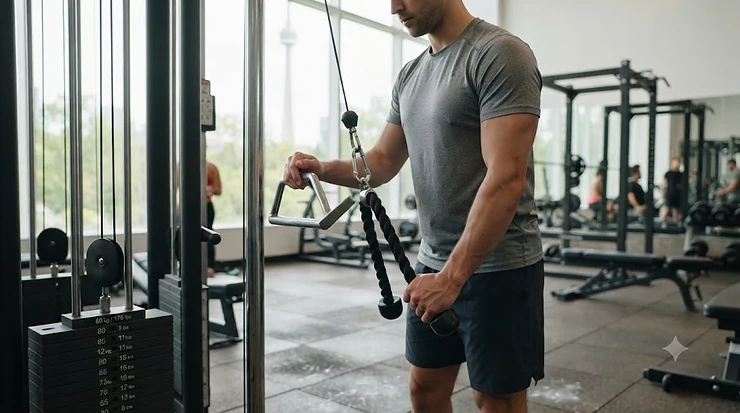
Stand at any cable station in any Canadian gym and you’ll see the same silent standoff: one lifter reaching for the rope, another grabbing the straight bar, both convinced they’ve picked the smarter tool. The tricep rope vs tricep bar attachment debate isn’t just gym folklore — it comes down to how each tool changes your range of motion, your grip, and ultimately how your triceps respond over months of training. A tricep rope is a flexible cord attachment that lets your hands separate at the bottom of the movement, while a tricep bar is a rigid handle (straight, angled, or V-shaped) that locks your grip in one fixed path. Neither is objectively “better” — they’re built for different jobs, and picking the wrong one for your goals is like using a chef’s knife to open a can. This guide breaks down seven real cable attachments — from budget combo sets to commercial-grade builds — with honest, spec-backed commentary so you can walk into (or set up) your home gym with a decision that actually holds up. We’ll also dig into the rope pushdown vs bar pushdown mechanics, hand position variation, cable rope material, and whether a lat pulldown rope alternative can really replace a dedicated bar. According to the triceps brachii muscle anatomy outlined on Wikipedia, the muscle has three distinct heads, and that anatomical detail is exactly why your attachment choice matters more than most lifters assume.

Quick Comparison Table
Before diving into the full breakdown, here’s the at-a-glance version for anyone in a hurry.
| Attachment | Type | Price Range (CAD) | Best For |
|---|---|---|---|
| Yes4All Deluxe Combo Set | Rope + Straight Bar + V-Bar + D-Handles | around C$45-C$55 | Best all-in-one starter set |
| CAP Barbell Deluxe Tricep V-Bar | V-Bar | under C$40 | Best budget bar-only pick |
| Gymreapers Tricep Rope | Rope (27″) | C$25-C$35 range | Best padded-handle rope |
| Valor Fitness MB-5 Tricep Rope | Rope (26.5″) | C$20-C$30 range | Best short, snag-free rope |
| Titan Fitness Tricep Rope | Rope (27″) | C$25-C$35 range | Best mid-tier commercial feel |
| Titan Fitness V-Shape Bar | V-Bar | C$45-C$60 range | Best premium chrome bar |
| REP Fitness Tricep Rope | Rope (27″+) | C$30-C$40 range | Best long-term durability |
Looking across this table, the split between rope and bar isn’t about which is “stronger” — it’s about range of motion versus rigidity. The Yes4All Deluxe Combo Set wins on sheer value because it hands you both tools at once, which matters when you’re not yet sure which style suits your elbows. Budget shoppers gravitate toward the CAP Barbell Deluxe Tricep V-Bar, but anyone chasing a deeper stretch at lockout should look at the rope options instead, since a fixed bar simply can’t replicate that separation.
💬 Just one click — help others make better buying decisions too!😊
Top 7 Tricep Cable Attachments: Expert Analysis
Picking a winner here isn’t about crowning one champion — it’s about matching the tool to your joints, your goals, and your patience for assembling a home gym. Below are seven real, currently available attachments spanning budget to premium, rope to bar.
1. Yes4All Deluxe Combo Set — most attachments per dollar
The Yes4All Deluxe Combo Set throws a straight bar, a V-shaped bar, a tricep rope, and D-handles into one box, which sounds like overkill until you realize that’s basically a starter kit for your entire pulling and pushing arsenal. Built from chrome-finished steel rated to roughly 880 lbs, the knurled handles on the bars grip well even once your palms get sweaty mid-set, and the rope’s rubberized ends keep it from slipping through your fingers on the eccentric. Based on the spec comparison, this set makes the most sense for anyone assembling a home gym from scratch, since buying these four pieces separately would cost noticeably more than the bundle price. Reviewers consistently mention that the knurling feels sharper than commercial-gym versions at first, which some love for grip security and others find abrasive during high-rep burnout sets — that’s a texture preference, not a defect. What most buyers overlook about combo sets like this one is that the “extra” pieces rarely go unused; the D-handles alone open up single-arm rows and cross-body cable curls you can’t do with either the rope or the bar. For anyone torn on tricep rope vs tricep bar attachment, owning both eliminates the decision entirely.
Pros:
- ✅ Four attachments cost less than buying separately
- ✅ 880 lb-rated steel construction feels commercial-grade
- ✅ Covers rope, bar, and handle training in one purchase
Cons:
- ❌ Knurling can feel rough for beginners
- ❌ Storage space needed for four separate pieces
Priced around C$45-C$55 for the full combo, this is the strongest value verdict on this entire list if you’re building a cable station from zero.

2. CAP Barbell Deluxe Tricep V-Bar — simplest rigid grip option
If the combo set feels like too much commitment, the CAP Barbell Deluxe Tricep V-Bar is the no-fuss alternative — one bar, one job, done well. It pairs a chrome steel frame with a molded rubber handgrip section, which BarBend’s equipment testing team has flagged as a standout feature since bare-metal V-bars tend to bite into your palms on heavier pushdown sets. The V-angle itself keeps your wrists in a neutral position rather than the more strained pronated grip a flat straight bar forces, and that alone reduces elbow strain over a long training block. Here’s what to weigh: because it’s rigid, your hands stay locked at a fixed width the entire rep, so you lose the extra squeeze-and-spread motion a rope offers at lockout. Reviewers aggregated across major retailers describe it as “simple but sturdy,” with the rubber grip section wearing well over months of daily pushdowns rather than cracking or peeling like cheaper foam grips sometimes do. For lifters who value consistency over variety — the type who does the exact same pushdown protocol every single week — that rigidity is a feature, not a limitation.
Pros:
- ✅ Neutral V-angle reduces wrist and elbow strain
- ✅ Molded rubber grip holds up better than foam
- ✅ Single-piece simplicity, nothing to assemble
Cons:
- ❌ No range-of-motion flexibility like a rope offers
- ❌ Handle width isn’t adjustable for smaller hands
At under C$40, this is the easiest “just add it to my bar” purchase on the list for anyone who already owns a rope and needs the rigid counterpart.
3. Gymreapers Tricep Rope Cable Attachment — best padded comfort
The Gymreapers Tricep Rope Cable Attachment measures 27 inches with grip zones at 12, 22, and 27 inches, meaning you’re not locked into one hand position — you can choke up for a tighter squeeze or spread wide for a broader stretch depending on the exercise. Neoprene padding wraps the primary grip zones, and reinforced stitching at the seams is designed to resist the fraying that cheap dollar-store ropes develop within weeks. Based on the spec sheet, the versatility of multiple grip points means this single rope can handle tricep pushdowns, face pulls, and even seated cable rows without needing to buy a second attachment for each movement. Aggregated customer feedback puts this rope at roughly 4.9 out of 5 stars across dozens of verified reviews, with recurring praise for feeling sturdier than typical off-brand ropes at a similar price point — one reviewer specifically noted it outperformed traditional grip-free ropes for comfort during high-volume sets. The 1-year replacement guarantee backing it also signals the manufacturer expects it to survive real gym abuse, not just light home use. What most buyers overlook is that the multiple grip zones make this rope genuinely useful for taller or shorter lifters who need a different lever length than the standard 27-inch endpoint offers.
Pros:
- ✅ Three grip zones for adjustable hand positioning
- ✅ Neoprene padding reduces palm fatigue on high reps
- ✅ Backed by a 1-year replacement guarantee
Cons:
- ❌ Slightly pricier than basic unpadded ropes
- ❌ Thicker padding may not suit very small hands
In the C$25-C$35 range, this rope earns its price premium through the padding alone if you’re doing multiple tricep sessions per week.
4. Valor Fitness MB-5 Tricep Rope — shortest, most snag-resistant build
At 26.5 inches end to end, the Valor Fitness MB-5 Tricep Rope is intentionally shorter than most competitors, and that’s not a flaw — for lifters in tighter home gym spaces or shorter cable stack setups, a shorter rope means less excess cord dragging across the floor or catching on nearby equipment. Braided nylon construction paired with rubber-capped ends gives it a durable, no-frills feel, and the branded steel attachment point is compatible with essentially any standard cable machine carabiner. Reviewers consistently report satisfaction with the shorter length specifically, noting they initially worried it would feel cramped but found it comfortable once integrated into their normal pushdown and pulldown routines. Based on the spec comparison, the shorter profile does mean slightly less range for a deep bottom-position stretch compared to 27-inch-plus ropes, so hypertrophy-focused lifters chasing maximum stretch may prefer a longer option instead. One aggregated review theme worth flagging: several users mentioned improvising their own grip covering (like kitchen liner material) to reduce hand slide, suggesting the stock rubber caps, while durable, aren’t the plushest grip surface out of the box. For home gym owners running a compact rack-and-pulley setup, this remains one of the tidiest rope options available.
Pros:
- ✅ Compact 26.5-inch length suits smaller home gyms
- ✅ Durable rubber-capped ends resist wear
- ✅ Solid steel attachment fits most cable machines
Cons:
- ❌ Shorter length limits maximum stretch range
- ❌ Grip surface less cushioned than padded competitors
Sitting around C$20-C$30, the Valor Fitness MB-5 Tricep Rope is the value pick for anyone whose home gym has limited floor clearance.
5. Titan Fitness Tricep Rope Pulldown Attachment — commercial-feel mid-tier rope
The Titan Fitness Tricep Rope Pulldown Attachment runs 27 inches long with a 1-inch rope diameter and textured, plastic-capped ends built to resist slipping mid-set. It’s compatible with any 9/16-inch hook or carabiner setup, which covers the overwhelming majority of home and commercial cable stations sold in Canada. Here’s what to weigh: the high-quality nylon braid feels noticeably thicker in-hand than entry-level ropes, which translates to less fraying over years of use rather than months — a detail that matters if you’re training triceps two or three times weekly. Aggregated reviews across retail platforms describe the rope as feeling “like the ones at my commercial gym,” a comparison that shows up often enough to suggest genuine consistency in build quality rather than a one-off compliment. What the spec sheet won’t tell you, but user reports suggest, is that the plastic end caps — while durable — feel slightly harder in the palm during max-effort final reps than the neoprene-padded alternatives on this list, so lifters with sensitive palms may want to pair this rope with lifting gloves. For anyone who trains at home but wants that unmistakable “commercial gym” tactile feel, this rope closes the gap convincingly.
Pros:
- ✅ Commercial-grade nylon braid resists fraying long-term
- ✅ Fits standard 9/16-inch hooks and carabiners
- ✅ Textured caps improve slip resistance
Cons:
- ❌ Plastic end caps feel harder than neoprene padding
- ❌ Slightly heavier than ultralight rope competitors
At roughly C$25-C$35, this is the pick for lifters who’ve used commercial-gym ropes and want that same feel without a commercial-gym membership.

6. Titan Fitness V-Shape Tricep Press Down Bar — premium chrome rigidity
Stepping up to the bar side, the Titan Fitness V-Shape Tricep Press Down Bar measures roughly 8 inches tall by 13 inches wide, with a chrome-coated solid steel frame and knurled rubber hand grips positioned along the angled arms. The V-shape is engineered specifically to let your wrists sit in a natural, slightly angled position rather than the harsher flat pronation of a straight bar, and Titan frames this as reducing wrist and elbow strain across heavier loading. Based on the spec comparison, the chrome finish isn’t just cosmetic — it’s a genuine corrosion barrier that matters if your home gym lives in a garage or basement with humidity swings across Canadian seasons. Reviewers and equipment testers who’ve compared it against cheaper V-bars note the rigidity feels noticeably more stable under near-max loads, without the slight flex some budget bars develop over time. What most buyers overlook is that this bar’s compatibility extends well beyond tricep pushdowns — the same V-angle works for close-grip lat pulldowns, seated rows, and face pulls, making it a legitimate lat pulldown rope alternative for anyone who wants a rigid option for back day too. The tradeoff, as with any bar, is the fixed hand width; you can’t widen or narrow your grip mid-set the way a rope allows.
Pros:
- ✅ Chrome steel resists rust in humid garages
- ✅ Natural wrist angle reduces joint strain
- ✅ Doubles as a lat pulldown and row handle
Cons:
- ❌ Premium price versus basic straight bars
- ❌ Fixed grip width, no mid-set adjustment
Expect to pay in the C$45-C$60 range, which is justified if you want one bar to genuinely last a decade of training.
7. REP Fitness Tricep Rope — best long-term durability pick
Closing out the list, the REP Fitness Tricep Rope is built with the kind of thick, solid-feeling nylon that REP’s broader reputation for commercial-grade home gym gear would lead you to expect. Aggregated customer reviews repeatedly highlight the extra length as a genuine functional advantage — lifters specifically call out achieving fuller extension and a deeper stretch at the bottom of tricep extensions compared to shorter ropes they’d used previously. The end caps are solid rather than hollow, and reviewers note zero fraying complaints even after extended use, which is a meaningfully rare compliment in a category full of ropes that shred within a year. Based on the spec comparison, REP’s own trainers have used this exact attachment to demonstrate tricep pushdown variations, sports handle comparisons, and face-pull technique, which suggests the company treats it as a flagship accessory rather than an afterthought add-on. The one recurring critique in aggregated feedback is that the hard end caps feel less forgiving than padded or rubberized alternatives during high-volume, high-fatigue sets — a fair tradeoff for the added structural durability. For serious home gym owners who train tricep-heavy programs multiple times weekly and want one rope that survives years rather than months, this is the durability-first choice on the list.
Pros:
- ✅ Thick nylon build shows minimal wear over time
- ✅ Extra length allows deeper stretch at lockout
- ✅ Solid end caps rarely reported as failing
Cons:
- ❌ Hard caps less comfortable on max-effort sets
- ❌ Priced above most entry-level rope competitors
At around C$30-C$40, the REP Fitness Tricep Rope earns its spot as the premium rope pick for anyone tired of replacing frayed attachments every training cycle.
Practical Usage Guide: Setting Up and Progressing Safely
Getting a new cable attachment right in the first 30 days saves you from bad habits that are brutally hard to unlearn later. Start by checking your cable machine’s pulley height — for tricep pushdowns, the anchor point should sit at or slightly above shoulder height so your forearms travel a clean vertical path rather than an awkward diagonal. Attach your rope or bar securely to the carabiner and give it a firm downward tug before loading any weight; a loose clip is the single most common (and most preventable) cause of cable-attachment accidents in home gyms. For your first two weeks, use lighter loads than you think you need — the goal is grooving the elbow-pinned pattern, not chasing numbers. A common mistake in the first month is letting the elbows drift forward as fatigue sets in, which shifts work away from the triceps and onto the shoulders and chest. If you’re using a rope, practice the outward hand-spread at lockout deliberately rather than letting it happen accidentally; that spread is where much of the rope’s advantage over a bar actually lives. Maintenance is minimal but not optional: wipe down rubber or neoprene grips after sweaty sessions, inspect nylon rope fibres monthly for fraying near the attachment point, and store bars hanging rather than stacked to avoid bent hooks. Reviewers across nearly every product in this guide mention longevity as directly tied to basic care like this, so five minutes a month meaningfully extends the life of whichever attachment you choose.
Real-World Scenarios: Which Attachment Fits Your Situation
Picture three different lifters walking into the same decision. First, there’s the apartment-dwelling beginner with a compact home cable tower and zero storage space — for them, the Valor Fitness MB-5 Tricep Rope or the CAP Barbell Deluxe Tricep V-Bar make the most sense, since both are compact, affordable, and don’t demand a dedicated storage rack. Second, consider the intermediate lifter training triceps three times a week who’s chasing hypertrophy and wants maximum stretch at lockout; that lifter should lean toward the REP Fitness Tricep Rope or Gymreapers Tricep Rope Cable Attachment, since the longer length and multiple grip zones directly support the deeper range of motion that drives muscle growth. Third, imagine someone building a garage gym completely from scratch on a moderate budget, needing rows, pulldowns, and pushdowns covered without five separate purchases — the Yes4All Deluxe Combo Set solves that in one transaction, and pairing it later with the Titan Fitness V-Shape Tricep Press Down Bar rounds out a genuinely versatile setup. None of these lifters are wrong; they’re just optimizing for different constraints — space, stimulus, or budget breadth. If you can see yourself in more than one profile, that’s a signal you may genuinely benefit from owning both a rope and a bar rather than forcing a single-attachment decision.
Rope Pushdown vs Bar Pushdown: The Real Difference
The rope pushdown vs bar pushdown question isn’t really about which exercise “activates” the triceps more — research, including EMG work comparing these variations, has generally found no dramatic activation advantage for one tool over the other when tempo and elbow position are controlled. What actually differs is mechanics. A bar pushdown locks your hands at a fixed width in a pronated grip, which maximizes stability and lets you handle marginally heavier loads with confidence, since there’s zero wobble in the handle itself. A rope pushdown allows your hands to separate and rotate slightly at the bottom of the rep, which lengthens the effective range of motion and adds a squeeze-and-rotate component absent from any rigid bar.
| Factor | Bar Pushdown | Rope Pushdown |
|---|---|---|
| Grip stability | Highest — fixed width | Moderate — hands can drift |
| Range of motion | Fixed, shorter at lockout | Extended, deeper stretch |
| Load capacity feel | Slightly higher confidence | Slightly lower at max loads |
| Wrist position | Pronated (straight) or angled (V-bar) | Neutral, adjustable |
| Best For | Titan Fitness V-Shape Bar, heavy loading days | REP Fitness Tricep Rope, hypertrophy-focused sets |
Interpreting that table honestly: if you’re chasing raw strength numbers on tricep-dominant pressing accessory work, the rigidity of a bar like the CAP Barbell Deluxe Tricep V-Bar removes a variable and lets you focus purely on load progression. If your goal is hypertrophy through maximal stretch and contraction, a rope like the Gymreapers Tricep Rope Cable Attachment gives you a genuine mechanical edge at the two extremes of the rep. Most well-rounded programs rotate both across a training block rather than picking a permanent winner.
✨ Ready to build out your cable station? Check current pricing on the picks above before your next session!

How to Choose the Best Cable Attachment for Triceps
Finding the best cable attachment for triceps comes down to matching a handful of criteria to your specific setup, rather than chasing whatever attachment currently has the most five-star reviews.
- Match it to your machine’s hook type. Most home and commercial pulleys use a 9/16-inch hook or standard carabiner clip — verify compatibility before buying, since a mismatched attachment simply won’t connect.
- Decide rope or bar based on training goal. Choose a rope for stretch-focused hypertrophy work, a bar for stability-focused strength work.
- Check your available ceiling and floor clearance. Longer ropes need more vertical drop space; shorter attachments like the Valor Fitness MB-5 Tricep Rope suit cramped home gyms.
- Consider grip comfort for your session volume. High-rep training benefits from padded handles like those on the Gymreapers Tricep Rope Cable Attachment; low-rep heavy work tolerates harder grips fine.
- Weigh material durability against your training frequency. Daily lifters should prioritize reinforced stitching and solid caps, as seen on the REP Fitness Tricep Rope.
- Factor in versatility if space is limited. A V-bar that also handles rows and pulldowns, like the Titan Fitness V-Shape Tricep Press Down Bar, stretches your investment further.
- Don’t ignore corrosion resistance in humid storage spaces. Chrome-finished steel resists rust far better than painted or bare metal in garage gyms through Canadian winters.
Working through this checklist takes maybe five minutes and saves you from the classic mistake of buying based on price alone, then replacing the attachment three months later because it didn’t fit your actual training pattern.
Long vs Short Tricep Rope: Which Length Wins?
The long vs short tricep rope debate is really a proxy for the space-versus-stretch tradeoff. Longer ropes — typically 27 inches and up, like the one on the REP Fitness Tricep Rope — allow your hands to travel further apart and lower at the bottom of the movement, which many lifters find translates to a deeper, more satisfying stretch through the long head of the triceps. Shorter ropes, such as the 26.5-inch Valor Fitness MB-5 Tricep Rope, sacrifice a small amount of that range but reward you with less excess cord dangling near your feet or catching on nearby equipment — a genuinely underrated concern in cramped home gyms. Reviewers of longer ropes consistently mention the extended stretch as the standout benefit, while reviewers of shorter ropes praise compactness and reduced snag risk rather than complaining about lost range. Neither length is universally correct: taller lifters with longer arms tend to prefer longer ropes simply because their natural range of motion is greater to begin with, while shorter lifters or those in pulley systems with limited vertical clearance often find shorter ropes fit their mechanics without any noticeable compromise. If you’re unsure, the middle-ground 27-inch options — including the Gymreapers Tricep Rope Cable Attachment and Titan Fitness Tricep Rope Pulldown Attachment — split the difference reasonably well for most body types.
Cable Rope Material Explained
Cable rope material sounds like a minor spec until your rope starts fraying six weeks into ownership. The overwhelming majority of quality tricep ropes use braided or coated nylon, chosen because it resists stretching under load far better than cotton or polyester blends, while still remaining flexible enough to bend and coil around the pulley. Braided nylon, used in the Valor Fitness MB-5 Tricep Rope, tends to feel slightly stiffer initially but breaks in with use and resists fraying at the ends thanks to tighter fibre weaving. Coated or reinforced nylon, as seen in the Titan Fitness Tricep Rope Pulldown Attachment, adds a protective outer layer that specifically targets the wear points where the rope contacts the carabiner hook — usually the first place any rope fails. End caps matter just as much as the rope itself: hard plastic caps, common on budget and even some premium ropes, are more durable long-term but less forgiving in the palm, while rubber or neoprene-padded caps — like those on the Gymreapers Tricep Rope Cable Attachment — trade a small amount of long-term rigidity for meaningfully better comfort across high-volume sessions. If you’re training multiple times weekly, prioritize reinforced stitching near the attachment point over marginal grip comfort differences, since that’s the spot that fails first on cheaper ropes.
Hand Position Variation: How Grip Angle Changes the Exercise
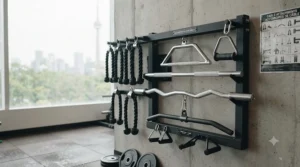
Hand position variation is arguably the most underrated lever you can pull on a tricep attachment, and it’s a big part of why bars and ropes feel so different under load. A straight bar forces a pronated grip — palms down, wrists locked — and a peer-reviewed EMG study on pulldown grip variations found that grip type and forearm orientation meaningfully change muscle recruitment patterns, even when the overall exercise pattern looks similar. A V-bar, like the one on the Titan Fitness V-Shape Tricep Press Down Bar, angles the wrists into a more neutral position that many lifters find noticeably easier on the elbows during heavier sets. A rope removes the fixed-angle constraint entirely, letting your hands rotate from neutral at the top of the movement toward a slight pronation-and-spread at lockout — a hybrid path no rigid bar can replicate. Reviewers and coaches alike note that rotating your hand position across a training block, rather than sticking to one grip permanently, tends to reduce repetitive strain on the elbow and wrist over months of consistent training. For anyone managing minor elbow discomfort from years of bar-only pushdowns, deliberately cycling in rope work for its neutral-to-pronated rotation is a simple, evidence-informed adjustment worth trying before assuming you need to stop training triceps altogether.
Lat Pulldown Rope Alternative: Can One Attachment Do It All?
If your home gym budget or storage space is genuinely limited, the question of a lat pulldown rope alternative comes up constantly — can your tricep rope or bar double as your back-day attachment too? The honest answer is a qualified yes. A standard tricep rope works reasonably well for close-grip lat pulldowns and seated rows, since the flexible cord still allows a functional pulling pattern, even though it’s not purpose-built the way a dedicated wide lat bar is. A V-shaped bar, such as the Titan Fitness V-Shape Tricep Press Down Bar, actually performs this dual role more convincingly than a rope does, since its rigid handle and neutral grip angle translate directly to close-grip pulldowns, seated cable rows, and face pulls without any awkward adaptation. What most buyers overlook is that dedicating one multi-purpose attachment, rather than buying a separate lat bar, a separate row handle, and a separate tricep bar, is exactly how combo sets like the Yes4All Deluxe Combo Set justify their existence — you’re not buying redundant gear, you’re buying overlapping utility. The tradeoff is specialization: a dedicated wide lat pulldown bar will always out-perform a tricep attachment repurposed for back day, so if lat development is a serious priority rather than an occasional add-on, budget for that dedicated bar eventually rather than treating your tricep gear as a permanent substitute.
Common Mistakes When Buying a Tricep Attachment
The most common mistake is buying based on price alone without checking hook compatibility, which leads to attachments that simply won’t connect to your specific cable machine. A close second is assuming longer automatically means better — as covered above, a longer rope only helps if you actually have the floor clearance and arm length to use that extra range, otherwise you’re just managing excess slack. Many first-time buyers also skip checking weight capacity ratings entirely, which matters far more for bars under heavy pushdown loads than for ropes, since a bar’s steel hanger is the failure point under max stress. Another frequent misstep is ignoring grip material until after the purchase — buyers who train frequently and skip padded options like the Gymreapers Tricep Rope Cable Attachment often regret it within a month once callusing and palm fatigue set in. Finally, plenty of shoppers buy a single attachment and expect it to handle every cable exercise equally well, when in reality a rope and a bar genuinely serve different mechanical purposes — expecting one tool to do everything is setting yourself up for a frustrating compromise rather than an efficient training setup.
Long-Term Cost & Maintenance
Thinking in terms of cost-per-use rather than sticker price changes the calculus considerably. A budget rope in the C$20-C$30 range that frays within six months and needs replacing twice a year actually costs more over 24 months than a single C$30-C$40 durable option like the REP Fitness Tricep Rope that survives the full period without failure. The same logic applies to bars: a CAP Barbell Deluxe Tricep V-Bar at under C$40 with a rubber grip that holds up for years outperforms, on a total-cost-of-ownership basis, a cheaper bar that needs its grip re-wrapped or replaced annually. Maintenance costs are minimal across this entire category — a damp cloth for grips, occasional inspection of stitching and hooks, and hanging storage rather than tossing attachments in a bin — but skipping that basic care is exactly what shortens lifespan and forces earlier replacement. If you’re outfitting a home gym you expect to use for years rather than months, paying slightly more upfront for chrome-finished steel and reinforced nylon, as found in the Titan Fitness V-Shape Tricep Press Down Bar and Titan Fitness Tricep Rope Pulldown Attachment, tends to work out cheaper per year of use than repeatedly replacing budget alternatives. For guidance on structuring safe, progressive resistance training around whichever attachment you choose, the Canadian Society for Exercise Physiology offers evidence-based standards that most certified Canadian trainers follow.

FAQ
❓ Is a tricep rope or bar better for building bigger triceps?
❓ Can I use a tricep rope for back exercises like lat pulldowns?
❓ What length tricep rope should I buy?
❓ Do tricep bars fit all cable machines?
❓ How do I stop my tricep rope from fraying or my bar from rusting?
Conclusion
Choosing between a tricep rope and a tricep bar attachment ultimately comes down to a simple question: are you chasing stretch and range of motion, or stability and load confidence? Ropes like the REP Fitness Tricep Rope and Gymreapers Tricep Rope Cable Attachment win on hypertrophy-focused range of motion, while bars like the Titan Fitness V-Shape Tricep Press Down Bar and CAP Barbell Deluxe Tricep V-Bar win on grip stability and multi-exercise versatility. Budget-conscious lifters building a home gym from the ground up will get the most mileage out of the Yes4All Deluxe Combo Set, since it sidesteps the debate entirely by giving you both tools in one purchase. Compact-space lifters should lean toward the Valor Fitness MB-5 Tricep Rope, while anyone training triceps multiple times weekly and prioritizing longevity should strongly consider the Titan Fitness Tricep Rope Pulldown Attachment. There’s no universally “correct” answer here — only the right tool for your specific elbows, your specific space, and your specific training goals. Whichever you land on, the habits that matter most — controlled tempo, elbows pinned, and basic gear maintenance — will do more for your triceps than the attachment itself ever could.
Recommended for You
- Tricep Rope Attachment 2026: 7 Best Options for Canadian Gyms
- Types of Lat Pulldown Bars: 7 Picks That Fix Your Back Day (2026)
- Lat Pulldown Bar Attachment: 7 Top Picks for 2026 (Canada Guide)
Disclaimer: This article contains affiliate links. As an Amazon Associate, I earn from qualifying purchases. If you purchase products through these links, we may earn a small commission at no additional cost to you.
✨ Found this helpful? Share it with your friends! 💬🤗
