
In This Article
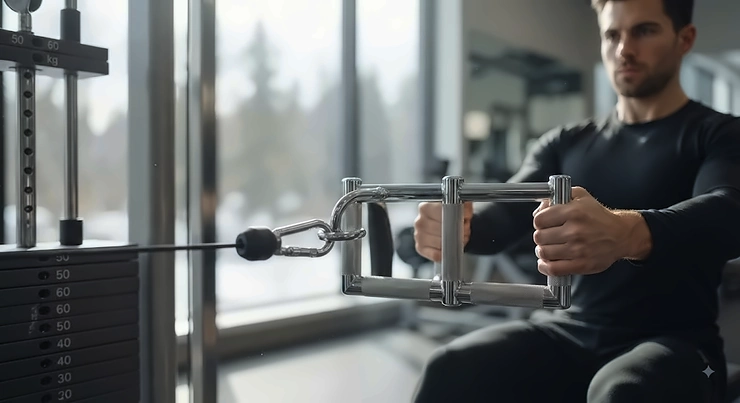
You’ve probably felt it before: halfway through a set of seated rows, your wrists start twisting sideways, your forearms are screaming before your lats even wake up, and the cheap plastic handle you bought last year is starting to crack at the seam. That’s the moment most lifters realize that cable row handles aren’t an afterthought — they’re the actual interface between your effort and your back. A cable row handle is the grip attachment — usually a D-shaped, rotating, or paddle-style piece of steel, aluminum, or nylon — that clips onto a cable machine’s pulley to let you perform rows, pulldowns, and single-arm pulling movements with a stable, ergonomic hold. Get the wrong one and every rep fights your joints. Get the right one and the resistance goes exactly where it’s supposed to: your back.
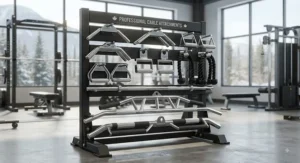
This guide breaks down seven real, currently available cable row handles across every price tier, from no-frills chrome D-handles to engineered rotating systems that cost more than some cable machines’ entire attachment kits. We’ll dig into what a rotating hinge actually does for your wrists, why knurling quality matters more than knurling quantity, and when a single handle beats a double one (and vice versa). According to Canada’s own physical activity guidelines, resistance training belongs in nearly everyone’s weekly routine — so it’s worth getting the tool that touches your hands on every single rep right.
Quick Comparison Table
| Handle | Type | Best For | Price Range (CAD) |
|---|---|---|---|
| Yes4All Double D Row Handle | Double, chrome, swivel | Budget-conscious beginners | C$30-C$45 |
| Mikolo Aluminum D Handle (Bearing) | Single, rotating bearing | Wrist-friendly single-arm work | C$45-C$65 |
| Titan Fitness Rotating D-Handle | Single, rotating hinge | Mid-range all-rounder | C$40-C$55 |
| Titan Fitness Double D-Handle | Double, fixed, knurled | Simple close-grip rows | C$35-C$50 |
| Titan Fitness Triangle Grip | Fat-grip triangle | Grip-strength focused lifters | C$55-C$70 |
| REP Fitness D-Handle (Steel) | Single, fixed or rotating | Home gym owners who want options | C$35-C$60 |
| Prime Fitness RO-T8 Handles (Pair) | Dual-axis rotating | Serious lifters, joint longevity | C$165-C$195 |
Looking at the spread here, there’s a clean line between “handle that clips on and does its job” and “handle that’s engineered to move with your body.” The Yes4All Double D Row Handle and Titan Fitness Double D-Handle sit at the accessible end and will serve most home gym owners perfectly well for years. Once you introduce rotation — as in the Mikolo Aluminum D Handle, Titan Fitness Rotating D-Handle, and the Prime Fitness RO-T8 Handles — the price climbs, but so does the wrist and elbow comfort during heavy volume. The Titan Fitness Triangle Grip stands apart because it’s less about ergonomics and more about raw grip demand, which is its own kind of training value.
💬 Just one click — help others make better buying decisions too!😊
Top 7 Cable Row Handles: Expert Analysis
1. Yes4All Double D Row Handle — best all-around budget pick
The first thing you’ll notice about the Yes4All Double D Row Handle is how unfussy it is: a chrome-finished steel frame in a double-D shape, built for two-handed pulling movements like seated rows and lat pulldowns. Its textured rubber grip and knurled surface are rated to support up to roughly 880 lbs (400 kg) of pull force, which is more than enough headroom for the vast majority of home-gym loads, and the 360-degree steel swivel at the connection point lets the handle track your pulling angle instead of locking your wrists into one position. Based on the spec comparison, this is a case where a simple double-D shape does exactly what it needs to: it puts both hands in a fixed, neutral-ish position so beginners can focus on pulling with their back instead of fighting an unstable grip. What most buyers overlook about this model is that the swivel is doing more work than it seems — it’s the reason your wrists aren’t locked into a single plane through the whole range of motion. Reviewers consistently report that the chrome finish holds up well against rust in humid basements, though a handful mention the rubber grip developing a slight odor after heavy sweat exposure, which is common at this price point.
Pros:
- ✅ Genuinely affordable entry point for home gyms
- ✅ 360° swivel keeps wrists from locking mid-pull
- ✅ Chrome finish resists corrosion in damp spaces
Cons:
- ❌ Rubber grip texture wears faster than metal knurling
- ❌ Fixed double-D shape limits single-arm exercise variety
At around C$30-C$45, the Yes4All Double D Row Handle earns its spot through pure value — you’re not paying for engineering flourishes, just a durable, functional grip that covers seated rows, lat pulldowns, and most standard back work.
2. Mikolo Aluminum D Handle (Bearing) — best rotating handle for wrist comfort
The Mikolo Aluminum D Handle takes a different approach: instead of chrome-plated steel, it’s built from aluminum alloy with a reinforced 15mm internal steel core, and the headline feature is a genuine internal bearing system that lets the handle spin independently of the cable attachment point. That distinction matters more than it sounds — a swivel at the carabiner lets the whole handle rotate, but a bearing inside the grip itself lets your hand rotate mid-rep without any cable twist transferring into your wrist. Here’s what to weigh: if you’ve ever felt a sharp little wrist snap at the top of a single-arm row, that’s usually cable torque finding the weakest link in the chain, and a bearing-equipped handle is specifically designed to absorb that. Aggregated buyer feedback highlights the joint-friendly feel during high-rep pulldown work, with several reviewers specifically calling out reduced forearm fatigue compared to fixed handles they’d used previously; a smaller number note that the aluminum construction, while lighter than steel, feels less “commercial gym” solid in the hand.
Pros:
- ✅ True internal bearing reduces wrist torque significantly
- ✅ Lightweight aluminum build is easy to store and swap
- ✅ Reinforced steel core prevents flex under heavy load
Cons:
- ❌ Feels less substantial than solid steel competitors
- ❌ Single-handle design means buying two for bilateral work
Priced around C$45-C$65, this is the one to reach for if rotating handle bearing tech is the specific feature drawing you to this article — it’s a genuinely mechanical solution to a real biomechanical problem, not just marketing language.
3. Titan Fitness Rotating D-Handle — best mid-range single handle
Titan’s entry here is a chrome-coated solid steel D-handle built around a rotating hinge rather than an internal bearing — a simpler mechanism, but one that still moves freely through your natural range of motion during single-arm rows, pulldowns, and chest work. The knurled grip section runs long enough to accommodate different hand sizes without your fingers running out of texture. On paper this means less than it does in practice: a rotating hinge, unlike a fixed handle, prevents the cable from twisting your forearm into an unnatural angle as you pull through different phases of the rep, which is exactly the kind of stress that accumulates into elbow tendinopathy over months of training. What most buyers overlook is that this rotation also lets you subtly change your grip angle — pronated, neutral, supinated — without unclipping and re-clipping the cable, something fixed handles simply can’t offer. User reports suggest the chrome finish is genuinely durable under daily gym use, though a few note the rotating mechanism can develop a slight click after a year or two of heavy use, which doesn’t affect function but is worth knowing about upfront.
Pros:
- ✅ Rotating hinge reduces wrist and elbow strain
- ✅ Solid steel build with durable chrome coating
- ✅ Deep knurling accommodates various hand sizes
Cons:
- ❌ Hinge mechanism may develop minor noise over time
- ❌ Sold as a single unit — pairs cost proportionally more
In the C$40-C$55 range, this handle sits comfortably between the entry-level double-D handles and the premium engineered systems, making it a smart pick for lifters who train single-arm rows regularly and want joint protection without the premium price tag.
4. Titan Fitness Double D-Handle — best for classic close-grip rows
Where the rotating handle above prioritizes joint mobility, the Titan Fitness Double D-Handle goes the other direction: a fixed, chrome-plated steel double-D shape designed for stable, symmetrical two-handed pulling. Its dimensions — roughly 5.75 inches wide with a 2.75-inch knurled grip section — put your hands in a close, neutral position that’s ideal for seated cable rows and lat pulldowns where you want maximum control rather than joint articulation. Based on the spec comparison, the appeal of a fixed double-D handle is really about consistency: every rep starts and ends in the same hand position, which makes it easier to track progressive overload without technique drifting between sets. Reviewers consistently note the welding quality holds up under repeated heavy pulling, and the knurling — while aggressive enough to prevent slipping — doesn’t tear up the palms the way some ultra-coarse steel handles can. The main tradeoff, as reviewers note, is that a fixed handle transfers more cable torque directly into your wrists compared to a rotating design, something worth factoring in if you already deal with wrist discomfort.
Pros:
- ✅ Rock-solid, no-flex construction for heavy pulling
- ✅ Neutral grip position ideal for close-grip rows
- ✅ Knurling balances slip resistance and hand comfort
Cons:
- ❌ Fixed design transfers more torque into the wrists
- ❌ Less versatile than rotating alternatives for varied grip angles
At roughly C$35-C$50, this is the D-handle cable attachment to buy if your programming is built around straightforward seated rows and lat pulldowns and you’d rather have unwavering stability than adjustable grip angles.
5. Titan Fitness Triangle Grip — best for building raw grip strength
The Titan Fitness Triangle Grip takes an entirely different design philosophy: instead of isolating your hands from cable torque, it hands you a solid 1.9-inch fat grip and lets your forearms do the stabilizing work. Built from powder-coated steel with an 8-inch handle spread and a 6.25-inch grip length, it’s designed for rows, pulldowns, and pushdowns where the point isn’t comfort — it’s demand. Here’s what to weigh: a standard-diameter handle lets your fingers close easily around the bar, but a fat grip like this forces your forearm flexors and grip muscles to work overtime just to maintain hold, which is precisely why strongman and grappling athletes gravitate toward fat-grip training. What most buyers overlook is that this isn’t a handle you reach for on your heaviest rowing days — grip fatigue will limit your load well before your back does, so it’s better suited to accessory or hypertrophy-focused sessions. Aggregated reviews describe the welding and powder coat as genuinely commercial-grade, with the main complaint being that the fixed 1.9-inch diameter simply isn’t for everyone; smaller-handed lifters report it’s a stretch to get a full, secure grip.
Pros:
- ✅ Builds forearm and grip strength as a side benefit
- ✅ Commercial-grade steel welding and powder coat
- ✅ Versatile across rows, pushdowns, and pull-up strap use
Cons:
- ❌ Fat grip diameter isn’t comfortable for smaller hands
- ❌ Grip fatigue can limit back-focused loading on heavy days
Sitting around C$55-C$70, this is less a direct replacement for your primary row handle and more a deliberate accessory pick — one of the lesser-known but genuinely useful additions for lifters chasing grip strength alongside back development.
6. REP Fitness D-Handle (Steel) — best for home gym owners who want options
REP Fitness sells its D-handle line in multiple grip materials — hard chrome steel, urethane-coated, and a knurled Pro Series — available individually or in pairs, which makes it one of the more flexible entries here for outfitting a full home gym. The steel version weighs in around the middle of REP’s stated 0.5-3.4 lb range depending on style, with a 10.3-inch strap on the steel handles versus a shorter 9.5-inch strap on the urethane option. Based on the spec comparison, the practical difference between these materials comes down to feel under load: hard chrome offers a firmer, more locked-in grip for heavier pulling, while the urethane-coated version is noticeably gentler on bare hands during high-rep, lighter-load work like warm-ups or rehab-style rowing. What most buyers overlook is that because these handles attach independently via carabiner, you can mix and match — steel for heavy rowing days, urethane for lighter accessory work — without buying an entirely new attachment each time. Aggregated customer feedback consistently praises the knurling quality on the Pro Series variant specifically, describing it as noticeably superior to the knurling found on cheaper alternatives, while a few reviewers wished the base package included more than one handle style. Pros:
- ✅ Multiple grip materials available for different training goals
- ✅ Sold individually, so you can build a custom handle set
- ✅ Pro Series knurling rated above typical budget competitors
Cons:
- ❌ Carabiner not included, adding a small extra cost
- ❌ Materials vary enough that buying “blind” can misjudge feel
Expect to pay somewhere in the C$35-C$60 range depending on which material you choose, which makes this one of the more customizable options if you’re building out a home gym cable station from scratch rather than replacing a single worn-out handle.
7. Prime Fitness RO-T8 Handles (Pair) — best premium pick for serious lifters
At the top of this list sits the Prime Fitness RO-T8 Handles, sold as a pair and built around what the company calls a dual-axis rotation system: the handle itself rotates freely, and your hand can independently rotate within the grip as you pull, letting you shift from pronated to neutral to supinated positions mid-rep without ever breaking contact with the cable. This is part of Prime’s broader RO-T8 ecosystem, which also includes long bars, short bars, and a landmine adapter that all share the same rotating hardware. On paper this means the handle is solving two separate biomechanical problems at once — cable-angle torque and natural wrist rotation — which is a meaningfully more sophisticated approach than a single rotating hinge. Reviewers consistently describe the swivel design as genuinely transformative for comfort during high-volume pulling sessions, with several longtime users specifically noting reduced grip fatigue that let them focus entirely on the target muscles rather than fighting the equipment. The near-universal criticism, even from enthusiastic reviewers, is the price relative to simpler rotating handles that deliver a meaningful chunk of the same wrist-comfort benefit for a fraction of the cost.
Pros:
- ✅ Dual-axis rotation is genuinely unique in this category
- ✅ Reduces grip fatigue during high-volume pulling sessions
- ✅ Expands into a full ecosystem of matching bar attachments
Cons:
- ❌ Premium price relative to simpler rotating alternatives
- ❌ Adjustment mechanism feels underbuilt for the price point
At roughly C$165-C$195 for the pair, the Prime Fitness RO-T8 Handles aren’t for everyone — but for lifters logging serious weekly volume on cable rows and pulldowns, the joint-comfort upgrade can genuinely extend how many productive years you get out of your elbows and wrists.
Practical Usage Guide: Setup, Break-In, and Maintenance
Getting a new cable row handle out of the box is the easy part — dialing it in for actual training is where most people cut corners. Start by inspecting the carabiner connection point before your first set: even quality handles ship with a slightly stiff swivel or hinge that needs a few light-load reps to loosen into its intended range of motion. Don’t load your working weight on rep one; a handful of warm-up pulls at 30-40% of your working load lets you feel whether the rotation is smooth or whether something needs adjusting.
For maintenance, wipe down chrome and steel handles after sweaty sessions — moisture sitting in knurling grooves is the fastest route to rust spots, even on “corrosion-resistant” finishes. Every few months, check rotating hinges and bearings for any grinding sensation, which usually signals it’s time for a drop of light machine oil at the pivot point (never on the grip surface itself). A common mistake in the first 30 days is over-tightening the carabiner gate against the handle’s mounting loop, which can wear a groove into softer aluminum handles faster than steel ones. Store handles somewhere dry rather than left clipped to a damp cable machine overnight, especially in basement gyms where humidity swings are common.
Real-World Scenarios: Who Should Buy What
Maria, a 34-year-old training in a condo gym three times a week, doesn’t own her equipment — she’s working with whatever cable station the building provides, so she wants something she can toss in a gym bag. For her, a single lightweight handle like the Mikolo Aluminum D Handle makes sense: it’s portable, clips onto most standard cable pulleys, and the bearing rotation protects her wrists during the higher-rep pulldown work her routine emphasizes.
Dev, a 41-year-old building out a garage gym on a tight budget, needs one handle that covers rows, pulldowns, and tricep work without buying three separate attachments. The Yes4All Double D Row Handle fits his situation well — affordable, versatile enough for multiple movements, and durable enough that he won’t be replacing it within the year.
Priya, a 28-year-old training for a physique competition with five weekly back sessions, is putting serious cumulative volume through her cable work, and joint longevity matters more than upfront cost. The Prime Fitness RO-T8 Handles make sense here — the dual-axis rotation directly addresses the repetitive-stress risk that comes with her training frequency, and the investment pays off over years rather than months.
Problem → Solution: Fixing Common Cable Row Handle Issues
Problem: your wrists ache after rowing sessions. This is almost always a fixed-handle-plus-heavy-load combination. Solution: switch to a rotating handle like the Titan Fitness Rotating D-Handle or the bearing-equipped Mikolo Aluminum D Handle, which let your wrist track its natural path instead of locking against cable torque.
Problem: the grip slips when your hands sweat. Knurling quality varies wildly between budget and mid-tier handles. Solution: look for deeper, more consistent knurling patterns like those on the Titan Fitness Double D-Handle, or switch to chalk between sets rather than relying on the handle alone.
Problem: you’re limited to one grip angle and your elbows are unhappy about it. Fixed double-D handles lock you into a single neutral position for every rep. Solution: rotate in a single rotating handle like the REP Fitness D-Handle for at least some of your weekly rowing volume to vary the stress on your elbows and forearms.
Problem: the handle rusts or corrodes within months. This usually points to a low-grade finish paired with poor storage habits. Solution: prioritize chrome-plated steel options and get in the habit of wiping handles dry after use — a cheap fix that adds years to any handle’s lifespan.
Problem: you’re not sure single or double handle is right for your goals. This comes down to what movement you’re prioritizing, which we cover in detail in the next section.
How to Choose Cable Row Handles
- Identify your primary movement. Seated rows and lat pulldowns favour a double handle for stability, while single-arm rows and unilateral work need a single handle.
- Decide how much you value joint protection. If you train high volume or already deal with wrist or elbow discomfort, prioritize a rotating hinge or bearing over a fixed grip.
- Check the load rating against your actual working weights. Most handles rate well above typical home-gym loads, but it’s worth confirming before you load up.
- Assess knurling depth versus hand comfort. Aggressive knurling grips better but can be harsh on bare hands during high-rep sets; moderate knurling is a safer default for mixed training styles.
- Match material to your environment. Chrome-plated steel resists moisture better in humid basements; aluminum saves weight if you’re transporting the handle between gyms.
- Consider whether you need a set or a single unit. Many manufacturers, including REP Fitness, sell handles individually — useful if you want to mix grip styles rather than committing to one pair.
- Weigh cost against expected training frequency. A premium handle like the Prime Fitness RO-T8 makes more financial sense for someone training cables five days a week than for someone rowing once weekly.
D-Handle Cable Attachment: What Actually Sets Them Apart
The term “D-handle” gets used loosely, but not all D-handle cable attachments are built the same. The core shape — a D-shaped loop of metal or molded material with a grip section along the flat edge — is standard across brands, but the details inside that shape vary enormously. Reviewers consistently note that fixed D-handles, like the Titan Fitness Double D-Handle, prioritize stability: no moving parts means nothing to wear out, and the connection between hand position and pulling angle stays completely predictable rep after rep. Rotating D-handles, on the other hand, add a hinge or bearing specifically to let the grip track your wrist’s natural movement, at the cost of one more mechanical part that can eventually wear.
What most buyers overlook is that the strap or connection length matters almost as much as the grip itself — a handle with a longer strap changes your effective range of motion and can shift where in the pull you feel the most tension, which is why REP Fitness’s steel and urethane D-handles use slightly different strap lengths depending on grip material. If your gym cable pulley sits unusually high or low, a slightly longer strap can also help you achieve a full range of motion without awkwardly bending at the hips to compensate.
Single vs Double Handle: Which Should You Choose?
This is one of the most common points of confusion for anyone shopping cable row handles, and the honest answer is that it depends entirely on the movement pattern you’re training. A double handle — like the Yes4All Double D Row Handle or Titan Fitness Double D-Handle — locks both hands into a fixed, symmetrical position, which is exactly what you want for bilateral movements like seated cable rows or close-grip lat pulldowns, where consistency and stability matter more than individual-arm adjustment. A single handle, by contrast, lets you isolate one side at a time, which is essential for correcting left-right strength imbalances, training unilateral rows, or performing single-arm pulldowns where your torso needs to rotate slightly through the movement.
Here’s what to weigh: if your programming is built around bilateral back exercises, a double handle is simpler, cheaper per rep, and requires no duplicate purchase. If you’re chasing symmetry, addressing an old injury on one side, or want the option to train unilaterally, you’ll need two single handles — like a pair of REP Fitness D-Handles or Titan Fitness Rotating D-Handles — which costs more upfront but adds real programming flexibility. Many serious home gym owners eventually end up owning both, since the two handle styles genuinely serve different purposes rather than competing for the same job.
Rotating Handle Bearings Explained
A rotating handle bearing is a small but mechanically important detail: rather than the handle simply pivoting at the carabiner connection, a bearing sits inside the grip itself, letting your hand rotate independently of the cable’s pull angle. Based on the spec comparison between hinge-based and bearing-based designs, the practical difference shows up most clearly during single-arm rows and pulldowns, where your wrist naturally wants to rotate from pronated to neutral as your elbow travels back. A fixed or hinge-only handle forces your wrist to absorb that rotational stress instead of letting it happen freely, which over months of training can contribute to elbow tendinopathy or wrist discomfort — the kind of cumulative-load issue that shows up gradually rather than from any single heavy session.
The Mikolo Aluminum D Handle is a clear example of true bearing construction in this price range, and reviewers consistently point to reduced forearm fatigue as the tangible benefit. What most buyers overlook is that a bearing system typically also outlasts a simple hinge under heavy use, since the load is distributed across a rolling surface rather than concentrated at a single pivot point — one reason premium systems like the Prime Fitness RO-T8 Handles lean on this mechanism as a core selling point rather than an afterthought.
Comfort Grip Knurling: What Actually Matters
Knurling — the crosshatched or straight-line texture pressed into a handle’s grip surface — exists for one purpose: friction. But not all knurling delivers the same experience, and the depth, pattern, and base material all change how it feels under load. According to Wikipedia’s overview of the knurling process, the technique creates raised ridges that improve grip specifically by increasing surface friction against the original smooth material, which is why deeper, more aggressive knurling grips more securely but also transfers more texture-related discomfort into bare palms during high-rep sets.
Here’s what to weigh: budget handles often use a shallow, uniform knurl pattern stamped into rubber or lower-grade steel, which feels fine for moderate loads but can polish smooth faster under heavy, frequent use. Mid-tier and premium handles — reviewers specifically single out the REP Fitness Pro Series knurling in this regard — use deeper, more precisely cut knurling on harder steel that holds its texture for years rather than months. If you train bare-handed without straps or gloves, moderate knurling depth paired with a slightly rounded profile tends to balance security and comfort better than the most aggressive options, which can be genuinely painful during high-volume back days.
Best Cable Handles for Rowing by Training Goal
If your priority is pure back hypertrophy through classic seated rows, the fixed stability of the Titan Fitness Double D-Handle or the accessible Yes4All Double D Row Handle covers the fundamentals without unnecessary cost. If joint comfort during high weekly volume is the deciding factor, the rotating mechanisms in the Titan Fitness Rotating D-Handle, Mikolo Aluminum D Handle, or the premium Prime Fitness RO-T8 Handles all directly address wrist and elbow strain in ways fixed handles simply can’t. For lifters chasing grip strength as a training goal in its own right, the Titan Fitness Triangle Grip stands apart from every other option on this list by design rather than by accident. And if you want the flexibility to build a custom handle collection — mixing grip materials for different training days — REP Fitness’s individually sold D-handles make that possible in a way bundled sets don’t.
Common Mistakes When Buying Cable Row Handles
One of the most frequent mistakes is buying based on price alone without checking whether the handle suits your primary movement — a double handle bought for unilateral training, or a single handle bought expecting bilateral stability, will feel wrong no matter how well it’s built. Another common misstep is ignoring strap or grip length relative to your cable machine’s pulley height, which can quietly limit your range of motion without you realizing why a lift feels off. Buyers also frequently overlook maintenance requirements entirely, assuming “corrosion-resistant” finishes mean zero upkeep, when a quick wipe-down after sweaty sessions is what actually prevents rust. Finally, many shoppers assume more expensive automatically means better for their specific needs — a beginner training twice weekly rarely needs the joint-protection engineering that justifies a premium rotating system’s price tag.
Long-Term Cost & Maintenance
Thinking in terms of cost-per-year rather than sticker price changes the calculation considerably. A budget double handle at C$35 that needs replacing every 18 months due to worn rubber or a rusted swivel works out to roughly C$23 per year of use. A mid-range rotating handle at C$50 that lasts five years or more, given basic care, drops to around C$10 per year — genuinely better value despite the higher upfront cost. Premium options like the Prime Fitness RO-T8 Handles at roughly C$180 stretch that further still if they last a decade of serious training, though the math only favours premium gear if you’re actually putting in the training volume to wear out cheaper alternatives in the first place. Maintenance costs are minimal across the board — a small bottle of light machine oil lasts years — but consistent care meaningfully extends the working life of any handle, regardless of price tier.
✨ Ready to upgrade your cable setup? Compare the full lineup above and pick the handle that matches your training style.
🔍 Don’t Miss These Exclusive Deals!
Take your back training to the next level with these carefully selected cable row handles. Click on any highlighted product above to check current pricing and availability on Amazon.ca. The right handle will help you build a stronger, healthier back your future self will thank you for! 💪
Safety, Regulations, and Buying Compliance
Cable attachments in Canada don’t fall under a mandatory consumer safety certification the way electrical equipment does, but reputable manufacturers still voluntarily meet recognized load-rating and welding standards common in commercial fitness equipment. When shopping, look for stated weight capacities well above your actual working loads — most quality handles rate between 400-880 lbs, far beyond typical home-gym use, which builds in a safety margin for dynamic, jerky pulls rather than smooth, controlled ones. The Canadian Society for Exercise Physiology’s movement guidelines recommend muscle-strengthening activity at least twice weekly for adults, and cable row work is a widely recommended way to meet that target safely, provided the equipment itself is sound. Always inspect carabiners and connection points before each session — a worn gate or a hairline crack in a chrome finish is the kind of small warning sign that’s easy to miss but important to catch before it becomes an equipment failure mid-set.

Frequently Asked Questions
❓ What is the best cable handle for seated rows?
❓ Do rotating cable handles really reduce wrist pain?
❓ Are D-handle cable attachments universal for all cable machines?
❓ Is single or double handle better for back width?
❓ How often should I replace a cable row handle?
Conclusion
Choosing the right cable row handle really comes down to matching the tool to your training pattern rather than chasing the most expensive option on the shelf. If you’re rowing bilaterally with straightforward programming, the Yes4All Double D Row Handle or Titan Fitness Double D-Handle covers the basics affordably and reliably. If joint comfort is your priority — especially with high weekly volume — the rotating mechanisms in the Titan Fitness Rotating D-Handle, Mikolo Aluminum D Handle, or premium Prime Fitness RO-T8 Handles genuinely change how your wrists and elbows feel after a session. And if grip strength or training flexibility matters more to you, the Titan Fitness Triangle Grip and REP Fitness D-Handle line each offer something the others don’t. Whichever you land on, remember that the handle is the one piece of equipment touching your hands on every single rep — it’s worth getting right. And if cable rows are just one piece of a broader movement routine, ParticipACTION’s breakdown of Canada’s 24-Hour Movement Guidelines is a solid reference for fitting strength work into a well-rounded weekly plan.
Recommended for You
- Home Multi-Gym vs Adjustable Dumbbells: 7 Smart 2026 Picks
- Best Home Multi-Gym for Small Apartments Picks (2026)
- Cable Ankle Strap Guide 2026: 7 Picks (And 3 To Skip)
Disclaimer: This article contains affiliate links. As an Amazon Associate, I earn from qualifying purchases. If you purchase products through these links, we may earn a small commission at no additional cost to you.
✨ Found this helpful? Share it with your friends! 💬🤗
