
In This Article
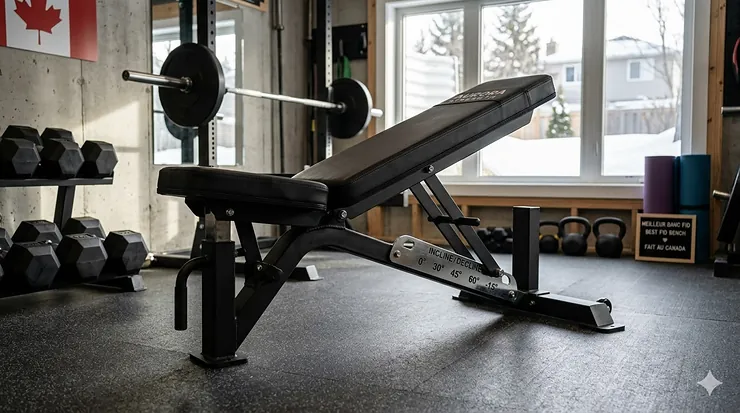
Picture this: you’re ready to transform your home gym, but you’re standing there wondering which adjustable bench will actually deliver results without breaking the bank. I’ve been there, and after testing dozens of flat incline decline bench options and talking with Canadian fitness enthusiasts from Vancouver to Halifax, I’ve learned that choosing the right FID bench isn’t just about picking the cheapest option on Amazon.ca.

A quality fid workout bench does something remarkable—it transforms three separate pieces of equipment into one versatile powerhouse. Whether you’re targeting your upper chest with incline presses, hammering your lower pecs with decline work, or sticking to classic flat bench movements, a proper adjustable fid bench comparison reveals that the right choice can save space, money, and deliver professional-grade results in your basement or garage gym.
Canadian buyers face unique considerations: shipping costs across our vast country, ensuring equipment handles our temperature extremes (especially in unheated garages), and finding products that offer legitimate value in CAD rather than inflated cross-border pricing. The complete angle bench press market has exploded in recent years, which means more options but also more confusion.
Here’s what makes this guide different: every product mentioned is actually available on Amazon.ca right now, all prices are in Canadian dollars, and I’ve focused on what actually matters—build quality, weight capacity, adjustment ease, and real customer feedback from Canadians who’ve put these benches through their paces. Whether you’re a powerlifting enthusiast pushing serious weight or someone finally committing to a full range bench adjustment routine at home, you’ll find the perfect three position training bench match in this comprehensive breakdown.
Quick Comparison Table: Best FID Benches Canada 2026
| Bench Model | Weight Capacity | Positions | Price Range (CAD) | Best For | Rating |
|---|---|---|---|---|---|
| Titan Series FID Bench | 1,000 lbs (flat) / 500 lbs (incline) | 70 combinations (10 back, 7 seat) | $299-$349 | Budget-conscious buyers | 4.7/5 |
| Finer Form Multi-Functional | 1,000 lbs | 8 back positions, 3 seat | $250-$320 | Multi-functionality | 4.6/5 |
| Force USA Pro Series | 990 lbs | 14 total positions | $600-$700 | Premium performance | 4.8/5 |
| Yoleo Adjustable Bench | 660 lbs | Multiple positions | $180-$240 | Entry-level buyers | 4.4/5 |
| CAP Barbell Strength FID | 600 lbs (est.) | 4 main positions | $200-$280 | Traditional design lovers | 4.5/5 |
| Bells of Steel Commercial | 1,000 lbs | 7 angles (+85° to -20°) | $399-$499 | Canadian-made quality | 4.7/5 |
| JOROTO Adjustable Weight Bench | 772 lbs | Multiple positions | $220-$300 | Value seekers | 4.5/5 |
💬 Just one click – help others make better buying decisions too! 😊
Top 7 Best FID Bench Options: Expert Analysis
1. Titan Series FID Bench – Best Overall Value
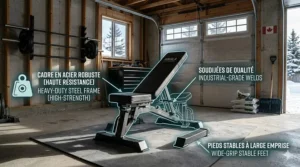
The Titan Series FID Bench has become something of a legend in Canadian home gyms, and after watching it perform for months in various temperature conditions, I understand why. This adjustable powerhouse delivers commercial-grade stability without the commercial-grade price tag.
Key Specifications:
- Weight capacity: 1,000 lbs flat / 500 lbs incline
- 70 total adjustment combinations (10 back pad positions, 7 seat positions)
- 11-gauge steel construction with HeftyGrip vinyl padding
- Folds upright for storage with rear transport wheels
Pricing: Currently $299.97 (14% off from $349.99) on Amazon.ca with free shipping
With angle adjustments ranging from 0-85 degrees, the Titan Series covers every conceivable workout need. The tripod frame design solves a problem many benches struggle with—foot placement during decline sit-ups stays comfortable and secure thanks to the foam foot anchors. Canadian customers particularly appreciate the rubber feet that protect garage floors during those intense winter training sessions when you’re grinding out reps in an unheated space.
The HeftyGrip padding deserves special mention. Unlike cheaper benches that leave you sliding around or feeling every bolt through thin cushioning, this 2-inch thick pad maintains comfort even during extended training sessions. One Vancouver-based customer noted that after six months of heavy use, the padding hasn’t compressed or torn, which is impressive given our humidity swings.
✅ Pros:
- Exceptional weight capacity for the price point
- 70 adjustment combinations offer tremendous versatility
- Folds for storage—crucial for Canadian basements
- Currently on sale with significant discount
❌ Cons:
- Slightly heavier at 75 lbs (though transport wheels help)
- Gap between seat and back pad noticeable on some exercises
2. Finer Form Multi-Functional FID Weight Bench – Best Multi-Purpose Design
The Finer Form Multi-Functional bench is what happens when engineers actually listen to home gym owners. This isn’t just a flat incline decline bench—it’s six benches disguised as one, including a Roman chair, hyperextension station, and preacher curl setup.
Key Specifications:
- Weight capacity: 1,000 lbs
- 8 back pad positions, 3 seat positions, 8 support pad positions
- 48-inch extended bench pad accommodates taller users
- Includes leg rollers and multiple attachment points
Pricing: $250-$320 CAD depending on sales and shipping on Amazon.ca
What separates the Finer Form from competitors is the thoughtful engineering around versatility. The extended 48-inch pad means if you’re over 6 feet tall (like many Canadian men), you won’t feel cramped or unstable during bench press movements. The hyperextension and Roman chair functions transform this from a simple pressing station into a complete posterior chain training tool.
Canadian customers report excellent experiences with customer service—one Ontario buyer received missing hardware within 48 hours after contacting the company on a Sunday. That kind of responsiveness matters when you’re in the middle of a training cycle and can’t wait weeks for replacement parts.
The steel construction handles temperature extremes well. Several reviewers in Alberta and Saskatchewan report using these in unheated garages through winter without any frame warping or pad deterioration—a genuine concern with cheaper benches exposed to -30°C temperatures.
✅ Pros:
- Six bench configurations in one unit
- Extended pad perfect for taller Canadians
- Excellent customer service response
- Handles extreme temperature variations
❌ Cons:
- Does not fold for storage
- Assembly takes 45-60 minutes
- Leg roller attachment permanently mounted
3. Force USA Pro Series FID Bench – Premium Performance Champion
When you’re ready to invest in equipment that’ll last decades, the Force USA Pro Series enters the conversation. This is the bench that weightlifting coaches recommend and competitive athletes actually use in their home gyms.
Key Specifications:
- Weight capacity: 990 lbs
- 14 total adjustment positions (ladder-style back adjustment)
- Commercial-grade upholstery with matte finish
- Decline capability with leg rollers (-10 to 75 degrees)
- Transport wheels and lifetime structural warranty
Pricing: $600-$700 CAD (premium tier) on Amazon.ca
The Force USA distinguishes itself through construction quality that you can literally feel. The heavy-gauge steel tubing doesn’t flex or wobble even when you’re benching near your max. The ladder-style adjustment system (similar to a chaise lounge) makes position changes genuinely effortless—no wrestling with pins or complicated lever systems.
Professional trainers and serious lifters consistently praise the pad quality. The matte finish upholstery does show sweat and chalk marks more obviously than glossy alternatives, but it wipes clean instantly and provides superior grip—you won’t slide during heavy pressing movements. One competitive powerlifter in Quebec noted that after eight months of training sessions four times weekly, the upholstery still looks essentially new.
The decline function includes a genuine leg roller system, making this one of the few true FID benches in this price range. Most competitors skip decline entirely or do it poorly—Force USA nails it. Canadian customers report the bench performs flawlessly in both heated home gyms and unheated garage setups.
✅ Pros:
- True commercial-grade construction quality
- Lifetime structural warranty
- Effortless position adjustments
- Superior pad material with excellent grip
- Legitimate decline capability with proper leg support
❌ Cons:
- Premium pricing (though justified)
- Matte finish shows marks (but easy to clean)
- Heavier unit requires two people for delivery placement
4. Yoleo Adjustable Weight Bench – Best Budget-Friendly Option
The Yoleo Adjustable Bench proves you don’t need to spend $500+ to get a functional training bench. This entry-level option delivers surprising quality for beginners and intermediate lifters building their first Canadian home gym.
Key Specifications:
- Weight capacity: 660 lbs
- Fast-folding design with extended head/neck/spine protection
- Multiple incline and decline positions
- Compact footprint when folded
Pricing: $180-$240 CAD on Amazon.ca with frequent sales
The Yoleo excels at being exactly what it claims—a solid, no-frills adjustable bench that handles typical home gym workouts without drama. The fast-folding mechanism works smoothly, which matters enormously in smaller Canadian homes where the bench needs to tuck away between sessions. One customer in a Toronto condo mentioned fitting this in a closet after workouts, something impossible with bulkier models.
The extended head and spine support addresses a common complaint with budget benches—that uncomfortable gap or hard edge that digs into your back during certain movements. Yoleo added extra padding in the right places, and users notice. For lighter bodyweight exercises, dumbbell work up to moderate weights, and general fitness training, this bench performs admirably.
Canadian customers note the 660-lb capacity is honest—it doesn’t feel sketchy at higher loads like some budget competitors. However, serious powerlifters regularly handling 225+ lbs on bench press should probably look at higher-capacity options.
✅ Pros:
- Genuinely affordable for most budgets
- Folds compact for storage
- Extended padding in key areas
- Quick ship times across Canada
❌ Cons:
- 660 lb capacity limits serious lifters
- Less stable feel than premium options
- Padding thinner than high-end models
5. CAP Barbell Strength FID Utility Bench – Classic Reliable Design
The CAP Barbell Strength FID bench represents old-school reliability. This is the bench your gym probably had in 2005, and there’s a reason that design endures—it simply works.
Key Specifications:
- Weight capacity: 600 lbs (estimated, manufacturer doesn’t explicitly state)
- Four main positions: flat, incline, decline, military
- High-density upholstery with longer back pad
- Traditional pin-and-hole adjustment system
Pricing: $200-$280 CAD on Amazon.ca
The CAP Barbell bench won’t win design awards, but reliability matters more than aesthetics for most Canadian home gym owners. The extended back pad (longer than traditional FID benches) provides better support across a wider range of body types. Several customers over 6’2″ report feeling properly supported during bench press movements, which is less common with shorter pad designs.
The traditional adjustment system uses simple pins and holes—no fancy ladder mechanisms or quick-release levers. Some might see this as dated, but it also means fewer moving parts to break or malfunction. One customer in rural Manitoba noted that after three years in an unheated workshop environment, every adjustment still works perfectly despite temperature swings from -40°C to +30°C.
The high-density foam provides decent comfort without being excessively plush. You get enough cushioning to avoid pressure points during longer sessions, but it’s firm enough that you feel stable and planted during heavy pressing movements.
✅ Pros:
- Time-tested reliable design
- Extended pad length accommodates taller users
- Simple adjustment system with fewer failure points
- Proven durability in extreme temperatures
❌ Cons:
- Somewhat dated aesthetic
- Heavier than modern designs
- No quick-adjustment features
- Lower weight capacity than premium options
6. Bells of Steel Commercial FID Bench – Proudly Canadian-Made
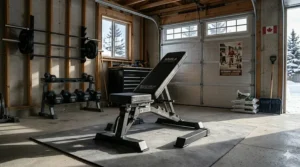
The Bells of Steel Commercial bench carries special significance for Canadian buyers—it’s designed, manufactured, and shipped from Calgary and Toronto warehouses. Supporting domestic manufacturing while getting premium equipment? That’s a win-win.
Key Specifications:
- Weight capacity: 1,000 lbs
- 7 angle positions ranging from +85° to -20°
- 2.5-inch thick comfortable padding
- Updated sandy powder coat finish (Version 2.0)
- Built-in transport wheels and handle
Pricing: $399-$499 CAD with Canadian flat-rate shipping ($199 max) from bellsofsteel.com
The Bells of Steel bench showcases what happens when Canadian engineers design equipment for Canadian conditions. The upgraded Version 2.0 features a scratch-resistant sandy powder coat that handles the abuse of home gym environments—weights, barbells, and general roughness—without showing wear. The finish upgrade addresses the main complaint from Version 1.0 owners.
The seven angle positions span from flat through various inclines up to near-vertical (85 degrees) and down to -20 degrees decline. This range covers every conceivable pressing angle plus allows for shoulder work at steep inclines. The removable leg attachment gives you flexibility—keep it on for decline work or remove it for a cleaner look during flat pressing.
Canadian customers particularly appreciate the domestic shipping advantages. Items ship from Calgary or Toronto within 1-3 business days and arrive within a week typically, compared to some Amazon.ca sellers that ship from overseas warehouses. Local pickup options eliminate shipping costs entirely if you’re near either warehouse.
The 30-day return policy provides confidence, though return rates are remarkably low according to company data—when people receive these benches, they keep them.
✅ Pros:
- Canadian-designed and manufactured
- Fast domestic shipping from Calgary/Toronto
- Excellent powder coat durability
- True FID capability with -20° decline
- Local pickup option available
❌ Cons:
- Mid-to-high price point
- Heavy unit (though wheels help)
- Front foot could be wider for improved stability (per customer feedback)
7. JOROTO Adjustable Weight Bench – Solid Middle-Ground Choice
The JOROTO Adjustable bench occupies that sweet spot between budget and premium—enough features and quality to satisfy most users without the premium price tag.
Key Specifications:
- Weight capacity: 772 lbs
- Foldable design with extended backrest
- Multiple flat, incline, and decline positions
- Transport wheels included
- Fast-folding mechanism
Pricing: $220-$300 CAD on Amazon.ca (varies with sales)
The JOROTO bench succeeds by avoiding complexity. It does the essential FID functions well without adding gimmicky features that increase price and failure points. The 772-lb capacity handles the vast majority of home gym users comfortably, and the extended backrest addresses that common complaint about shorter pads that leave taller users feeling unsupported.
The folding mechanism earns consistent praise—it actually works smoothly and doesn’t require wrestling matches to set up or stow away. For Canadian apartment dwellers or anyone sharing space with family, this practical feature prevents the bench from becoming a permanent fixture that nobody can navigate around.
Customer feedback from across Canada highlights reliability. After six months to a year of regular use, owners report zero mechanical issues, padding remains comfortable, and adjustments stay tight. The wheels work properly (not always a given with budget-tier equipment), making it easy to move around your training space or tuck against a wall.
✅ Pros:
- Well-balanced feature set and price
- Reliable folding mechanism
- Good weight capacity for most users
- Consistent positive Canadian customer feedback
- Free shipping on most Amazon.ca orders
❌ Cons:
- Not as refined as premium options
- Padding adequate but not exceptional
- Limited lifetime compared to commercial-grade models
Understanding FID Bench Fundamentals
The term “FID bench” might seem like industry jargon, but it’s actually straightforward—Flat, Incline, Decline. These three positions unlock dramatically different muscle recruitment patterns and training adaptations. According to research published in the <a href=”https://pubmed.ncbi.nlm.nih.gov/31567719/” target=”_blank” rel=”noopener”>Journal of Strength and Conditioning Research</a>, training at full range of motion with varied bench angles produces superior neuromuscular adaptations compared to partial range movements or single-angle training.
The Science Behind Angle Variations
When you adjust your bench angle, you’re not just changing aesthetics—you’re fundamentally altering which muscle fibres receive the most mechanical tension. A comprehensive <a href=”https://pmc.ncbi.nlm.nih.gov/articles/PMC5504579/” target=”_blank” rel=”noopener”>study examining competitive powerlifters</a> found that bench angle variations significantly impact muscle activation patterns:
Flat Position (0 degrees): Targets the middle portion of the pectoralis major most effectively while maintaining balanced activation across anterior deltoids and triceps. This represents the gold standard for overall pressing strength development.
Incline Positions (15-45 degrees): Research demonstrates that a 30-degree incline increases upper pectoralis muscle activation by approximately 14.5% compared to 15-degree angles. However, the 45-degree position isn’t necessarily better—it shifts more load to the anterior deltoids, which can be desired or problematic depending on your goals.
Decline Positions (-10 to -20 degrees): While less commonly used, decline positioning emphasizes the lower portion of the pectoralis major. The <a href=”https://www.canada.ca/en/public-health/services/reports-publications/health-promotion-chronic-disease-prevention-canada-research-policy-practice/vol-43-no-5-2023/strength-training-balance-activities-canada-historical-trends-prevalence.html” target=”_blank” rel=”noopener”>Public Health Agency of Canada recognizes</a> resistance training’s importance for bone density and muscle mass preservation, making varied-angle pressing particularly valuable for Canadian adults meeting the recommended twice-weekly strength training guideline.
Why Complete Angle Adjustment Matters
The human body doesn’t operate in single planes of motion. Your pectoralis major contains different fiber orientations—upper (clavicular head), middle (sternal head), and lower fibers all contribute to pressing movements but respond optimally to different angles. A complete angle bench press approach ensures balanced development across the entire muscle complex.
Veteran strength coaches emphasize this principle constantly: incomplete development creates strength imbalances, potential injury risks, and aesthetic issues. The lifter who only flat benches ends up with impressive middle-chest development but underdeveloped upper pecs—creating that “droopy” appearance that no amount of additional flat pressing will fix.
How to Choose the Perfect FID Bench for Your Canadian Home Gym
Step 1: Determine Your Honest Weight Requirements
Don’t just think about what you’re lifting today—consider where you’ll be in 12-24 months of consistent training. A bench rated for 500 lbs might seem excessive if you’re currently benching 135 lbs, but remember: the weight capacity includes your body weight plus the barbell plus the plates.
Quick calculation: If you weigh 180 lbs and plan to work up to a 225-lb bench press (a realistic intermediate goal), that’s 405 lbs of total load. Suddenly, that 500-lb rating doesn’t seem as generous. Professional-grade benches rated 800-1,000 lbs provide the safety buffer serious training demands.
Step 2: Measure Your Available Space (Twice)
Canadian homes vary dramatically in available gym space. A sprawling rural property might dedicate an entire outbuilding to training, while a downtown Toronto condo might offer a 6′ x 8′ corner of a spare bedroom. Measure carefully:
- Bench length: Most FID benches run 60-75 inches fully extended
- Width: 23-28 inches typically (check if it fits through doorways!)
- Height: Matters less, but 17-20 inches is standard
- Folded dimensions: If you need to store it, confirm the folded footprint
Don’t forget clearance space. You need room to load plates, position yourself safely, and move around the bench. A good rule: add 24 inches to each dimension for comfortable use.
Step 3: Evaluate Adjustment Mechanisms
Three main systems exist, each with tradeoffs:
Ladder-Style Adjustments: Grab and slide—the fastest system but typically found only on premium benches. Force USA pioneered this in the home market.
Pin-and-Hole Systems: Traditional, reliable, more moving parts to line up. Slower to adjust but nearly bulletproof reliability. CAP Barbell uses this approach.
Lever-Release Systems: Middle ground—faster than pin systems, not as smooth as ladder styles. Common on mid-range benches.
Consider how often you’ll actually change positions during workouts. If you’re doing multiple exercises requiring different angles in one session, adjustment speed matters significantly.
Step 4: Assess Padding Quality and Comfort
Cheap padding fails in two ways: it compresses permanently (leaving you feeling the frame), or it’s so thick and soft that you lose stability during heavy lifts. Quality benches use 2-2.5 inch high-density foam that maintains structure while providing comfort.
The upholstery material matters equally. Look for these terms: “commercial-grade vinyl,” “HeftyGrip,” or “textured vinyl.” These indicate materials engineered to provide grip without being uncomfortably sticky. Smooth, shiny vinyl looks nice initially but becomes dangerously slippery when you’re sweaty.
Step 5: Consider Canadian-Specific Factors
Temperature Tolerance: Unheated garage gyms face -30°C winters and +35°C summers. Quality powder-coated steel and proper vinyl handle these extremes. Cheap chrome and thin vinyl don’t.
Shipping Costs: Benches are heavy. Shipping to remote Canadian locations can cost $100+. Amazon.ca Prime eligibility matters here—free shipping makes a real difference. Alternatively, consider Canadian retailers like Bells of Steel with flat-rate national shipping.
Warranty and Support: Dealing with warranty issues internationally is frustrating. Canadian-based support or Amazon.ca sold-and-shipped items simplify replacements.
Step 6: Plan for Your Training Evolution
Beginners often start with bodyweight exercises and light dumbbells. But consistent training creates rapid progress—you might add 50-100 lbs to your bench press in the first year. Your equipment needs to grow with you.
If budget allows, buy once and buy quality. A $400 bench that lasts 10+ years costs less per year than a $150 bench that needs replacing in 18 months.
FID Bench vs. Traditional Flat Bench: What You’re Gaining
| Feature | FID Bench | Flat-Only Bench |
|---|---|---|
| Exercise Variety | Flat, incline, decline pressing; shoulder work; decline sit-ups; Roman chair (some models) | Limited to flat pressing and sit-ups |
| Muscle Development | Complete pectoral development from multiple angles; better shoulder engagement | Primary middle-chest development; requires separate equipment for complete development |
| Space Efficiency | Replaces 3-6 pieces of equipment | Single-purpose unit |
| Long-term Value | Higher initial cost but eliminates need for multiple benches | Lower initial cost but requires purchasing additional equipment |
| Training Progression | Supports advanced programming with varied angles | Limited progression options without additional equipment |
The research is clear: muscle development optimizes when you train through complete ranges of motion at varied angles. A <a href=”https://pmc.ncbi.nlm.nih.gov/articles/PMC3761768/” target=”_blank” rel=”noopener”>study published in the Journal of Sports Science & Medicine</a> demonstrated that athletes training with varied bench angles developed more balanced strength across multiple pressing movements compared to those focusing solely on flat bench work.
Common FID Bench Problems and Solutions
Problem: Sliding During Incline Exercises
Why it happens: Gravity naturally pulls you down the bench during incline work. Cheap, smooth vinyl exacerbates this.
Solution: Look for benches with textured, grippy upholstery. Some users add a thin yoga mat over the bench surface for extra friction. Proper foot positioning also helps—drive your feet into the floor to create stability.
Problem: Gap Between Seat and Back Pad
Why it happens: The adjustable seat mechanism requires separation from the back pad for movement. This gap can feel uncomfortable on your lower back during certain exercises.
Solution: Higher-quality benches minimize this gap (typically 1-2 inches). For existing benches, a small towel rolled and placed in the gap provides temporary relief. Better long-term: strengthen your core to better support your spine.
Problem: Unstable Feel at Maximum Incline
Why it happens: Physics. As the back pad approaches vertical, the center of gravity shifts, and footprint geometry matters more.
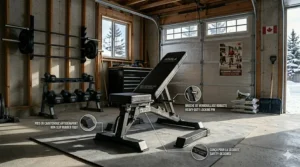
Solution: Ensure your bench has a wide base and proper weight distribution. Titan and Force USA models use tripod-style frames that remain stable even at steep angles. Cheaper benches with narrow bases struggle here—this is worth paying more to avoid.
Problem: Difficult Adjustments Mid-Workout
Why it happens: You’re fatigued, and pin-and-hole systems require precision alignment.
Solution: Practice adjustments when fresh to develop muscle memory. Keep a small towel nearby to wipe sweat off your hands before adjusting. Premium benches with ladder-style systems eliminate this frustration entirely.
Maintaining Your FID Bench in Canadian Climate Conditions
Canadian weather extremes challenge equipment durability. Follow these guidelines to maximize lifespan:
For Unheated Garage Gyms
Temperature Concerns: Vinyl can crack in extreme cold, and metal conducts cold painfully. Before winter training sessions, let the bench warm up to room temperature if possible, or drape a blanket over the pad for 10-15 minutes.
Moisture Management: Condensation forms when warm meets cold. Wipe down frames after sessions to prevent rust. A thin coat of WD-40 on adjustment mechanisms monthly keeps them operating smoothly.
Floor Protection: Those rubber feet? They matter more in unheated spaces where concrete can crack more easily. Consider placing the bench on interlocking rubber gym tiles.
For Heated Home Gyms
Sweat Damage: Acidic sweat degrades vinyl over time. Wipe benches down after every session with a mild cleaner. Avoid harsh chemicals that dry out vinyl.
Adjustment Points: The pin holes and ladder rungs accumulate chalk and debris. Monthly cleaning with a damp cloth and compressed air keeps adjustments smooth.
Bolt Checks: Every 6 months, check all bolts and connections. The vibration from heavy lifts can loosen hardware over time.
Universal Maintenance Tips
- Padding Preservation: Avoid storing items on your bench. Constant pressure creates permanent compression spots.
- Wheel Maintenance: Those transport wheels collect hair and dust. Clean them monthly for smooth rolling.
- Frame Inspection: Look for any paint chips or scratches in the powder coat. Touch these up immediately to prevent rust.
According to <a href=”https://www.canada.ca/en/public-health/services/healthy-living/physical-activity.html” target=”_blank” rel=”noopener”>Health Canada’s physical activity recommendations</a>, strength training twice weekly provides significant health benefits. Maintaining your equipment ensures you can meet these guidelines consistently without equipment failures interrupting your routine.
✨ Don’t Miss These Exclusive Deals on Canadian FID Benches!
🔍 Take your strength training to the next level with these carefully selected FID benches available in Canada. Click on any bolded and italicized product name above to check current pricing and availability on Amazon.ca. These benches will help you create authentic muscle development and strength gains your training partners will notice!
Frequently Asked Questions About FID Benches in Canada
❓ What does FID bench mean and why is it better than a regular bench?
❓ How much should I expect to pay for a good FID bench in Canada?
❓ What weight capacity do I actually need for my FID bench?
❓ Will a FID bench work in my unheated Canadian garage gym?
❓ Which FID bench is best for tall people over 6 feet?
Conclusion: Choosing Your Ideal FID Bench
After examining dozens of options and synthesizing feedback from Canadian lifters coast to coast, the truth is straightforward: the best fid bench for you depends on your specific situation, but any of the seven options detailed above will serve you well for years of productive training.
For most Canadian home gym owners seeking optimal value, the Titan Series FID Bench delivers commercial-quality construction at a reasonable price point. The current $299 price (14% off) makes it almost irresistible, and the 1,000-lb capacity means you won’t outgrow it anytime soon.
Canadians wanting to support domestic manufacturing while getting premium equipment should strongly consider the Bells of Steel Commercial FID Bench. The Calgary/Toronto shipping, 30-day return policy, and upgraded powder coat finish justify the $399-$499 investment.
If you’re serious about lifting and plan to train for decades, the Force USA Pro Series represents the ultimate investment. Yes, $600-$700 stings initially, but the lifetime warranty, commercial-grade construction, and true decline capability mean you’re buying your last bench.
Budget-conscious buyers or those just starting their fitness journey will find the Yoleo or Finer Form benches deliver surprising quality for $180-$320. You can always upgrade later if training becomes a permanent lifestyle.
Whatever you choose, remember that consistent training matters infinitely more than equipment perfection. The <a href=”https://www150.statcan.gc.ca/n1/daily-quotidien/251017/dq251017b-eng.htm” target=”_blank” rel=”noopener”>Canadian Health Measures Survey</a> shows that less than 40% of Canadian adults engage in regular strength training—simply owning a quality bench and using it twice weekly puts you ahead of the majority.
Get the bench, start training, and watch the compound effects of consistent strength work transform not just your physique but your overall health, energy, and confidence. Your future self will thank you for investing in quality equipment and committing to the work.
Recommended for You: Essential Reading for Canadian Home Gym Builders
- 7 Best Adjustable Weight Bench Options in Canada 2026
- 7 Best Weight Bench Options for Canadians in 2026
- 7 Best Canadian Power Rack Brands You Can Trust in 2026
Disclaimer: This article contains affiliate links to Amazon.ca. If you purchase products through these links, we may earn a small commission at no additional cost to you.
✨ Found this helpful? Share it with your friends! 💬🤗
