In This Article
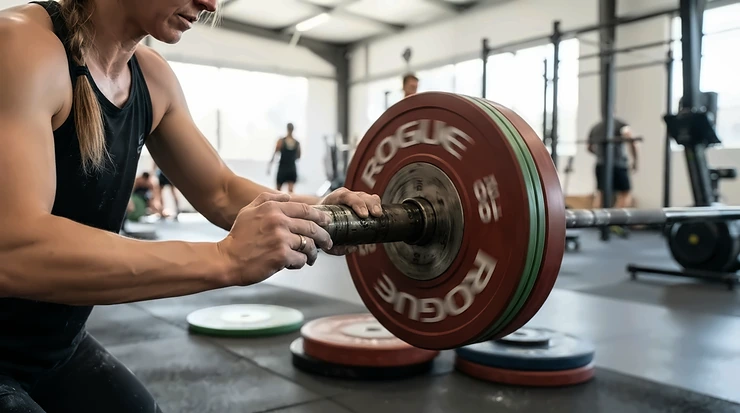
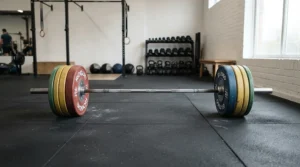
A 20kg olympic barbell for home gym use is the standard men’s bar: about 2.2 m (7 ft) long, with 50 mm rotating sleeves that take Olympic plates. It’s the same weight and sleeve format used in commercial gyms, so your numbers transfer cleanly to any rack, platform or gym you visit.
Everything else in your setup is replaceable. Plates can be added, racks upgraded, benches swapped. The bar is the one piece you touch on every rep, so it sets the tone for the whole room. The format follows the long-standing conventions described in this overview of the barbell, and the 20kg, 28 to 29 mm men’s bar is the default almost everywhere.
Specs only tell half the story, though. A Canadian garage swings from minus 25 °C in January to humid, condensation-prone shoulder seasons, and that matters more than most spec sheets admit. A bar that rusts in two winters is a bad bar, however good it looked online.
So this guide goes past the marketing. We compare seven real bars across budget, mid-range and premium. We dig into the stainless steel olympic barbell question, the olympic barbell with bearings vs bushings debate, bar finish and rust resistance, and how sleeve rotation actually feels. We also answer the question most first-time buyers quietly worry about: is a 20kg bar enough for a home gym? Prices below are ranges only, in Canadian dollars, so check current pricing before you buy.
Quick Comparison: 7 Bars at a Glance
| Product | Sleeve Rotation | Finish | Approx. Price Range | Best For |
|---|---|---|---|---|
| Synergee Regional Olympic Barbell | Needle bearings | Black phosphate or hard chrome | C$250–C$330 | Mixed training on a budget |
| XMARK Crowbar | Brass bushings | Hard chrome | C$280–C$350 | Squat and deadlift focus |
| Titan Performance Series Olympic Barbell | Not specified in the listing | Not specified in the listing | C$200–C$300 | Slow, heavy basics |
| REP Stainless Steel Power Bar V2 | Bushings | Full stainless steel | C$500–C$650 | Lifetime rust-proof buyers |
| Synergee Games Barbell | 10 needle bearings | Cerakote | C$300–C$420 | Olympic lifts and CrossFit style |
| Fitness Avenue Yukon Bar | Composite bushings | Hard chrome or ArmourCoat sleeves | C$200–C$250 | Canadian-sourced all-rounder |
| AmStaff Fitness 7ft Olympic Bar | Brass bushing and needle bearings | Not specified | C$140–C$180 | First bar, tight budget |
Prices are approximate, were gathered at the time of research, and move often. Reading the table, the AmStaff Fitness 7ft Olympic Bar and Fitness Avenue Yukon Bar are the value anchors, while the REP Stainless Steel Power Bar V2 is the buy-once, cry-once option for damp garages. If you plan to snatch and clean, the Synergee Games Barbell is the only bar here built around a dedicated bearing stack. Powerlifters will gravitate to the XMARK Crowbar and the REP Stainless Steel Power Bar V2.
💬 Just one click — help others make better buying decisions too!😊
Top 7 20kg Olympic Barbell for Home Gym Picks: Expert Analysis
Every bar below is a 20kg, 2-inch-sleeve bar. The analysis rests on published specifications and independent reviewer findings, not hands-on testing. Where a review pool was too small to trust, I say so.
1. Synergee Regional Olympic Barbell — best all-rounder under the premium tier
The Synergee Regional Olympic Barbell is the sort of bar you buy when you want to stop researching. The 20kg version has a 28 mm shaft, an 86.36″ overall length and about 16.4″ of loadable sleeve.
Its 190,000 PSI tensile strength and 1,500 lb manufacturer rating are generous for home use, and dual knurl marks serve both power and Olympic grips. That tensile figure matters because it describes how well the steel springs back after a heavy deadlift instead of bending permanently. At this price tier, it’s a solid number.
The 28 mm shaft suits smaller hands and gives a touch more whip than 29 mm power bars, which helps cleans feel lively. Independent reviewers at Garage Gym Reviews describe it as a capable multipurpose bar, with needle bearings for spin. Their main complaints are the short one-year warranty and shaft coatings that aren’t the most durable. That second point is the one to weigh in a damp garage, so choose hard chrome over black phosphate if you can.
Pros:
- ✅ Strong 190,000 PSI steel for the money
- ✅ Dual knurl marks suit every lift
- ✅ Two coating options, including hard chrome
Cons:
- ❌ Only a one-year warranty
- ❌ Black phosphate wears faster than chrome
Expect a price in the C$250–C$330 range. For general strength training, the value verdict is excellent.
2. XMARK Crowbar — best centre-knurled bar for squats
The XMARK Crowbar has semi-aggressive knurling and a nearly 5″ centre knurl. That centre knurl is the detail that separates a squat-friendly bar from a purely Olympic one, because it keeps the bar from sliding down your back.
It runs a 28 mm shaft, 16.25″ sleeves and brass bushings, which fits its character: reliable, quiet, not flashy. Brass bushings are less strong than bronze, so don’t expect elite-level durability, but for a home gym with one or two lifters they are plenty. One reviewer at Garage Gym Lab named it a personal favourite of three XMARK bars and felt it performed better than the Lumberjack for squats and deadlifts.
The spin is calm, not slippery, which tends to suit the slower pace of heavy basics. If you plan to snatch regularly, you’ll feel the limits of bushing rotation. For squats, benches and pulls, it’s quite comfortable.
Pros:
- ✅ Nearly 5″ centre knurl holds squats steady
- ✅ Hard chrome finish resists corrosion
- ✅ Thinner 28 mm shaft suits smaller hands
Cons:
- ❌ Brass bushings limit fast-lift spin
- ❌ Centre knurl can chafe bare skin
Plan on roughly C$280–C$350. It earns a strong value verdict for strength-focused lifters.
3. Titan Performance Series Olympic Barbell — best budget bar for slow, heavy lifts
The Titan Performance Series Olympic Barbell is aimed squarely at beginners and intermediates. It’s a 20kg, 28 mm bar with medium “volcano” knurling and dual knurl marks, rated by the maker to 700 lb.
That 700 lb rating is the important number. It’s far below the 1,500 lb figures on pricier bars, so it suits lifters who aren’t pushing into very heavy territory. For many home lifters that ceiling is years away, and paying for capacity you won’t use is a classic mistake.
One thing the listing doesn’t tell you is how the sleeves spin or exactly how the shaft is finished. Ask Titan or the retailer before buying, especially if you care about bar finish and rust resistance. Until then, treat it as a straightforward training bar for squat, bench and deadlift rather than a snatch tool.
I couldn’t verify a large pool of independent Canadian customer reviews, so rely on the published specs and Titan’s return policy.
Pros:
- ✅ Dual knurl marks at a low entry price
- ✅ Medium knurl is gentle on hands
- ✅ Fits standard 2-inch Olympic plates
Cons:
- ❌ 700 lb rating is modest
- ❌ Spin and finish details are unclear
Expect about C$200–C$300. It’s good value if you confirm the missing details.
4. REP Stainless Steel Power Bar V2 — best for a rust-proof, buy-once bar
The REP Stainless Steel Power Bar V2 is the answer for anyone who has lost a bar to a damp basement. Both the shaft and the smooth sleeves are stainless steel, so there is no coating to flake and nothing underneath to rust.
It’s a 20kg bar with a 29 mm shaft, medium-depth knurling and roughly 200,000 PSI tensile strength (listings show 200K to 205K). It’s rated to 1,500 lb and uses bushings for rotation. The 29 mm shaft is stiffer than the 28 mm bars above, which many lifters like for heavy squats and deadlifts but find a bit chunky for fast Olympic work.
Reviewers at Garage Gym Lab like the raw-steel feel and the lifetime warranty. They also note the sleeves aren’t as quiet as some of REP’s other power bars. A Gymcrafter buyer’s guide goes further and says it would rather see you buy a stainless bushing bar than a pricey bearing bar in a finish that corrodes.
Pros:
- ✅ Full stainless shaft and sleeves
- ✅ Medium knurl won’t shred your hands
- ✅ Backed by a lifetime warranty
Cons:
- ❌ Priciest bar in this roundup
- ❌ 29 mm shaft feels thick for snatches
Expect roughly C$500–C$650. For a Canadian garage, the value verdict is “worth it” if you’ll keep it a decade.
5. Synergee Games Barbell — best Cerakote bar for Olympic lifts
The Synergee Games Barbell is the pick for lifters whose programming leans Olympic. The 20kg version has a 28 mm shaft, a 1.2 mm diamond knurl and ten needle bearings in the sleeves, plus a Cerakote shaft and the same 190,000 PSI, 1,500 lb numbers as the Regional.
Needle bearings are what let the sleeves turn freely in a clean or snatch, which reduces torque on your wrists at the catch. Garage Gym Reviews frames this bar as a budget-friendly alternative to a Cerakote Rogue bar, noting it isn’t made in the USA and uses a thinner shaft and bearings instead of bushings.
Here’s the honest caution on the finish. Cerakote is excellent at resisting rust, but a Gymcrafter analysis points out that on most bars the steel under the coating is bare steel, which will rust if the coating is breached. Keep it away from sharp rack edges and wipe it down.
Pros:
- ✅ Ten needle bearings give a lively spin
- ✅ Cerakote shaft resists rust and wear
- ✅ Dual knurl marks for power and Olympic grips
Cons:
- ❌ Bare steel under the coating
- ❌ Colour options sell out often
Budget about C$300–C$420. It’s strong value for Olympic-style lifters.
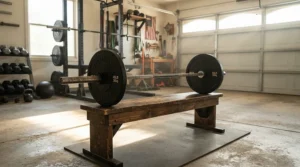
6. Fitness Avenue Yukon Bar — best Canadian-retailer all-rounder
The Fitness Avenue Yukon Bar comes from a Canadian retailer with showrooms in Ontario and Quebec, which means easier support and shipping within Canada. It’s a 20kg bar with a 28.5 mm shaft, composite bushings and dual IPF and IWF knurl markings.
The listing cites a 1,500 lb static rating, 190,000 PSI tensile strength, medium whip and a 1% weight tolerance. The sleeves come in hard chrome or ArmourCoat, which should hold up well to wear and corrosion. Composite bushings are a quiet, durable middle ground between bronze bushings and bearings.
The 28.5 mm shaft is a neat compromise, thick enough for stability and slim enough for cleans. One word of caution on reviews: the product page I found showed a single five-star review praising its sturdiness and lack of wobble. That’s encouraging but far too small a sample to prove long-term durability. Also, this bar is sold by Fitness Avenue, so check whether it’s available through the retailer you intend to use.
Pros:
- ✅ 28.5 mm shaft balances grip and stiffness
- ✅ Composite bushings spin quietly and last
- ✅ Hard chrome or ArmourCoat sleeves
Cons:
- ❌ Very small verified review pool
- ❌ Availability varies by retailer
Plan around C$200–C$250. It’s a strong value if the quality holds up.
7. AmStaff Fitness 7ft Olympic Bar — best entry point for a first bar
The AmStaff Fitness 7ft Olympic Bar proves that a first bar doesn’t need a second mortgage. It’s a 20kg, 218 cm bar with a 28 mm knurled shaft and 132 cm between the plate stops. The 390 mm rotating sleeves use a brass bushing and needle bearing combination.
That hybrid setup is unusual at this price, and it should give a decent balance between durability and spin. It ships with two spring collars and is rated by the seller to 700 lb. As with the Titan, that capacity is plenty for most beginners.
The retailer’s page shows a 4.9 average across seven reviews, with one reviewer saying the bar “can’t be beat” for the price. Seven reviews is a thin sample, so treat that as encouraging, not conclusive. Finish details weren’t listed, so plan to oil the shaft and check for any surface rust early on.
Pros:
- ✅ Brass bushing and needle bearing hybrid
- ✅ Two spring collars included
- ✅ Very low entry price
Cons:
- ❌ Finish type isn’t stated
- ❌ 700 lb rating caps long-term growth
Expect about C$140–C$180. It’s the best value verdict here for beginners.
Spec Comparison: What the Numbers Mean
| Product | Shaft | Tensile Strength | Rated Capacity | Warranty Note |
|---|---|---|---|---|
| Synergee Regional Olympic Barbell | 28 mm | 190,000 PSI | 1,500 lb | 1 year (reviewer-reported) |
| XMARK Crowbar | 28 mm | Not stated | Check listing | Check listing |
| Titan Performance Series Olympic Barbell | 28 mm | Not stated | 700 lb | Check listing |
| REP Stainless Steel Power Bar V2 | 29 mm | ~200,000 PSI | 1,500 lb | Lifetime |
| Synergee Games Barbell | 28 mm | 190,000 PSI | 1,500 lb | Check listing |
| Fitness Avenue Yukon Bar | 28.5 mm | 190,000 PSI | 1,500 lb (static) | Check listing |
| AmStaff Fitness 7ft Olympic Bar | 28 mm | Not stated | 700 lb | Check listing |
Put the table into plain language: the REP Stainless Steel Power Bar V2 buys stiffness and longevity, while the Synergee Regional Olympic Barbell and Fitness Avenue Yukon Bar deliver nearly identical steel strength at much lower prices. The two lower-priced 700 lb bars, the Titan Performance Series Olympic Barbell and AmStaff Fitness 7ft Olympic Bar, are fine for beginners but leave less headroom for heavy lifters.
✨ Don’t Miss These Exclusive Deals!
🔍 Take your home gym to the next level with these carefully selected bars. Click on any highlighted item to check current pricing and availability. The right bar will help you build strength your whole family can be proud of!
How to Choose a 20kg Olympic Barbell for Home Gym Use
Choosing well comes down to six decisions. Work through them in order and the shortlist shrinks fast.
- Decide what you’ll lift most. Squat, bench and deadlift favour bushings and a centre knurl. Snatch and clean and jerk favour bearings and a slimmer shaft.
- Pick a shaft diameter. A 28 mm shaft has more whip and suits smaller hands, while 29 mm adds stiffness for heavy slow lifts. A 28.5 mm shaft sits between the two.
- Check tensile strength. Look for roughly 180,000 PSI or higher for lifters who plan to get strong. Lower numbers are fine for light training.
- Choose your finish for your climate. A damp or unheated Canadian garage points toward stainless steel, hard chrome or Cerakote, as covered below.
- Match the rotation to your lifts. Bushings for strength work, needle bearings for Olympic lifts, composite or hybrid systems for a mix of both.
- Confirm the warranty and the return policy. Lifetime bend warranties exist at the premium end, while budget bars may offer one year. Returns matter because feel is personal.
The answer to the first question usually settles two or three of the others. A lifter who mostly squats and benches can stop worrying about needle bearings, while a CrossFit-style lifter should look past a bushing-only bar. If you still can’t decide, a mid-priced hybrid such as the AmStaff Fitness 7ft Olympic Bar or the Fitness Avenue Yukon Bar is a safe all-round bet.
Stainless Steel Olympic Barbell: Is the Premium Worth It?
A stainless steel olympic barbell sounds like a luxury. In a Canadian garage it can be a practical choice instead.
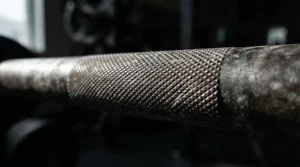
Stainless steel has the highest corrosion resistance of any bar material or finish, according to REP’s own finish guide. There’s no coating to chip, so the grip you buy is the grip you keep. A fully stainless bar such as the REP Stainless Steel Power Bar V2 also removes the biggest maintenance chore: constant wiping, oiling and rust-watching.
The trade-offs are real, though. Stainless can’t be hardened like other steel alloys, so manufacturers compensate with thicker shafts and careful alloy choices. That’s why many stainless power bars are 29 mm. Stainless is also the priciest finish in most comparisons, and it is not completely immune to staining, so occasional cleaning still helps.
Here’s a simple rule of thumb. If your bar will live in an unheated garage, a shed or a basement near a laundry room, a stainless steel olympic barbell pays for itself in avoided frustration. If it lives in a heated, dry spare room, a hard chrome bar such as the XMARK Crowbar does the job for far less.
Olympic Barbell with Bearings vs Bushings: Which Wins for Home Lifters?
The olympic barbell with bearings vs bushings debate is where most buyers get lost, so let’s strip it down.
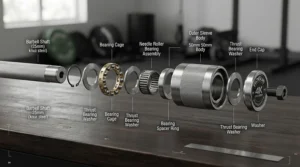
Both systems sit inside the sleeve and control how the plates turn. Bushings are solid rings, usually bronze, composite or brass, that slide against the shaft. Bearings roll, and the three common types are ball, thrust and needle. Bearings spin faster and freer, which helps in the snatch and the clean and jerk. Bushings are generally more durable because there are fewer moving parts and tighter tolerances.
Bearings tend to cost more and may need more upkeep. A quality bushing can also outperform a cheap bearing, and as one retailer guide notes, ten cheap bearings can spin worse than one good pair. Hybrid bars, like the AmStaff Fitness 7ft Olympic Bar, combine both and aim for balance.
For most home gyms, bushings are the better value. That’s the view in a Gymcrafter breakdown, which suggests a stainless bushing bar beats a bearing bar with a finish that corrodes. Bearings earn their keep if you snatch and clean regularly, which is why the Synergee Games Barbell and Synergee Regional Olympic Barbell suit that crowd. The XMARK Crowbar and REP Stainless Steel Power Bar V2 lean on bushings and suit strength lifters.
Bar Finish and Rust Resistance: What Survives a Canadian Winter
Bar finish and rust resistance are the least glamorous spec and the most expensive to ignore. Here’s how the common finishes behave, per published finish guides.
| Finish | Rust Resistance | Notes |
|---|---|---|
| Stainless steel | Highest | No coating to wear; priciest |
| Cerakote | Very high | Colour options; bare steel often underneath |
| Hard chrome | High | Very wear-resistant; can feel slick |
| Bright or black zinc | Good | Tougher than basic chrome; wears faster on the shaft |
| Black oxide | Poor | Great feel; needs regular oiling |
The table shows why finish should drive the decision in a humid garage. Black oxide feels wonderful in the hand but offers little protection. Hard chrome is the toughest against abrasion, while Cerakote and stainless sit at the top for rust resistance. Among our seven bars, the REP Stainless Steel Power Bar V2 is strongest on rust, the Synergee Games Barbell and XMARK Crowbar are solid mid-tier options, and the Synergee Regional Olympic Barbell is best bought in hard chrome.
A practical tip: condensation forms when a cold bar meets warm, humid air. Wipe your bar down after sessions in shoulder seasons and avoid leaving it against a cold concrete wall.
Sleeve Rotation: What Spin Actually Feels Like Under Load
Sleeve rotation is easy to oversell, so keep expectations realistic. When you catch a clean, the plates want to keep turning for a moment. Free-turning sleeves let your wrists stay relaxed while the plates spin on.
With bushings, the rotation is smooth but slightly damped, and that stability is useful when you’re grinding out a heavy squat. With needle bearings, it’s livelier, which is the “gold standard” for Olympic lifts according to REP’s sleeve guide.
For most beginners, the difference is subtle. Spin quality also depends on how well the sleeves are fitted and maintained, not just on the type. A poorly fitted bearing bar can feel worse than a well-made bushing bar. Check the end caps and circlips, keep sleeves clean, and oil them lightly now and then.
If you lift mostly basics, sleeve rotation will rarely limit you. If your program includes cleans or snatches twice a week, it starts to matter, and a bar like the Synergee Games Barbell is easier to justify.
Is a 20kg Bar Enough for a Home Gym?
Is a 20kg bar enough for a home gym? For nearly everyone, yes. A 20kg bar is the standard that competition and commercial gyms use, so it’s the weight your training numbers are measured against. You’ll add plates, not a different bar.
What matters more than the bar’s own weight is its rating and your plan for progression. Many budget bars are rated around 700 lb, while premium options claim 1,500 lb. Unless you’re lifting extreme loads, that capacity is a safety margin rather than a daily limit.
Where might a 20kg bar not be enough? If you’re a smaller lifter or a beginner who struggles with 20kg as a starting weight, a 15kg bar with a 25 mm shaft may be a better first step. If you chase very heavy deadlifts, a stiffer 29 mm power bar like the REP Stainless Steel Power Bar V2 gives you more confidence. For general fitness, one good 20kg bar is plenty.
It also helps to remember the target. The Canadian 24-Hour Movement Guidelines for Adults recommend muscle-strengthening activities at least twice a week, which a single barbell can deliver easily.
20kg Olympic Barbell vs Alternatives: Where It Fits
| Option | Strengths | Limits | Best For |
|---|---|---|---|
| Synergee Regional Olympic Barbell (20kg Olympic) | Full-range lifts, standard plates | Needs a rack | Serious home lifters |
| 15kg women’s or youth bar | Lighter, thinner shaft | Lower capacity | Smaller lifters, technique work |
| Adjustable dumbbells | Space-saving | Limited loading | Apartments |
| Standard 1-inch bar | Cheap | Incompatible with Olympic plates | Very light training |
The comparison shows why the 20kg bar wins on versatility. A 15kg bar is a smart alternative for lighter lifters, and dumbbells suit small spaces, but neither matches the loading range of the Synergee Regional Olympic Barbell or a similar bar. Standard 1-inch bars are rarely a good long-term buy because they won’t take Olympic plates.
Long-Term Cost and Maintenance
A bar’s true cost is the purchase price plus what it takes to keep it healthy. A cheap bar that needs constant attention and an early replacement can cost more than a premium bar that lasts a decade.
Budget bars like the AmStaff Fitness 7ft Olympic Bar and Titan Performance Series Olympic Barbell keep the upfront cost low, but they ask for more care with their finish. Mid-range bars such as the Fitness Avenue Yukon Bar and XMARK Crowbar balance both sides. Premium options like the REP Stainless Steel Power Bar V2 cost the most up front and save the most in upkeep, backed by a lifetime warranty.
Maintenance is simple. Wipe the shaft after use, brush the knurl occasionally, and lightly oil sleeves a few times a year. Avoid harsh chemicals and steel brushes on coated bars, as Rogue’s care guidance for Cerakote warns. Store the bar horizontally on a rack or in a vertical holder, not leaning at an angle that could bend it.
Practical Usage Guide: Setup and Your First 30 Days
A new bar rewards a little ceremony. Follow this simple plan.
- Unbox and inspect. Check the shaft for shipping marks and roll it on a flat floor to spot any bend.
- Wipe it down. Remove any factory oil with a dry cloth, then apply a very thin coat of light oil to the shaft if it’s uncoated.
- Test the sleeves. Spin each by hand and listen for grinding. Smooth is good, rough isn’t.
- Set the rack height. Place J-cups so you can unrack with a slight bend in your knees. Plastic liners help protect the finish.
- Start light. Spend the first week with the bar alone to learn the knurl and the balance.
During the first month, avoid the common mistakes: dropping a bar that isn’t rated for it, loading plates unevenly, and forgetting collars. The AmStaff Fitness 7ft Olympic Bar listing in particular comes with spring collars, and some retailer listings say specific bars aren’t meant for dropping, so read the rules. After each session, wipe the bar, and once a month, inspect for rust spots and oil the sleeves.
Real-World Scenarios: Which Bar for Which Lifter
The apartment-garage beginner. Budget is tight, and the bar will live in a basement locker. A budget pick like the AmStaff Fitness 7ft Olympic Bar is a reasonable starting point. Pair it with a cheap rack and plan to oil it.
The garage strength lifter in Winnipeg. The garage is unheated and the lifter squats and deadlifts four days a week. The REP Stainless Steel Power Bar V2 makes sense because cold and condensation are constant, and the stiffer 29 mm shaft suits heavy lifts. If the budget is lower, the XMARK Crowbar in hard chrome is a good middle option.
The CrossFit-style home lifter in Halifax. Cleans, snatches and a mix of metcons demand a lively spin. The Synergee Games Barbell fits, with ten needle bearings and a Cerakote shaft. Keep the coating intact and wipe it often in the humid coastal air.
The household with mixed abilities. Two adults train, and one is a newer lifter. The Fitness Avenue Yukon Bar or Synergee Regional Olympic Barbell are versatile enough for both, with the 28 to 28.5 mm shaft being friendly to a range of hand sizes.
These choices also support the broader goal. A Public Health Agency of Canada report on strength training and balance activities highlights how many adults still fall short of muscle-strengthening recommendations, which is a good reason to make training easy to start at home.
FAQ
❓ How long is a 20kg olympic barbell, and will it fit my rack?
❓ Can I drop a 20kg olympic barbell for home gym use onto rubber flooring?
❓ How often should I oil the sleeves on my barbell?
❓ Is a 28 mm or 29 mm shaft better for a home gym?
❓ What plates do I need for an Olympic barbell?
Conclusion
The best 20kg olympic barbell for home gym use is the one that matches how you lift and where you train. For most Canadians, that means deciding on finish first, because a bar that rusts is a bar you stop using.
If you want the lowest-hassle, longest-lasting option, the REP Stainless Steel Power Bar V2 is the standout. For a balanced, well-priced all-rounder, the Synergee Regional Olympic Barbell and Fitness Avenue Yukon Bar are hard to beat. The Synergee Games Barbell is the Olympic-lift specialist, the XMARK Crowbar is a squat-friendly workhorse, and the Titan Performance Series Olympic Barbell and AmStaff Fitness 7ft Olympic Bar make first-time buying easy.
Remember the bigger picture, too. Canada’s guidelines, covered by CBC’s report on the Canadian Physical Activity Guidelines, emphasize regular strength work, and a quality bar at home removes the biggest excuse. Check current prices and availability, pick the bar that fits your space, and start lifting.
✨ Ready to build your home gym?
🏋️♂️ Click any highlighted bar above to check current pricing and availability, and lift with confidence!
Recommended for You
- 45lb Olympic Barbell: 7 Best Picks For Canadians In 2026
- Best Dumbbell Set For Beginners: 7 Proven Picks In 2026
- Dumbbell Sets Vs Adjustable Dumbbells For Home Gym: 7 Best Picks 2026
Disclaimer: This article contains affiliate links. As an Amazon Associate, I earn from qualifying purchases. If you purchase products through these links, we may earn a small commission at no additional cost to you.
✨ Found this helpful? Share it with your friends! 💬🤗
