
In This Article
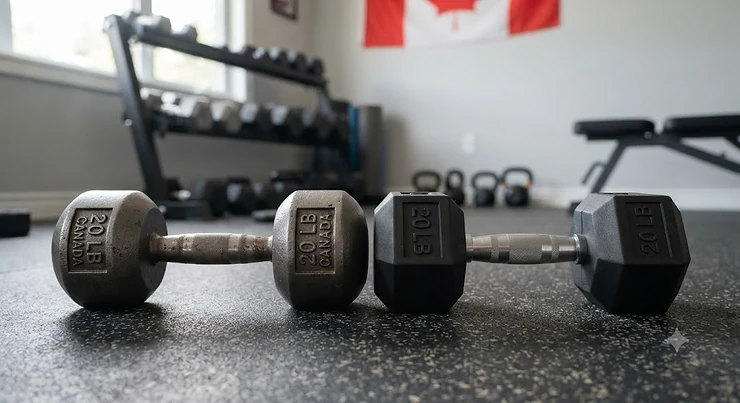
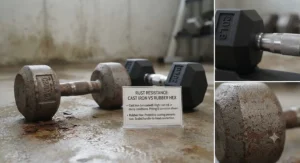
Somewhere in every Canadian basement renovation story, there’s a moment where someone drops a dumbbell and everyone upstairs freezes. That single thud is usually what kicks off the real question behind cast iron dumbbells vs rubber hex dumbbells: which one actually belongs in your home gym, your apartment, or your garage that doubles as a gym three nights a week? Cast iron dumbbells are the old-school workhorses — raw, uncoated, and basically indestructible, but loud and prone to chipped enamel. Rubber hex dumbbells wrap that same iron core in a shock-absorbing shell, trading a bit of that industrial charm for quieter drops and floor protection.
What is the difference between cast iron dumbbells and rubber hex dumbbells? Cast iron dumbbells are solid iron weights, often enamel-coated, prized for their density and low cost, while rubber hex dumbbells use a cast iron core wrapped in vulcanized rubber or PVC, which softens impact noise and shields flooring at a modest weight and price premium.
Neither option is objectively “better” — the right pick depends on where you train, how hard you drop things, and whether your downstairs neighbour has opinions about 6 a.m. workouts. This guide breaks down real products sold in Canada, honest aggregated review sentiment, and the practical trade-offs — durability, noise, grip, and upkeep — that actually matter once the dumbbells leave the box. According to the Canadian Society for Exercise Physiology, Canadian adults are encouraged to include muscle-strengthening activities using major muscle groups at least twice a week, and dumbbells remain one of the most space-efficient ways to meet that recommendation at home.
Quick Comparison: Cast Iron vs Rubber Hex Dumbbells
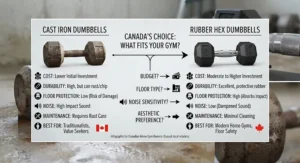
| Factor | Cast Iron Dumbbells | Rubber Hex Dumbbells |
|---|---|---|
| Noise on drop | Loud, metallic clang | Muffled, dull thud |
| Floor protection | Minimal — can chip hardwood/tile | Good — rubber cushions impact |
| Price (per lb) | Generally lower | Slightly higher |
| Odour | None | Mild rubber smell when new |
| Durability of coating | Enamel can chip/rust over years | Rubber resists chipping, may crack with age |
| Best For | Garages, basements, serious lifters | Apartments, condos, shared spaces |
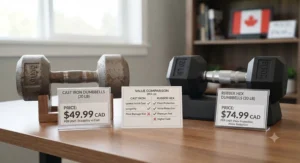
Looking at the table above, cast iron dumbbells win on raw cost-per-pound and long-term structural toughness, but rubber hex dumbbells are the clear pick if you live above someone or train on a hard floor you actually care about. Reviewers consistently note that the rubber coating’s main job isn’t grip — it’s damage control, both to your floor and to your eardrums. If your workout space is a detached garage with a concrete slab, that damage control matters a lot less than it would in a third-floor condo unit.
Just one click — help others make better buying decisions too! 😊
Top 7 Cast Iron and Rubber Hex Dumbbells: Expert Analysis
Here’s where things get specific. We researched seven real dumbbells sold through Amazon.ca — a mix of budget cast iron, premium rubber hex, and a couple of oddballs worth knowing about — and broke down what the spec sheet doesn’t tell you.
1. CAP Barbell Cast Iron Hex Dumbbell — best budget entry point into cast iron
The CAP Barbell Cast Iron Hex Dumbbell is about as close to the platonic ideal of a “gym class” dumbbell as you’ll find, and that’s exactly its appeal. Each unit is solid black cast iron with a hexagonal head that stops it from rolling off a shelf, finished in a semi-gloss enamel coating designed to resist rust and chipping better than raw iron alone. Available across a wide weight range from roughly 5 to 50 lb, the handle uses a medium-depth knurl — enough texture to stop slippage during a sweaty set of curls without shredding your palms on day one.
Based on the spec comparison with other entry-level options, what stands out here is the sheer weight-to-price ratio: you’re paying almost entirely for iron, not packaging or branding. This makes it a strong fit for garage-gym builders who want to stack up a full dumbbell rack without financing it. Reviewers consistently mention that the semi-gloss finish holds up better than expected against minor bumps, though a few long-term owners report surface rust appearing after a couple of years in humid basements — a predictable trade-off for an uncoated metal product. What the spec sheet won’t tell you, but reviewers note, is that the enamel coating does eventually show wear at contact points where the dumbbell rests on a rack, so a rubber mat underneath extends its life meaningfully.
Pros:
- ✅ Excellent price-per-pound for solid cast iron
- ✅ Hex shape prevents rolling and simplifies storage
- ✅ Wide weight range suits beginners through intermediate lifters
Cons:
- ❌ Enamel coating can chip on concrete floors over time
- ❌ No noise dampening — loud on hard flooring
Prices for the CAP Barbell Cast Iron Hex Dumbbell generally sit in the C$25-C$90 range depending on weight, and at the time of research it remains one of the most cost-effective ways to build out a dumbbell rack without rubber padding. For a garage or basement gym on concrete, it’s tough to beat on value.
2. Amazon Basics Rubber Encased Hex Dumbbell — best all-around rubber hex for most homes
The Amazon Basics Rubber Encased Hex Dumbbell takes the same solid cast iron core as the CAP Barbell model and wraps it in a rubber shell, which changes the entire ownership experience even though the underlying iron does the actual work. It’s sold individually rather than in fixed pairs, letting you build up a mismatched set gradually — handy if your budget doesn’t allow for buying an entire rack at once. The handle uses a textured, contoured rubber grip rather than knurled metal, which trades a bit of aggressive traction for comfort during higher-rep sets.
On paper this means a slightly heavier, bulkier dumbbell than an equivalent cast iron model, since rubber adds volume without adding useful weight — worth knowing if storage space is tight. The honest analytical take: this is the “no surprises” option, and that’s a compliment. A dedicated outdoor gear testing outlet that put multiple hex dumbbell lines through comparative testing found the Amazon Basics line delivers a reasonable balance of versatility, durability, and sturdy construction relative to other standard dumbbells in its class, though its top-end weight caps out lower than premium competitors. Aggregated customer sentiment across major retail listings clusters solidly around 4.4 to 4.5 stars, with common praise for the non-slip grip and common complaints centred on a noticeable rubber smell straight out of the box that usually fades within a week or two of open-air storage.
Pros:
- ✅ Rubber shell muffles noise and cushions floor impact
- ✅ Sold individually for flexible, incremental collection building
- ✅ Contoured handle is comfortable across long rep ranges
Cons:
- ❌ New-product rubber odour takes time to dissipate
- ❌ Bulkier footprint than uncoated cast iron of the same weight
Priced roughly in the C$20-C$90 range depending on the weight selected, the Amazon Basics Rubber Encased Hex Dumbbell represents genuinely solid value for anyone who wants rubber’s floor protection without paying a premium-brand markup.
3. Yes4All Rubber Encased Hex Dumbbell with Chrome Grip — best value rubber hex
The Yes4All Rubber Encased Hex Dumbbell with Chrome Grip pairs a solid cast iron core with thick rubber encasing and swaps the usual rubber handle for a chrome-finished grip section, aiming to combine noise reduction with a firmer, more traditional hold. Yes4All markets this line specifically on its noise- and floor-reducing construction, and the chrome handle section is meant to solve a complaint some lifters have with all-rubber grips: they can feel slightly spongy under a heavy load.
Here’s what to weigh: the chrome grip gives you more precise handle feedback during pressing and curling movements, which matters more as your working weight climbs, while the rubber-encased head still absorbs the bulk of drop impact. Aggregated review sentiment across retail listings for this line is generally positive, with ratings frequently landing between 4.1 and 4.8 stars depending on the specific weight and colour variant, and buyers repeatedly flagging quick shipping and accurate weight labelling as strengths. A recurring theme in lower-starred reviews is that the rubber does carry a noticeable chemical smell initially, consistent with typical SBR rubber off-gassing behaviour documented in flooring and equipment industry sources — it fades but isn’t instant.
Pros:
- ✅ Chrome handle offers firmer grip feedback than full rubber
- ✅ Thick rubber encasing genuinely reduces drop noise
- ✅ Sold individually across a broad 5-50 lb range
Cons:
- ❌ Initial rubber odour more pronounced than some competitors
- ❌ Chrome grip can feel cold and slick when hands are sweaty
The Yes4All Rubber Encased Hex Dumbbell with Chrome Grip typically runs in the C$20-C$85 range across weights, making it a legitimate value pick for buyers who want rubber’s benefits without going premium.
4. MAGMA Premium Cast Iron Rubber Hex Dumbbells — best premium rubber hex
The MAGMA Premium Cast Iron Rubber Hex Dumbbells sit at the higher end of the rubber hex category, built around the same cast iron core concept but finished with a diamond-pattern knurled handle instead of a smooth or lightly textured grip. MAGMA backs the line with a 1-year limited manufacturer’s warranty, which is a meaningfully longer commitment than most budget dumbbell brands offer and signals more confidence in long-term build quality.
What most buyers overlook about this model is that the diamond knurling changes grip security far more than the rubber coating does — for anyone doing heavy farmer’s carries or high-volume pressing, that texture is often the difference between a confident grip and a slipping one halfway through a set. Reviewers describe MAGMA as a trusted brand across homes and gyms in Canada and the United States, and the rubber-coated head is specifically engineered to reduce noise while adding a protective buffer between the dumbbell and the floor. Based on the spec comparison against the Amazon Basics and Yes4All lines, the MAGMA set costs more per pound but backs that up with a warranty and a more aggressive grip pattern, which is the kind of trade-off serious lifters tend to appreciate more than casual users.
Pros:
- ✅ 1-year manufacturer warranty, longer than most competitors
- ✅ Diamond knurling gives superior grip security
- ✅ Rubber coating meaningfully reduces noise and floor wear
Cons:
- ❌ Priced noticeably higher than budget rubber hex options
- ❌ Knurling is more aggressive, less comfortable for light warm-up sets
Expect the MAGMA Premium Cast Iron Rubber Hex Dumbbells to sit in the C$30-C$120 range depending on weight, positioning it as a worthwhile step up for buyers who plan to lift heavy and often.
5. HAJEX Rubber Encased Hex Dumbbells — best budget alternative for light-to-moderate training
The HAJEX Rubber Encased Hex Dumbbells offer a straightforward, no-frills rubber-coated option spanning an unusually wide range from 3 lb all the way up to 100 lb, which makes this line appealing if you want one dumbbell family to cover everything from rehab-level light work to serious strength training. HAJEX is a newer entrant compared to legacy brands like CAP or Yes4All, but the underlying construction — cast iron core, rubber encasing, anti-slip handle — follows the same proven formula.
Here’s what to weigh: because HAJEX spans such a broad weight range under one product family, it’s an efficient way to build a full home dumbbell collection from a single, consistent-feeling brand rather than mixing grip styles across several manufacturers. Reviewers consistently report that the rubber encasing does its job on noise reduction, and the anti-slip handle texture performs adequately for general strength training, though it isn’t as refined as the diamond knurling found on premium lines. If you can’t verify extensive long-term durability data for a newer brand like this, the honest answer is that it’s less battle-tested than CAP or Yes4All, so buyers should treat it as a solid budget bet rather than a lifetime guarantee.
Pros:
- ✅ Extremely wide weight range from 3 lb to 100 lb
- ✅ Consistent rubber-and-iron construction across the whole line
- ✅ Competitive pricing relative to established rubber hex brands
Cons:
- ❌ Less long-term track record than legacy brands
- ❌ Handle texture less refined than premium diamond-knurled options
Pricing for the HAJEX Rubber Encased Hex Dumbbells generally falls in the C$15-C$110 range across the full weight spectrum, making it one of the more budget-friendly ways to cover a huge training range with rubber protection.
6. Yes4All Adjustable Cast Iron Dumbbell Pair with Connecting Rod — best space-saving cast iron option
The Yes4All Adjustable Cast Iron Dumbbell Pair with Connecting Rod takes a different approach entirely: instead of fixed-weight hex heads, you get plate-loaded cast iron dumbbells that use a star-lock collar system, plus a connecting rod that lets the pair convert into a short barbell. For anyone trying to squeeze strength equipment into a condo storage closet, this single product effectively replaces what would otherwise be five or six separate dumbbells.
Based on the spec comparison with fixed-weight hex dumbbells, the trade-off here is setup time for storage efficiency — changing weight means loading and locking plates rather than grabbing a different dumbbell off a rack, which is slower mid-workout but dramatically more compact between sessions. The removable silicone sleeve protecting the plates and handle ends is a thoughtful touch that most fixed-weight cast iron dumbbells don’t offer, since it cuts down on the metal-on-metal clatter that typically makes adjustable sets annoying to use. What most buyers overlook about this style of product is that the barbell conversion feature is a genuine bonus rather than a gimmick — it opens up two-handed movements like the deadlift or overhead press that fixed dumbbells alone can’t easily replicate.
Pros:
- ✅ Converts into a barbell for two-handed compound lifts
- ✅ Silicone sleeve reduces plate-clatter noise during storage
- ✅ Massive space savings versus a full fixed-weight rack
Cons:
- ❌ Slower to change weights mid-session than fixed hex dumbbells
- ❌ Star-lock collars require periodic tightening as they wear
The Yes4All Adjustable Cast Iron Dumbbell Pair with Connecting Rod typically sells in the C$130-C$220 range for a full set, which is a reasonable total cost of ownership given it functionally replaces several individual dumbbells.
7. CAP Barbell Cast Iron Hex Dumbbell, Heavy-Duty Line (15-120 lb) — best for serious, heavy lifters
The CAP Barbell Cast Iron Hex Dumbbell, Heavy-Duty Line is built for a different customer than the entry-level CAP model covered earlier — this version uses a cold-rolled solid steel handle joining the two cast iron heads, engineered specifically for the 15 to 120 lb range where a standard handle would be more prone to flex or wear. The finish is the same durable industrial enamel with grey-silver weight markers, but the handle construction is the meaningful upgrade for anyone lifting genuinely heavy.
Here’s what to weigh: at the lower end of a dumbbell line, handle construction barely matters because the forces involved are modest, but once you’re routinely loading 60, 80, or 100+ lb into a single hand, a cold-rolled steel handle resists bending and long-term fatigue in a way that thinner rod stock can’t. Reviewers frequently cite accurate weight labelling and solid value compared to similarly heavy dumbbells from premium strength-equipment brands, with one recurring comment noting that the price advantage over specialty gym-equipment suppliers made this the deciding factor for a home setup. The obvious downside of heavy fixed cast iron is the same downside as the entry-level model — no rubber buffer means every set-down at these weights is genuinely loud, and repeated heavy drops onto hard flooring can eventually damage both the enamel coating and the floor itself.
Pros:
- ✅ Cold-rolled steel handle built for genuinely heavy loads
- ✅ Strong value compared to specialty heavy-dumbbell brands
- ✅ Consistent, accurate weight labelling across the range
Cons:
- ❌ No rubber buffer — loud and hard on floors at heavy weights
- ❌ Not ideal for shared walls, condos, or upstairs apartments
Given the wider weight range, prices for the CAP Barbell Cast Iron Hex Dumbbell, Heavy-Duty Line vary considerably, generally landing in the C$60-C$350 range depending on the specific weight purchased — still competitive against comparable heavy dumbbells from dedicated strength-equipment retailers.
Top 7 Dumbbells: Full Comparison Table
| Product | Material | Weight Range | Price Range (CAD) | Best For |
|---|---|---|---|---|
| CAP Barbell Cast Iron Hex Dumbbell | Cast iron, enamel-coated | 5-50 lb | C$25-C$90 | Budget garage gyms |
| Amazon Basics Rubber Encased Hex Dumbbell | Cast iron + rubber | 5-50 lb | C$20-C$90 | Everyday all-around use |
| Yes4All Rubber Encased Hex Dumbbell | Cast iron + rubber, chrome grip | 5-50 lb | C$20-C$85 | Value-focused rubber buyers |
| MAGMA Premium Cast Iron Rubber Hex Dumbbells | Cast iron + rubber, knurled | 3-50 lb | C$30-C$120 | Serious lifters wanting grip + warranty |
| HAJEX Rubber Encased Hex Dumbbells | Cast iron + rubber | 3-100 lb | C$15-C$110 | Broad range on a budget |
| Yes4All Adjustable Cast Iron Dumbbell Pair | Cast iron, plate-loaded | Configurable | C$130-C$220 | Small spaces, condo storage |
| CAP Barbell Heavy-Duty Line | Cast iron, steel handle | 15-120 lb | C$60-C$350 | Heavy lifters, basements |
The spread here makes one thing clear: rubber hex dumbbells cluster in the moderate-weight, moderate-price middle of the pack, while pure cast iron options dominate both the cheapest budget tier and the heaviest weight capacities. If you need anything past 50 lb per hand, cast iron is currently your more practical (and often only) option among these seven, since rubber coating adds bulk and cost that becomes impractical at very heavy weights.
👉 Tap any product above to check today’s price and availability before it changes.
Setting Up and Maintaining Your Dumbbells: A Practical Guide
Buying the right dumbbell is half the job — keeping it usable for a decade is the other half, and it’s the part Amazon listings never mention.
First 30 days: Store new dumbbells on a rubber mat or interlocking foam tile from day one, even if your flooring is already fairly durable. Cast iron dumbbells especially benefit from this, since the first few accidental drops onto bare concrete or hardwood cause most of the visible chipping you’ll see in long-term owner photos. If you bought rubber hex dumbbells, expect a noticeable rubber smell for the first one to two weeks; storing them in a ventilated area (not a sealed closet) speeds up off-gassing considerably.
Ongoing maintenance: Wipe cast iron dumbbells down after sweaty sessions — moisture sitting on exposed metal, especially at chipped enamel points, is the single biggest driver of rust. A light coat of mineral oil or silicone spray on any bare metal spots every few months prevents surface rust from spreading. Rubber hex dumbbells need less attention but benefit from an occasional wipe with mild soap and water to prevent grime buildup in the handle texture, which over time can make the grip feel slick rather than tacky.
Common first-month mistakes: New owners frequently rack dumbbells by tossing them onto a wooden shelf rather than setting them down — this is where most enamel chipping happens, not during actual exercises. Another common error is storing dumbbells in an unheated garage over a Canadian winter; the temperature swings can accelerate rubber cracking on rubber hex models and encourage condensation-driven rust on cast iron. A dedicated indoor storage spot, even a simple rack in a mudroom or basement corner, extends the usable life of either material significantly.
Real-World Scenarios: Which Dumbbell Fits Your Living Situation
Picture three different Canadian households, because the “best” dumbbell genuinely depends on where you’re standing when you use it.
The condo dweller on the 12th floor: If you’re training in a rented or owned condo unit with shared walls and floors, rubber hex dumbbells aren’t optional — they’re basically a courtesy requirement. The Amazon Basics Rubber Encased Hex Dumbbell or Yes4All Rubber Encased Hex Dumbbell with Chrome Grip in the 5-25 lb range covers most bodyweight-assisted and isolation exercises without turning every workout into a noise complaint waiting to happen.
The basement home-gym builder with a family: A finished basement on a concrete slab with a rubber gym mat underneath removes most of the noise and floor-damage concerns that drive people toward rubber coating in the first place. Here, the CAP Barbell Cast Iron Hex Dumbbell or the CAP Barbell Heavy-Duty Line make more financial sense, since you’re paying purely for iron rather than a rubber buffer you don’t strictly need.
The space-constrained apartment renter who still wants to go heavy: If storage is your real constraint rather than noise, the Yes4All Adjustable Cast Iron Dumbbell Pair with Connecting Rod solves both problems — it replaces a rack’s worth of fixed dumbbells with one compact, plate-loaded system, and the silicone sleeve keeps plate-clatter noise manageable even in a shared building.
Cast Iron vs Rubber Hex: Which Should You Actually Buy?
The honest answer is that cast iron and rubber hex dumbbells aren’t really competing products — they’re the same core technology solving two different problems. Cast iron dumbbells solve the “I need maximum weight for minimum dollars” problem. Rubber hex dumbbells solve the “I need to not damage my floor or annoy my neighbours” problem. Reviewers consistently note that once you own both types, you tend to reach for rubber hex during higher-rep, higher-drop-risk movements like renegade rows or floor presses, and cast iron during controlled, rack-to-hand movements like standing curls where drop risk is low.
Cost-per-use tells a similar story: cast iron typically runs 15-30% cheaper per pound at the same weight tier, but that gap shrinks considerably once you factor in a rubber gym mat, which most cast iron owners end up buying anyway to protect flooring. In practice, many Canadian home-gym owners land on a hybrid setup — heavier cast iron dumbbells for controlled lifts, lighter rubber hex dumbbells for anything performed on the floor or done for higher reps.
How to Choose Between Cast Iron and Rubber Hex Dumbbells
- Assess your flooring first. Concrete slabs and rubber gym mats tolerate cast iron fine; hardwood, tile, and laminate strongly favour rubber hex.
- Consider your neighbours. Shared walls or floors in a condo or apartment building make rubber hex close to mandatory for peaceful coexistence.
- Decide your weight ceiling. Above roughly 50 lb per hand, uncoated cast iron becomes the more available and cost-effective option among mainstream brands.
- Factor in grip preference. Knurled cast iron handles offer sharper traction; rubber and chrome-grip hybrids trade a bit of traction for comfort.
- Budget for the full setup, not just the dumbbells. Cast iron buyers should budget for a protective mat; rubber hex buyers can often skip that expense.
- Think about resale and longevity. Cast iron typically holds resale value better since there’s no rubber to degrade or crack with age.
- Match your training style. High-rep, floor-based, or drop-prone training (like snatches or explosive movements) favours rubber; slow, controlled lifting favours either material equally.
Dumbbell Material Durability Comparison
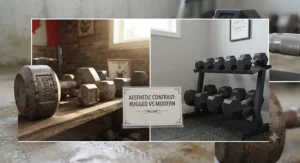
Durability is where cast iron dumbbells vs rubber hex dumbbells really diverges, and it’s not a simple “one wins” answer. Cast iron itself, as a material, is a family of iron-carbon alloys containing between 2 and 4 percent carbon by weight, a composition that gives it excellent compressive strength and resistance to permanent deformation — this is precisely why a 50-year-old cast iron dumbbell can still be perfectly functional today, provided rust hasn’t compromised it. The core of a rubber hex dumbbell is the exact same material, so structurally the two products are equally durable at the iron level; the difference lies entirely in what’s protecting that core.
Uncoated or enamel-coated cast iron is vulnerable to two things: surface chipping from repeated impacts and rust from moisture exposure on exposed metal. Rubber hex dumbbells largely eliminate the chipping problem, since the rubber shell absorbs impact rather than transferring it directly into a brittle enamel coating, but that rubber shell introduces its own long-term wear pattern — UV exposure, temperature extremes, and age can cause rubber to harden, crack, or separate slightly from the iron core after many years of heavy use. Reviewers consistently report that budget rubber hex products show this cracking sooner than premium lines like MAGMA, which use thicker, higher-quality rubber compounds specifically engineered to resist it. For a strictly apples-to-apples durability comparison: cast iron degrades primarily through rust and chip damage, while rubber hex degrades primarily through UV and age-related cracking — neither is inherently more durable, they simply fail differently.
Floor Noise and Impact
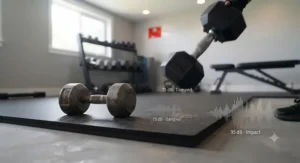
If there’s one factor that decides cast iron dumbbells vs rubber hex dumbbells for most Canadian buyers, it’s floor noise — and the physics behind it matter more than most buying guides admit. Impact noise from a dropped weight travels through a building’s structure far more efficiently than airborne noise like a stereo, which is exactly why it’s such a common source of complaint in multi-unit residential buildings. A Canada Mortgage and Housing Corporation guide on reducing apartment noise notes that impact sounds — including dropped objects — transmit through floor and wall structures via vibration, and that building codes generally target sound transmission ratings for exactly this kind of disturbance between residential units.
In practice, this means an uncoated cast iron dumbbell dropped from waist height onto a hard floor in a condo can genuinely be heard, and felt, in the unit below — even through a concrete slab, since impact vibration travels differently than airborne sound. Rubber hex dumbbells don’t eliminate this transmission entirely, but the rubber shell absorbs a meaningful portion of the impact energy before it ever reaches the floor, which is why reviewers across nearly every rubber hex product researched for this guide specifically cite noise reduction as a top-line benefit. For anyone in a townhouse, condo, or apartment, pairing rubber hex dumbbells with a rubber gym mat underneath addresses both the impact noise and the floor protection problem simultaneously — a combination that uncoated cast iron alone simply can’t match regardless of how carefully you set the weights down.
Grip Texture Differences
Grip is the most personal, least universally-agreed-upon factor in the cast iron dumbbells vs rubber hex dumbbells debate, because it depends heavily on hand size, sweat levels, and training style. Cast iron dumbbells typically use a knurled metal handle — a pattern of small diamond or cross-hatch ridges machined or cast directly into the steel — which provides sharp, mechanical traction that holds up even when hands get sweaty mid-set. Rubber hex dumbbells split into two camps: some use a rubber or neoprene-textured handle for comfort, while others, like the Yes4All Rubber Encased Hex Dumbbell with Chrome Grip, add a separate chrome-finished handle section specifically to recapture some of that mechanical traction cast iron is known for.
Rubber itself has interesting grip properties worth understanding: as a material, its usefulness derives from properties like flexibility and its ability to deform under pressure and return to shape, which is part of why textured rubber grips feel tacky and secure when dry but can become noticeably slicker once hands are sweaty, since the material doesn’t channel moisture away the way a sharply knurled metal surface does. What most buyers overlook is that grip preference often shifts with training intensity — a smooth or lightly textured rubber handle feels perfectly comfortable during a 15-rep bicep curl set, but during a heavy, low-rep farmer’s carry or a snatch, the sharper mechanical bite of diamond knurling (like on the MAGMA line) becomes genuinely more important for safety and confidence. There’s no universally “better” grip texture here — it’s a direct trade-off between comfort and raw traction, and the right answer depends entirely on what kind of lifting you do most.
Long-Term Maintenance
Maintenance requirements for cast iron dumbbells vs rubber hex dumbbells diverge in ways that affect total cost of ownership over a five- or ten-year horizon, not just the sticker price on day one. Cast iron dumbbells need active moisture management: wiping down sweat after use, avoiding damp basement storage without ventilation, and periodically touching up any bare metal spots where enamel has chipped away. Skipping this for a couple of years in a humid Canadian basement is exactly how a once-pristine dumbbell rack ends up speckled with surface rust — cosmetically unfortunate, though rarely enough to compromise structural safety unless left unchecked for many years.
Rubber hex dumbbells are comparatively low-maintenance day-to-day — no rust risk on the coated surfaces — but they come with a different long-term consideration: rubber compounds slowly harden and can develop surface cracks with age, particularly if stored in direct sunlight or temperature extremes like an uninsulated garage. This is a slower process than cast iron rust but it’s essentially irreversible once it starts, whereas a rusted cast iron dumbbell can often be sanded, treated, and repainted to extend its life meaningfully. For buyers weighing the two, the practical takeaway is this: cast iron requires more frequent, smaller maintenance tasks (wiping, oiling, occasional touch-ups), while rubber hex requires almost no maintenance but has a harder ceiling on total usable lifespan once the rubber itself begins to degrade.
Common Mistakes When Buying Dumbbells
Even careful shoppers trip over a handful of predictable mistakes when choosing between cast iron and rubber hex dumbbells. First, buying purely on price-per-pound without factoring in flooring protection — a cheap cast iron set that ends up chipping a hardwood floor isn’t actually the cheaper option once you account for floor repair. Second, underestimating weight progression needs; many beginners buy a single moderate weight instead of a small range (say, 10, 15, and 20 lb), which limits how quickly they can progressively overload their training. Third, ignoring handle diameter — cast iron and rubber hex handles aren’t always the same thickness across brands, and buyers with smaller hands sometimes find aggressive knurling genuinely uncomfortable rather than just “tough.”
A fourth common mistake is assuming all “rubber hex” products use the same rubber quality; budget and premium lines differ meaningfully in coating thickness and compound quality, which directly affects both noise reduction and long-term crack resistance. Finally, some buyers skip verifying real aggregated review data altogether and rely purely on marketing copy — checking actual buyer feedback for recurring complaints about odour, chipping, or inaccurate weight labelling is a five-minute step that prevents most disappointing purchases.
Cast Iron and Rubber Hex Dumbbells for Different Types of Buyers
Beginners generally benefit more from rubber hex dumbbells in the 5-25 lb range — the comfortable grip and forgiving noise profile make early, less-controlled workouts less stressful for both the lifter and anyone sharing the space. Intermediate and advanced lifters working with heavier weights and more controlled technique often gravitate toward cast iron, especially once weight requirements exceed what most rubber hex lines offer. Condo and apartment dwellers should treat rubber hex as close to a default choice regardless of experience level, simply because of the shared-structure noise considerations discussed earlier. Budget-conscious buyers building a first home gym often do best starting with a small cast iron set and adding a rubber gym mat, since that combination frequently costs less overall than an equivalent rubber hex set while still addressing most of the floor-protection concern.
Frequently Asked Questions
❓ Are cast iron dumbbells better than rubber hex dumbbells?
❓ Do rubber hex dumbbells smell bad?
❓ Can cast iron dumbbells rust?
❓ Are rubber hex dumbbells quieter than cast iron?
❓ What weight range should a beginner start with for dumbbells?
Conclusion
Cast iron dumbbells vs rubber hex dumbbells isn’t really a rivalry — it’s the same core technology adapted for two different living situations. Cast iron rewards buyers who have a forgiving floor, don’t mind some noise, and want maximum weight for minimum dollars, with options like the CAP Barbell Cast Iron Hex Dumbbell and the CAP Barbell Heavy-Duty Line covering everything from a first home-gym purchase to serious heavy lifting. Rubber hex dumbbells reward buyers who share walls, care about their flooring, or simply want a quieter workout, and picks like the Amazon Basics Rubber Encased Hex Dumbbell, Yes4All Rubber Encased Hex Dumbbell with Chrome Grip, MAGMA Premium Cast Iron Rubber Hex Dumbbells, and HAJEX Rubber Encased Hex Dumbbells all deliver that trade-off at different price points and grip styles.
If space is the real constraint rather than noise or floor damage, the Yes4All Adjustable Cast Iron Dumbbell Pair with Connecting Rod deserves serious consideration as a compact, multi-function alternative to either fixed-weight category. Whichever direction you go, pairing your choice with a proper rubber gym mat and a consistent maintenance routine will do more for long-term satisfaction than the material choice alone ever could.
✨ Ready to build your home gym? Compare current prices on any of these seven picks above and find the set that matches your space, your budget, and your downstairs neighbour’s patience! 🏋️♀️💪
Recommended for You
- 7 Best Cast Iron Dumbbells For Canadian Garage Gyms (2026)
- 7 Best Rubber Hex Dumbbells In Canada For 2026
- Fixed Weight Dumbbells for Home Gym: 7 Best Picks (2026)
Disclaimer: This article contains affiliate links. As an Amazon Associate, I earn from qualifying purchases. If you purchase products through these links, we may earn a small commission at no additional cost to you.
✨ Found this helpful? Share it with your friends! 💬🤗
