In This Article
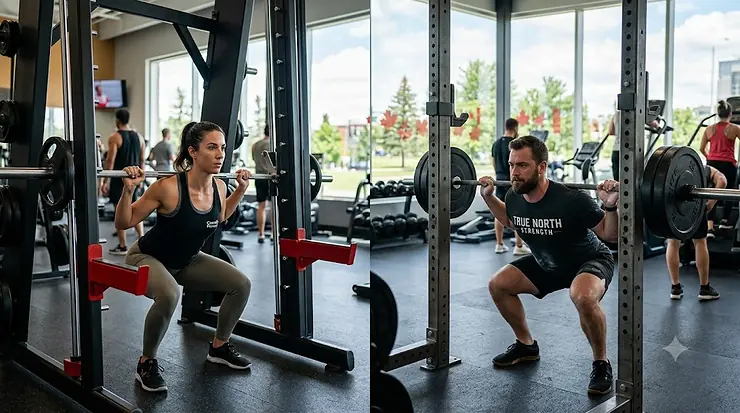
If you’ve spent any time researching home gym equipment, the debate around guided smith machine vs free weight barbell has probably made your head spin. Both sides have passionate defenders — powerlifters swear by the raw barbell, while smart solo trainers quietly rack their smith machine and walk away injury-free. The truth? Neither is universally better. The right answer depends entirely on who you are, where you train, and what you’re actually trying to accomplish.
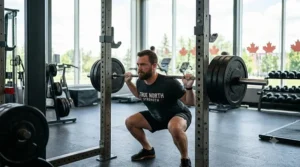
For Canadians building home gyms — whether it’s a cold basement in Winnipeg or a compact condo space in downtown Vancouver — this choice carries extra weight (pun intended). Equipment has to last through years of use, fit in spaces often built before “home gym” was a concept, and deliver real results without requiring a training partner every session. With Canadian recreational sports centre memberships up 15.9% between 2021 and 2024 (Statistics Canada CPI), the break-even point on a quality home setup has never been shorter.
In this guide, I’ve researched and reviewed 7 real products available on Amazon.ca — a mix of guided smith machines and free weight barbell options — and laid out exactly who should buy what and why. Whether you’re a complete beginner trying to lift safely without a spotter, or an experienced lifter questioning whether a fixed bar path is limiting your gains, you’ll find a clear answer here.
All prices are in Canadian dollars (CAD) and reflect general market ranges — always check Amazon.ca for the current price, as they fluctuate regularly.
Quick Comparison: Guided Smith Machine vs Free Weight Barbell at a Glance
| Feature | Guided Smith Machine | Free Weight Barbell |
|---|---|---|
| Bar path | Fixed (vertical or slight angle) | Completely free |
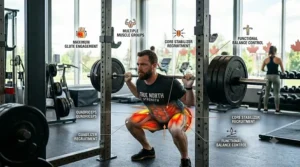
| Stabiliser muscle activation | Lower | Higher |
| Solo training safety | Excellent (built-in catches) | Requires spotter or rack |
| Learning curve | Beginner-friendly | Moderate to steep |
| Functional strength carryover | Moderate | High |
| Space requirement | Large footprint (all-in-one) | Flexible (bar + rack) |
| Starting cost in CAD | $600–$2,500+ | $150–$800+ |
| Best for | Beginners, rehab, hypertrophy | Athletes, sport performance, functional strength |
The table above tells part of the story, but here’s what it can’t show: the guided smith machine vs free weight barbell debate isn’t about which tool is superior — it’s about which tool is superior for you. The smith machine’s fixed bar path removes the need to stabilise the weight in three dimensions, which is genuinely useful for beginners and for isolation exercises. But that same fixed path means stabiliser muscles get less work over time. A barbell demands full-body coordination, and the research backs this up: studies published in the Journal of Strength and Conditioning Research found significantly greater medial deltoid activation during free weight bench press compared to Smith machine bench press — those stabilisers matter for long-term shoulder health. Budget-conscious Canadian buyers should also note that a quality all-in-one smith machine typically costs more upfront than a comparable barbell-and-rack setup, but it consolidates multiple training stations into one footprint — a smart trade-off in Canadian basement gyms where space is often at a premium.
💬 Just one click — help others make better buying decisions too! 😊
✨ Don’t Miss These Exclusive Deals!
🔍 Take your strength training to the next level with these carefully selected products. Click on any highlighted item to check current pricing and availability on Amazon.ca. These tools will help you build real, lasting strength — safely and efficiently!
Top 7 Guided Smith Machines & Free Weight Barbells: Expert Analysis for Canadian Buyers
1. Marcy MD-9010G Diamond Elite Smith Machine
The Marcy MD-9010G has been a cornerstone of the home gym world for years, and its continued presence on Amazon.ca tells you everything about its staying power. This is a full cage system combining a smith machine with precision sealed linear bearings, dual cable crossovers, a pec deck station, low pulley with foot rest, and a preacher curl pad — all in one unit.
The 7-degree angled guide rod design is worth noting: it more closely matches the natural arc of pressing and squatting movements compared to a purely vertical rail. In practice, this means your bench press feels less robotic and your squats don’t force your knees into unnatural territory. The 2,000-lb tensile-strength aircraft cable on the pulley system is commercial-grade — you won’t be replacing this after a year of hard training. Assembled dimensions run approximately 178 cm L × 200 cm W × 216 cm H (70″ × 79″ × 85″), so measure your basement ceiling height first — a common mistake in Canadian homes where older builds can have ceilings as low as 213 cm (84″).
For the Canadian solo trainer who doesn’t have a reliable gym partner, the MD-9010G’s safety catches and bar catches make heavy lifting genuinely safe alone. This is the machine I’d point a 45-year-old Torontonian returning to fitness after a decade away toward — it’s forgiving enough to rebuild technique, versatile enough to keep you engaged for years.
Customer feedback on Amazon.ca is consistently positive around build quality and versatility, though several reviewers note that assembly takes 3–5 hours and a second pair of hands helps considerably.
✅ Built-in safety catches for solo lifting
✅ 7-degree angled rod path feels more natural than vertical designs
✅ All-in-one value — replaces multiple machines
❌ Large footprint — not suitable for small spaces
❌ Weights not included — factor plates into total budget
Price range: mid-$800 to mid-$1,100 CAD — check Amazon.ca for current pricing.
2. EonfitOmni E3 2.0 Smith Machine
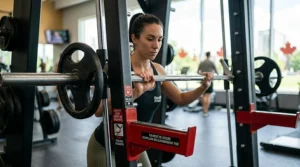
The EonfitOmni E3 2.0 is arguably the most talked-about smith machine in Canadian home gym communities right now, and for good reason. Built around a 2×2-inch steel upright frame with premium solid steel guide rails and precision bearings, this machine delivers genuinely smooth bar travel that rivals systems costing twice as much. The standard version carries a 500-lb weight rating on the smith bar with overall weight capacity up to 454 kg (1,000 lbs); the Pro version bumps to 680 kg (1,500 lbs).
What sets the E3 apart is its free-motion arms — a patented design that allows cable movements outside the rack frame, like cable flyes in different positions. For a Canadian home gymmer trying to replicate the full tool set of a commercial gym, this is a genuine differentiator. You’re not just getting a smith machine; you’re getting a functional cable trainer that moves the way your body moves. The 42″×75″×87″ assembled footprint fits reasonably well in standard Canadian basement gyms.
This is the machine I’d recommend to a 30-something Calgarian who wants one piece of equipment to replace their gym membership — the E3 2.0 gives you over 200 exercise variations, which means training motivation stays high through long Alberta winters when outdoor activity grinds to a halt.
Canadian reviews praise the responsive customer service and the clean powder-coat finish. Assembly runs approximately 4–6 hours.
✅ Exceptionally smooth linear bearing bar path
✅ Unique free-motion arms for cable exercises outside the rack
✅ Proven in the Canadian home gym community
❌ Weights and plates not included
❌ Pro version carries a significant price premium
Price range: around $800–$1,100 CAD on Amazon.ca — check current pricing.
3. EonfitOmni E5 2.0 Multi-Function Smith Machine
If the E3 is the smart choice, the EonfitOmni E5 2.0 is the ambitious choice — and honestly, for serious home gym builders, the ambition is justified. This 11-in-1 system combines power cage, smith machine, functional trainer, two LAT pulldown stations, low row, vertical leg press, chin station, dip station, core trainer, landmine, and suspension trainer into one unit. The uprights measure 2×2.75 inches — thicker than most competitors — using 14-gauge steel for serious structural rigidity.
The vertical leg press is the standout addition over the E3. For Canadians dealing with knee injuries or coming back from lower-body surgery, a controlled leg press is invaluable — and having it integrated rather than as a separate $600+ machine is a significant space and cost win. The dual LAT pulldown stations mean two people can train simultaneously, which matters for busy household gyms.
The trade-off is size and price. At roughly the same footprint as the E3 but with considerably more hardware, the E5 demands a dedicated space. A condo or apartment gym isn’t realistic here — this machine is for garage or basement setups.
✅ Vertical leg press integration — rare at this price point
✅ Dual LAT pulldown stations for multi-user training
✅ 2×2.75″ steel uprights provide exceptional stability
❌ Premium price — among the higher-end options on Amazon.ca
❌ Requires significant dedicated space and assembly time
Price range: $1,100–$1,600 CAD on Amazon.ca — check current pricing.
4. Altas Strength AL-3061B All-in-One Smith Machine
Altas Strength is a Canadian-based fitness equipment company, and the AL-3061B is their flagship all-in-one system — which makes it a particularly relevant pick for Canadian buyers who value local brand support and service accessibility. The machine centres on dual 100 kg (220 lb) weight stacks (440 lbs total) connected through a 2:1 pulley ratio system, which means smooth, consistent cable resistance without hunting for loose plates. Aircraft cables rated at 2,000 lbs tensile strength run the pulleys.
The 2:1 pulley ratio deserves a moment of explanation: when you pull 50 kg on the cable, you’re actually moving 100 kg from the stack. This creates longer cable travel and a smoother feel on exercises like lat pulldowns and cable rows — it’s the same ratio commercial gyms use, and it genuinely changes how cable work feels compared to cheaper 1:1 systems. The included adjustable lever arms replicate chest press and explosive pushing movements with a free-weight feel while maintaining guided safety — a genuinely clever design for exercises that don’t suit a pure vertical bar path.
For a Canadian buyer who wants commercial-grade quality, local brand warranty support, and the psychological comfort of knowing parts and service are accessible domestically, the Altas Strength AL-3061B is the strongest case in this review.
✅ Dual 100 kg weight stacks included — significant value
✅ Commercial 2:1 pulley ratio for smooth cable travel
✅ Canadian brand with domestic service support
❌ Very large and heavy — over 475 kg (1,047 lbs) assembled
❌ Assembly is complex; professional installation recommended
Price range: $1,800–$2,500 CAD on Amazon.ca — check current pricing.
5. Mikolo Smith Machine Home Gym
The Mikolo Smith Machine occupies a sweet spot on Amazon.ca: a 998 kg (2,200 lb) rated power cage with built-in smith bar, LAT pulldown cable system, cable crossover, 360° landmine, and barbell holders, all at a price that won’t require a second mortgage. For Canadians just getting started with home gym equipment and nervous about committing a large budget before knowing whether they’ll stick with training, the Mikolo offers genuine versatility at an entry-level price.
The smith bar runs on a linear rail system — not the premium sealed bearings of the EonfitOmni line, but smooth enough for the training loads most beginners and intermediate lifters will use. The 360° landmine is a underappreciated feature: landmine exercises (rotational presses, single-leg Romanian deadlifts, T-bar rows) are excellent for athletic development and shoulder health, and they’re typically absent from cheaper all-in-one systems.
The honest caveat: at this price range, steel gauge and weld quality are adequate rather than impressive. If you’re planning to regularly load this machine at near-maximum capacity, the premium options above are worth the investment. But for a 25-year-old in suburban Edmonton who wants to train 4 days a week at moderate loads without paying for a gym membership, the Mikolo delivers solid value.
✅ Competitive price range for a full smith machine system
✅ 360° landmine included — great for athletic training
✅ Solid user ratings on Amazon.ca for value
❌ Frame construction is lighter than premium options
❌ Bar path smoothness is adequate, not exceptional
Price range: $700–$1,000 CAD on Amazon.ca — check current pricing.
6. GOIMU S1-V4 Smith Machine
The GOIMU S1-V4 is a newer entrant on Amazon.ca but one worth paying attention to. Rated to 907 kg (2,000 lbs), it combines a power cage frame with an integrated smith bar, cable crossover system, and multiple training attachments including safety spotter arms and J-hooks. The build uses 2×2-inch uprights with consistent 1-inch hole spacing — compatible with most aftermarket rack accessories, which matters if you plan to expand your setup over time.
What I find genuinely useful about the S1-V4 is its straightforward design philosophy. Where some all-in-one systems add so many stations that navigating them mid-workout feels like operating industrial machinery, the GOIMU is clean and intuitive. The cable crossover is positioned well for functional movements, and the smith bar engages smoothly for compound lifts. For a beginner strength trainer, this simplicity is not a weakness — it’s actually a feature that reduces the decision fatigue that often kills training consistency.
For a first-time home gym buyer in a Halifax townhouse, the S1-V4 offers a manageable footprint, clear functionality, and enough capacity to grow into for several years of progressive training.
✅ Clean, intuitive design — easy for beginners to navigate
✅ Standard 1-inch hole spacing for aftermarket accessory compatibility
✅ Good balance of features vs. footprint
❌ Fewer advanced features than premium alternatives
❌ Limited Canadian customer review data compared to established brands
Price range: $750–$1,050 CAD on Amazon.ca — check current pricing.
7. Weider 7-Foot Olympic Barbell
Here’s the free weight barbell option that deserves its place in this list — and a reminder that for many Canadian lifters, the guided smith machine vs free weight barbell decision might end with a barbell setup being the right call. The Weider 7-Foot Olympic Barbell, available on Amazon.ca, offers a 2.2 m (7-foot) Olympic-spec bar with 2-inch sleeve diameter, compatible with all standard Olympic weight plates. Tested to comfortably support up to 141 kg (310 lbs), it’s suitable for intermediate lifting loads.
The case for a quality barbell is compelling if you already own or plan to buy a power rack. Research consistently shows that free weight squats activate approximately 43% more total muscle compared to smith machine equivalents — a finding referenced across multiple biomechanics studies including work published in journals focused on strength and conditioning science. That translates to real-world benefits: better functional strength, greater athletic carry-over, and more effective calorie burn per session.
For a 28-year-old Ottawa lifter with a solid squat rack and a training partner (or good safety spotter arms), a quality barbell setup at the $150–$300 CAD range delivers superior return on investment for functional strength development than any guided machine in this price tier. The partial diamond knurling on the Weider bar provides reliable grip through chalk-free training sessions — essential when your hands are cold in a Canadian basement gym in February.
✅ Excellent value for functional strength development
✅ Compatible with all Olympic 2-inch weight plates
✅ Significantly lower cost than all-in-one smith systems
❌ Requires a separate power rack for safe heavy lifting
❌ Demands more technical skill and ideally a spotter
Price range: under $200 CAD on Amazon.ca — check current pricing.
Who Should Actually Buy What: A Canadian Buyer’s Decision Guide
This is the section most articles skip because it requires taking a position. I won’t.
If you train alone, have no spotter, and are building strength from scratch — a guided smith machine is the right starting point. The fixed bar path removes the variable of balance from heavy compound lifts, letting you focus on load progression and muscle development without risking a failed squat burying you in your basement. The Marcy MD-9010G or EonfitOmni E3 are both excellent here.
If you’re recovering from an injury or returning to lifting after a long break — the guided smith machine’s fixed path actually serves a therapeutic function. It allows you to load a movement pattern with controlled range of motion, reducing the demand on injured stabilisers while rebuilding primary muscle strength. The Altas Strength AL-3061B’s cable system is particularly useful here for targeted rehab exercises.
If you’re an experienced lifter focused on sports performance or athletic development — a free weight barbell is likely the better long-term investment. The stabiliser muscle activation, functional movement patterns, and real-world strength carryover from barbell training are difficult to replicate on a guided machine. The Weider Olympic Barbell paired with a solid power rack (sold separately) is the economical path here.
If you have a young family and limited basement space in a Canadian subdivision home — an all-in-one smith system is almost certainly the pragmatic answer. Consider the EonfitOmni E5 2.0 or Altas Strength AL-3061B. You get multiple training modalities in one footprint, minimising the chaos of a garage gym that’s also doubling as storage for hockey equipment.
If budget is the primary constraint — the Weider barbell plus a used power rack from Kijiji or Facebook Marketplace will give you more training capability per dollar than any all-in-one smith machine. Canadian resale markets for gym equipment are robust, especially post-January when people sell their “New Year’s resolution” setups at significant discounts.
How to Set Up and Use Your Home Gym Equipment: First 30 Days
Getting the equipment is step one. Getting value from it consistently is the part most buyers underestimate. Here’s what the first 30 days should look like, whether you’ve chosen a smith machine or a barbell setup.
Week 1 — Assembly and Baseline Testing: Take your time with assembly. For smith machines, rushing this phase leads to misaligned guide rods that create frustrating bar path friction. The Government of Canada’s physical activity guidelines for adults recommend 150 minutes of moderate-intensity activity per week — use week one to establish a baseline with light loads on all major movements (squat, press, pull, hinge) and log the weights.
Week 2-3 — Pattern Establishment: Resist the urge to go heavy immediately. For smith machine users, this is the phase to understand the guide rod angle and adjust foot positioning accordingly. Vertical smith machines suit exercises like shrugs and calf raises; angled machines (7–12°) better match the natural arc of bench presses and squats. For free weight barbell users, focus on bracing technique — a tight core and full-body tension are the non-negotiables of safe heavy lifting.
Cold-Weather Tip for Canadian Gyms: If your home gym is in an unheated garage or basement, take 10–15 extra minutes to warm up during winter months. Cold muscles and connective tissue are significantly more injury-prone, and the effect is measurable. Keep a space heater or radiant heat panel in your gym space — a reasonable investment at Canadian Tire for under $100 CAD.
Week 4 — First Progression: Increase loads by 2.5–5 kg per session on lower body movements, 1.25–2.5 kg on upper body. This rate of progression — called linear progression — is the single most effective training strategy for beginners regardless of whether you’re on a smith machine or a barbell.
Maintenance: For smith machines, wipe down the guide rails monthly and apply a light coat of silicone spray. Canadian winter basements can be humid, which accelerates rust on bare steel. Check all bolts every 3 months — vibration from heavy lifts loosens fasteners over time.
The Science Behind the Choice: What Research Actually Says
The guided smith machine vs free weight barbell debate has attracted legitimate scientific attention, and the findings are more nuanced than either camp admits. Here’s what the evidence actually shows.
On muscle activation: Research published in the Journal of Strength and Conditioning Research found that medial deltoid activation was significantly greater during free weight bench press compared to Smith machine bench press, at both 70% and 90% of one-rep maximum, regardless of experience level. The interpretation: the instability of the free barbell requires more shoulder stabiliser recruitment, which builds functional joint stability over time. Meanwhile, the pectoralis major and anterior deltoid showed similar activation between modes — meaning the chest and front shoulder work equally hard on either platform.
On hypertrophy: A 2023 meta-analysis of 13 studies and 1,016 participants published in BMC Sports Science, Medicine and Rehabilitation found no significant difference in muscle hypertrophy between machine-based and free-weight training when programming was matched. In plain terms: if you do the same volume and intensity on a smith machine as you would with a barbell, you’ll build roughly the same amount of muscle. The smith machine’s stabiliser deficit doesn’t translate to a meaningful hypertrophy disadvantage for most recreational lifters.
On strength carryover: Free weight movements develop more transferable strength — particularly to athletic contexts and everyday functional tasks. If you’re a hockey player in Ottawa or a skier in Whistler, that functional carry-over from barbell training is worth prioritising.
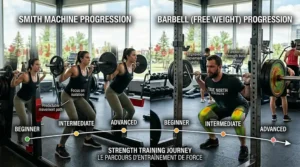
The practical conclusion: For pure muscle building, either tool works if you program intelligently. For functional athletic development, the barbell has a measurable edge. For safety and accessibility — particularly for beginners or those training without a spotter — the smith machine is demonstrably the smarter choice.
Smith Machine Safety for Beginners: What Most Guides Skip
One of the most undersold benefits of a guided smith machine is the injury prevention it offers beginners who haven’t yet developed the stabiliser strength and proprioceptive awareness that safe free weight lifting requires. According to information compiled by Wikipedia’s article on the Smith machine, the built-in safety hook system allows the bar to be locked at any point in the range of motion — a critical feature when training alone.
But there are safety mistakes specific to the smith machine that beginners need to avoid.
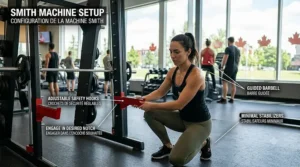
The foot positioning problem: Because the bar path is fixed, you can’t adjust the bar’s trajectory to suit your natural movement. On a vertical smith machine, squatting with your feet directly below the bar — as you would in a barbell squat — loads the knees in a forward shear pattern that can aggravate patellar tendon issues over time. Move your feet 15–30 cm (6–12 inches) forward to compensate. This is the single most common form error on smith machine squats.
The bar angle assumption: Not all smith machines use the same angle. Vertical rails suit shrugs and calf raises; angled rails (7–12 degrees) suit pressing and squatting. Know which type you own before loading up. Most smith machines on Amazon.ca in the all-in-one category use a slight angle, but always verify in the product specs.
Ignoring free weight supplementation: Using only the smith machine long-term creates movement pattern limitations. Even for dedicated smith machine users, adding dumbbell work — lateral raises, single-arm rows, split squats — ensures stabiliser muscles continue developing. The cable systems on all-in-one machines like the Altas Strength AL-3061B are excellent for this supplementary work.
Common Mistakes Canadian Buyers Make When Choosing Strength Training Equipment
1. Buying for the gym they want, not the gym they have. Ceiling height is non-negotiable. Most all-in-one smith machines stand 213–228 cm (84–90 inches) tall. Standard Canadian basement height is 213–244 cm (84–96 inches). Measure twice before purchasing.
2. Ignoring shipping and delivery logistics. All-in-one smith machines often ship in multiple crates weighing hundreds of kilograms. For remote or northern Canadian addresses — northern Ontario, interior BC, prairie rural communities — delivery surcharges can add $200–$500 CAD to the effective price. Confirm shipping costs to your postal code before placing the order on Amazon.ca.
3. Forgetting about plates. The most common buyer’s regret in the Canadian gym equipment market: purchasing a beautiful all-in-one smith machine and then realising that 90 kg (200 lbs) of Olympic plates — the minimum for productive training — adds another $300–$600 CAD to the budget. Factor plates into your total cost calculation before comparing machine prices.
4. Prioritising the machine over the programme. The most expensive smith machine in the world doesn’t produce results without a structured training programme. Beginners should invest $20–$50 CAD in a programme (many reputable ones are available through Canadian personal trainers and platforms like Starting Strength or GZCLP) before spending $1,500 on equipment.
5. Overlooking warranty and Canadian service coverage. Cross-border purchases from US-only sellers may leave you without warranty coverage in Canada. For major purchases, prioritise sellers — like Altas Strength, a Canadian company — that offer domestic warranty support.
FAQ
❓ Is a guided smith machine good for beginners in Canada?
❓ What is the real difference in muscle activation between a smith machine and a free weight barbell?
❓ Can I get free shipping on a smith machine from Amazon.ca in Canada?
❓ Is the guided smith machine bar path safe for squats?
❓ How much does a quality smith machine cost in Canada in 2026?
Conclusion
The guided smith machine vs free weight barbell debate doesn’t have a universal winner — but it does have a right answer for you specifically. If you’re a beginner, a solo trainer, someone rebuilding after injury, or a Canadian home gymmer who wants maximum versatility in one footprint, the guided smith machine is the smarter starting point. The fixed bar path, built-in safety system, and multi-station functionality of systems like the EonfitOmni E3, Altas Strength AL-3061B, and Marcy MD-9010G represent exceptional value for the solo strength trainer.
If you’re an experienced lifter chasing athletic performance, functional strength carryover, and maximum muscle activation per session — a quality Olympic barbell like the Weider 7-footer paired with a solid power rack remains one of the most cost-effective strength training investments available on Amazon.ca.
The honest truth is that many serious Canadian home gym builders end up with both: a smith machine for solo high-volume days and a barbell for days focused on functional compound work. Budget permitting, that combination is genuinely hard to beat.
Whatever you choose, remember that the equipment is just the tool. Consistency, progressive overload, and sleep will produce more results than any machine ever will.
✨ Don’t Miss These Exclusive Deals!
🔍 Ready to build your Canadian home gym? Click on any highlighted product to check current pricing and availability on Amazon.ca. Start your strength journey today — your future self will thank you for it! 💪🇨🇦
Recommended for You
- Best Guided Smith Machine for Home Gym in Canada 2026 (Top 7)
- Do I Need FID Bench or Just Adjustable? 7 Best Picks Canada 2026
- Best Compact Weight Bench for Small Apartments in Canada 2026
Disclaimer: This article contains affiliate links. As an Amazon Associate, I earn from qualifying purchases. If you purchase products through these links, we may earn a small commission at no additional cost to you.
✨ Found this helpful? Share it with your friends! 💬🤗
